
Quick report
Temperatures and sun exposure cooperated enough that we didn't see wet snow problems emerge. Surfaces remained supportable, even though south-facing slopes softened a bit in the afternoon. Had temperatures been much warmer, then wet problems may have been on the table on the south side of the compass.
The time of year has come when patches of bare ground are appearing even up into above tree line terrain, and snow cover is rapidly depleting at lower elevations. Hot sleds and creek crossings are becoming a part of getting into the mountains.
Firm and refrozen surfaces showed little to no signs of instability.Weather
- Air Temp
- 25
- Cloud Cover
- scattered
- Wind Loading
- none
- Rain Elevation
- Not observed.
- Recent Snowfall
- Trace
- Snow Avail For Transport
- none
Air temperatures stayed below freezing, and felt crisp as we approached above tree line elevations. Mostly scattered skies, with clouds moving in and out, allowing for periods of sun. Winds from the southwest were mostly light.
Snowpack
Temperatures overnight plummeted into the low 20s F, allowing for the previously moist surfaces to freeze and become supportable. Valley bottoms were firm, and the lower elevation landscapes had a thin layer of frost. Throughout the day, skies were mostly sunny, but temperatures only warmed up to the point that south-facing aspects had just started to soften. Colder daytime temps and passing cloud cover kept wet snow problems at bay.
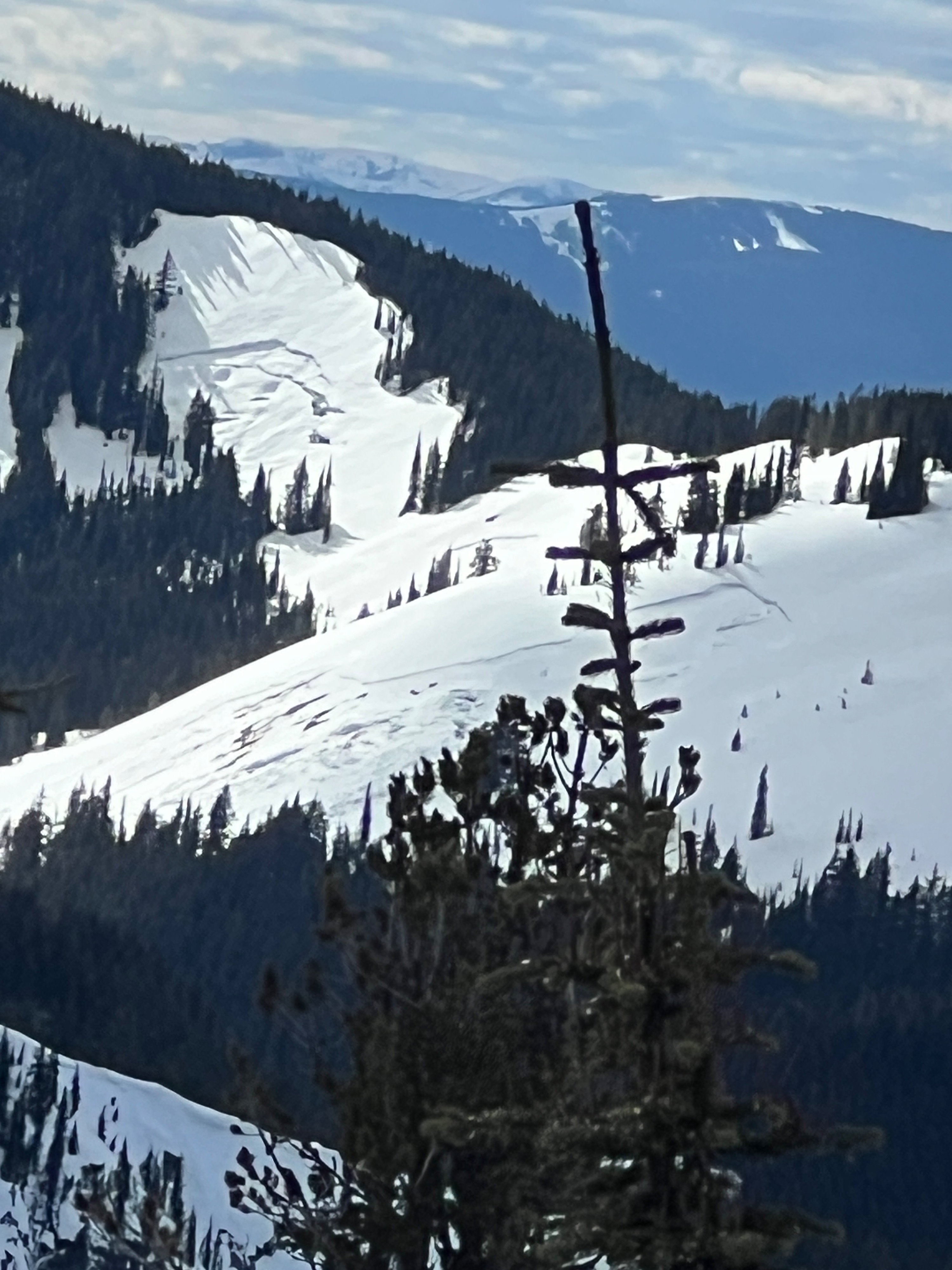
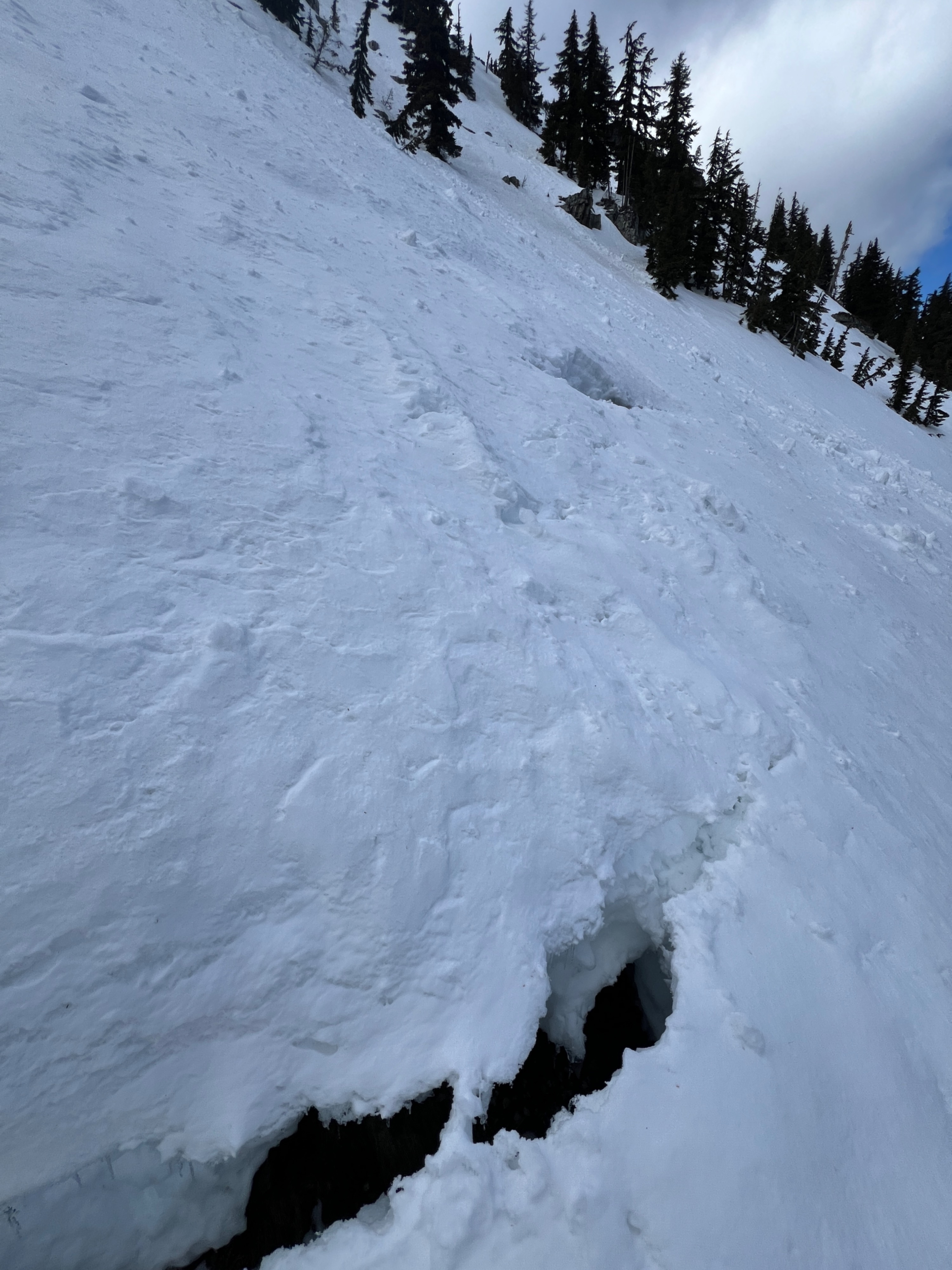
On an east aspect at 6,400', we noticed a couple of small glide cracks that are opening up. This particular slope has a number of large rocky outcrops and cliffs, and we encountered several older Wet Loose avalanches that originated around the rocks, and grew increasingly in size as the wet snow picked up more snow moving downhill. The debris ran through trees and neared the bottom of the path. Around the same time window, blocks of cornices broke off from the ridge line.
We dug a pit near where we observed the glide cracks. The top 18cm of the snowpack was pencil hard and firm. Below that, we found several layers of weaker snow where water has been pooling. In our snowpack tests, we had several failures in compression tests where water had pooled, but the firm surface would have kept a skier or snowmobile from influencing any of those layers.
Avalanche
- Size
- D1.5
- Type
- WL
- Aspect
- E
- Trigger
- N
- Elevation
- 6400 ft
Several large, older wet loose avalanches were observed. These likely ran earlier in the week during a significant warming event. Snow initially melted off of rocks and cliff bands, and entrained more snow as it moved down steep slopes. The debris ran through the trees.