
Quick report
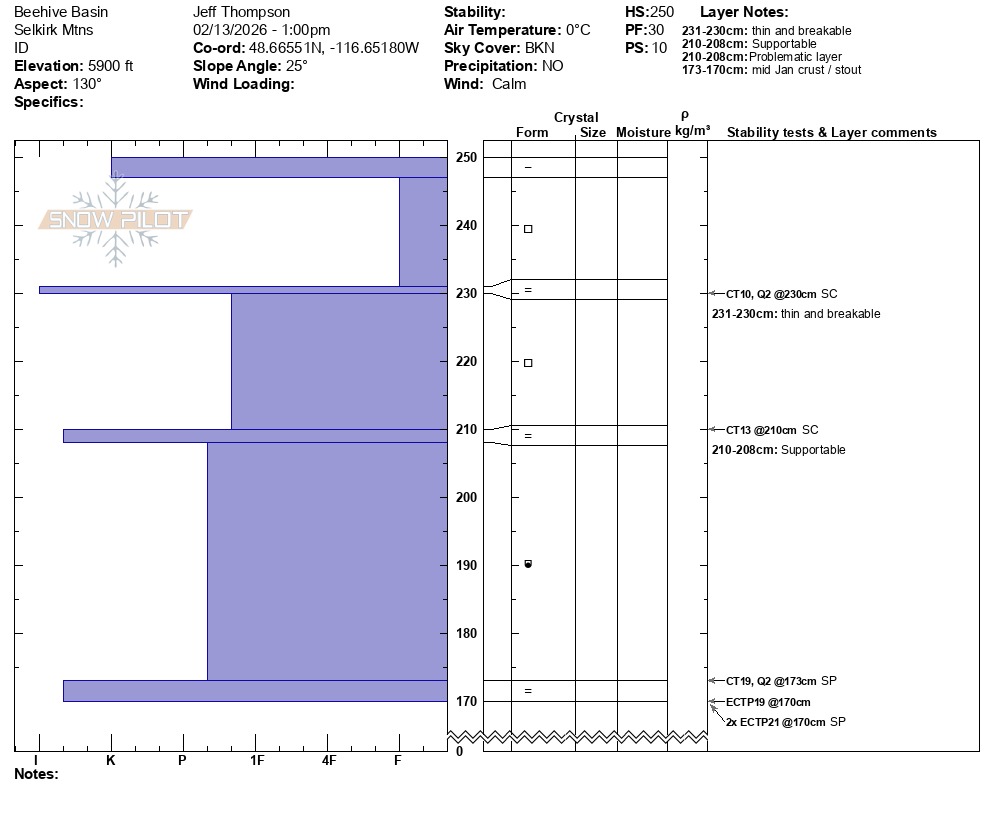
Despite little if any signs of unstable snow while traveling along on top of the snowpack, we continue to observe concerning snowpack tests results in weak layers below. These weaknesses are likely to rear their heads with more snow load in the coming days. Sunny slopes continue to provide safer travel options through middle elevations where more shady slopes are the bulls-eye to trigger a larger, Persistent Slab avalanche.
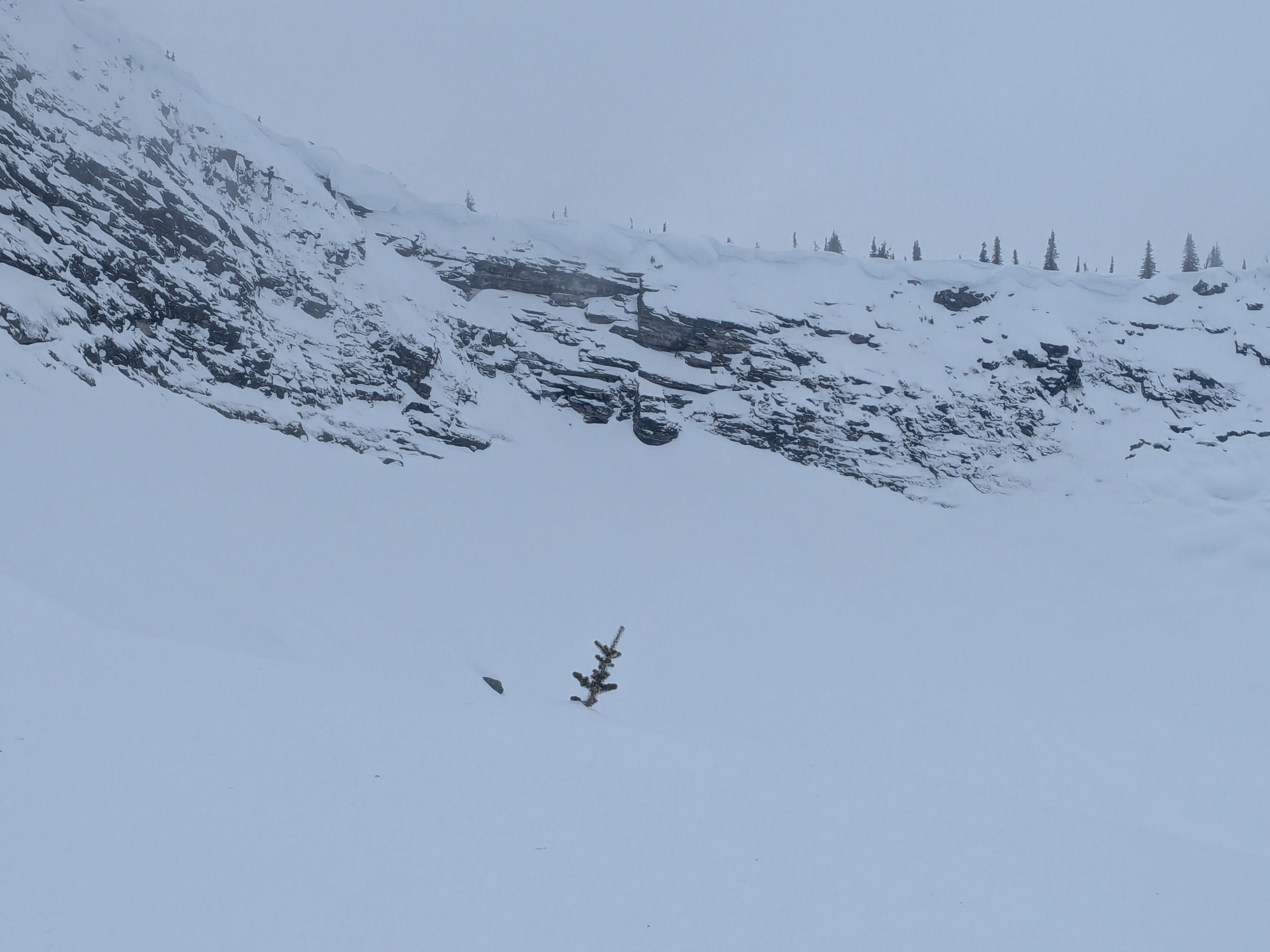
We spied a couple older avalanches. A Size 2 wet release slab avalanche on rocks and a small Size 1 slab avalanche on the ridge line just below a corniceWeather
- Air Temp
- Low 30's
- Cloud Cover
- overcast
- Wind Loading
- previous
- Recent Snowfall
- 0
- Snow Avail For Transport
- small smounts
The morning fog made way for clouds to push in by afternoon. Winds were generally calm, although a subtle breeze felt along upper elevation ridges. A few flurries in the afternoon.
Snowpack
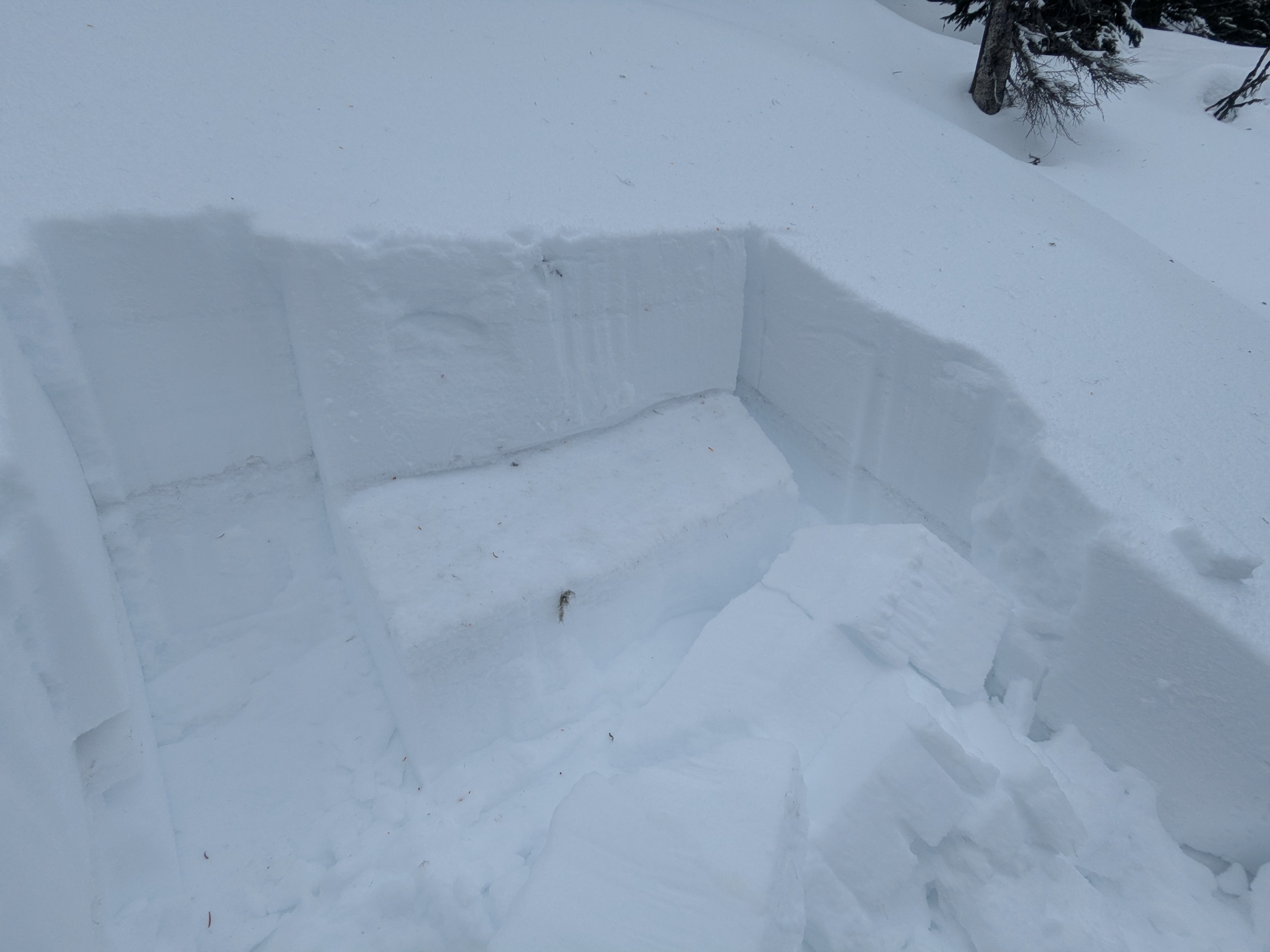
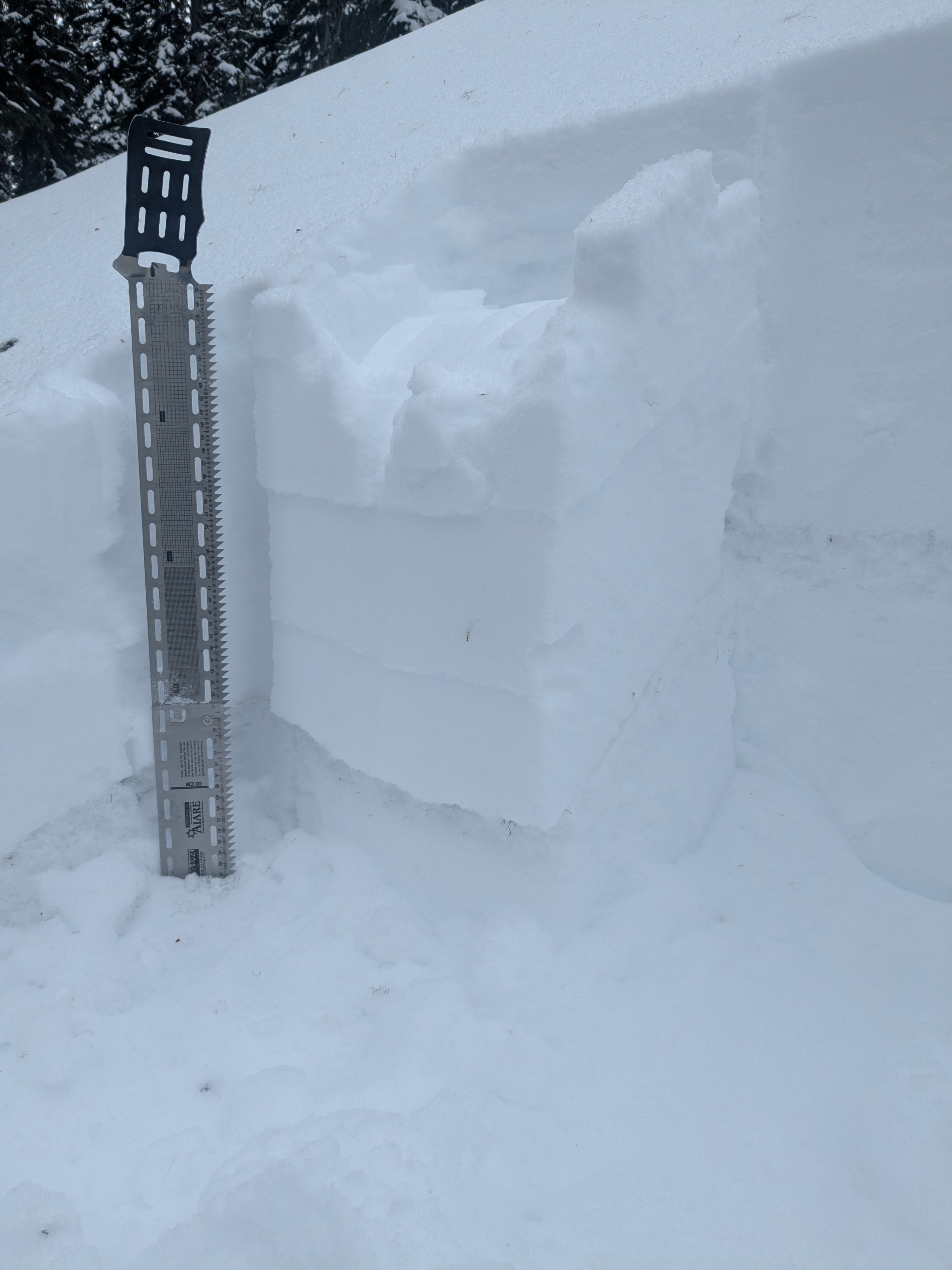
We did not observe the same widespread surface hoar growth on the surface as field teams observed the day prior in the Purcell Mountains near Canuck Pass. Broad openings near creek bottoms and in sheltered areas are where we noticed small, feathers growing (4 to 6 mm). Digging deeper, the slab above the 1/28 interface is slowly faceting on shady slopes at mid and upper elevations. Numerous potential failure planes exists - especially at middle elevations. ECTs continue to produce concerning results in a layer of decomposing surface hoar and faceted grains above a rain crust. This interface is around 60 to 70 cm deep. We did not hear any audible collapses on our travels or shooting cracks, but the tests results were enough for us to continue avoiding steeper terrain on north to east aspects at middle elevations on our travels. Digging around 6,800 feet on an easterly and northerly aspect, upper snowpack layering is more well-bonded than lower down and we did not find evidence of surface hoar on top of the same rain crust. However, a thin layer of small faceted grains sit on top of the crust. Wind pressing the slab and more settlement over the crust appear to be helping with overall stability. The caveat is that the buried crust and thin facet layer is widespread across the landscape so triggering an avalanche in upper elevation terrain (or places more alpine like) have the best chance to break wider than you expect. Southerly aspects continue to prove to be the safest travel options for now. The plethora of warmer weather recently has helped the layers on those slopes compress and the many crusts are thicker and more robust. With the arrival of new snow in the coming days, the primary hazard on southerly slopes is likely from the new snow sliding on top of the current firm crusted surface. Weak facets loom underneath to help nudge the failure potential along once slabs form above.
Avalanche
- Size
- D1.5
- Type
- SS
- Count
- 3
- Aspect
- NE
- Trigger
- N
- Elevation
- 6900 ft