
Quick report
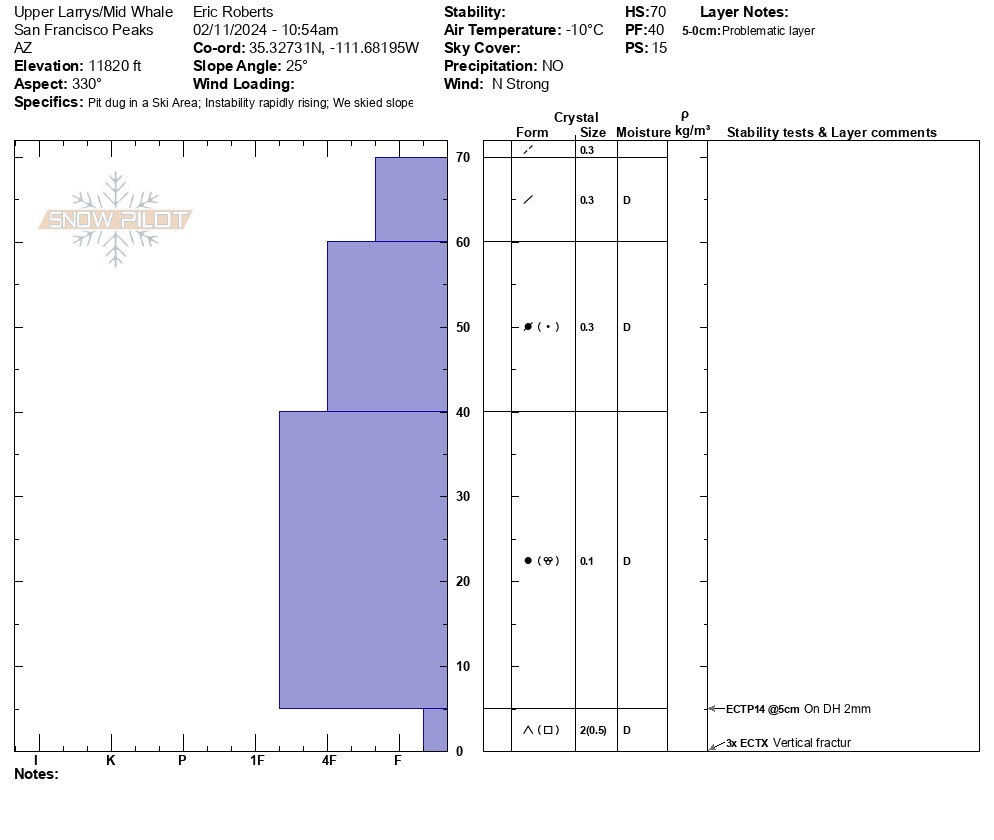
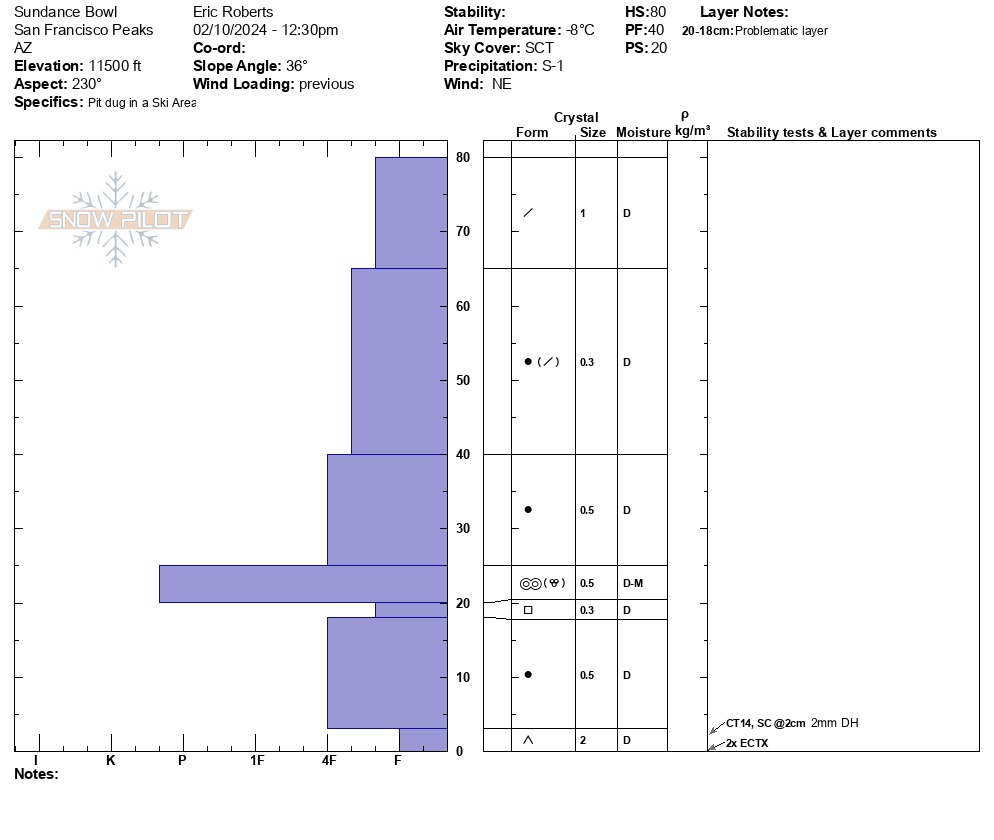
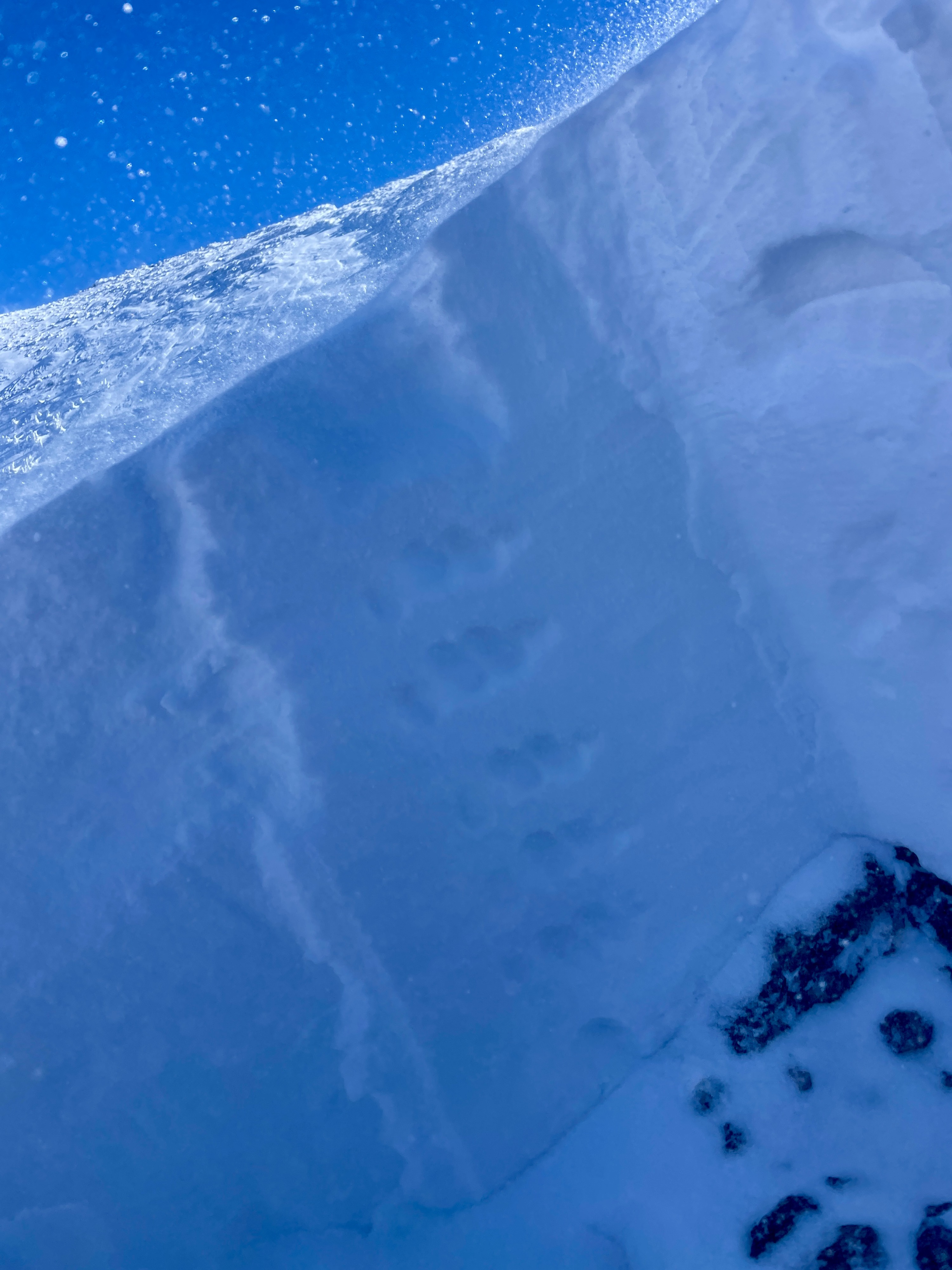
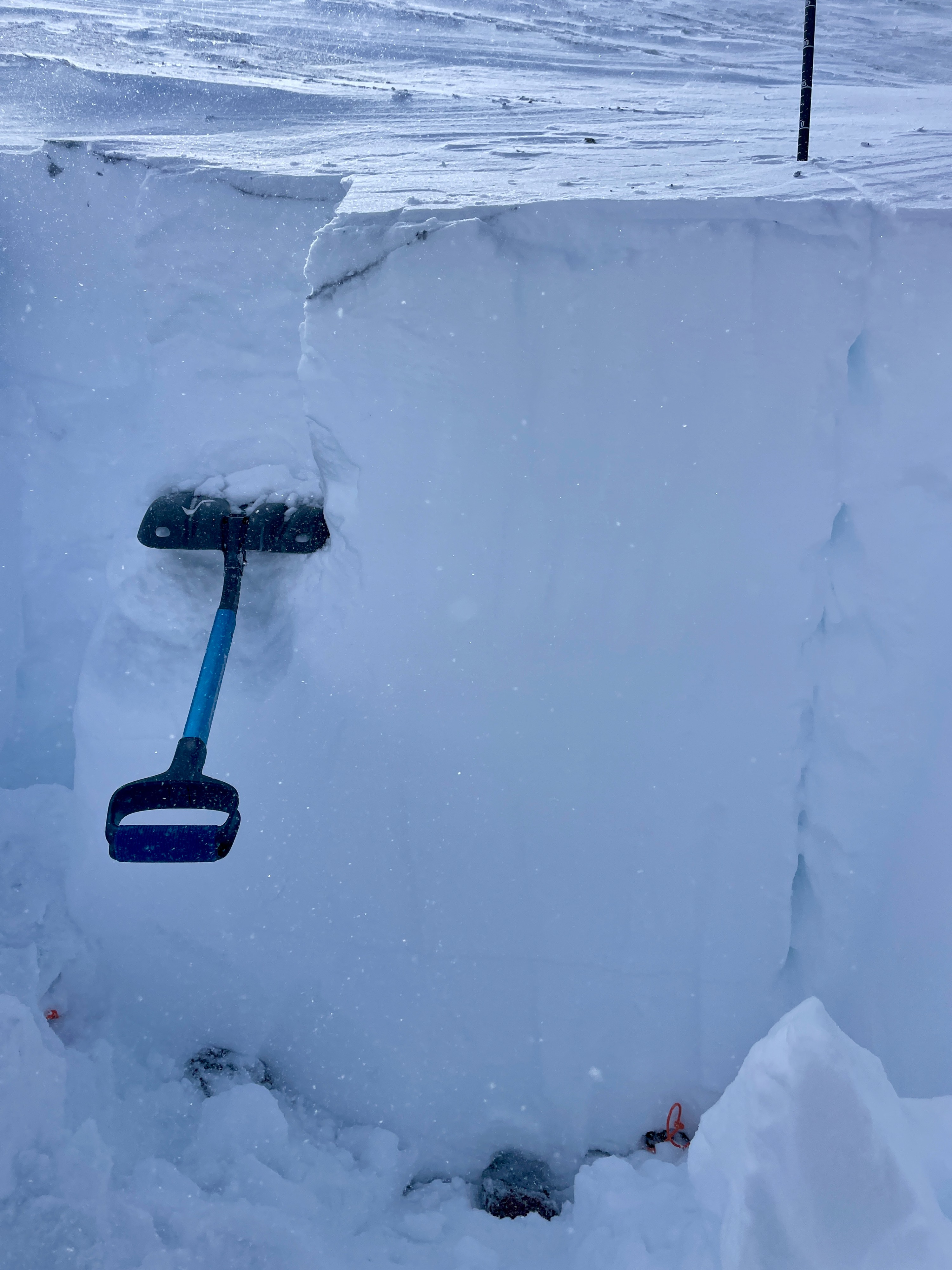
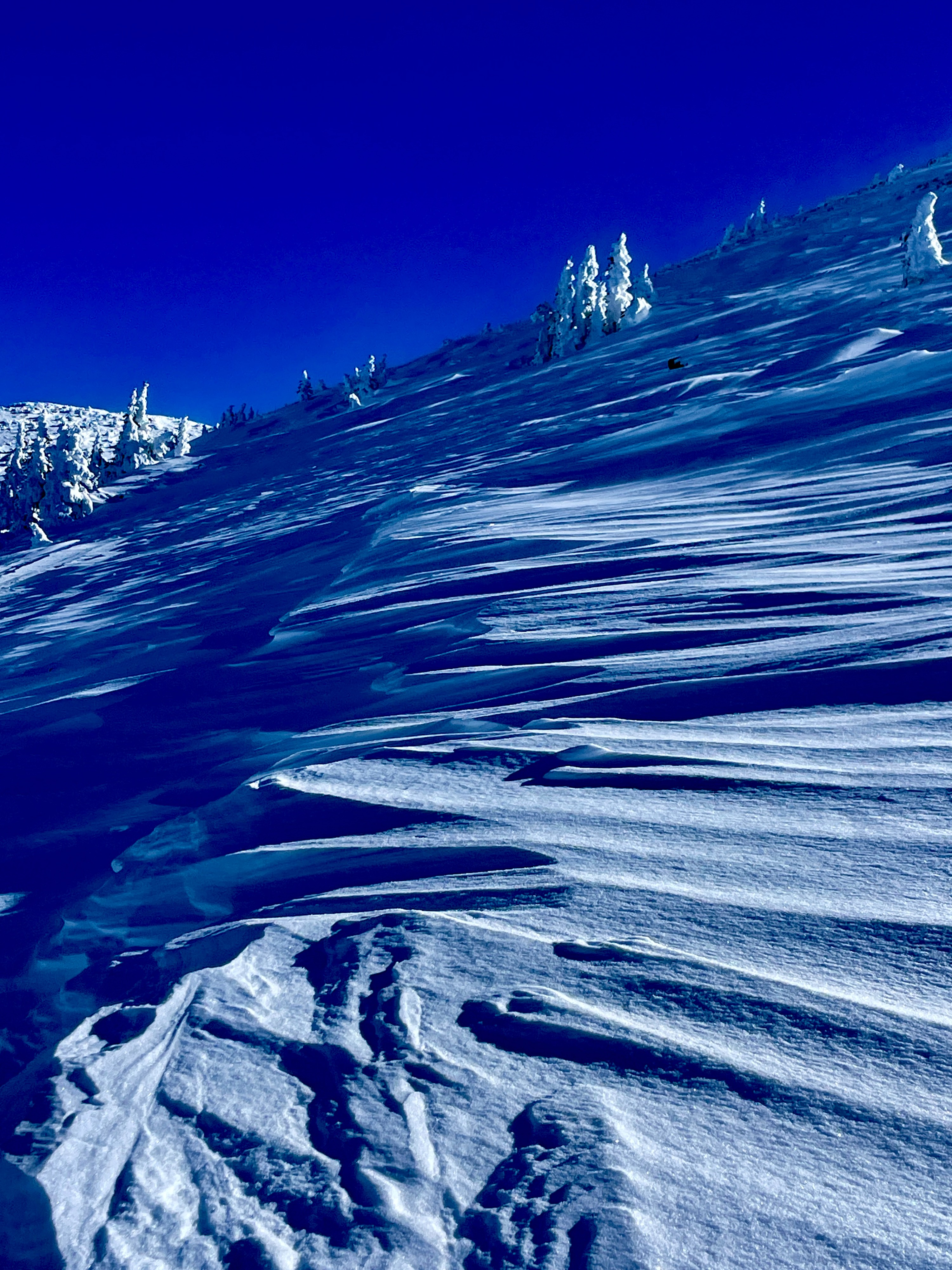
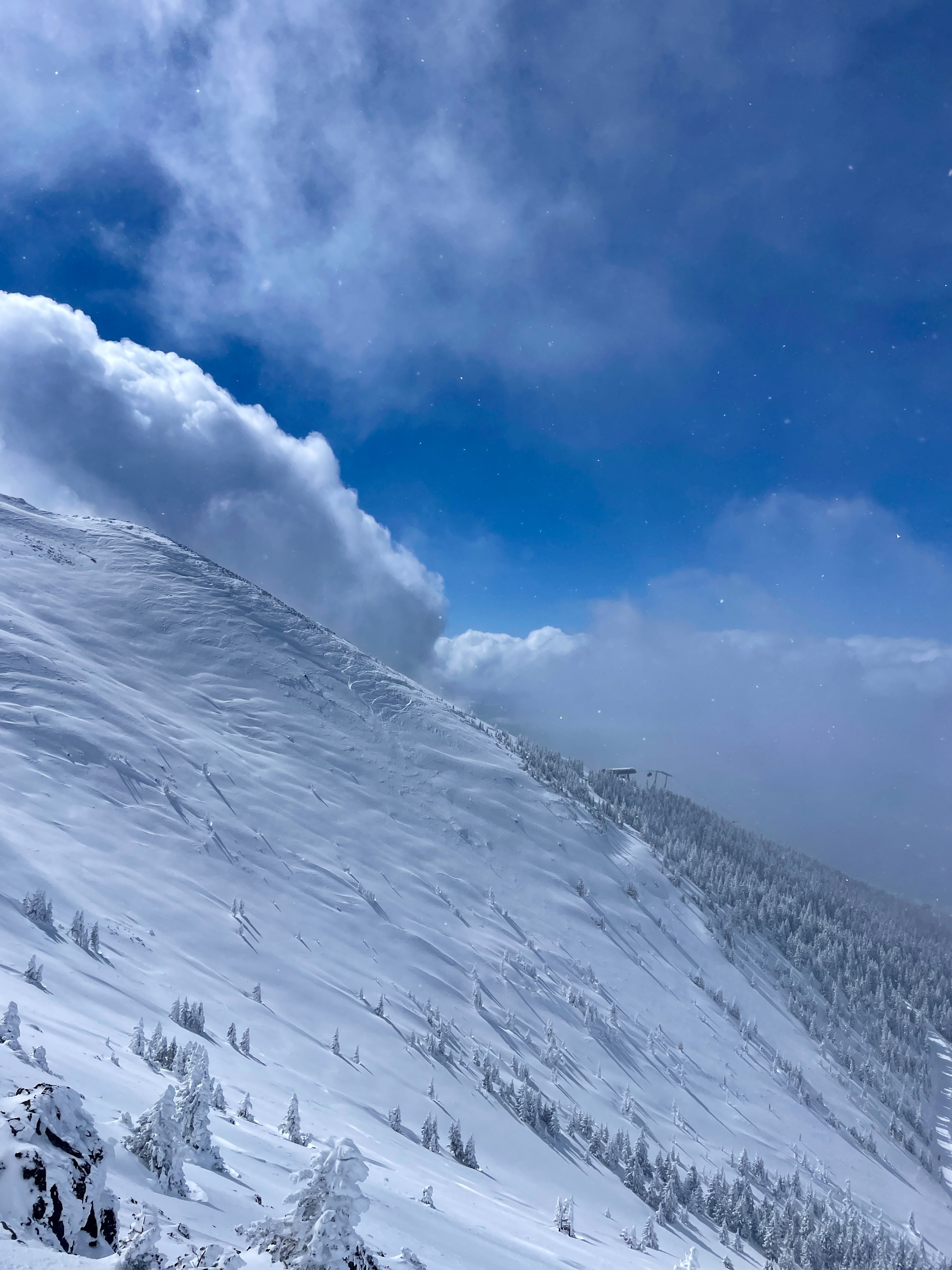
Overall, we conducted three test pits (two attached), with results reflecting moderate structure, moderate strength and moderate propagation propensity. Wind affect has played a major factor in stripping 20-30cm of low density snow between 2/10 and 2/11. Rocks, trees and talus that was once previously (and thankfully) covered, have now been re-exposed, with specific micro-features and drainages harboring a 4F cohesive slab of 30-60cm at the low end.
Weather
- Air Temp
- 8-15*F
- Cloud Cover
- clear
- Wind Loading
- moderate
- Recent Snowfall
- 0cm
- Snow Avail For Transport
- moderate amounts
Moderate to strong NNE winds which decreased by midday. Sporadic gusts throughout afternoon primarily affecting upper ridgelines. Few clouds with patchy roaming fog. Clear skies through PM. No precipitation during day. Rime present on trees with melting in sheltered southern aspects.
Snowpack
Wind stiffened surfaces of 2-15cm (4F+/-) were widespread this morning during our tour. Snow observed, tested and skied on 2/10 was primarily composed of Fist hard dendrites layering the upper 20-40cm of the snowpack. Unfortunately, it seems the wind had bigger plans and stripped this low density layer away, leaving a thankfully right side up snowpack in specific aspects, but a bit firmer and wind stiffened. Today, on S/SE aspects below 11,200', surface melting was widespread and will most likely form a surface crust by PM. On 2/10, midway down Sundance Bowl between 11,200'-11,800', a 5cm melt-freeze crust was observed in specific SE/SW/S aspects, approximately 10-20cm above ground. Height of Snow (HS) ranged between 50-80cm (pre-wind event) and the layer was nonreactive in Large column tests. This MFcr would be a key layer to track for future accumulation and to see overtime if its 1. protecting the depth hour beneath 2. becoming a facet factory above and below and 3. a new bed surface for a future cohesive slab.