
Quick report
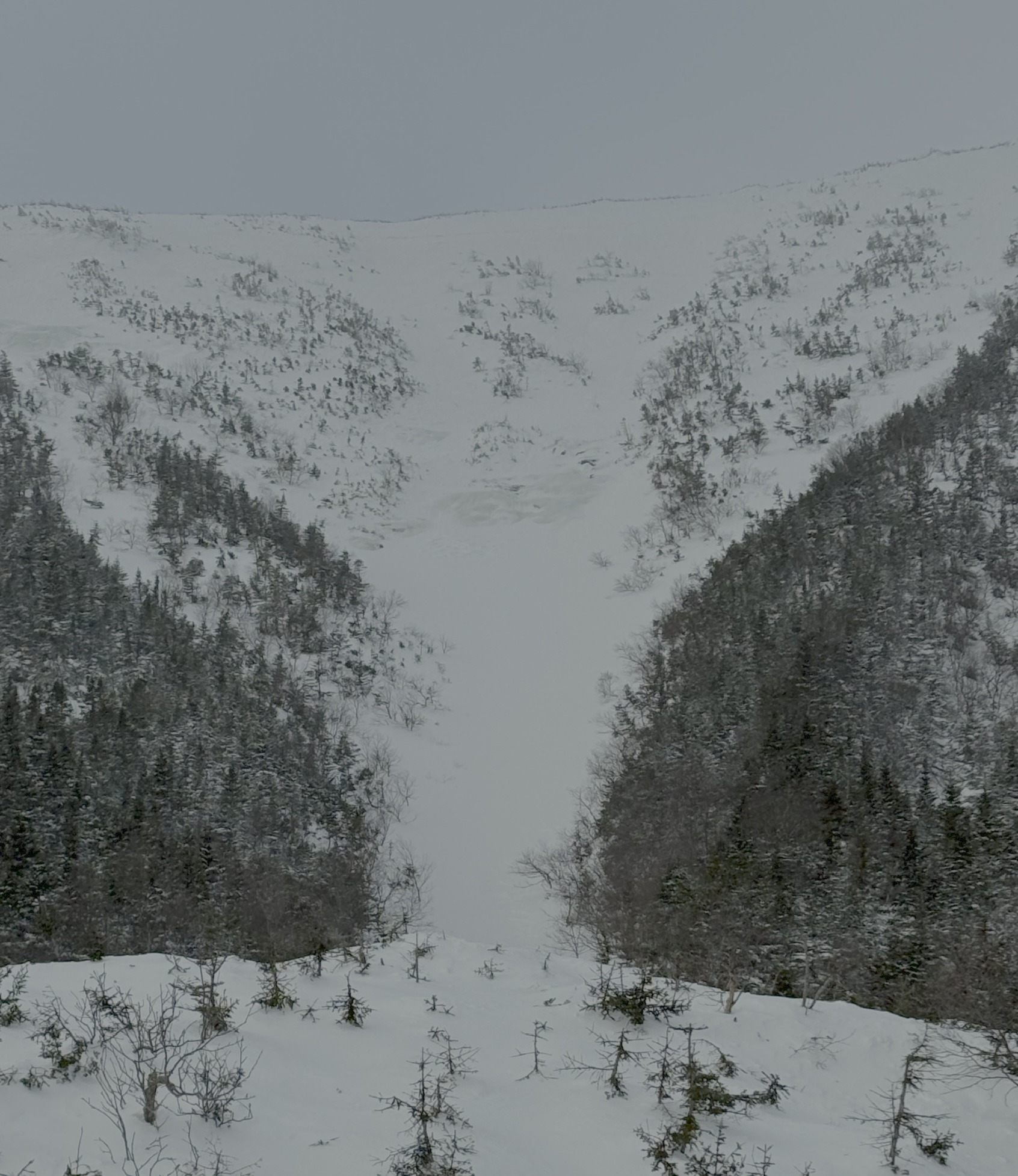
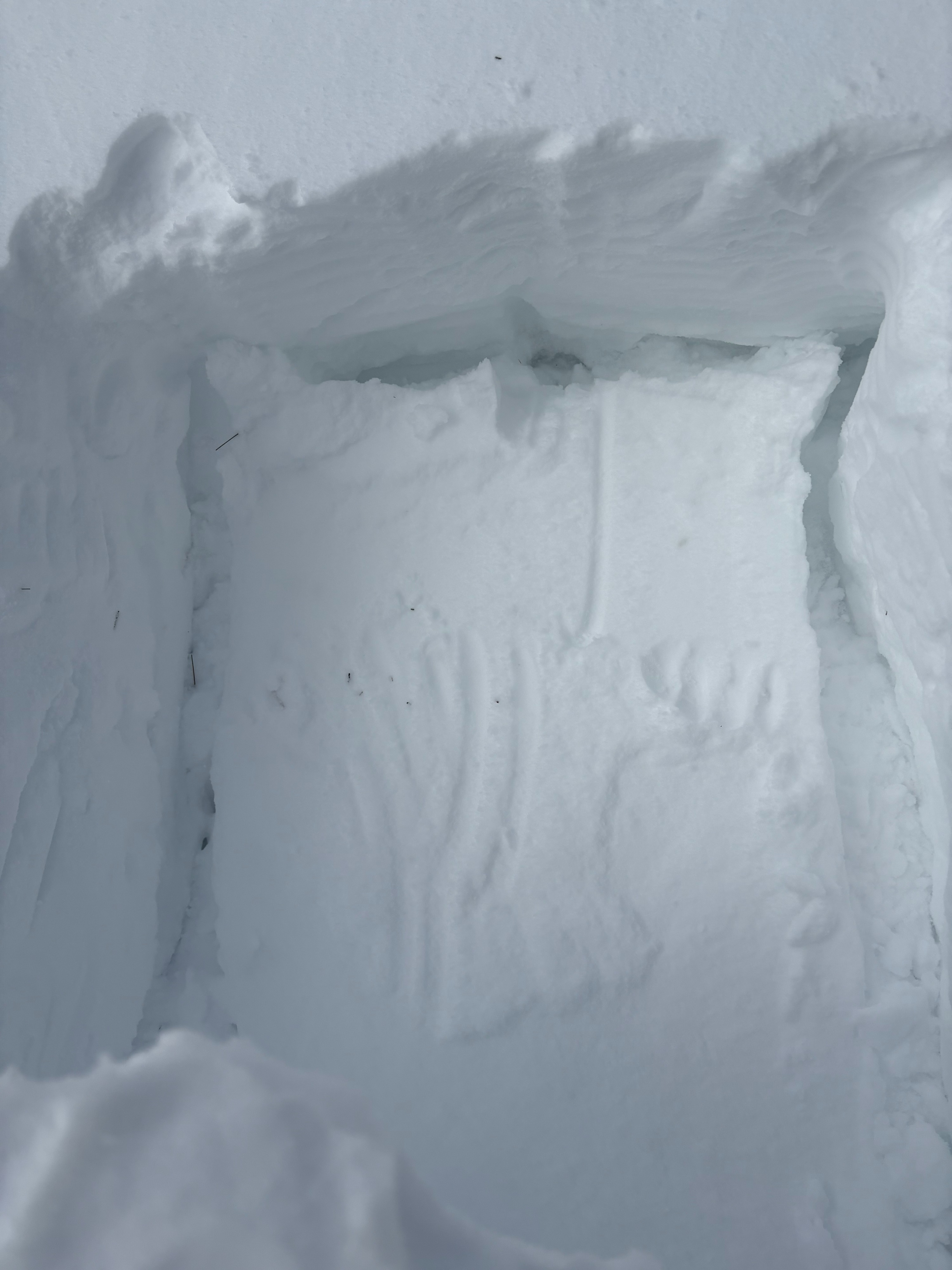
We performed a series of handshear tests at 4250-4300ft on lookers right of Main Gully in GoS. The first handshear popped out a 30cm 1F hardness slab with moderate to firm force (which may have been a function of the larger than normal handshear size) on a thin planar layer. This fracture was well above the deeper raincrusts. Our team guessed that there was a lull in the wind or change in wind direction that allowed the slabs to set up independently. About 50ft higher in elevation we found a thinner 15cm thick 4F harness windslab that popped out relatively easily on the same planar layer. At this higher location the slab began sounding hollow beneath our ski poles. At this point we transitioned and gently skied out of Main Gully. Our team agreed that if our margin of safety was coming from how gently we skied, that we should not be skiing that slope. Extensive and well-connected windslabs found at 4100ft and above in Main Gully. 1F to 4F hardness slabs were releasing on a thin planar layer at 15-30cm down - notably NOT on the 12/19 or 12/29 raincrusts. Moderate force released the slabs on multiple handshear tests, and there was some energy when the slabs released (they felt like they popped out). The slabs had a hollow sound in thinner sections.
Snowpack
Snowpack is icy hard and wind stripped where exposed to the wind, or made up of extensive windslabs deposited in lee areas.