
Quick report
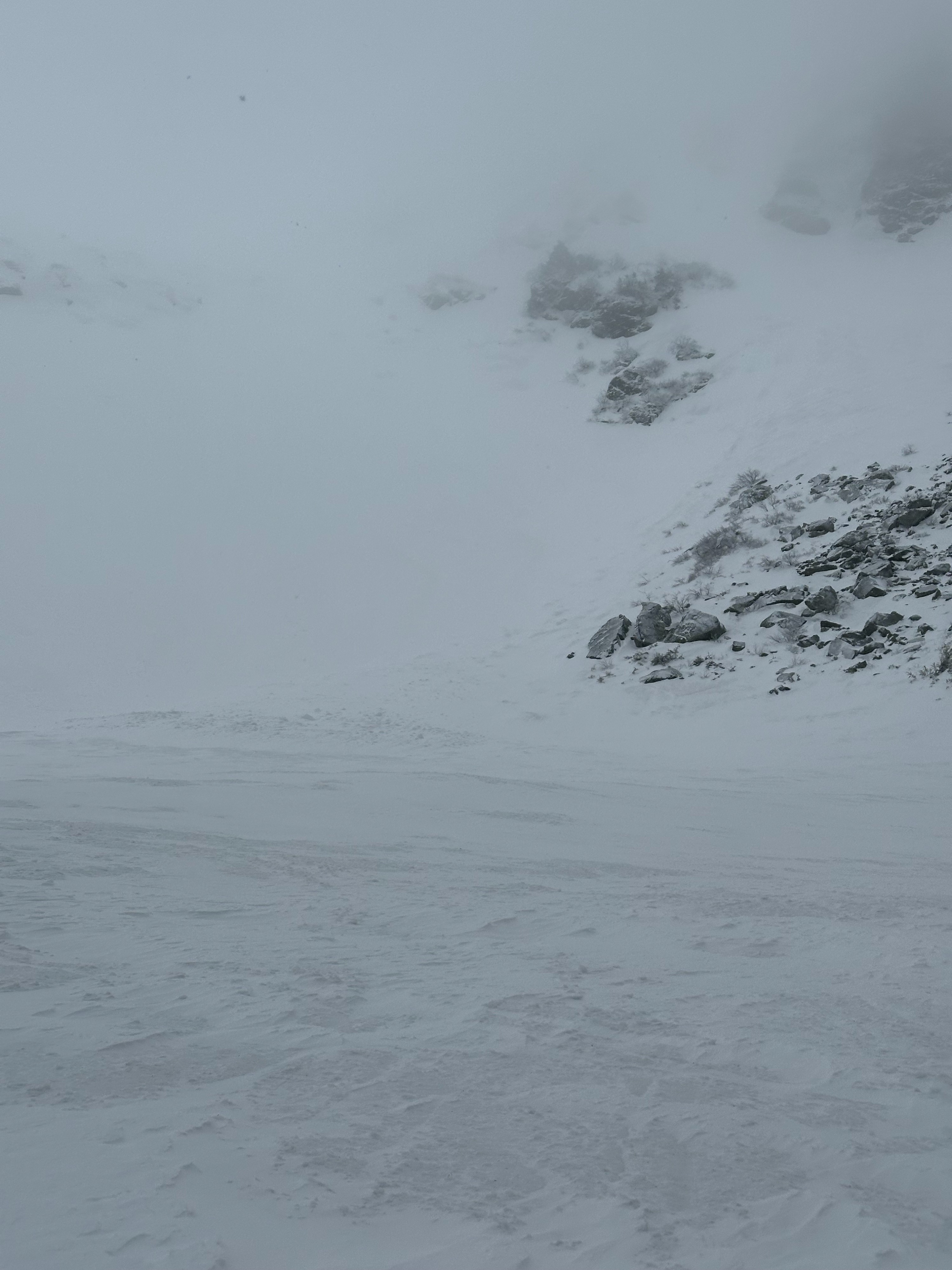
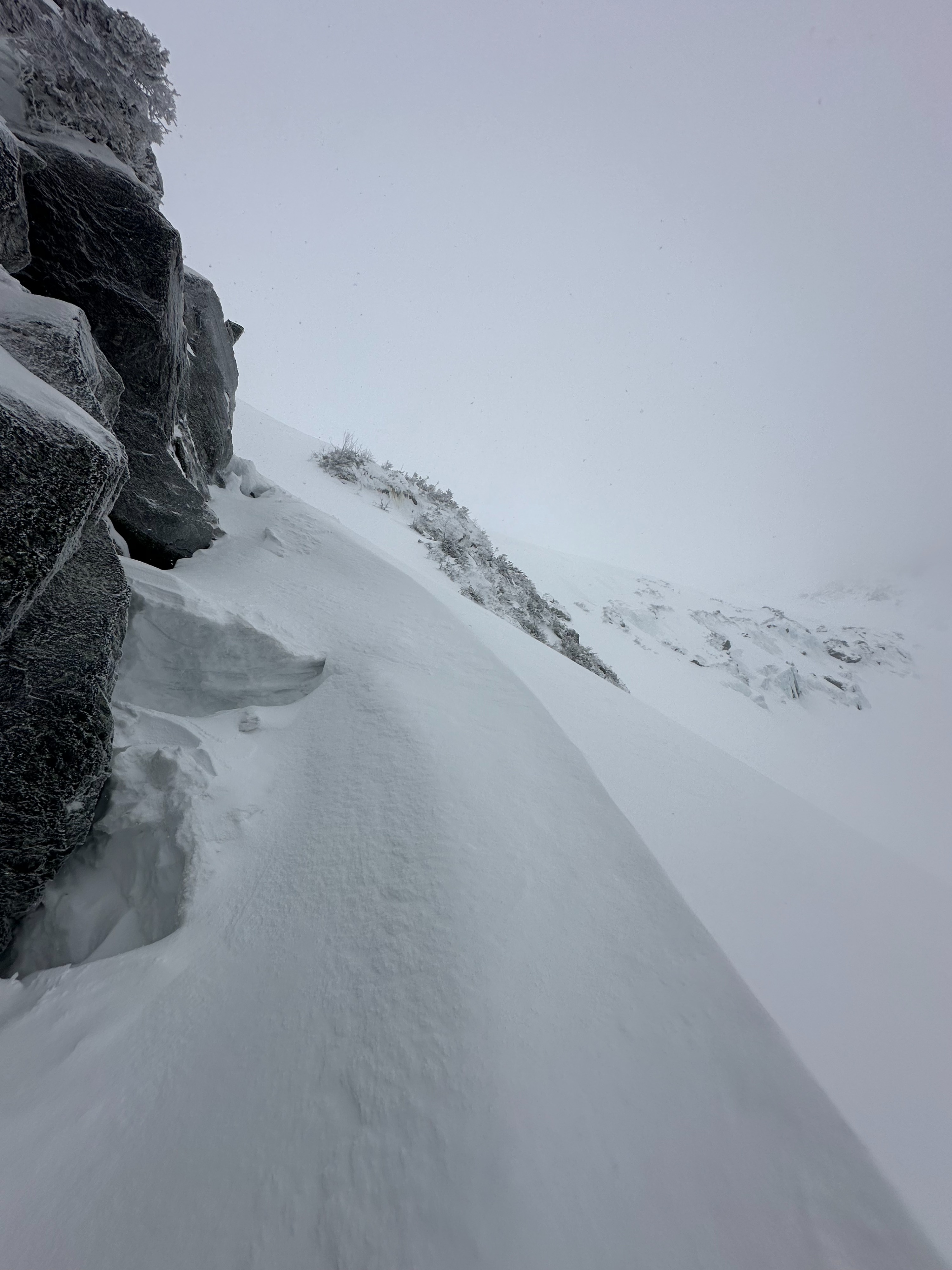
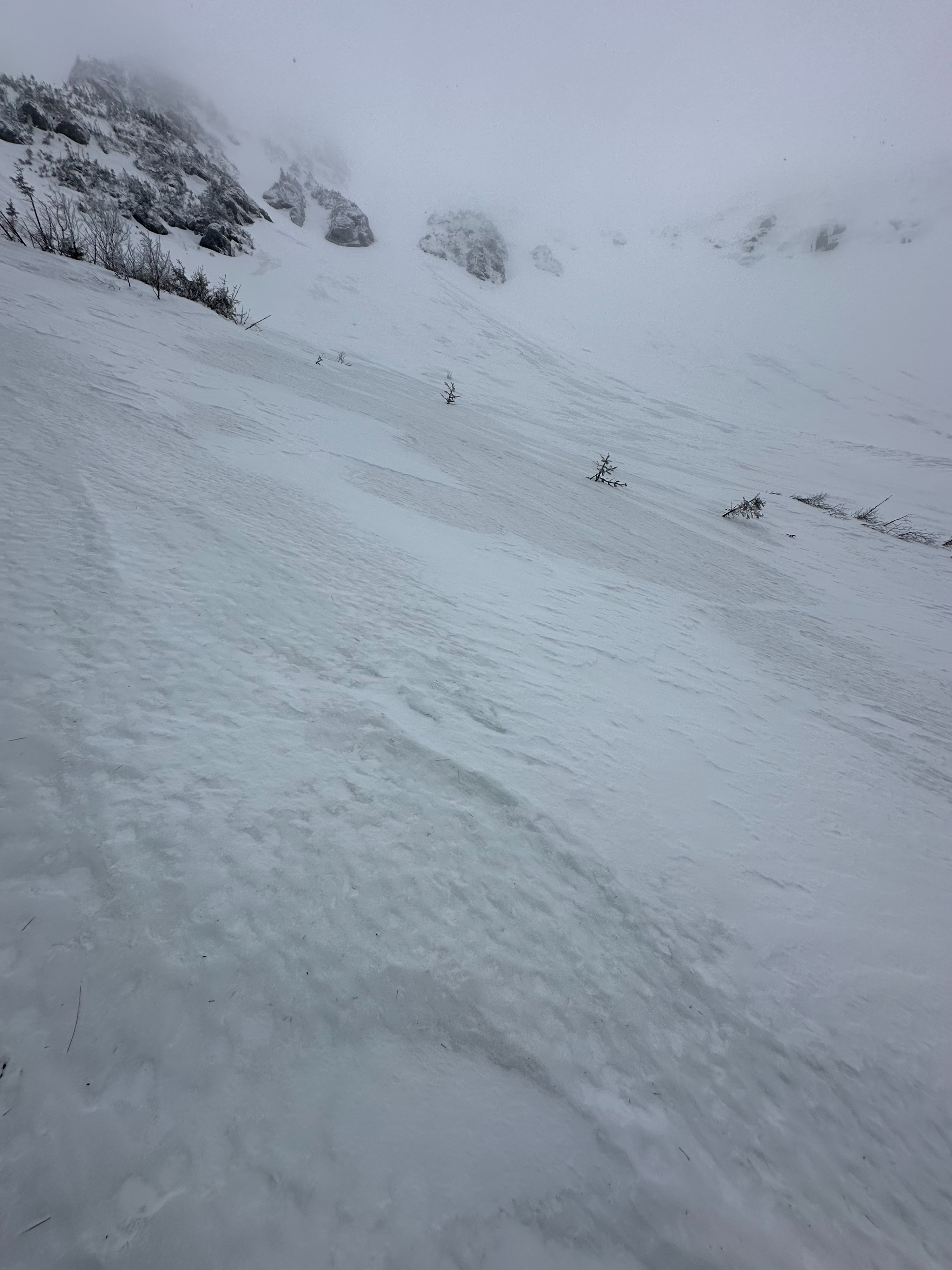
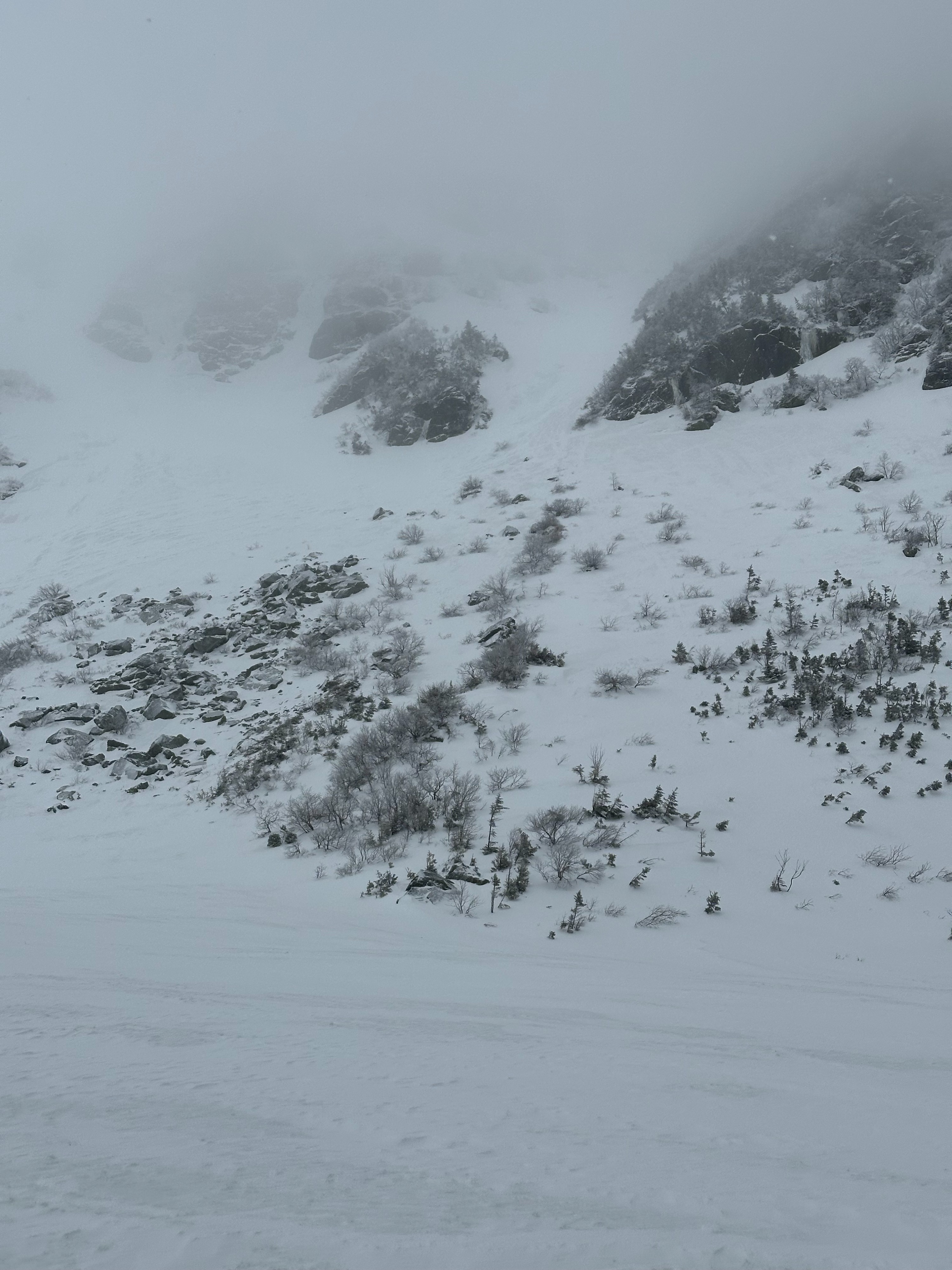
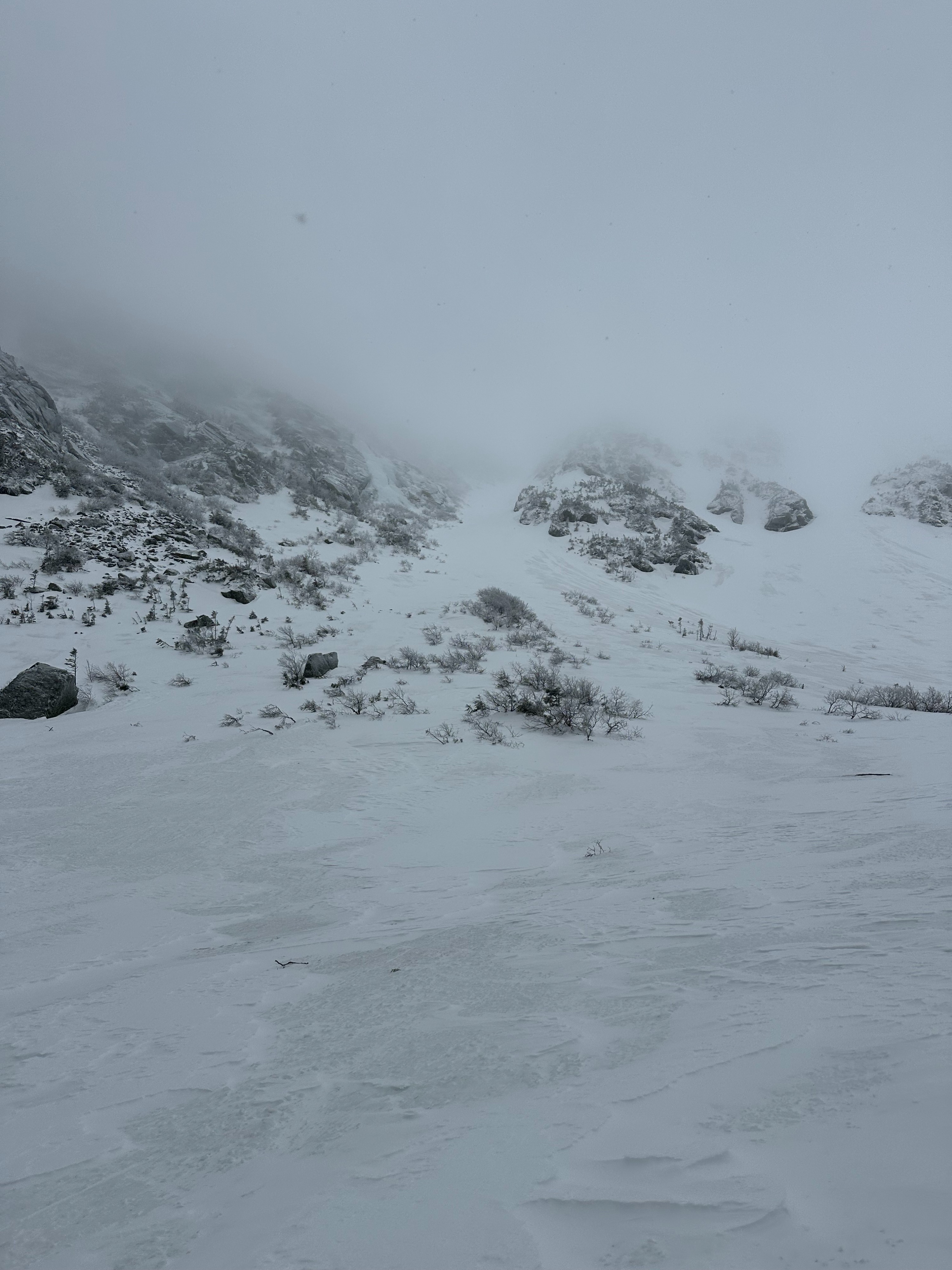
In Tuckerman Ravine, the snowpack was a mix of hard, icy old snow and patchy wind slabs up to 12 inches thick. Wind slab depth was variable between 6 and 12 inches. The deeper areas were relatively isolated and easy to identify. Thicker wind slabs were the most common on north and east-facing aspects, in the middle of gullies where the terrain provides good shelter from the wind.
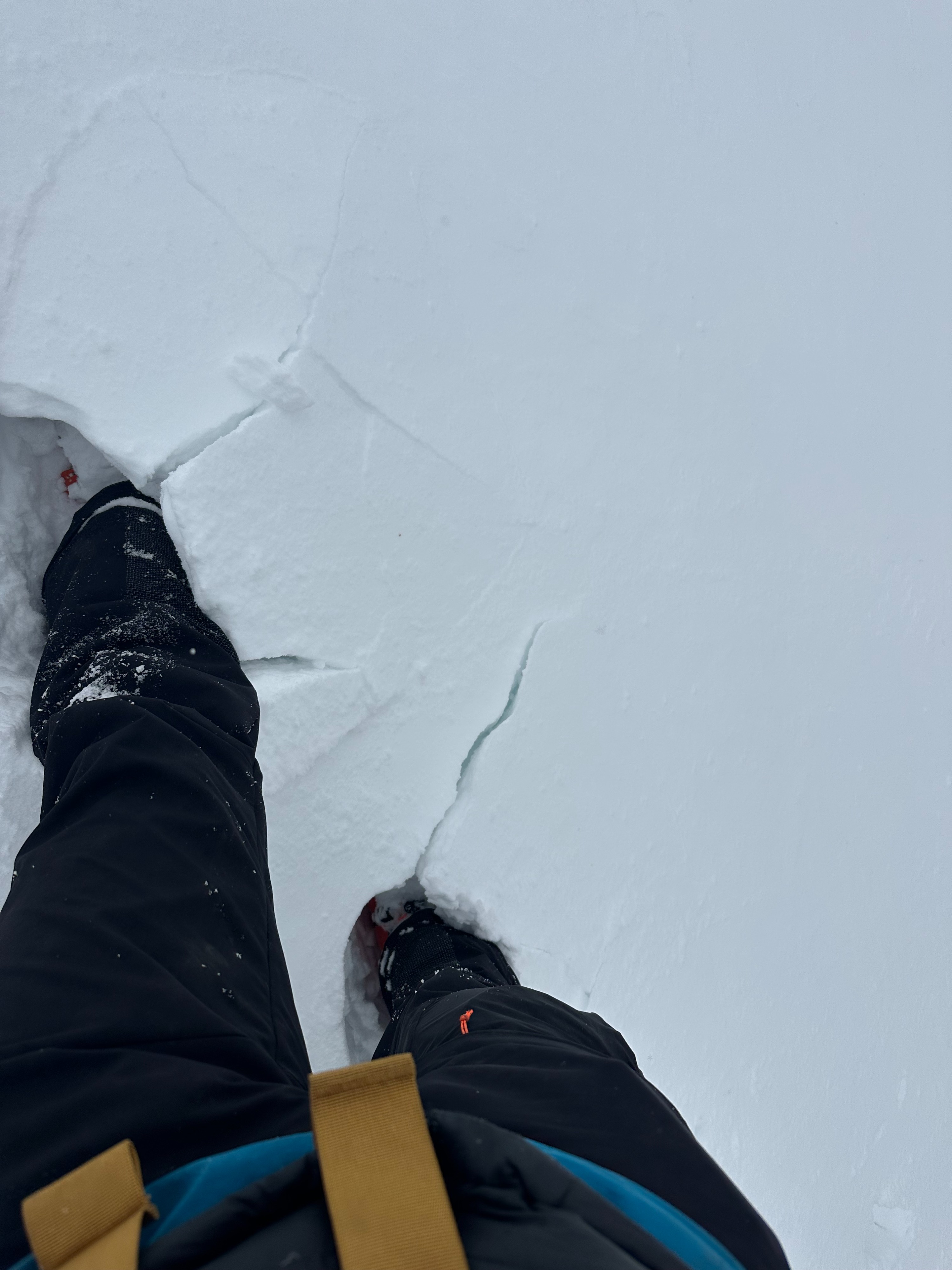
In areas of thicker wind slab, multiple hand sheer tests failed on the interface of the old, icy snow surface with moderate/hard force. Some graupel and mixed precipitation grains were observed within this interface in some areas. While new slabs were not very well connected across the terrain, in pockets of thicker slabs, their character was generally strong-over-weak. I observed limited cracking underneath my feet. Pieces of slab were dislodging as blocks, but I did not observe any propagation in the areas I was traveling in. In very steep terrain, like gully entrances, where there is lower friction on the new/old snow interface, I would have been a bit more concerned about the potential to trigger an avalanche.
Upper elevations, the tops of gullies, and south-facing avalanche terrain seemed to be mostly scoured down to the old snow surface.
Avoiding thicker, potentially reactive wind slabs was easy by traveling on the obvious old snow surface. Crampons and an ice ax were required for me to travel safely in these areas.
No clear or obvious signs of instability were observed.Weather
- Air Temp
- 25
- Cloud Cover
- overcast
- Wind Loading
- none
- Recent Snowfall
- 5
- Snow Avail For Transport
- small smounts
Skies were cloudy with light snow showers through the morning. Temperatures were mild, in the mid-20s F. Winds in Tuckerman Ravine were light and variable with a few stronger gusts. No wind loading was observed.