
Quick report
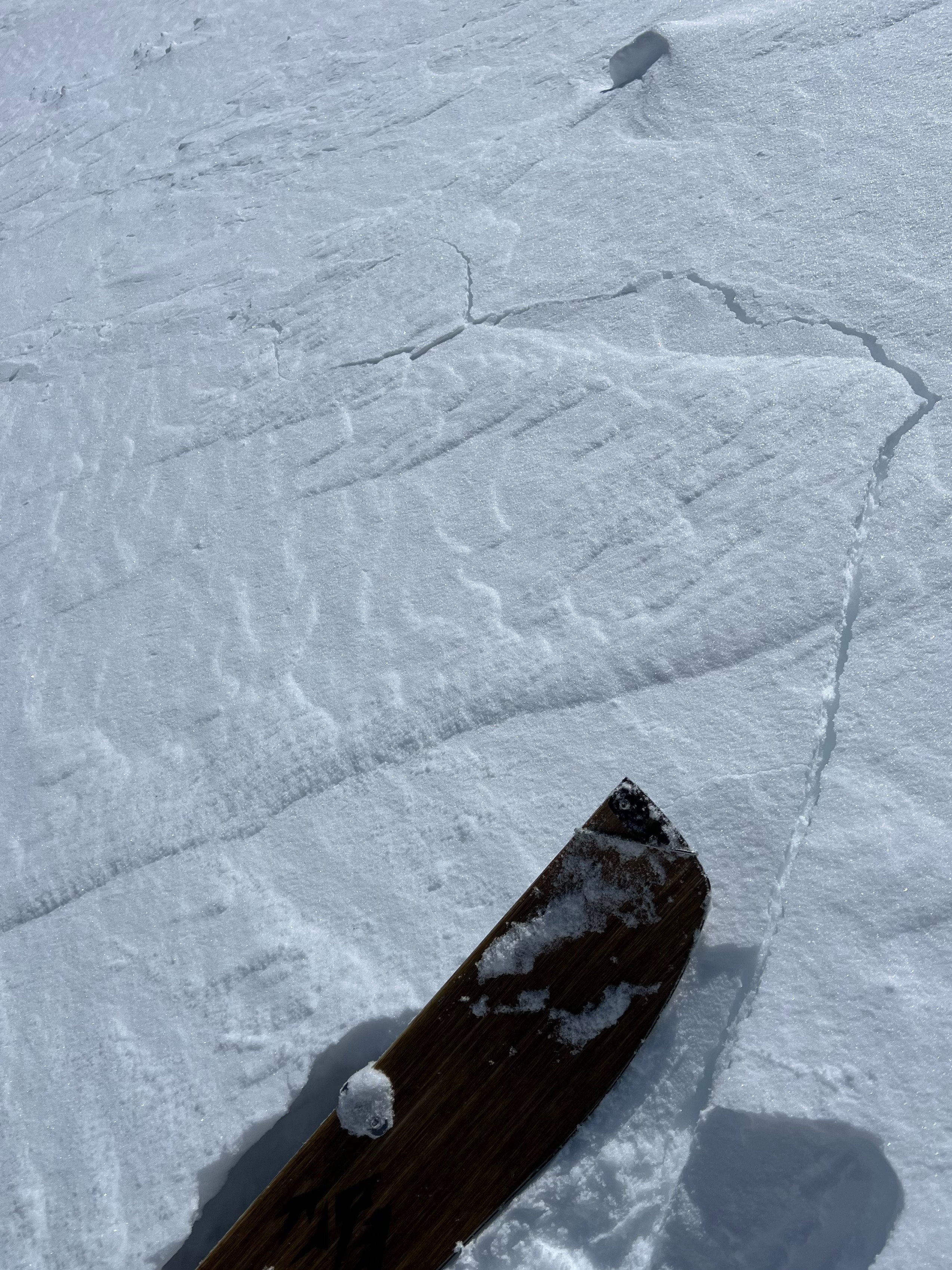
- Cracking
- specific
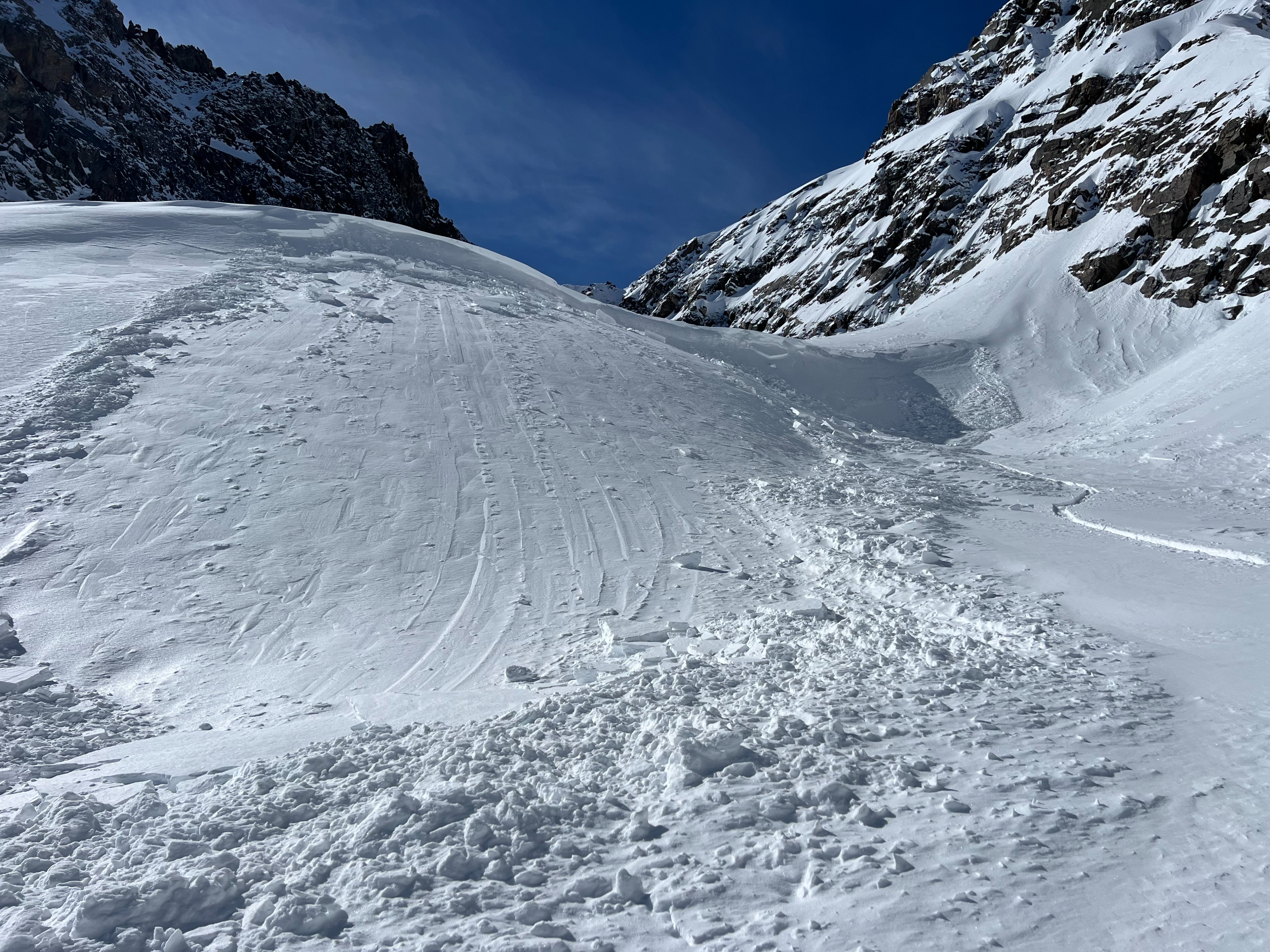
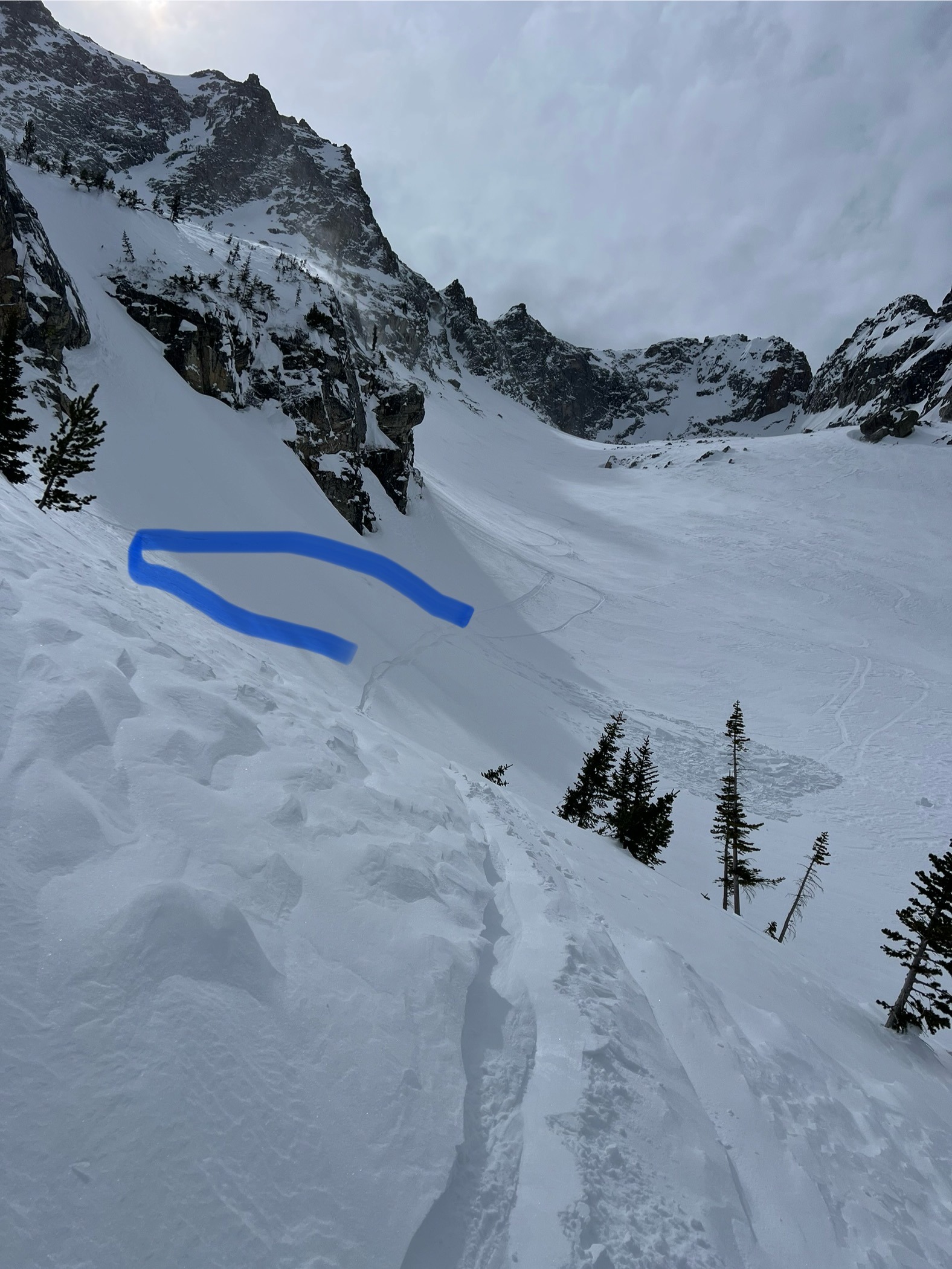
We found signs of instability over two days in higher elevation terrain. These observations really highlight the importance of looking for avalanche problems that are trickier to identify due to their isolated or specific nature. On 3/9, wind loaded terrain was primarily observed above the forecast boundary in very isolated areas. Southwest wind increased early 3/10 creating more widespread slabs on specific features further down in elevation, but remained only in the upper elevations and beyond. Active snow transport observed. We triggered one 6" D1 wind slab on a small, terrain driven cross-loaded slope below a cliff feature. Subtle increase in avalanche danger on from 3/9-3/10 (increase 2-2.5 if we were European). Otherwise, we found generally stable conditions without much wet loose activity either day. The majority of wet shed occured during first initial warming on March 8th D1-1.5.
Wind loaded terrain transitioned from isolated to specific areas due increased wind. Triggered one small D1 avalanche on 3/10 . One recent natural D1 wind slab over a foot deep off a small cornice that likely occured 3/7 or 3/8 and cracking surfaces on an adjacent slope 3/9 around 10,500'.Avalanche
- Size
- D1 R1
- Type
- SS
- Aspect
- NE
- Trigger
- AR
- Elevation
- 9500 ft