
Quick report
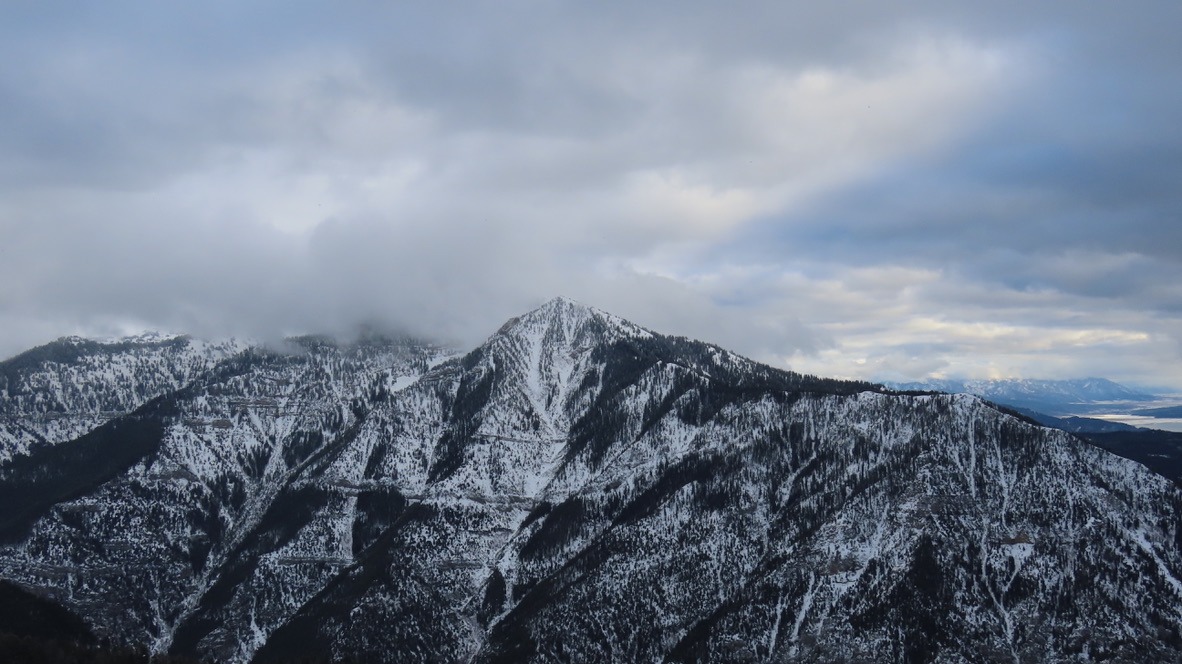
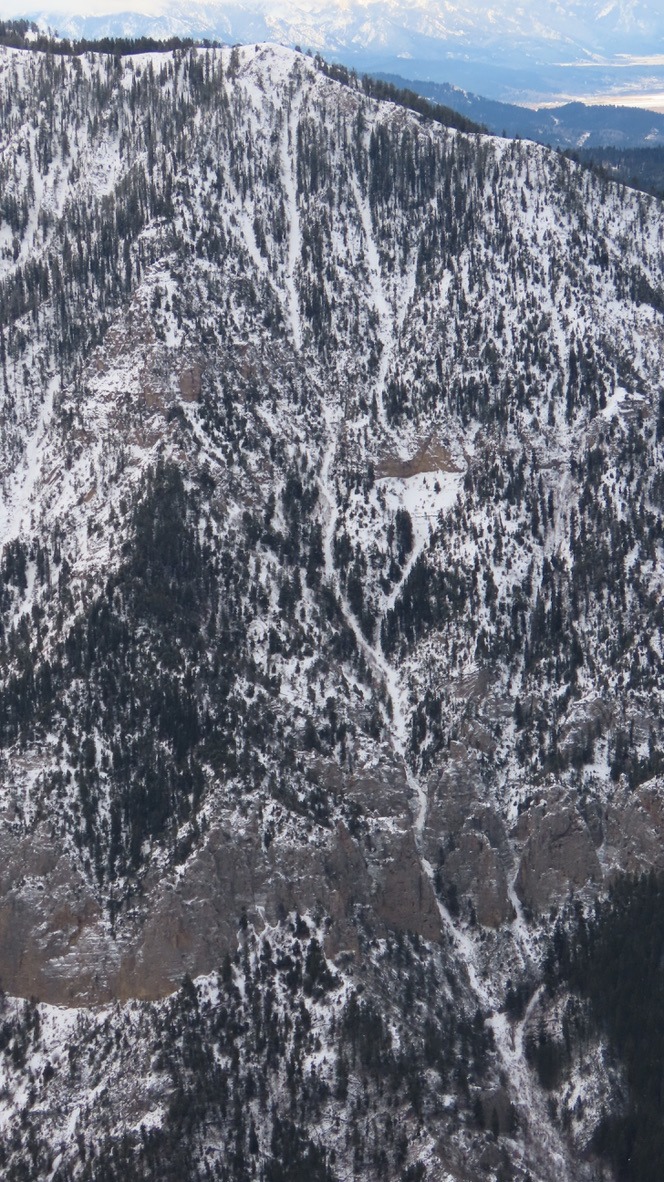
Toured up to ~8,500 feet to compare depth/structure to last season (same route from 11/30/23), snow cover ranging 6-10 inches from 7,500' and up. Interestingly, I found more continuous coverage spanning all aspects than last year but overall shallower depth. Around 12-20 inches of snow at 8,500', the bottom half of which is dry, small facets. The rest of the snowpack consists of decomposing recent snow capped with a stout but breakable melt-freeze crust, also noted on N aspects.
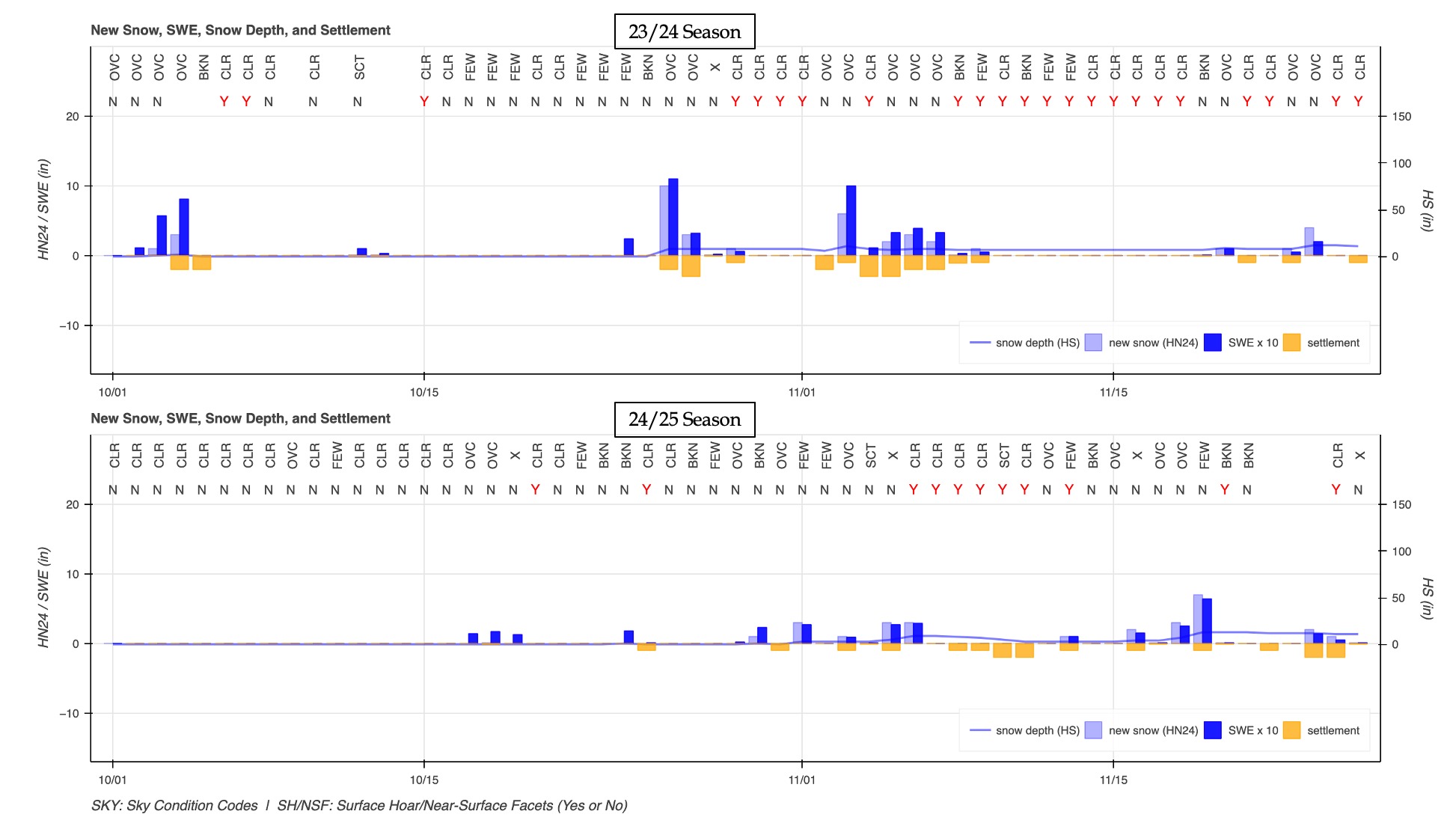
Though snow depths remain fairly shallow, the dry spells we have encountered have been warm and cloudy, which, in my observations, has led to less extensive faceting and surface hoar growth. Almost all the weak snow I have found has remained moist, smaller in size, thinner in layering, and less continuous in spatial spread, though these are just a few data points. I dug into last year's snowpack during the same time to explore if data could also reflect this general trend. These graphs illustrate two things. 1) We have about half of the snowpack we had at this point last year [5.96" SWE last year vs. 3.17" SWE this year], and 2) conditions have been less conducive to faceting [the red Y on the graphs indicates conditions in which faceting is more likely].
Though we tend to think that a shallower snowpack that stays dry tends to become weaker faster than a deeper snowpack, the weather also plays a significant role in that trend. Last year, a greater flux to cold temperatures and clear skies was experienced earlier in the season, while more snow was on the ground. This year, skies have remained overcast with a more gradual temp flux. Weak snow has certainly formed and is more developed on anything in confined, alpine terrain, primarily above 8,500' and northerly. However, the amount (thickness of the facet layer), extent (how striated/dry/large), and spatial distribution are far less than I observed this time last year.
Weather
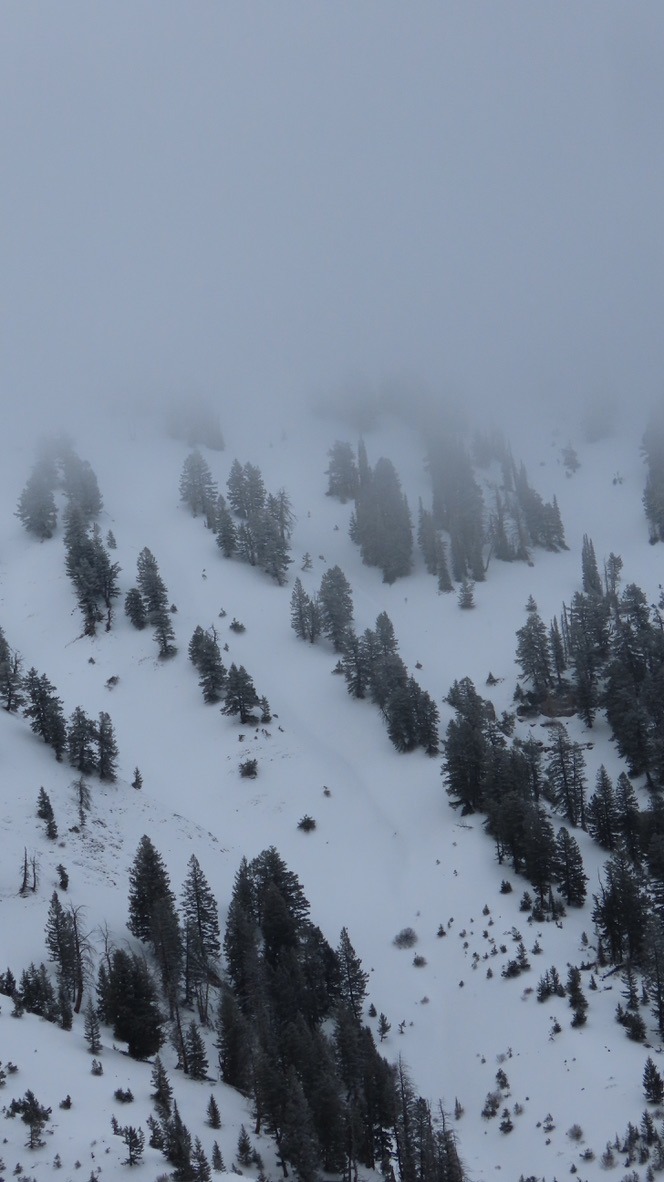
- Cloud Cover
- broken