
Quick report
- Cracking
- specific
- Collapsing
- specific
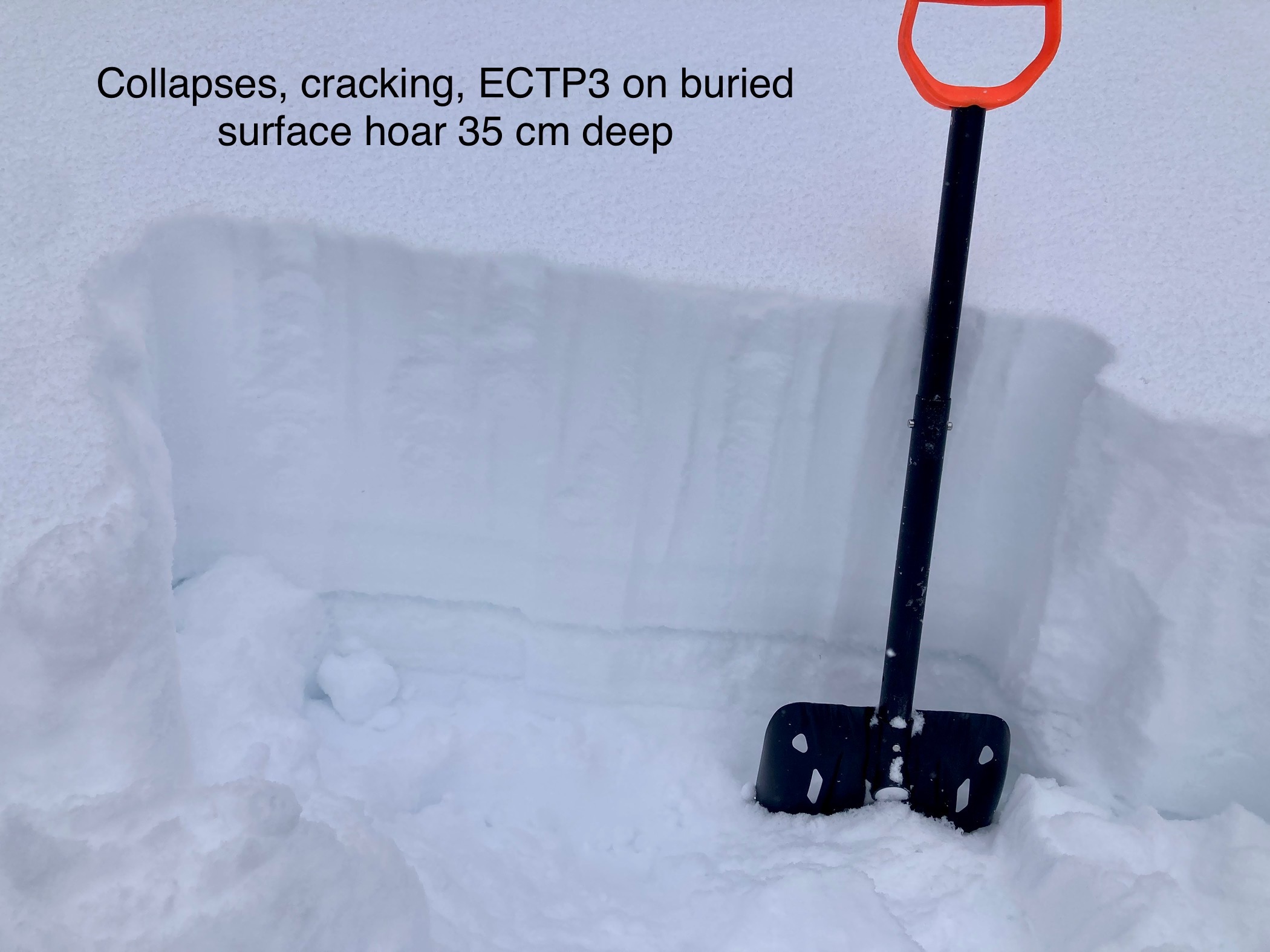
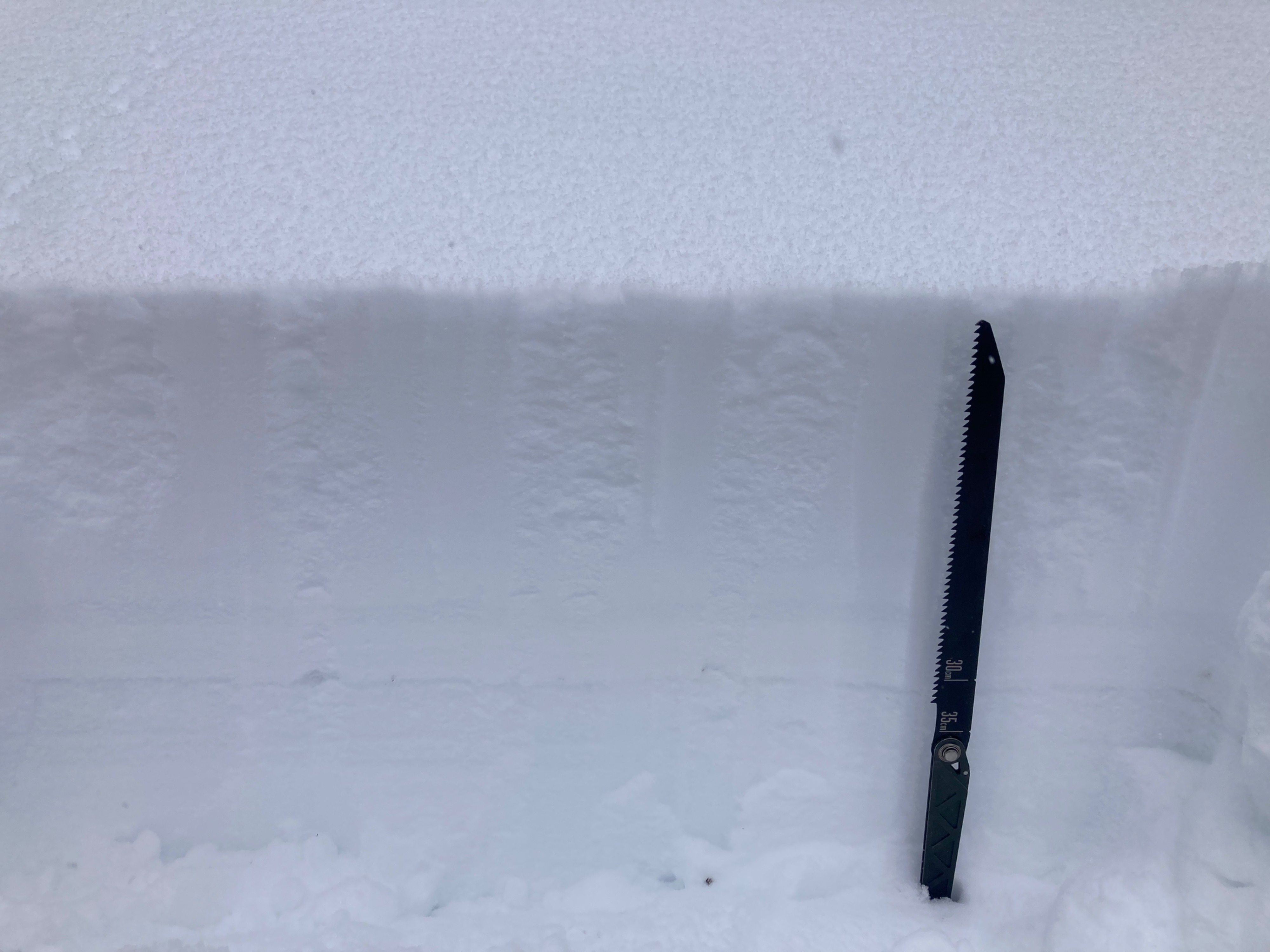
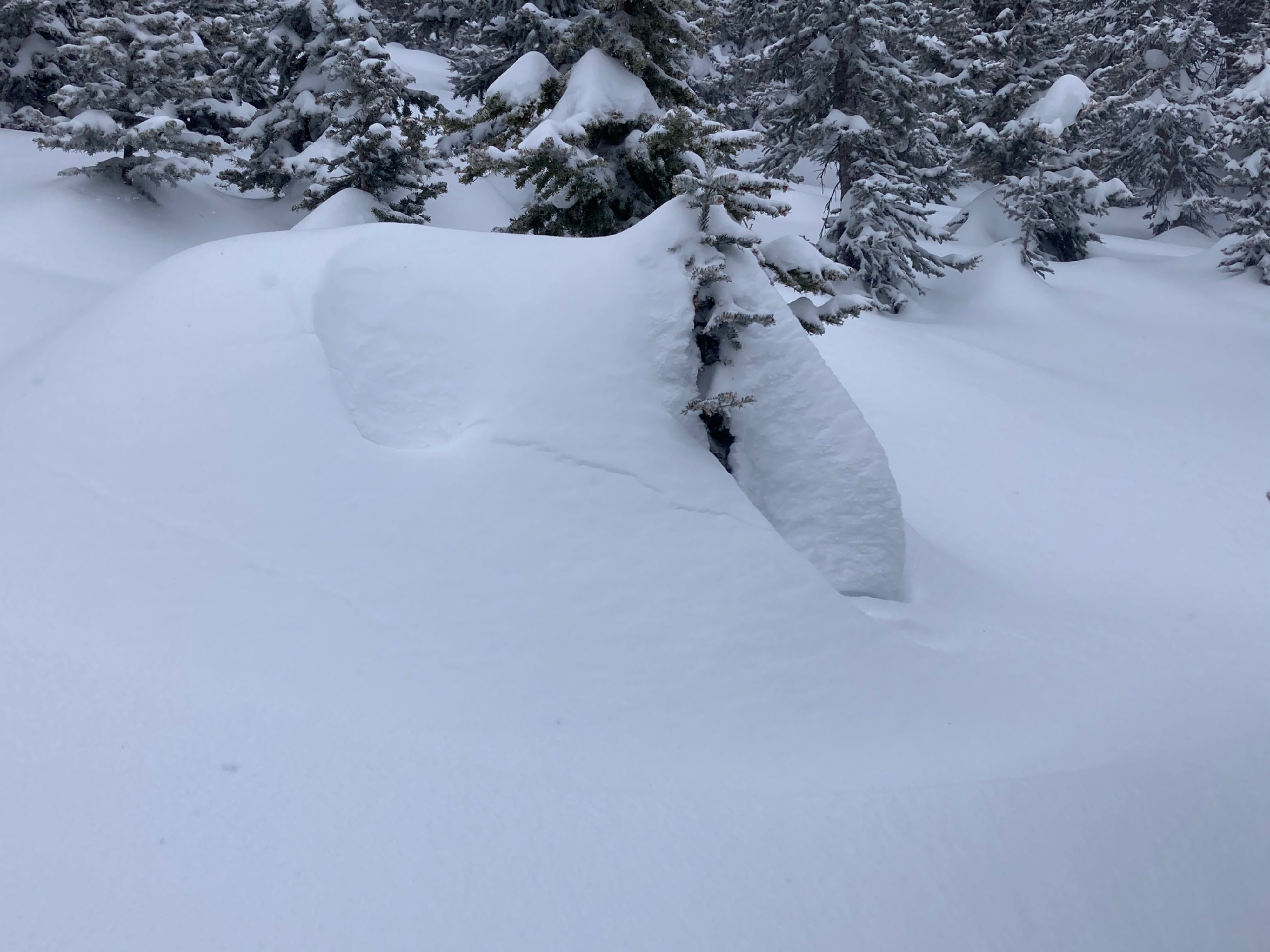
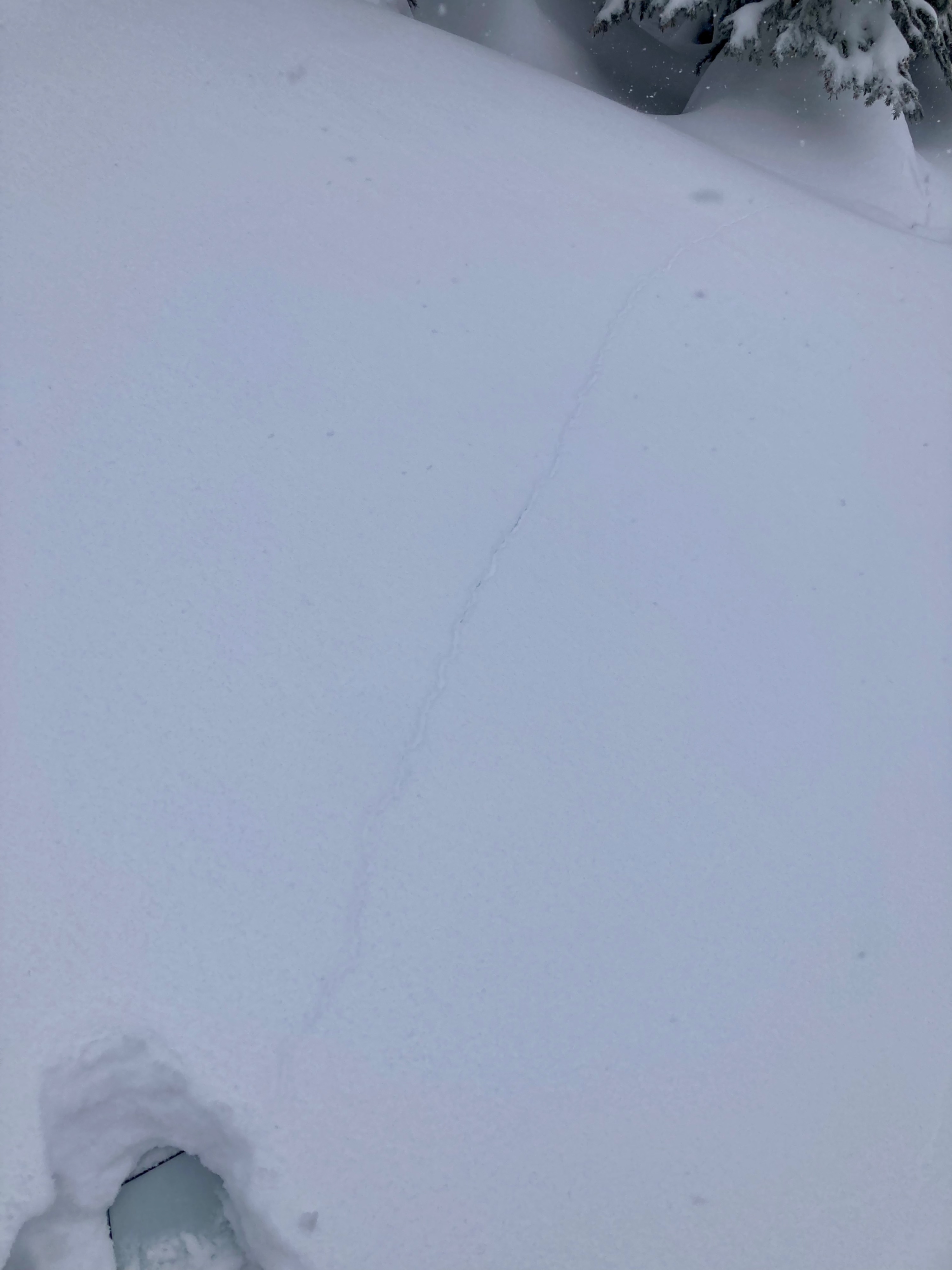
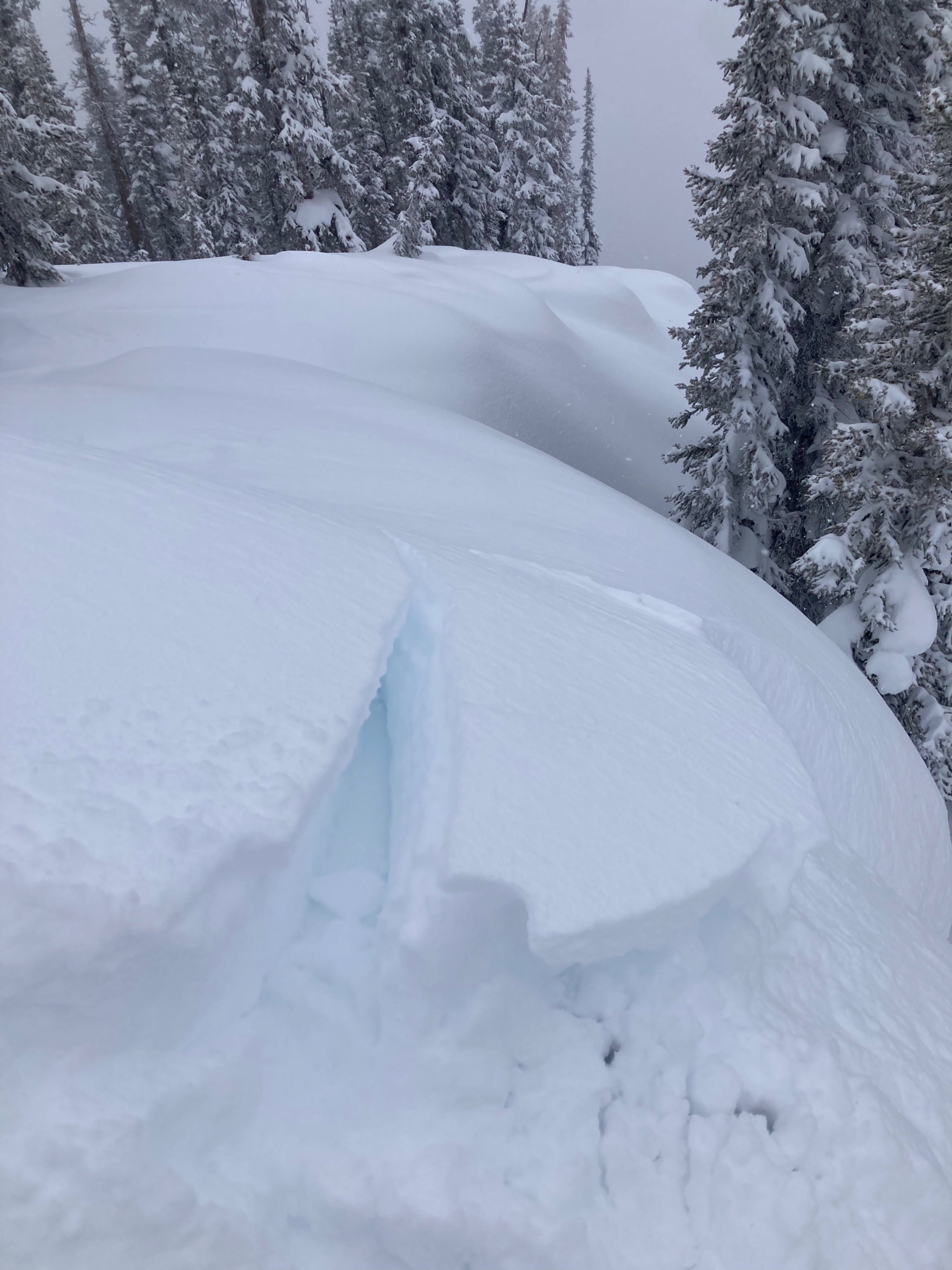
Easily triggered storm slabs about a foot thick on north to east aspects where the slabs formed over surface hoar and facets. A few test slopes on steep southerlies suggested better bonding to the crust. Signs of instability were fairly frequent on buried surface hoar but subtle: collapses were very quiet and tiny cracks would pop up on settlement cones 20 or 30 feet away.
Soft collapses and subtle cracks were common in open/sparse glades below about 10,800, where the buried surface hoar was massive (>1cm). Signs of instability were less common above that, except a few collapses on drifted wales.Weather
- Cloud Cover
- overcast
- Wind Loading
- light
- Rain Elevation
- N/A
- Recent Snowfall
- 35
- Snow Avail For Transport
- large amounts
About 30 cm storm total when we got there at 9 a.m. Moderate snowfall rates (S3) until we left at noon. Trees were shaking from northwest winds, but we didn't see a whole lot of wind transport happening here. I suspect in other areas it was more significant.
Avalanche
- Size
- D1 R1
- Type
- SS
- Count
- 3
- Aspect
- NE
- Trigger
- AS
- Elevation
- 11000 ft
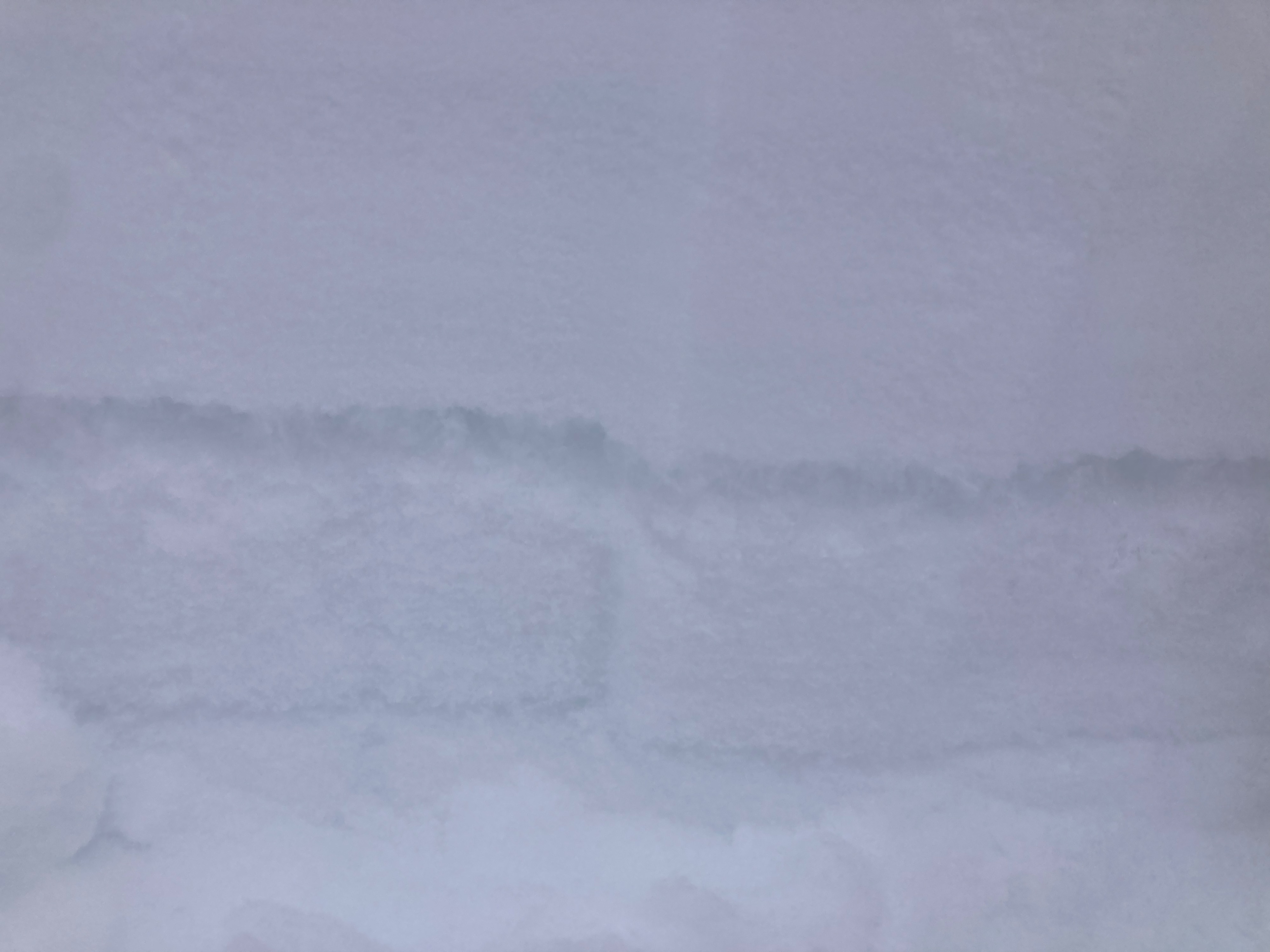
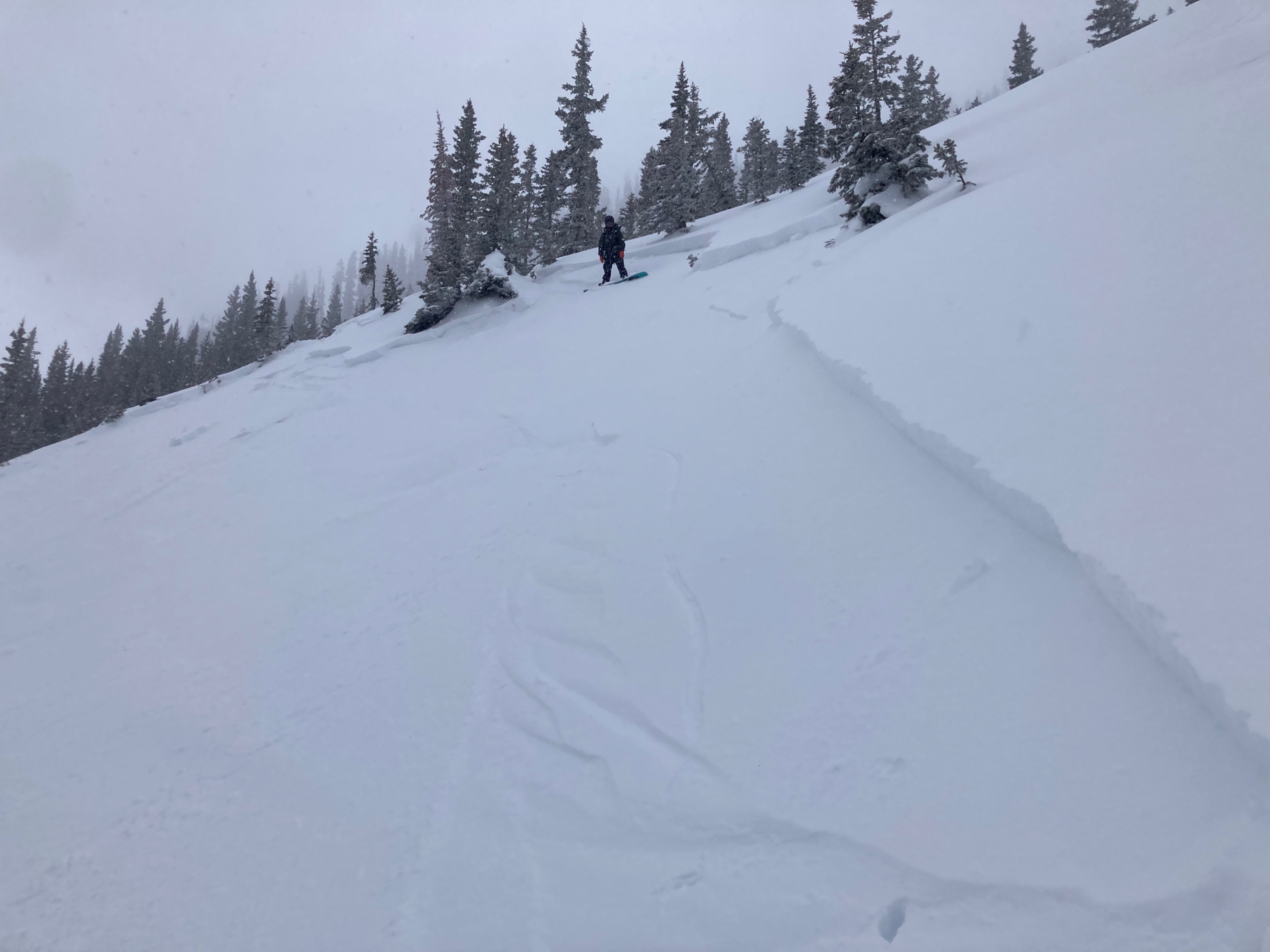
Intentionally ski cut several storm slabs that were about 10" to 12" thick. These were all D1 to D1.5s on relatively small terrain features facing northeast and east. I only inspected one crown closely and it failed on near surface facets, no surface hoar at that location. No naturals were observed.