

Quick report
- Collapsing
- isolated
The mountains and the snowpack have gotten much quieter over the last several days. Backcountry users have slowly stepped into more aggressive terrain without incident, but weak layers in the upper snowpack are not free from concern. Snowpack tests continue to propagate failures and audible collapsing is still present - albeit with less predictability. Conservative terrain decisions is the best way to manage lingering uncertainty around stability.
Cracking was confined to drifted areas near ridges and on side walls of gullies.Weather
- Cloud Cover
- obscured
- Wind Loading
- none
- Recent Snowfall
- 10 to 20
- Snow Avail For Transport
- moderate amounts
Obscured skies with S1-1+ snowfall and light winds. It was by far the warmest storm day in some time in the mountains. Snow fell as mostly columns and plates.
Snowpack
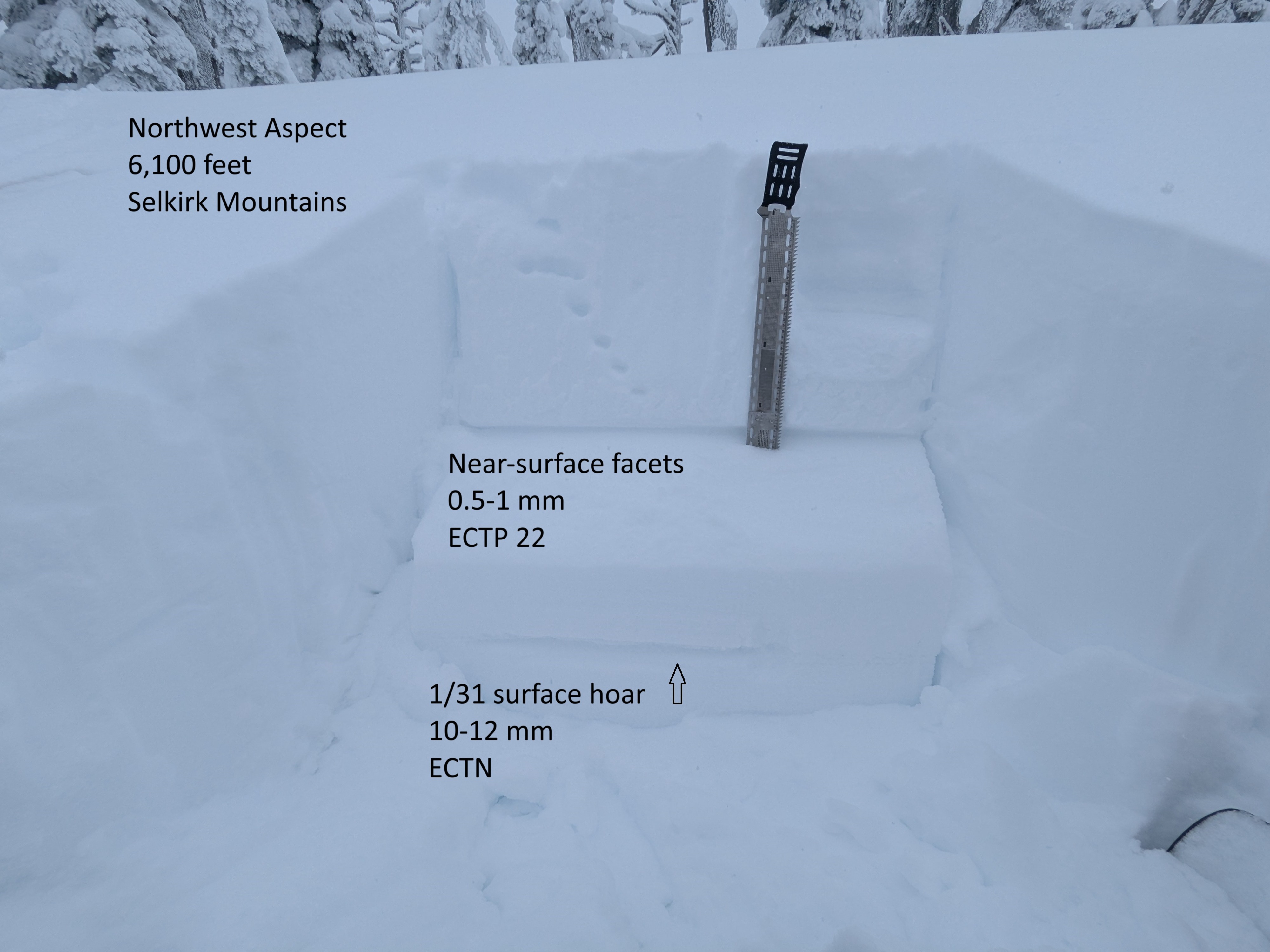
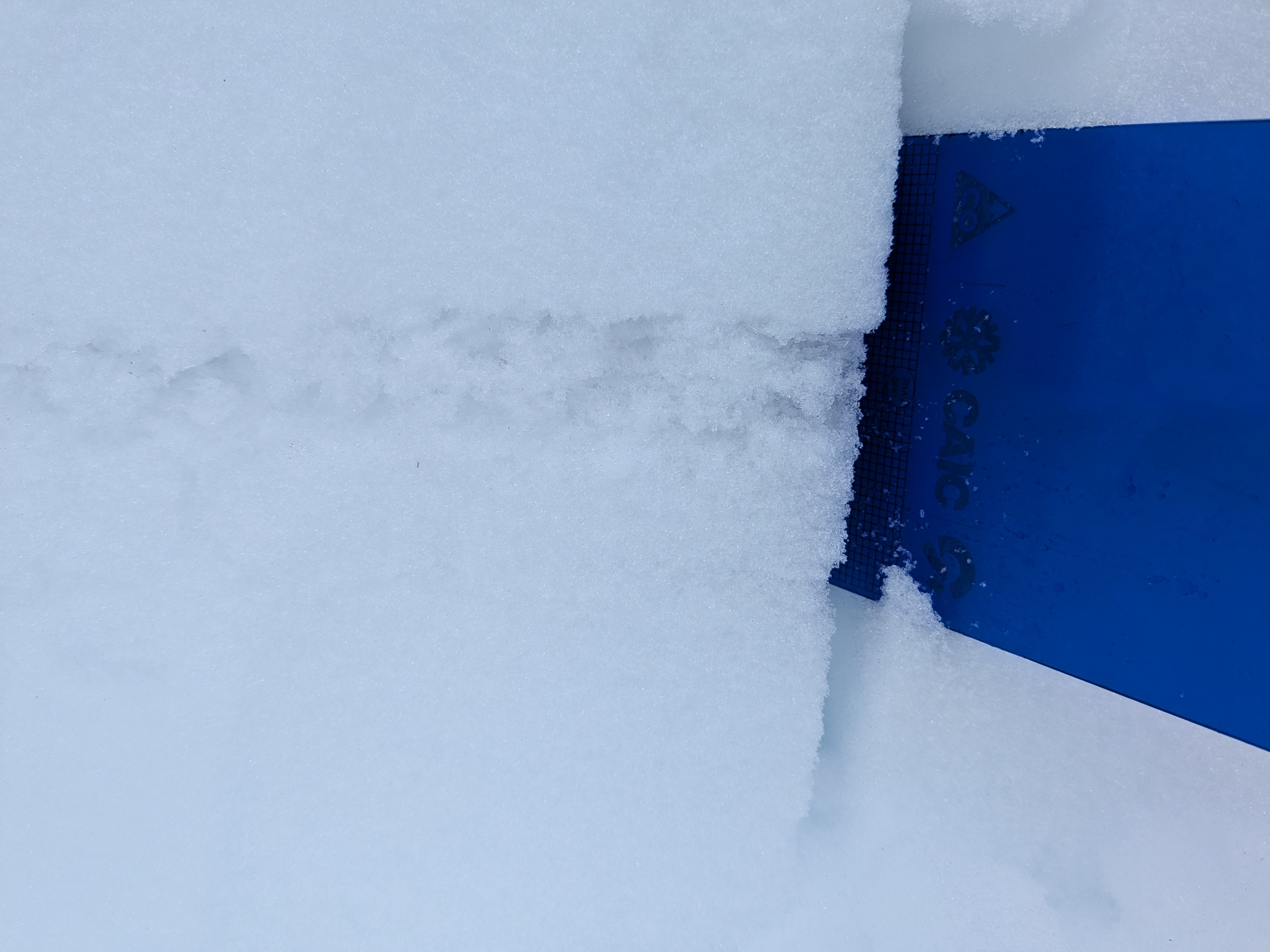
We found the January 31 surface hoar layer down 50 to 60 on northeast and east-facing slopes. In our snowpit at 5,800 feet, these grains produced ECTP 16 and sudden planar failures with 18 taps in CTs. We dug our pit in a similar location as our last visit, but did not experience the same audible collapses as last time. Digging on a northwest-facing slope at 6,100 feet, we found a reactive layer of near-surface facets (0.5-1 mm) sitting about 15 cm above the January 31 surface hoar interface. These near-surface facets were down around 45 cm and is likely a storm/ density change layer that faceted with cold temperatures and shallow burial. In our northwest pit, CTs produced sudden collapse failures with 28 taps in the buried surface hoar, and no ECT results. The slab above was notably stiffer and likely more wind-drifted than in our other pit on a more sheltered slope. By the afternoon, we started to observe cracking along the skin track on sunny slopes where a thin, breakable crust sits below the storm snow. Snowfall over the last couple of days seems to be settling faster than its accumulating with around 10 to 20 cm of new snow between 5,000 and 6,200 feet.