
Quick report
- Cracking
- Observed
Variable rain lines have left the lower elevations in the Silver Valley-Bitterroots with only small amounts of snow. Above 5500-6000, the snowpack depth changes significantly and currently resembles something closer to winter. Strong to extreme winds, swinging temperatures, and oscillating precipitation types have made for varying conditions across the zone. Over 1 foot of new snow since late March has brought in some fresh, new snow avalanche problems.
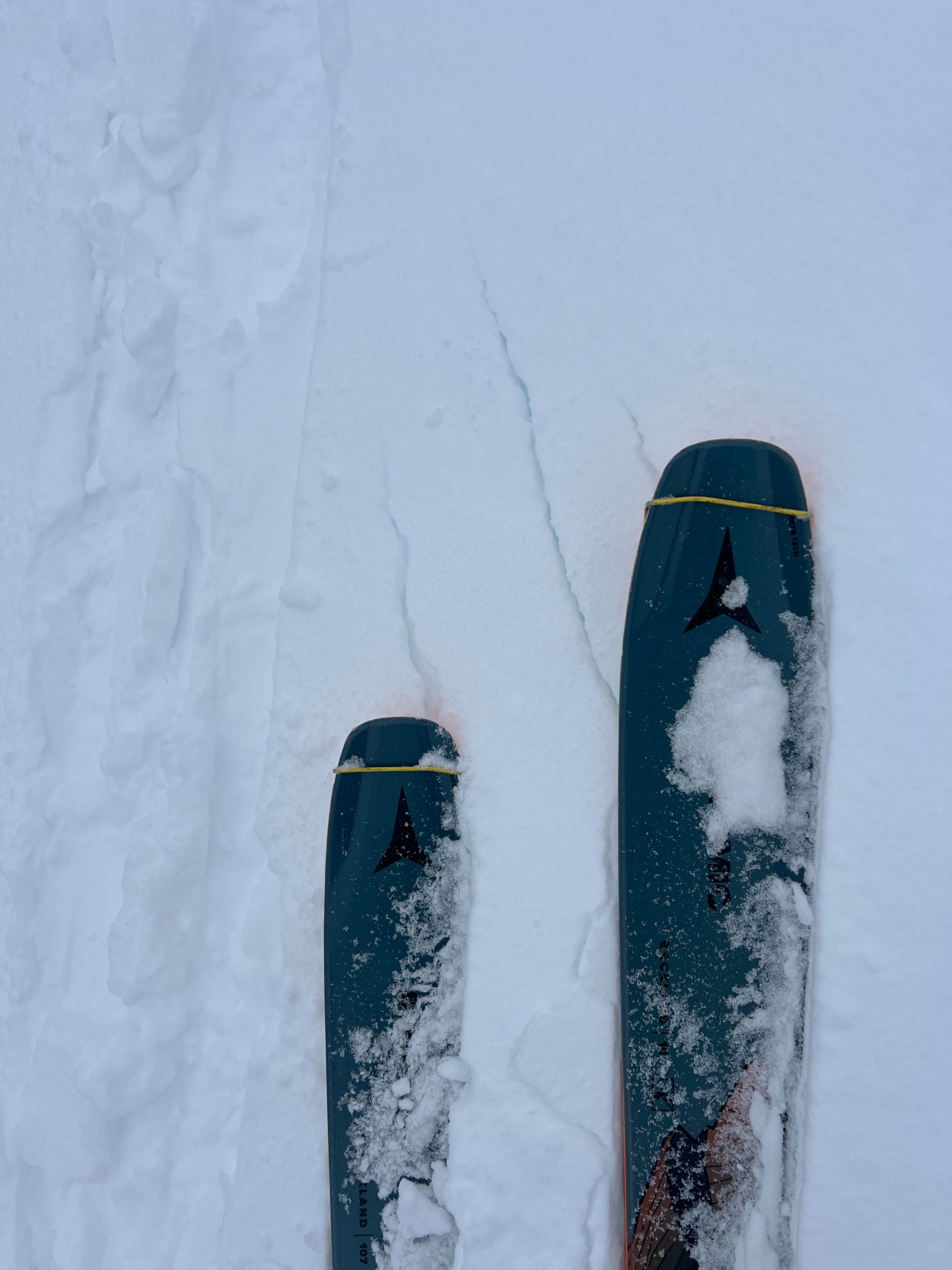
Cracking occurred between our skis on slopes that had denser snow and had been affected by the wind. We could get small pockets of snow to pop out cutting between each other's ski tracks. Snow was actively being transported by strong wind gusts.Weather
- Cloud Cover
- overcast
- Wind Loading
- moderate
- Rain Elevation
- 3000
- Recent Snowfall
- 17
- Snow Avail For Transport
- moderate amounts
S-1 snowfall persisted for most of the day, with the rain line in the morning hovering around 3000 feet. Blustery conditions up high, with strong to extreme winds primarily blowing from the west. The wind swirled and switched directions around the different basins and terrain features. Temperatures were mild, but the high humidity made it feel colder than what the stations were reporting. By the evening, precipitation lessened, and there was a very light wintry mix up to 5000 feet.
Snowpack
Snowfall that started on Wednesday evening delivered around 7 inches of new snow. This recent April snow fell on top of a widespread, very thin and brittle crust (4F). Below the brittle crust sat around 4 inches of snow that fell at the very end of March and had settled out. While the late March snow had a higher moisture content, the most recent snow was lighter density and made the slab generally "right side up". The combined foot or so of snow developed on a very thick, slick, and robust crust, which has been successful at bridging any lingering instabilities below it.
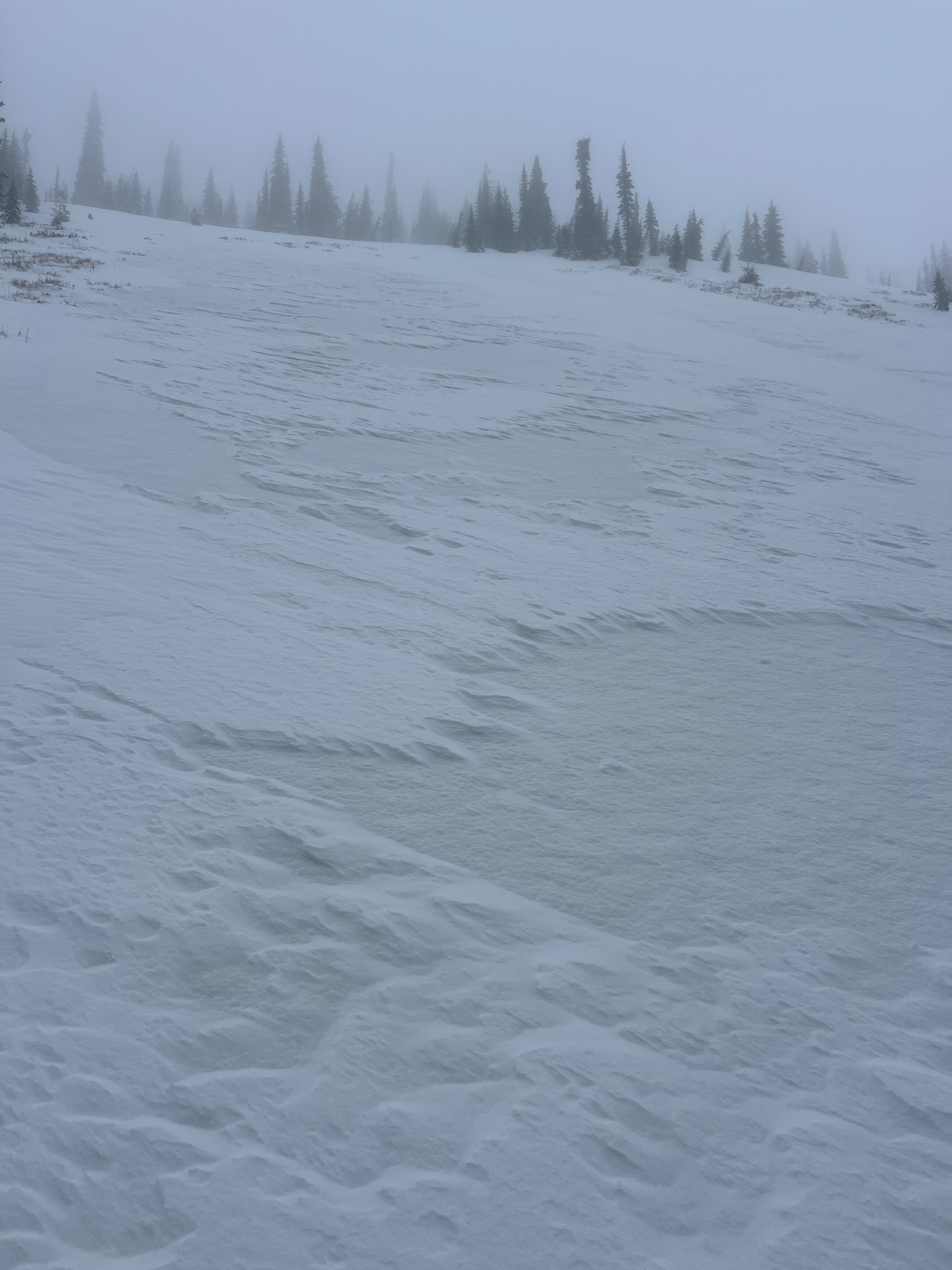
Evidence of strong winds could be seen on both east and west-facing aspects. Interestingly, small cornices had formed on both aspects. Mid-slope terrain features on east-facing aspects had snow stripped down to the thick crust, with the redeposited snow sitting on the opposite side. Slabs were denser around ridgelines, but overall less reactive than expected.
Snow would easily sluff in steep terrain and carry long distances, sliding on the thick crust. While the new snow is a welcome sight, conditions still remain extremely variable. Most of the terrain below tree line is melted out, and there is a growing difference between upper and lower elevations.
Avalanche
None observed.