
Quick report
- Cracking
- specific
- Collapsing
- specific
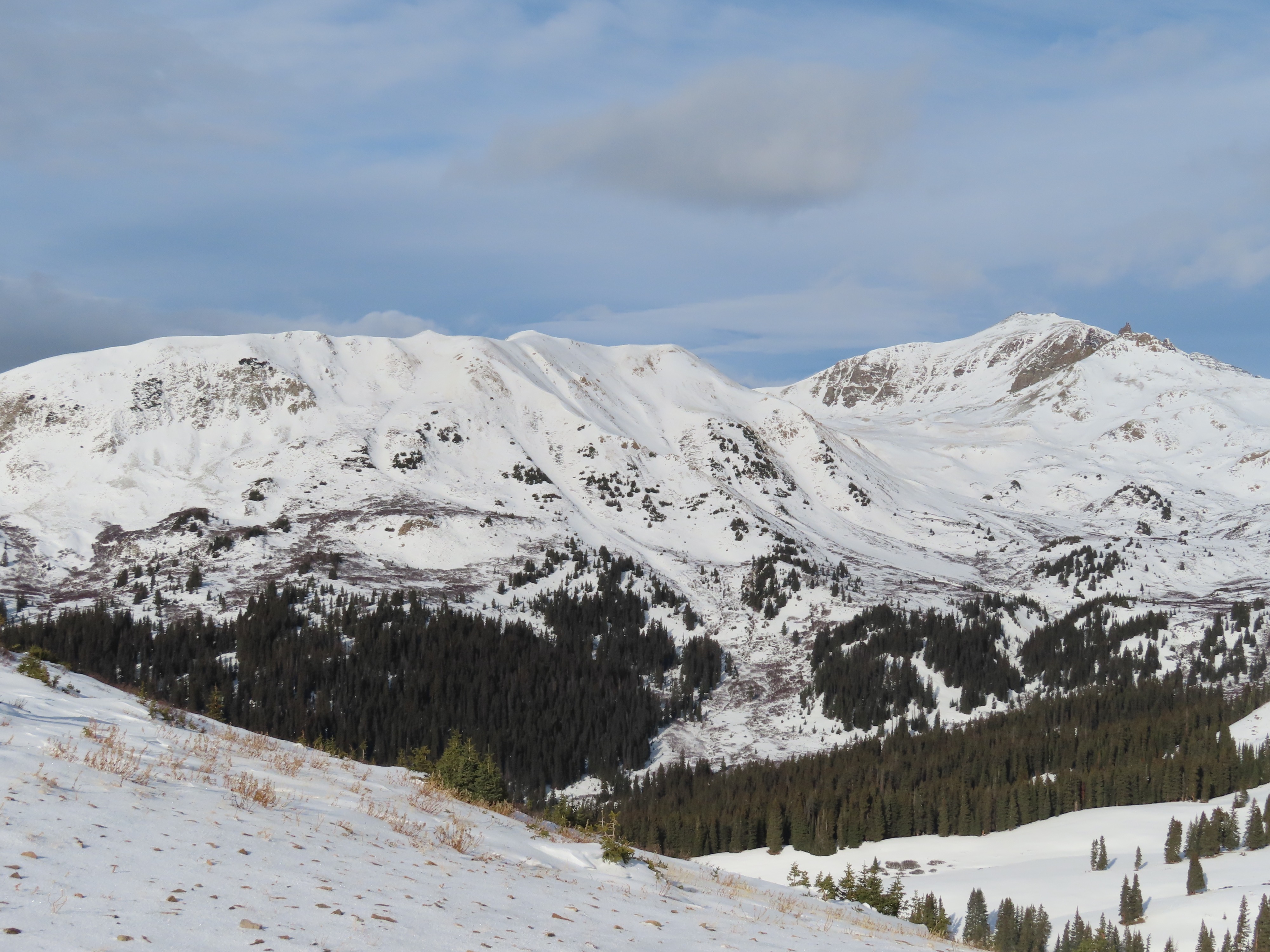
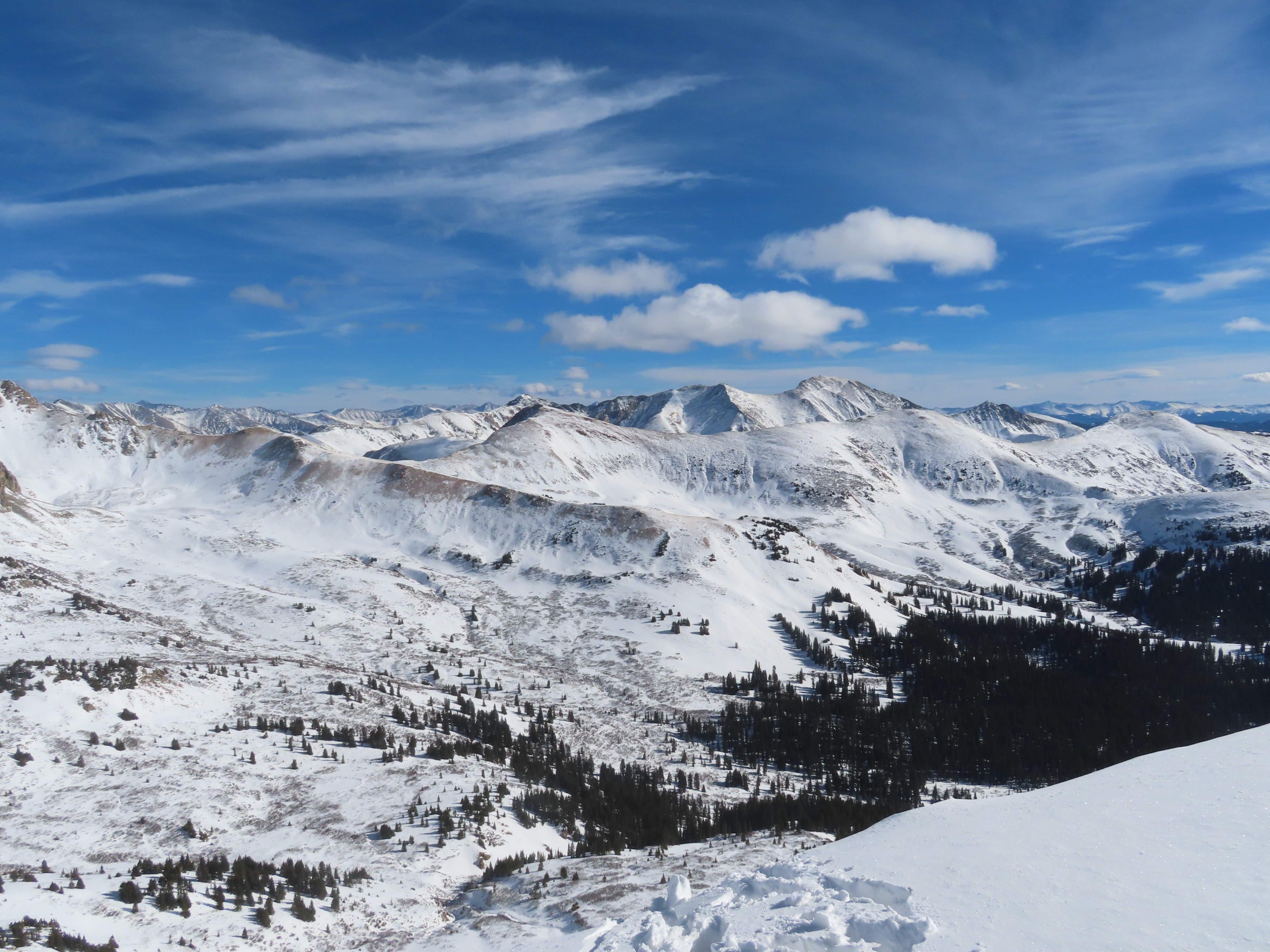
Wallowy facet fest! The snowpack is thin, weak, and faceted except on the southern quadrant, which has either melted out or holds thicker, stronger crusts. Despite getting several notable collapses in flat, sheltered terrain, I had trouble finding more than a few features of concern in steeper terrain of Carbonate and Hunter Hill, thanks to significant wind erosion. I felt comfortable moving through complex terrain while avoiding a few concave features that appeared to harbor thin hard slabs.
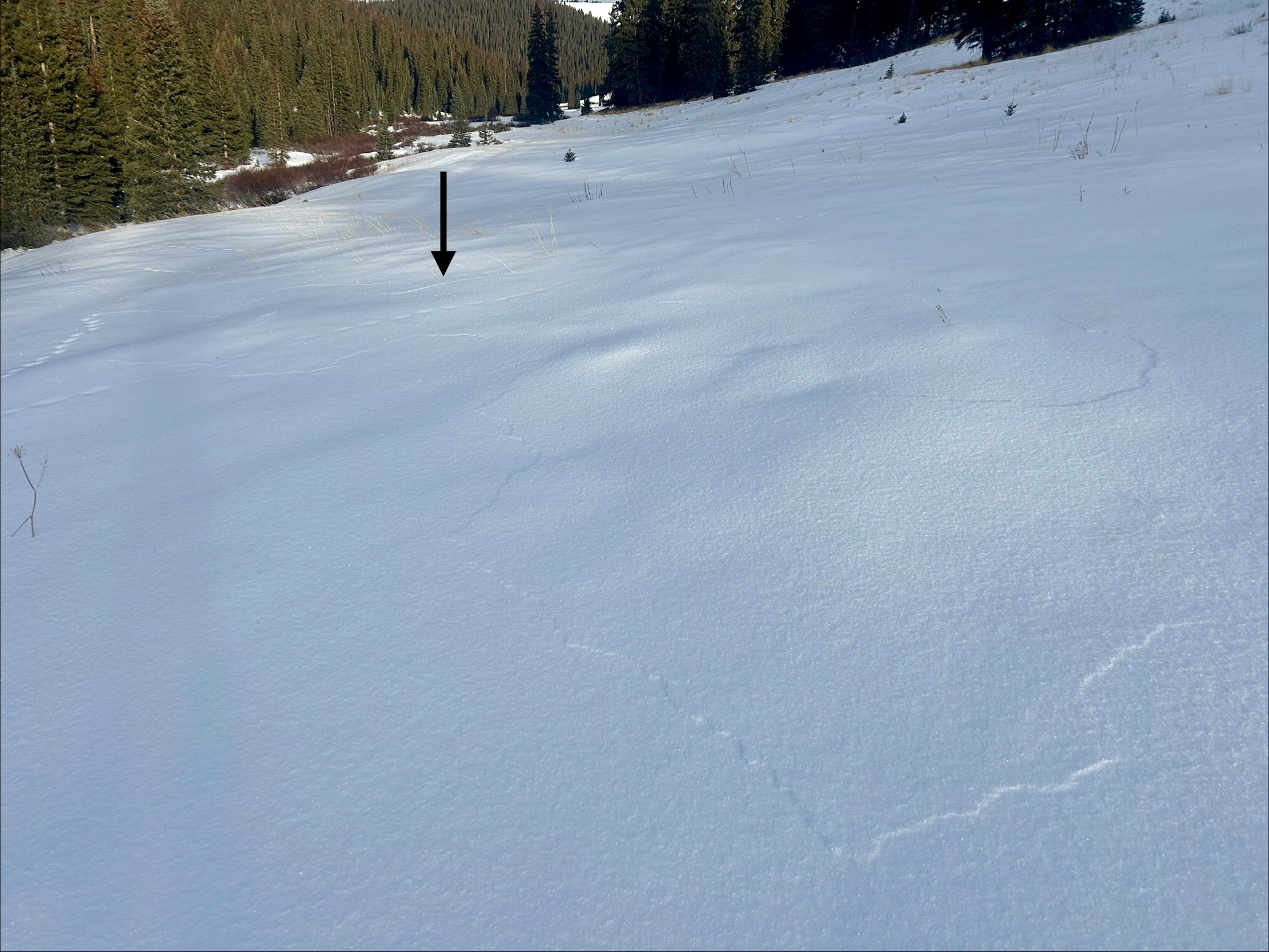
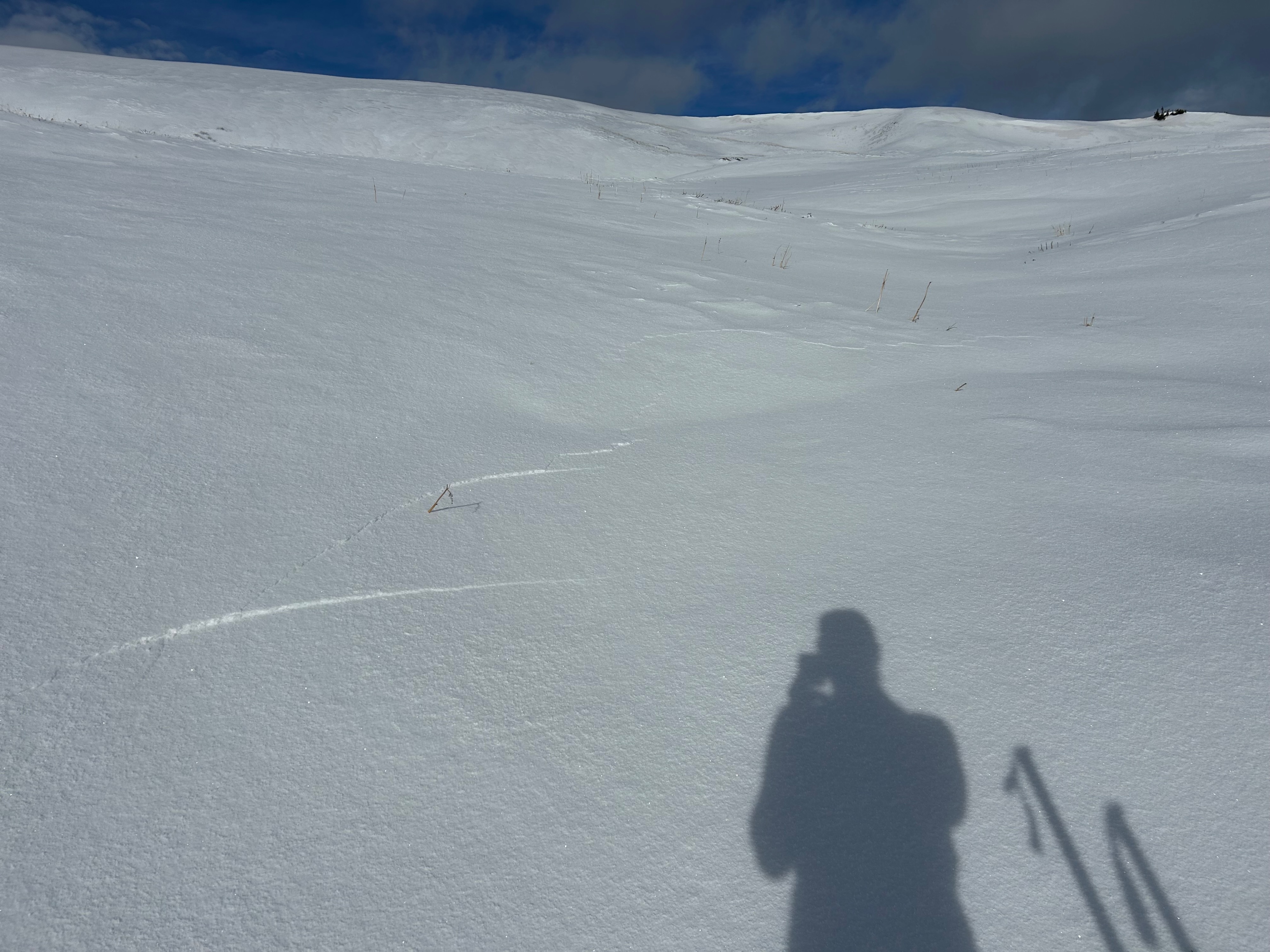
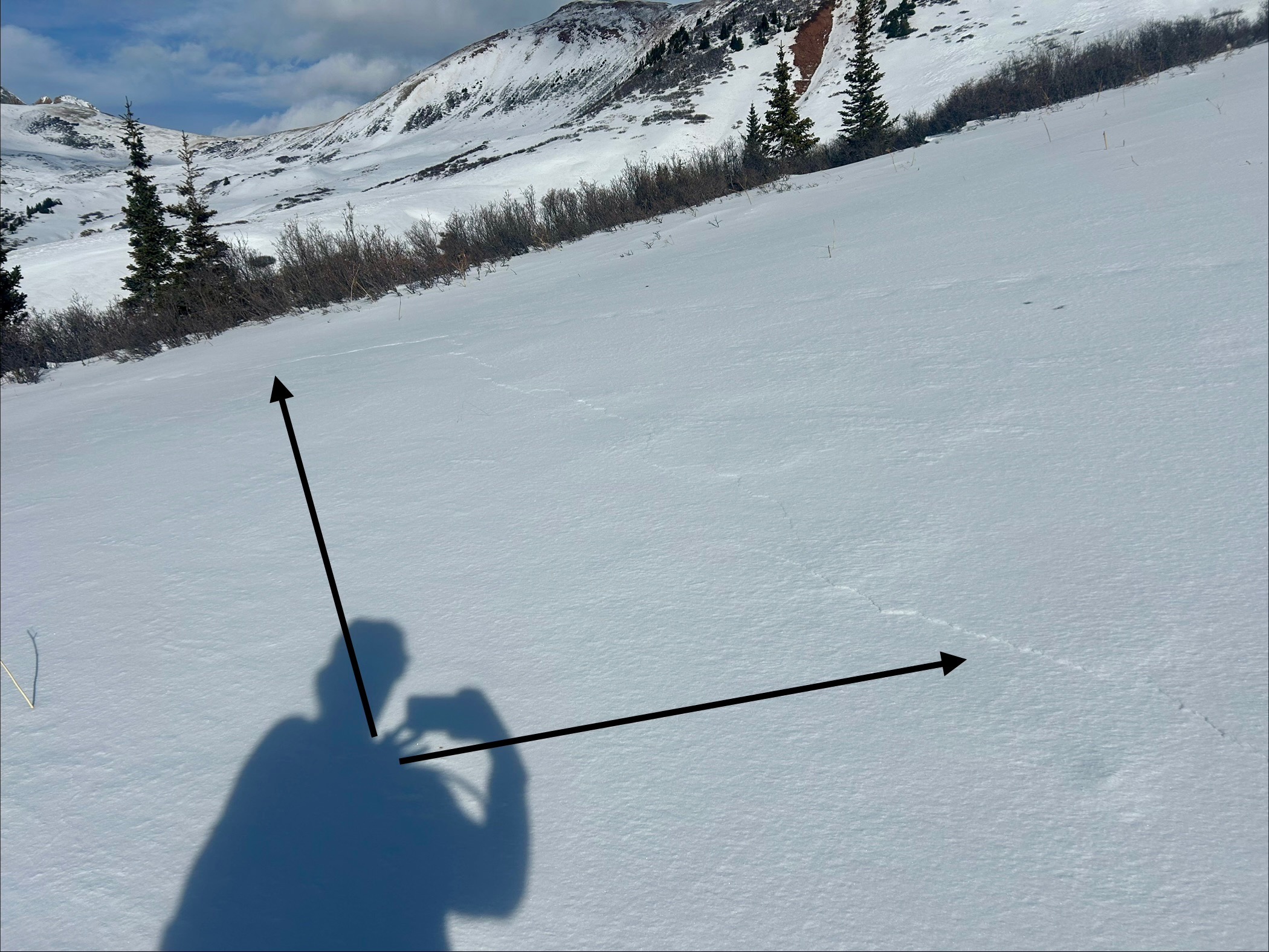
Two flavors of collapsing/cracking: In relatively flat, sheltered terrain above 10,800', the 11/30 facet layer produced consistent feedback, about a foot deep below a faceted soft slab. Most often, cracks would radiate a couple feet around my skis, but occasionally, they would create a more audible collapse and radiate 15 to 40 feet. I also observed a few collapses where last week's wind event formed thin, hard slabs over the December dry spell layer. These were in more wind exposed terrain, and only in concave gullies that collected the drifting snow.Weather
- Cloud Cover
- scattered
- Wind Loading
- none
- Recent Snowfall
- 3
- Snow Avail For Transport
- small smounts
Snowpack
Snow depths are typically less than 45 cm, averaging around 30 cm. In wind sheltered terrain N/BTL, ski pen is often close to the ground through fist-hard facets (yet somehow, still producing some collapses). I'd estimate the December drought layer is 1-1.5mm, and the November drought layer is 2mm+. On Carbonate Hill, I targeted steep SE-facing terrain above treeline to see how problematic the December dryspell layer will be. Slopes near the SE/E boundary were nearly all dry facets with a very thin crust. As I moved closer to the S/SE boundary, crusts were thicker, and refrozen percolation columns drained into the facets. On the shady side of the compass above treeline, the December dryspell layer is sometimes capped by hard, windpacked rounds (wind crusts), which vary from 4F to P hard, while other slopes were just weak facets. It looked like thin, hard slabs reside in a few gulley features; I didn't feel comfortable assessing slab thickness/stability in those terrain features given the consequential terrain I was in.
Avalanche
- Size
- D1.5
- Type
- SS
- Aspect
- E
- Trigger
- N
- Elevation
- 12500 ft
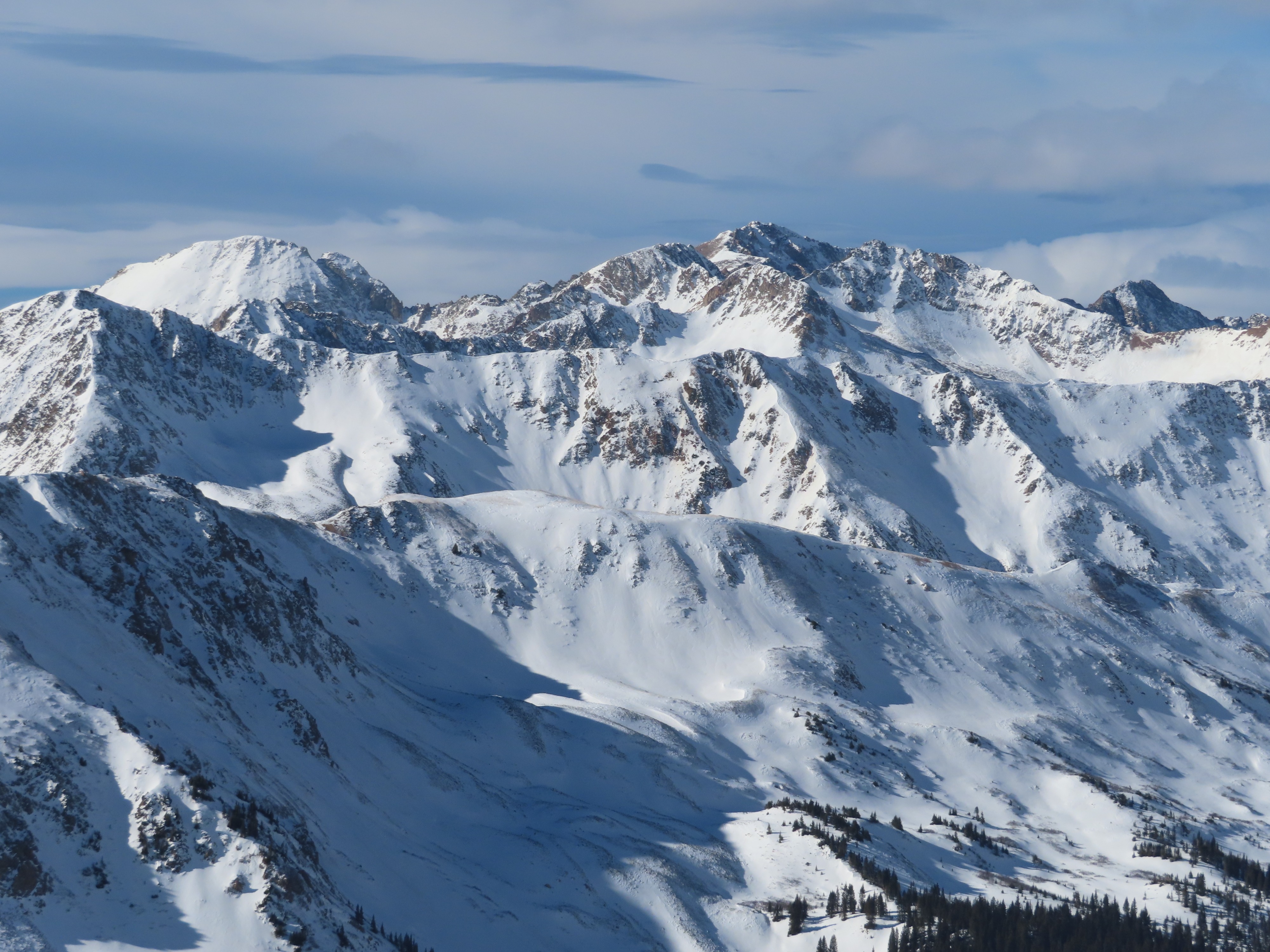
No recent activity. A few D1-D1.5s ran off of Carbonate Hill during the 12/6 storm.