
Quick report
- Cracking
- specific
My goals for today were to monitor the distribution and sensitivity of our storm slab and wind slab avalanche problems near and below treeline (NTL/BTL).
Storm slab: Specific distribution- places where the wind hasn't affected harbor a right-side-up slab over the rain crust from New Year's NTL and BTL. I found the sensitivity to be stubborn. ECTP21 x 2 at the New Year's/ New snow interface.
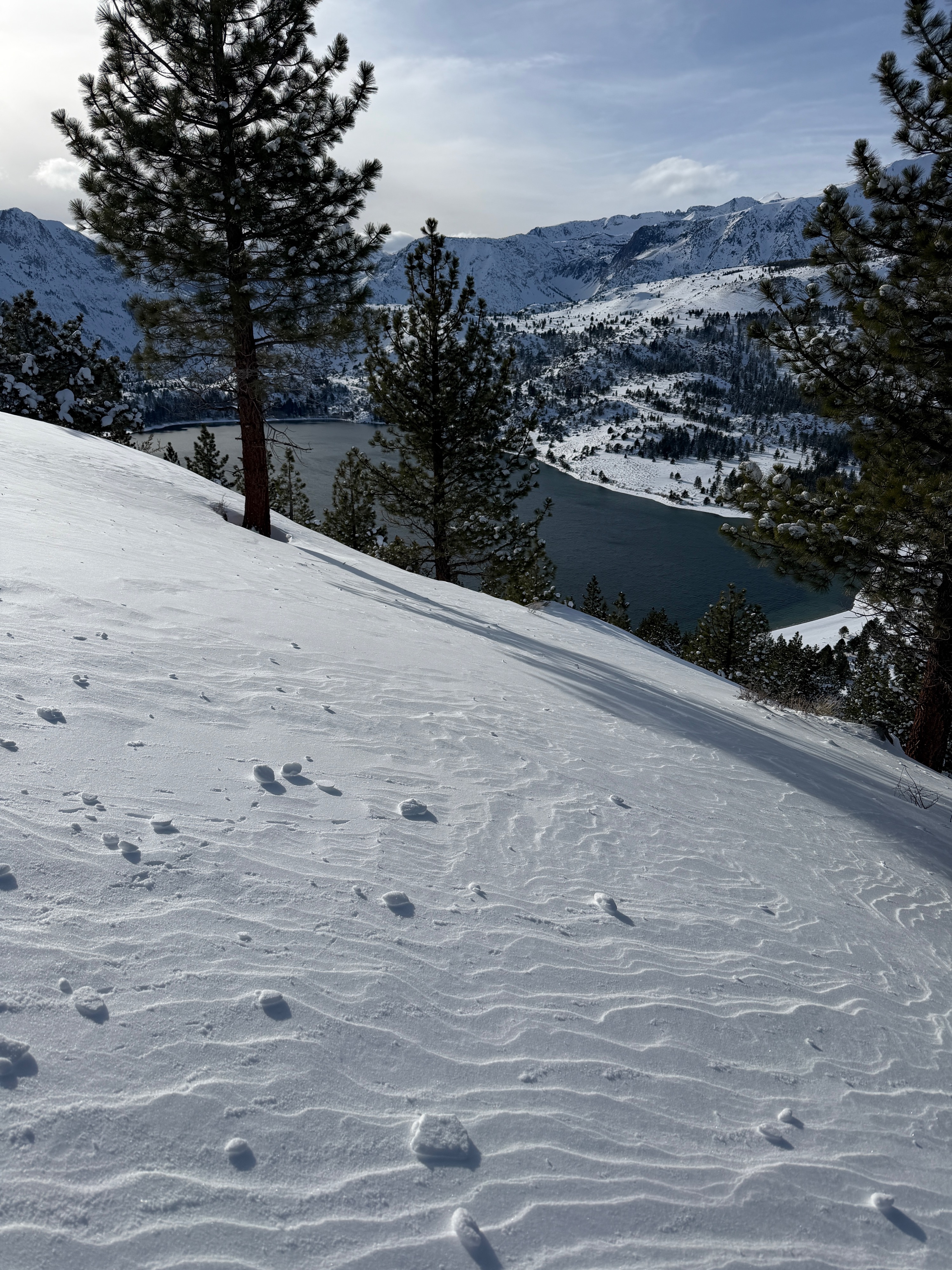
Wind Slab: Specific distribution- places where the southwesterly winds are moving snow and packing it into a cohesive slab. I noted wind-loaded terrain at all elevations. I found the sensitivity to be reactive to a human trigger and avoided steep terrain, holding a wind-stiffened slab at the surface.
I found cracking in specific locations, where wind-drifted snow had left a fresh slab over decomposing fragments.Weather
- Air Temp
- 33
- Cloud Cover
- few
- Wind Loading
- intense
- Recent Snowfall
- 0
- Snow Avail For Transport
- large amounts
Wind. Winds were light to moderate out of the southwest, occasionally gusting strong. As I worked my way into sheltered north-facing terrain, I finally escaped. Our recent storm left generous amounts of snow available for transport, and blowing snow was found at all elevations.
Snowpack
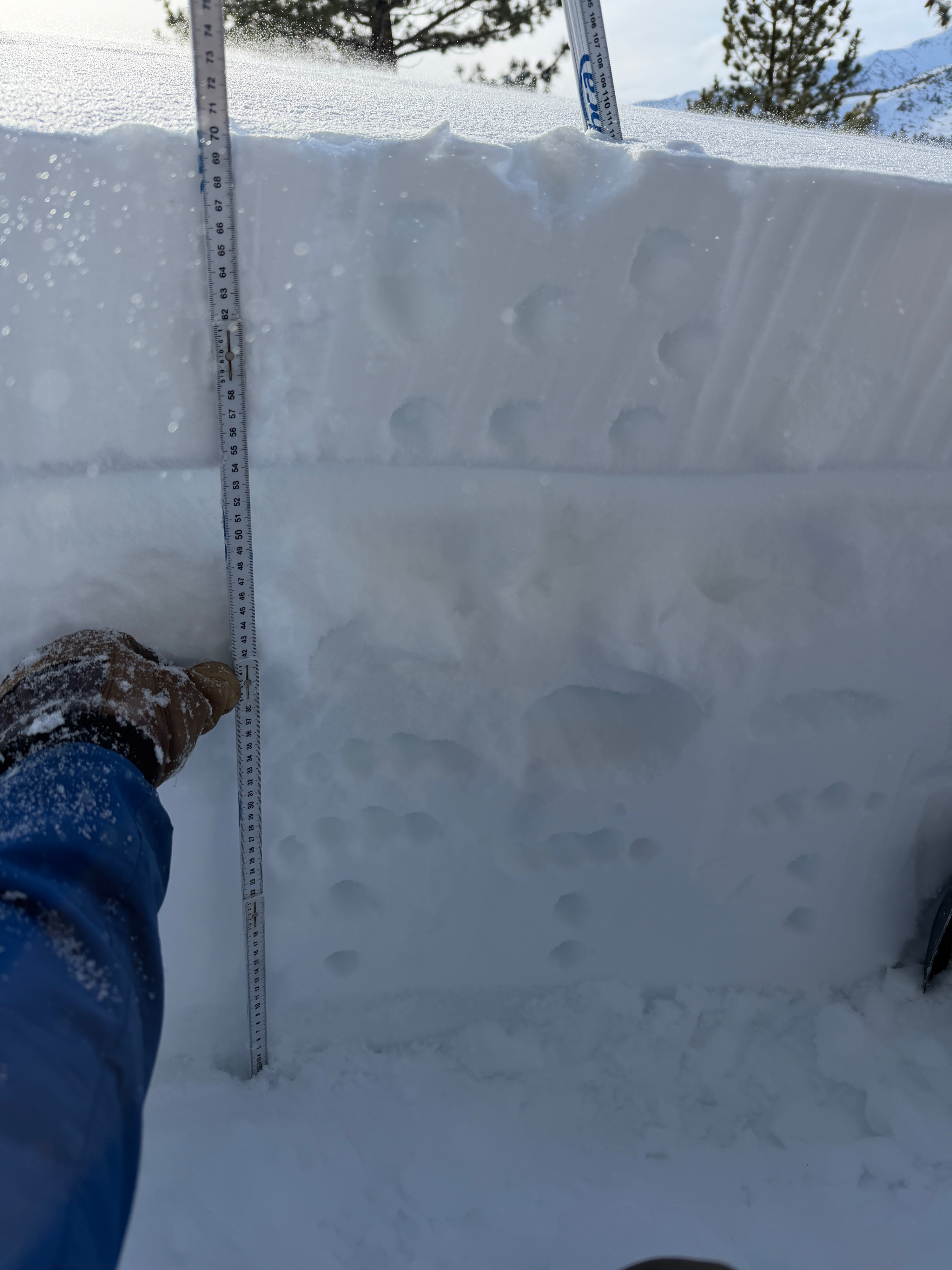
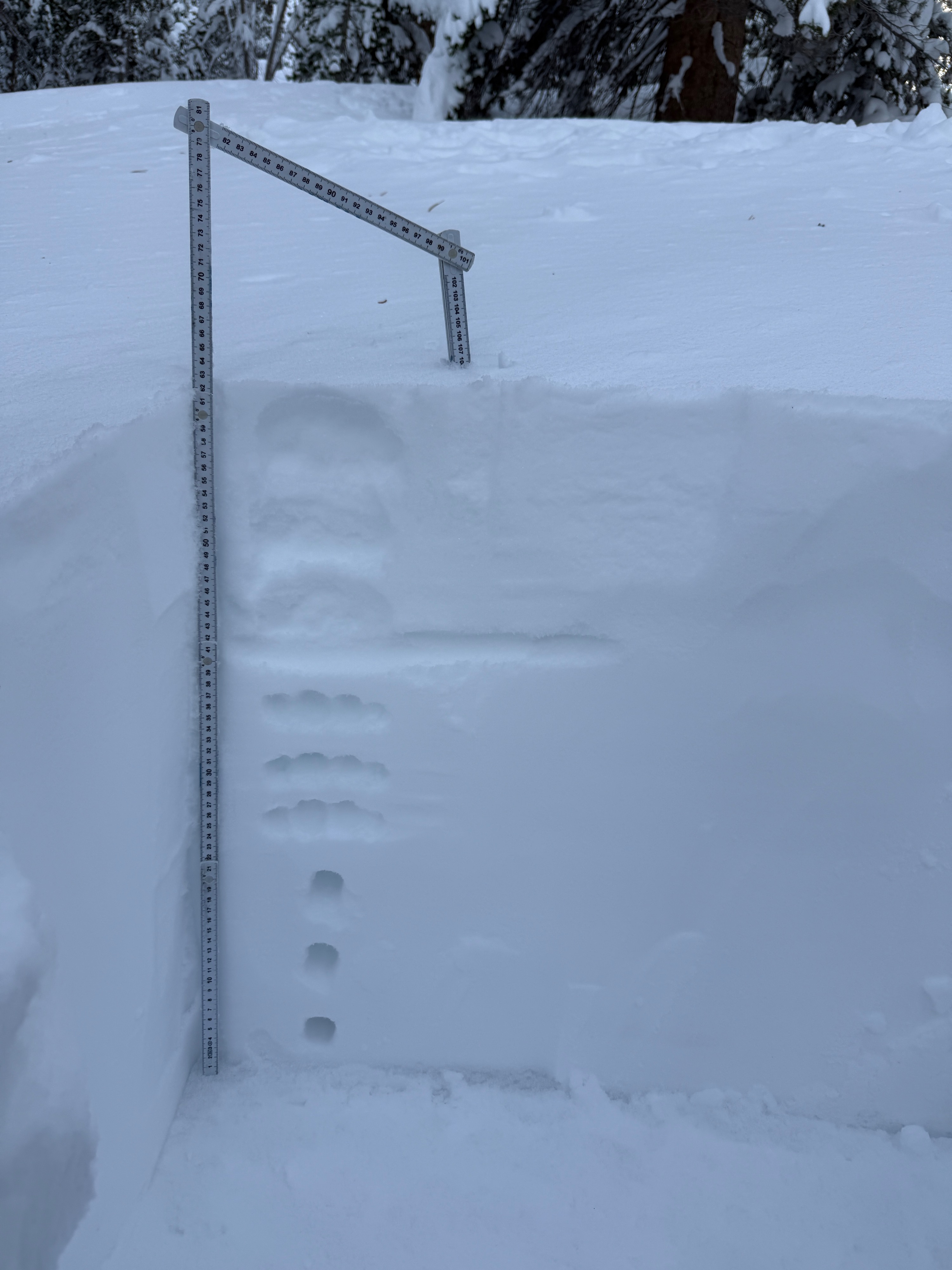
I dug a couple of holes today to get an idea of the structure in the top 120cm post-storm. Around 8900' on a north-facing aspect, I found a location less affected by the wind. I found:
- ~60cm of new snow lying over our New Year's rain crust. This snow became harder with depth, right-side-up. It was primarily comprised of decomposing fragments.
- Small (1mm) facets beneath the New Year's rain crust. In multiple extended-column tests, I had no results on this layer.
- Hard propagating results below our new snow, above the rain crust. (ECTP21 x 2). I found non-persistent decomposing fragments to be the weak layer. The rain crust served as a good bed surface. Our slab is all of the recent settled snowfall.
Where the wind has/is drifting snow, I found:
- 10-40cm of wind-packed rounds (1F) lying over decomposing fragments (F). This strong-over-weak setup is quite fragile, and the slab peeled away when isolated.
- Below the slab, right-side-up, new snow is lying over the New Year's rain crust. Comparable to the location less affected by the wind.
- While I found fresh, shallow slabs at lower elevations, recent natural activity shows a larger slab near and above treeline.