
Quick report
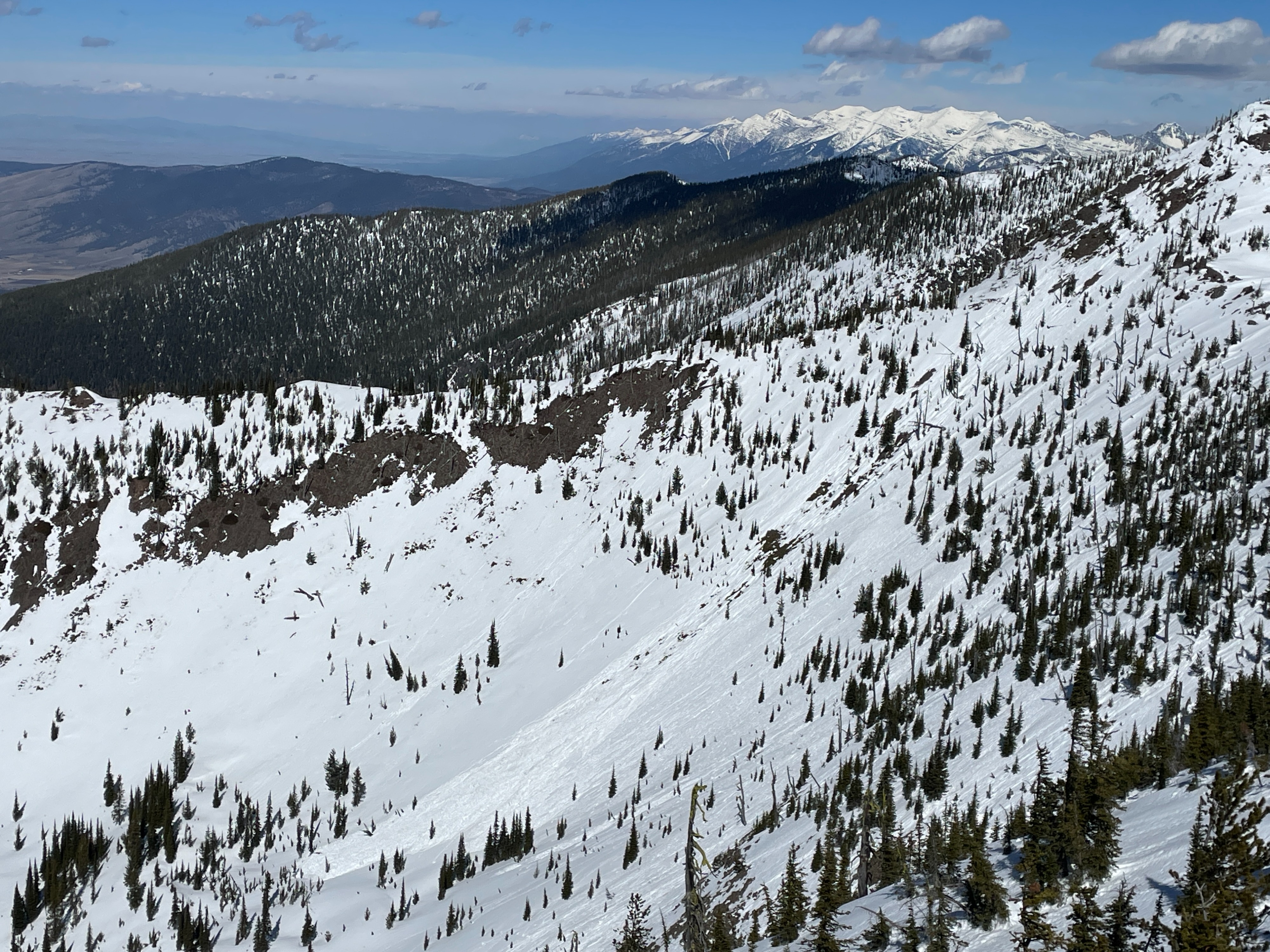
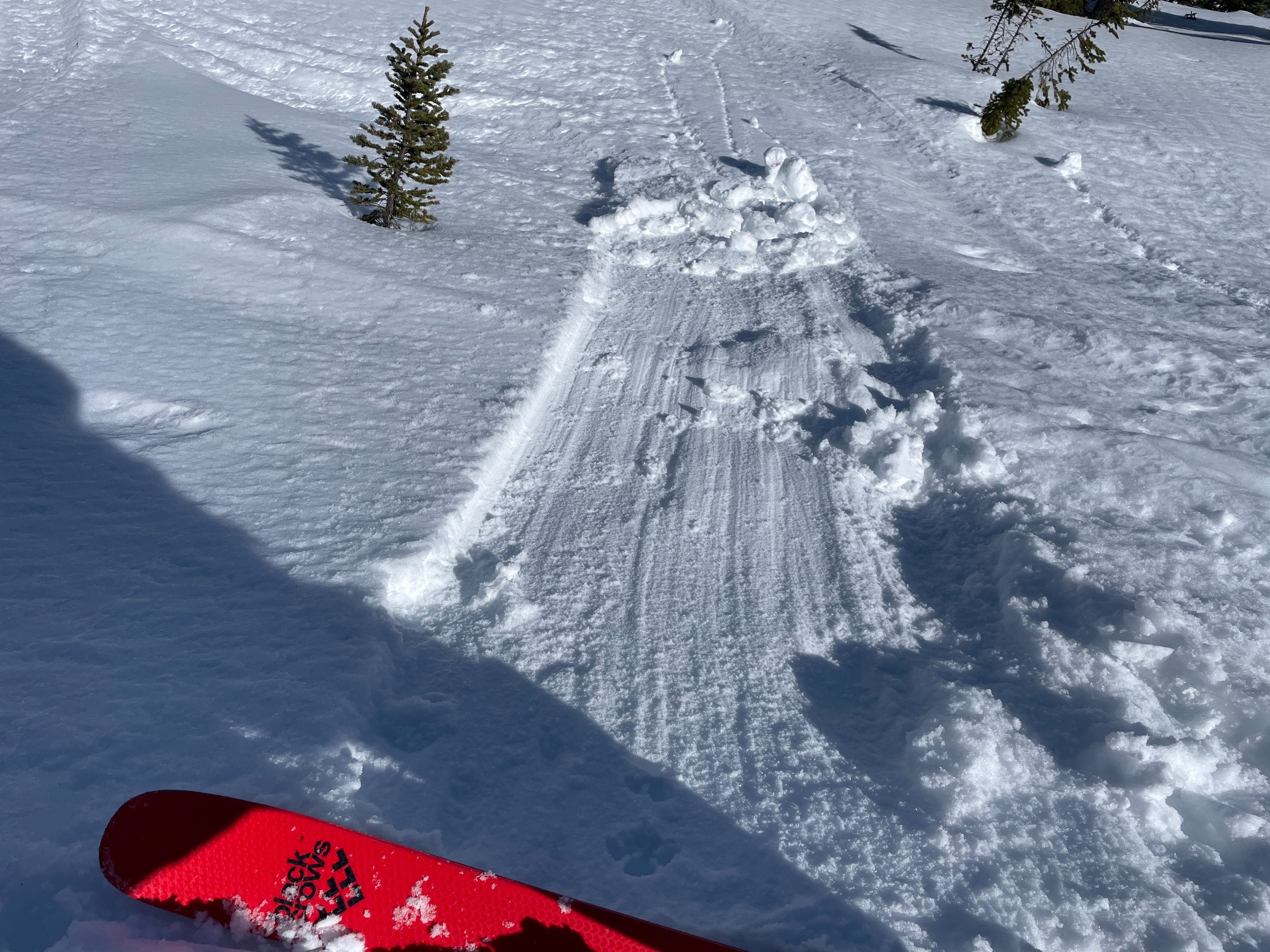
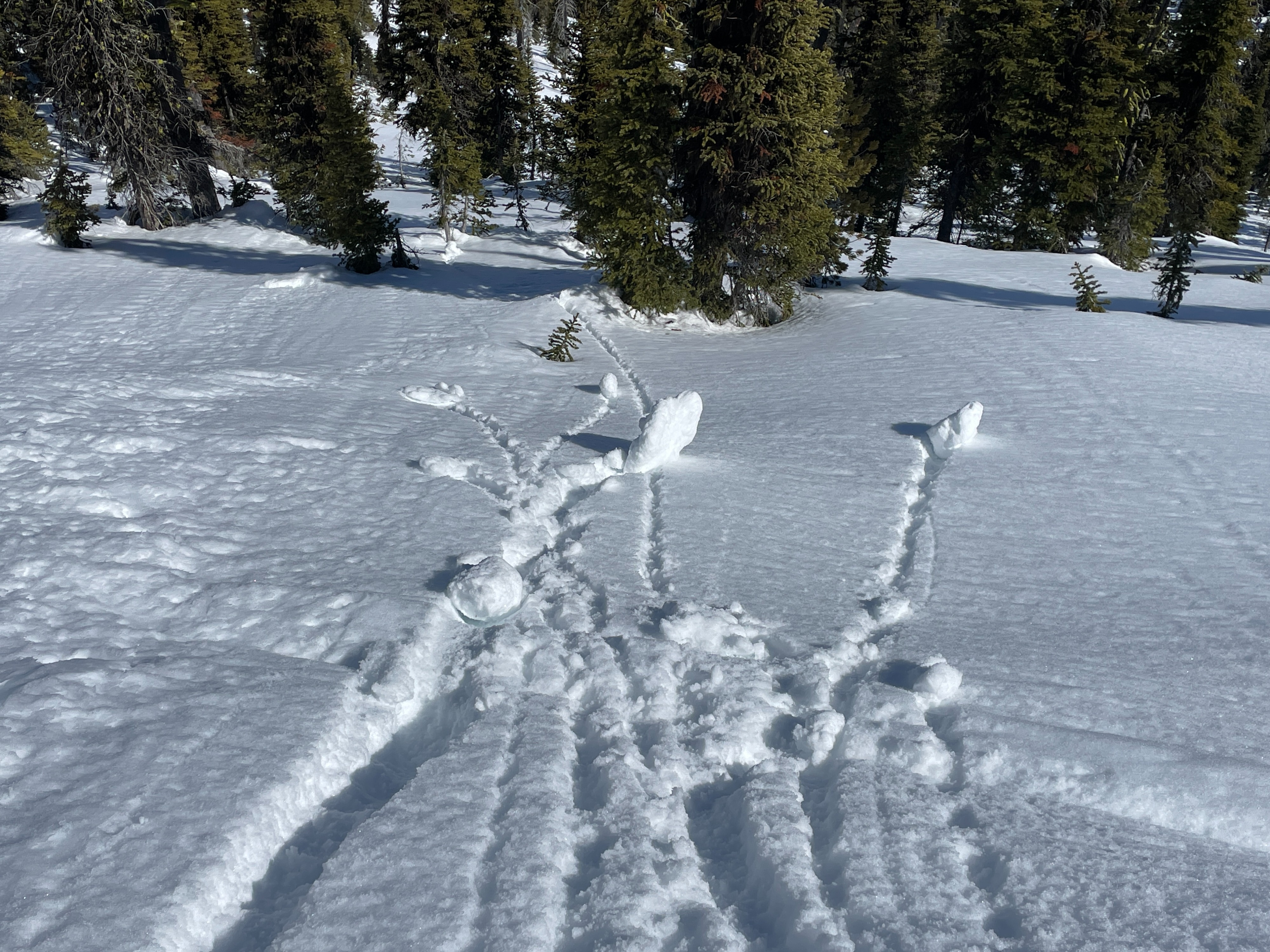
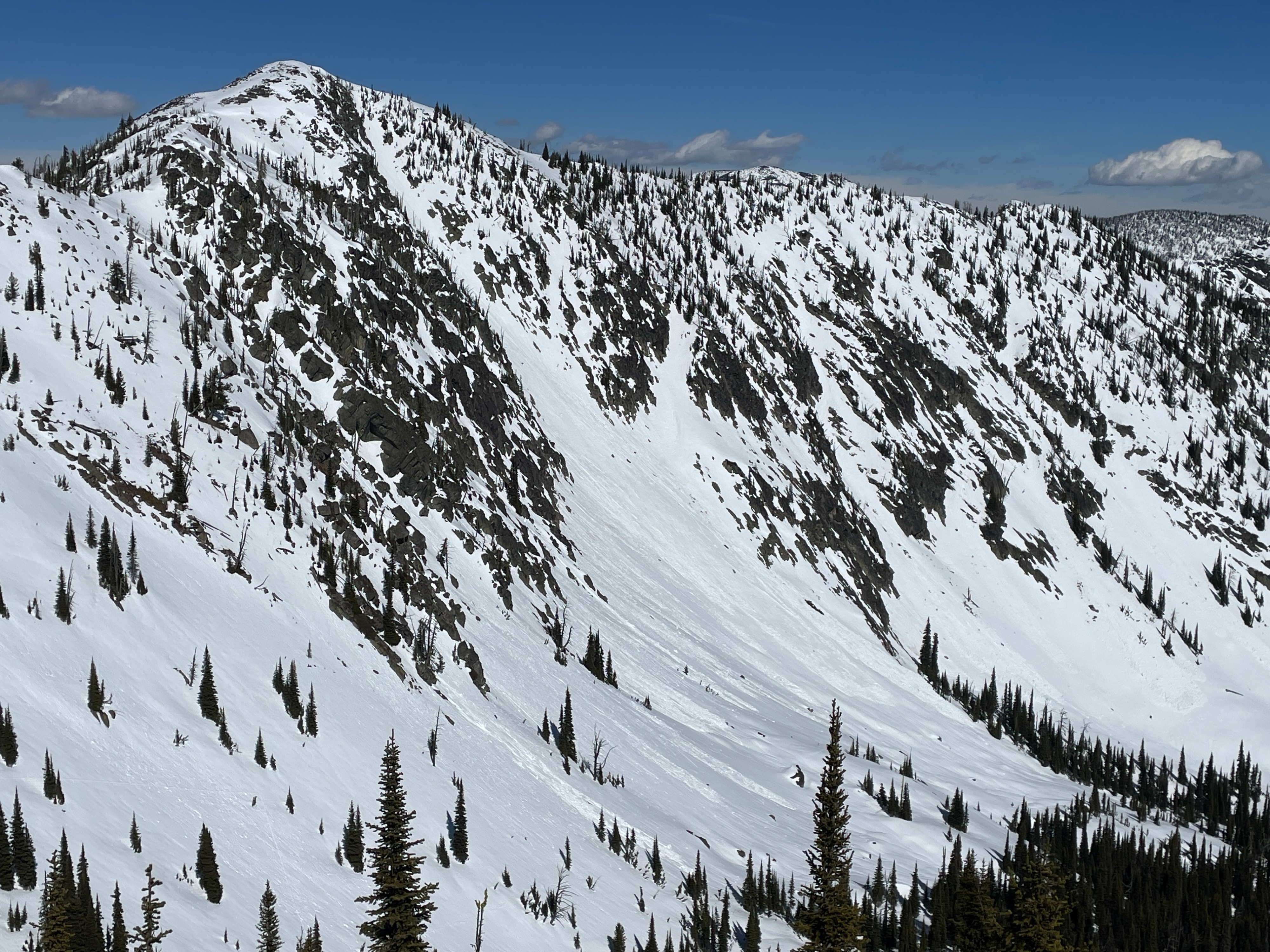
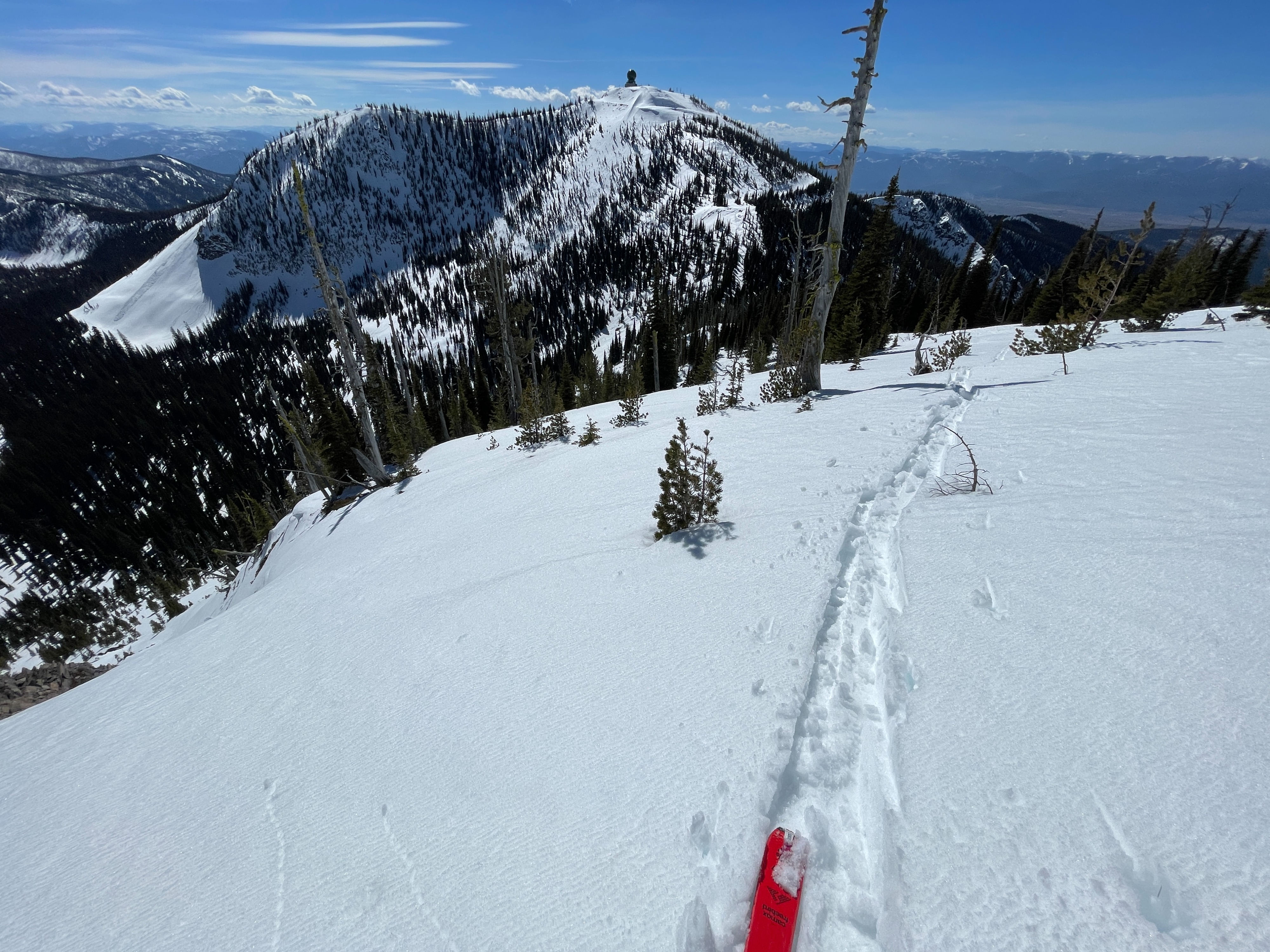
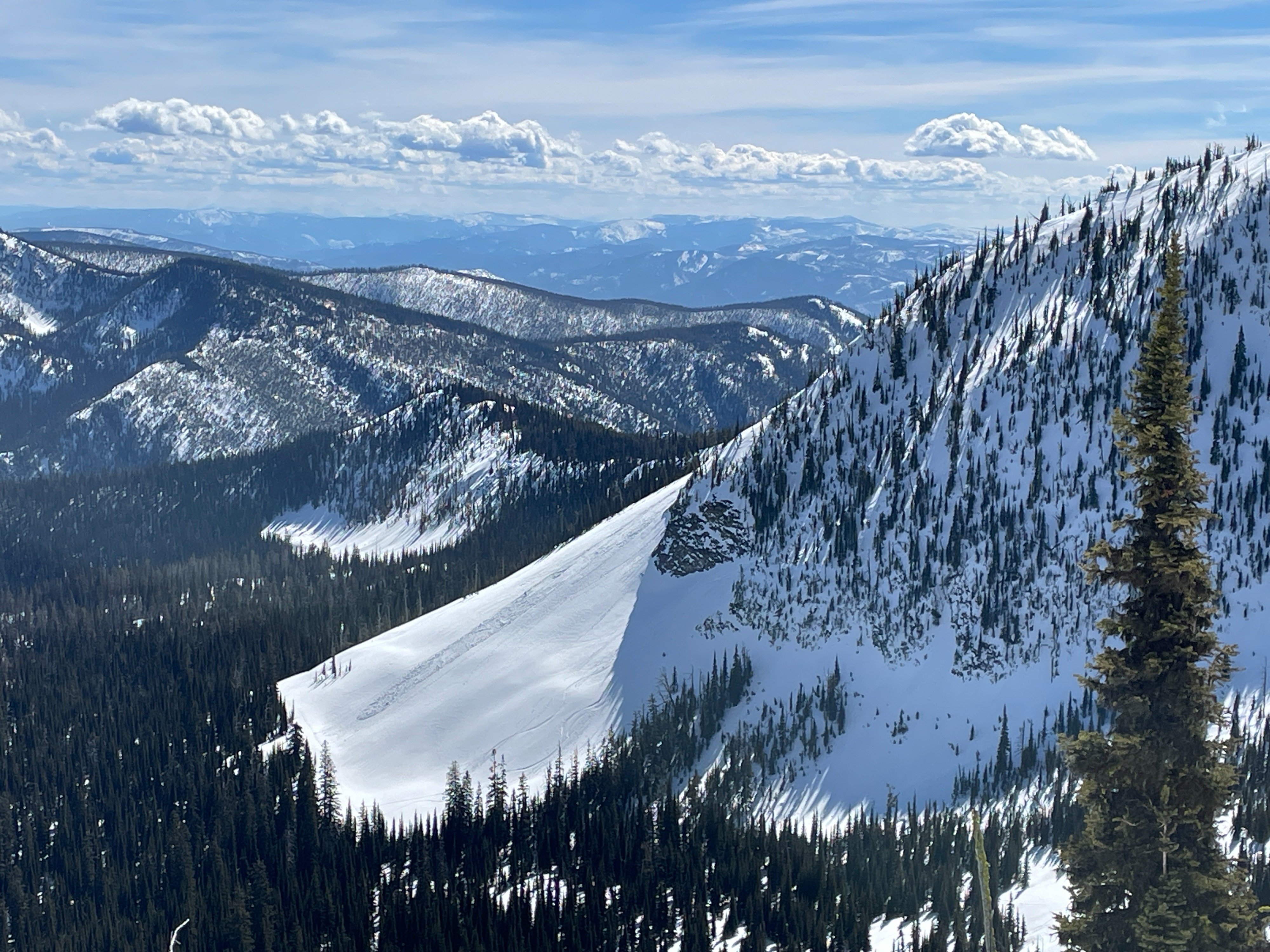
The sun was still strong today, and wet avalanche hazards were the primary concern. There was a marginal refreeze overnight, but most snow surfaces were wet when I traveled around in the afternoon. The exceptions were along the highest ridgelines, where moderate west winds kept the snow cooler, and on due north aspects, where I found a thin zipper crust at the surface and dry snow below. The snow on sunny aspects was wet down to the ground, and unsupportable in places. I was able to trigger rollerballs and small wet loose slides where the snow was wettest. There was widespread evidence of natural wet loose avalanches from the last several days of sunshine and warm temperatures. There was a significant amount of heat in the snowpack, and it will likely take some time to fully refreeze.
I triggered rollerballs and small wet loose slides in wind-protected areas, and I observed a widespread wet loose avalanche cycle from the last several days.Weather
- Cloud Cover
- few
- Wind Loading
- none
- Recent Snowfall
- 0
- Snow Avail For Transport
- none
It was a nice day with warm temperatures, mostly sunny skies, and moderate west winds along upper elevation ridgelines.
Snowpack
I dug two snowpits today, one on a southeast aspect and the other on a northeast aspect, both at 7800 ft. The southeast pit was in a deeper spot just below the ridgeline with a more consolidated and supportable snowpack. Still, the snowpack was moist to wet down to the ground, and there was evidence of water pooling on several buried crusts. The total depth was 51 in (130 cm). An extended column test did not produce any results. The northeast pit had a thin refrozen zipper crust at the surface with dry snow below that to the ground. There were rounding facets present above and below the early February crust, but they have gained strength and did not produce any results in an extended column test. The total depth was 73 in (185 cm).
Avalanche
- Size
- D1.5
- Type
- WL
- Aspect
- S
- Trigger
- N
- Elevation
- 7700 ft
I observed many natural wet loose avalanches from the last several days of sunshine and warm temperatures on all aspects at upper elevations. They were all generally D1-D1.5 in size, although some of them gouged down to the ground. They likely failed on Saturday, Sunday, or Monday. Only the highest and steepest due north aspects appeared to have less avalanche activity.