
Quick report
- Cracking
- isolated
We observed a variety of conditions today. Lower elevations were spring like with wet, sticky snow and minimal snow coverage. Upper elevations told a different story with dry snow, cold temperatures, and a lot of wind. The wind blew from the southwest and was actively loading north and east aspects. We found persistent weak layers within the snowpack on a northeast aspect and a west aspect at upper elevations but did not get reactivity in extended column tests.
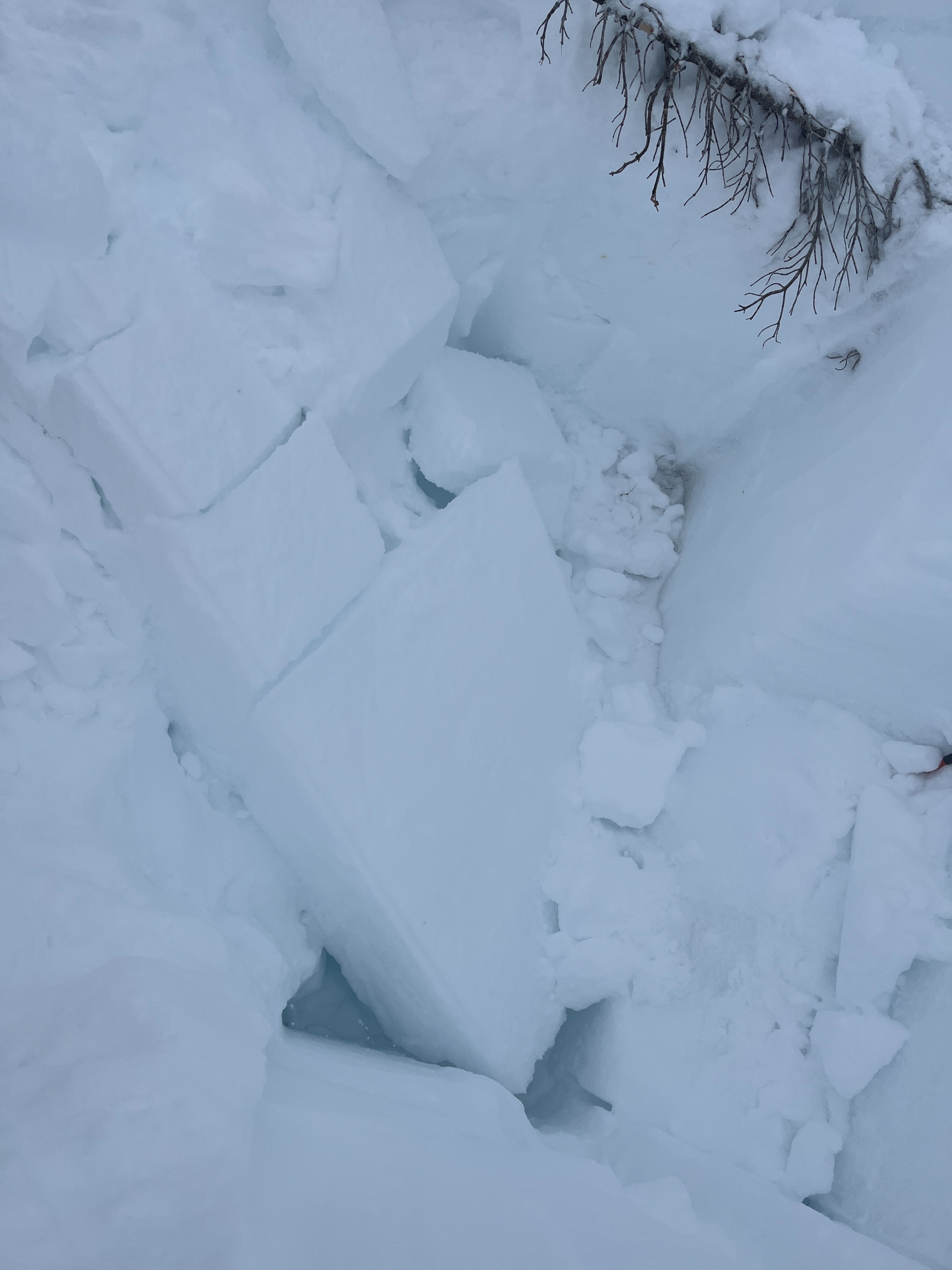
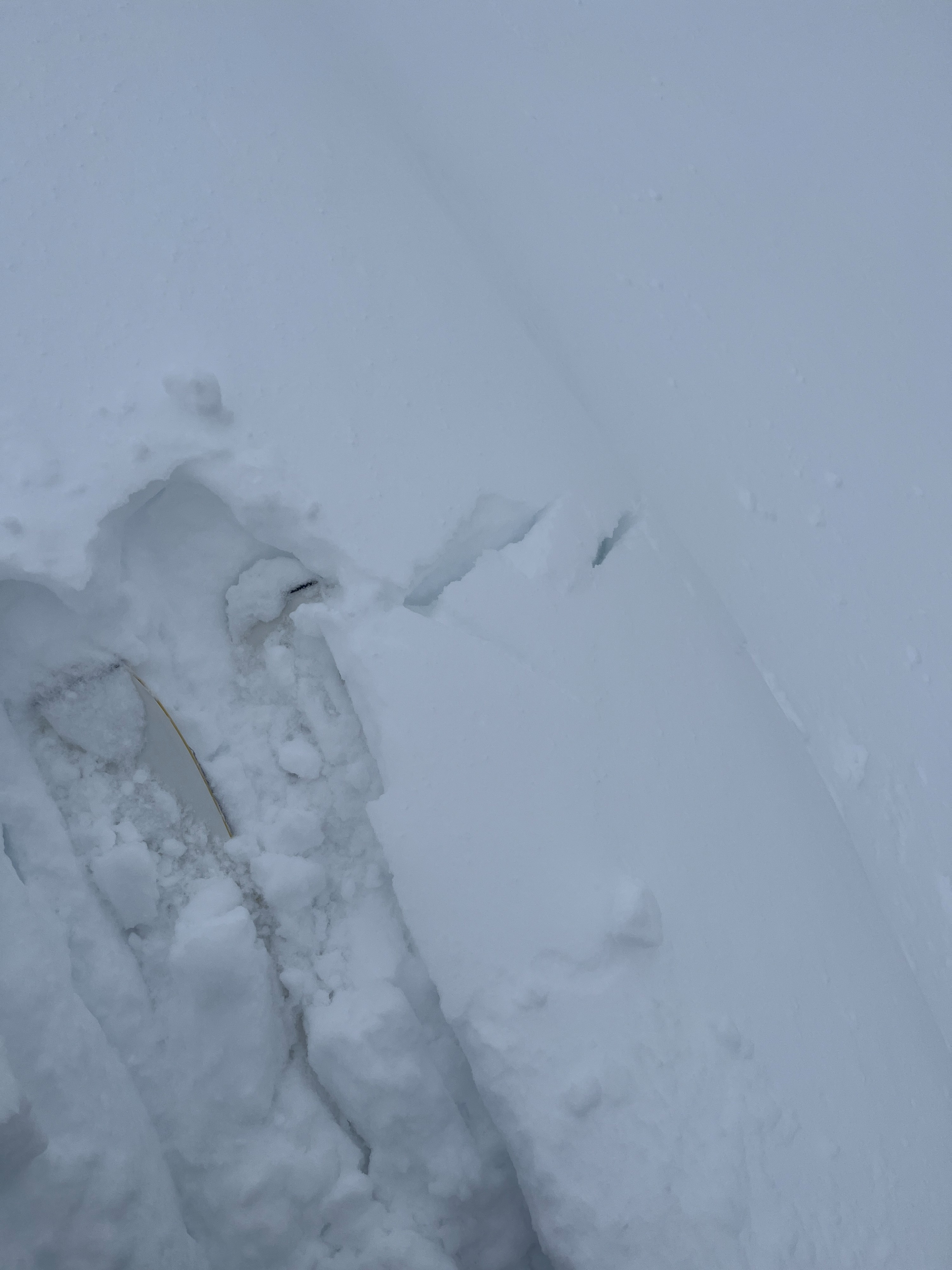
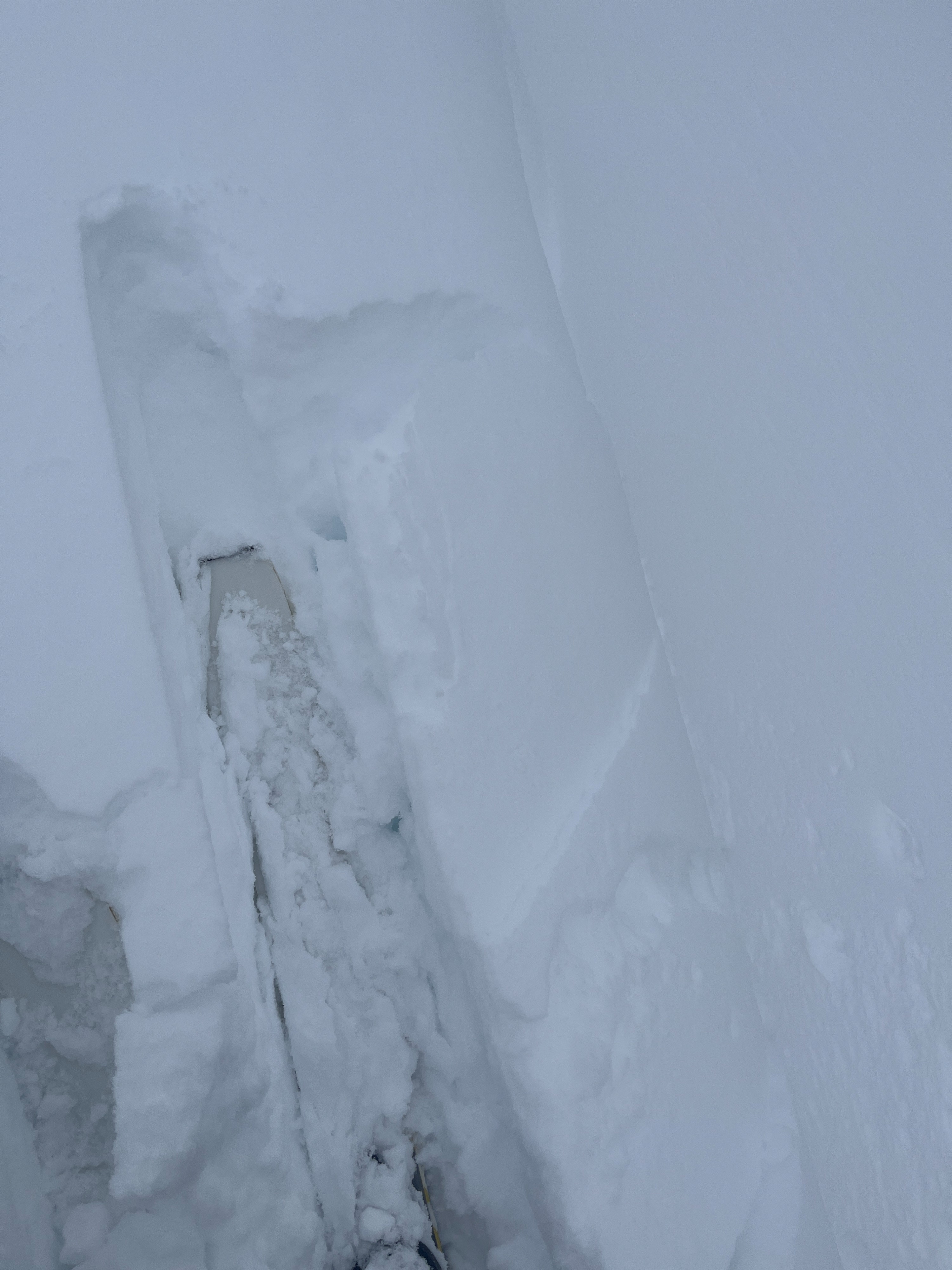
We observed some shooting cracks in wind loaded terrain but the slabs did not want to move downslope very easily.Weather
- Air Temp
- >32 at TH, 18 at upper elevations
- Cloud Cover
- overcast
- Wind Loading
- moderate
- Snow Avail For Transport
- moderate amounts
The sky was overcast all day and a few very small flurries of snow fell. At lower elevations, temperatures were warm and wind was minimal. Temperatures cooled noticeably around 7000', and wind from the southwest was moderate/strong at ridge top.
Snowpack
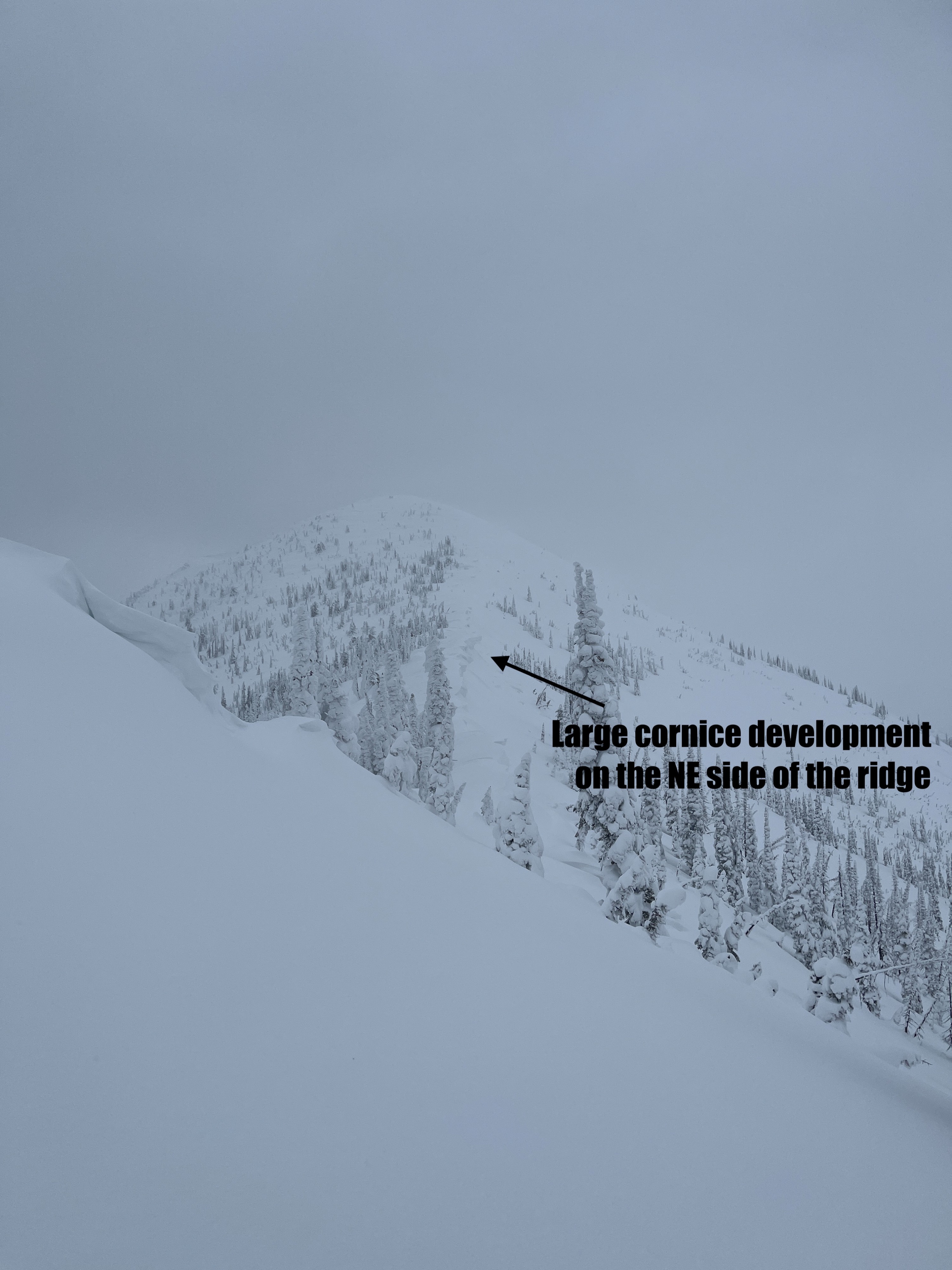
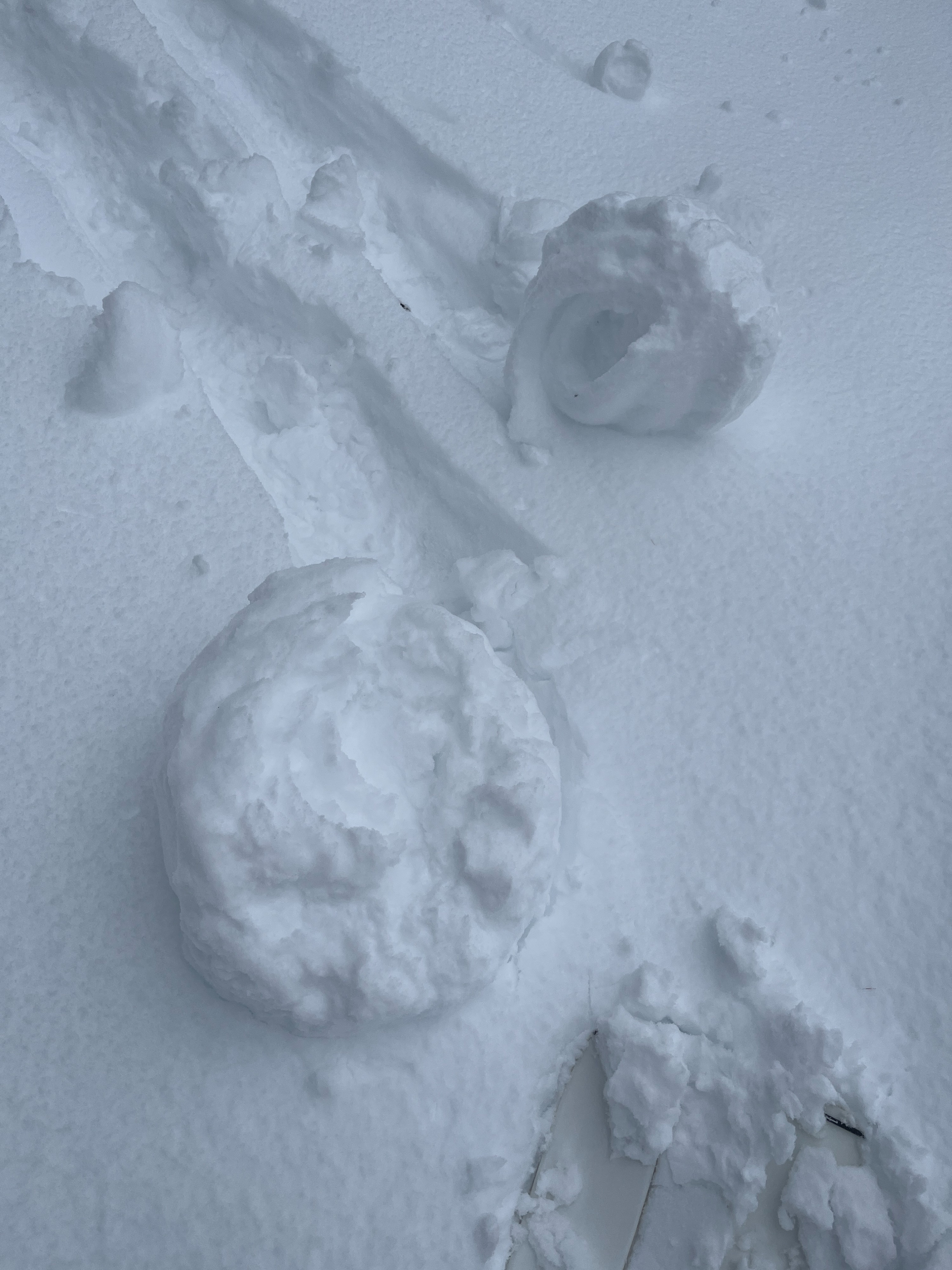
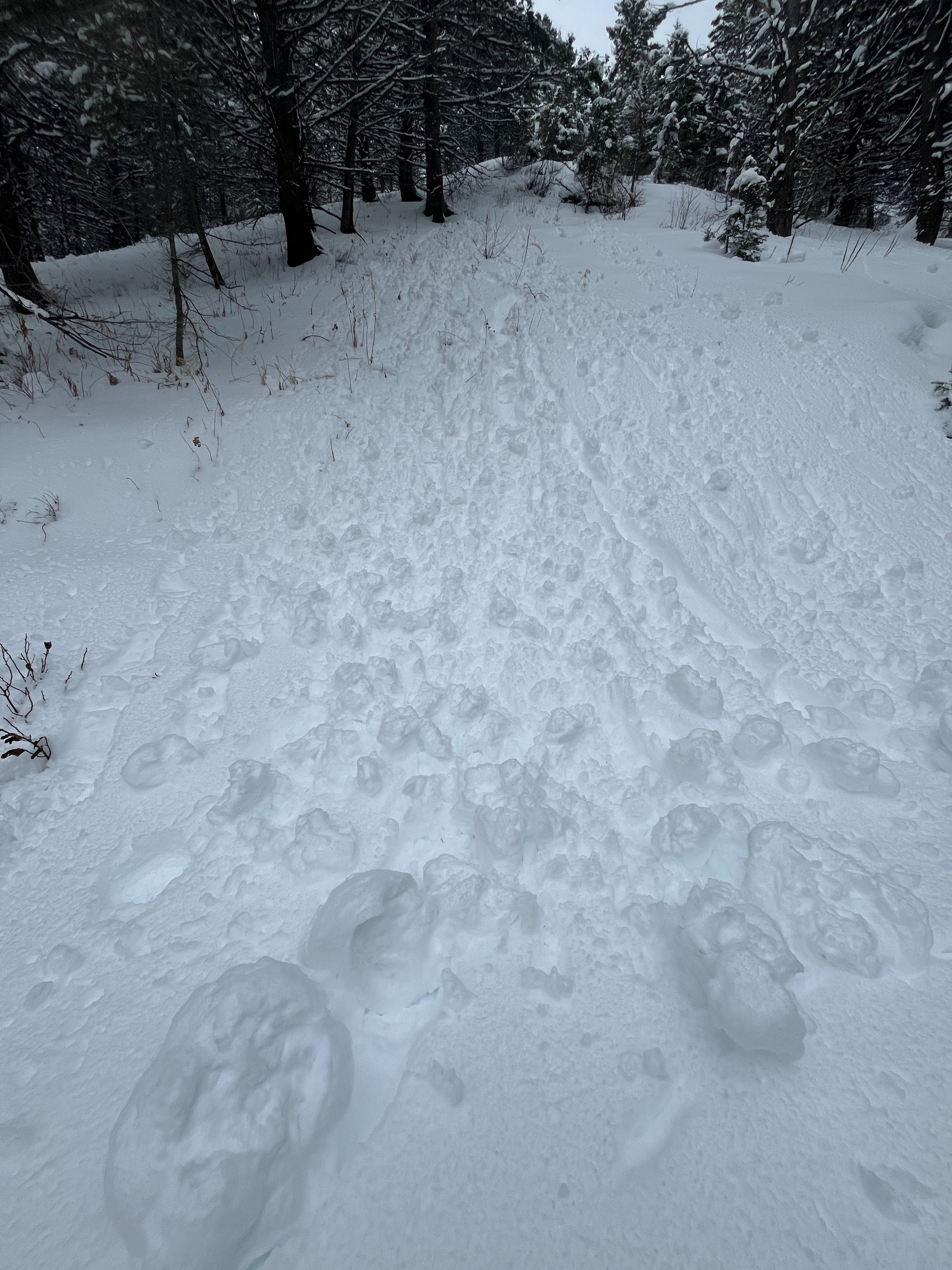
At lower elevations, the snow was warm, sticky, and springlike. There was about 1' of snow. We observed extensive roller ball and pinwheel release. By 6900', the snow was cool and dry, and the depth was approximately 2 1/2'. At upper elevations, there is some variability in snow depths; we observed over 7' on a northeast aspect and 4' on a west aspect. Upper elevation south and west aspects were noticeably wind scoured. North and east aspects were wind loaded, but we did not encounter significant cracking and collapsing in this snow. Large cornices had developed on the northeast side of ridge lines.
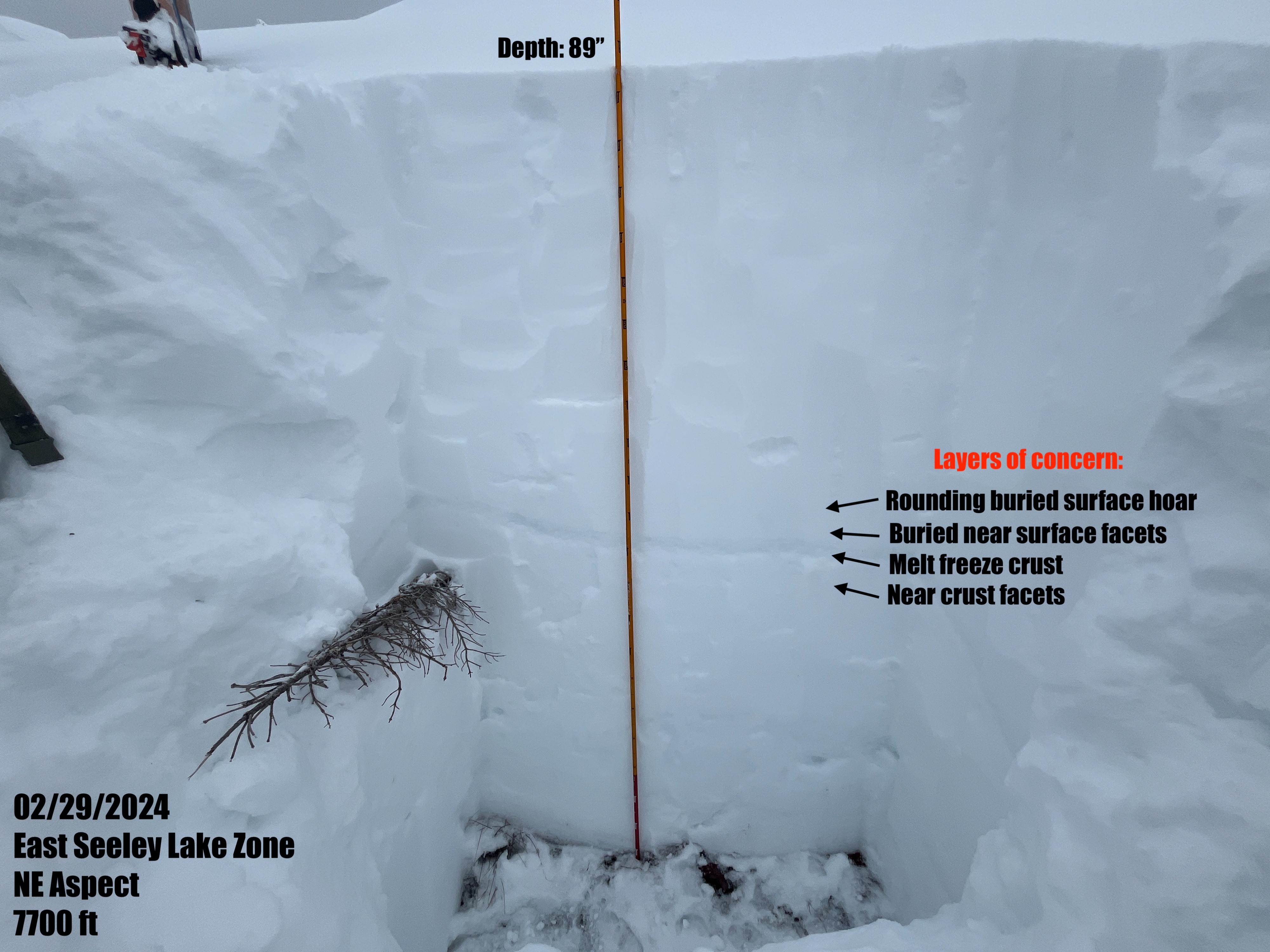
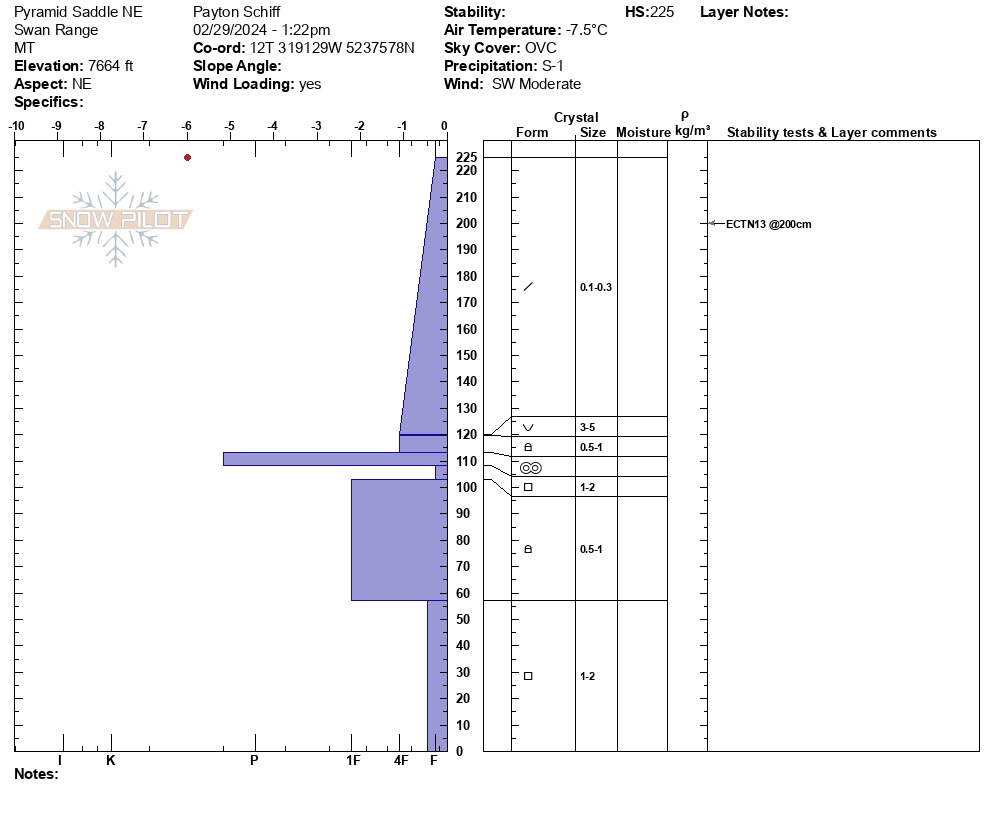
We dug a pit on a northeast aspect at 7700'. The depth of this pit was 89" (225cm). We found a 41" (105cm) fist (F) - four finger (4F) hard slab overlaying (in order from top down) buried surface hoar, buried near surface facets, a pencil (P) hard melt freeze crust, and near crust facets. Below these layers were one finger (1F) hard rounding facets and F hard facets at the ground. We performed an extended column test and got moderate non-propagating results within the slab (ECTN13). When we pulled the ECT block away from the pitwall, it broke easily in the near crust facets.
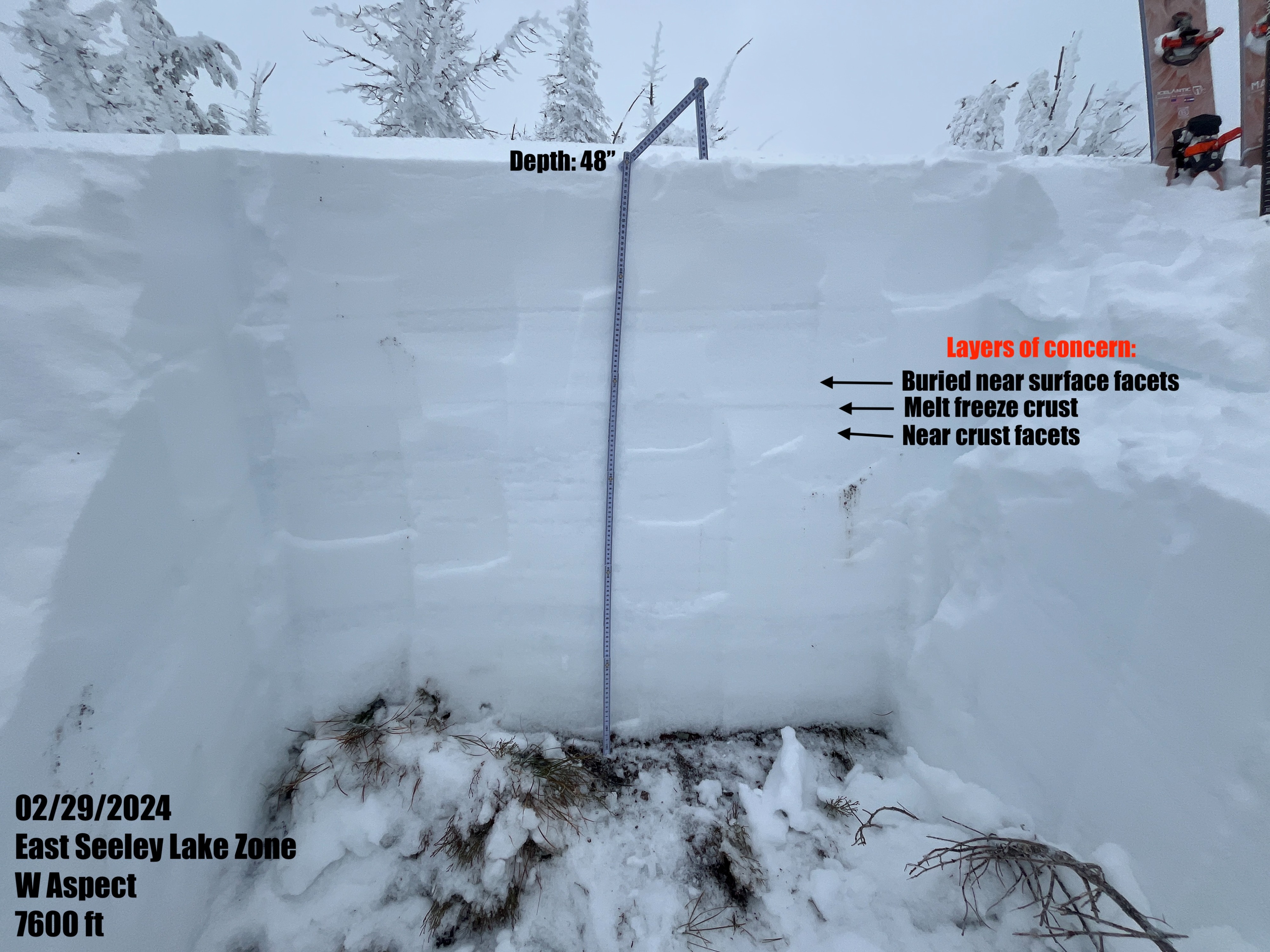
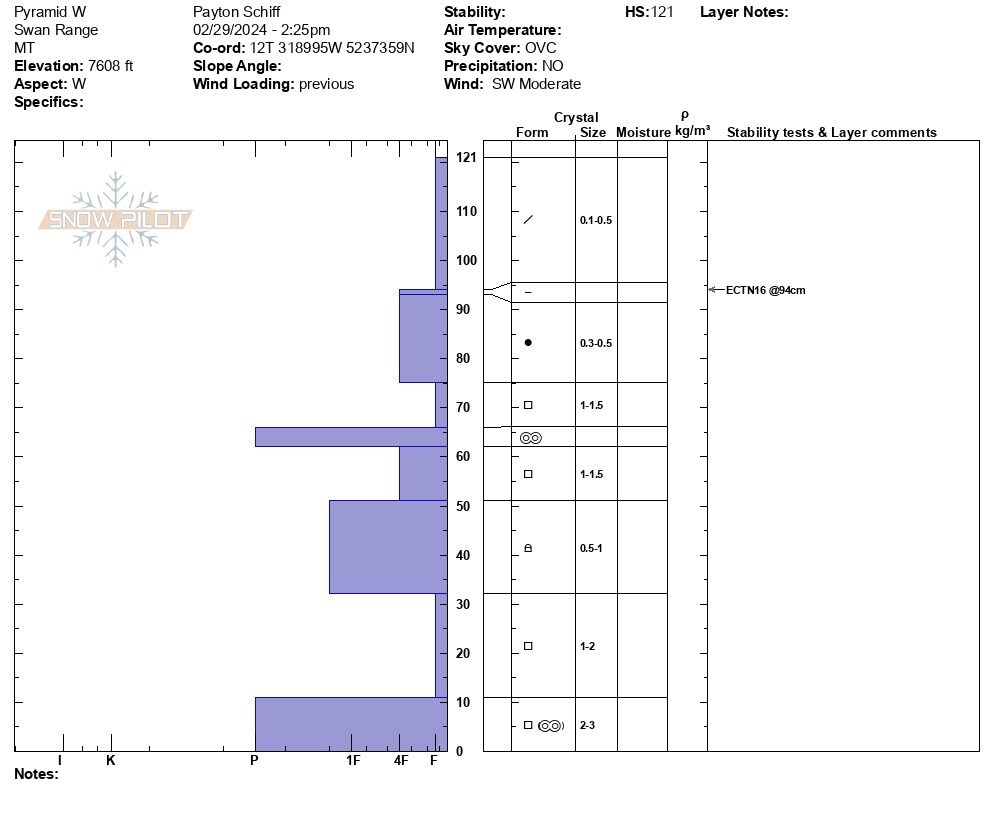
We dug another pit on a west aspect at 7600'. The depth of this pit was 48" (121cm). We found a 4F hard thin crust 11" (27cm) down. Below this were rounded grains, buried near surface facets, a P hard melt freeze crust, and near crust facets. We found 1F hard rounding facets and F hard facets at the ground. We performed an ECT and got moderate non-propagating results at the crust 11" down (ECTN16). The ECT block broke in the facets near the ground when pulled away from the pit wall.