
Quick report
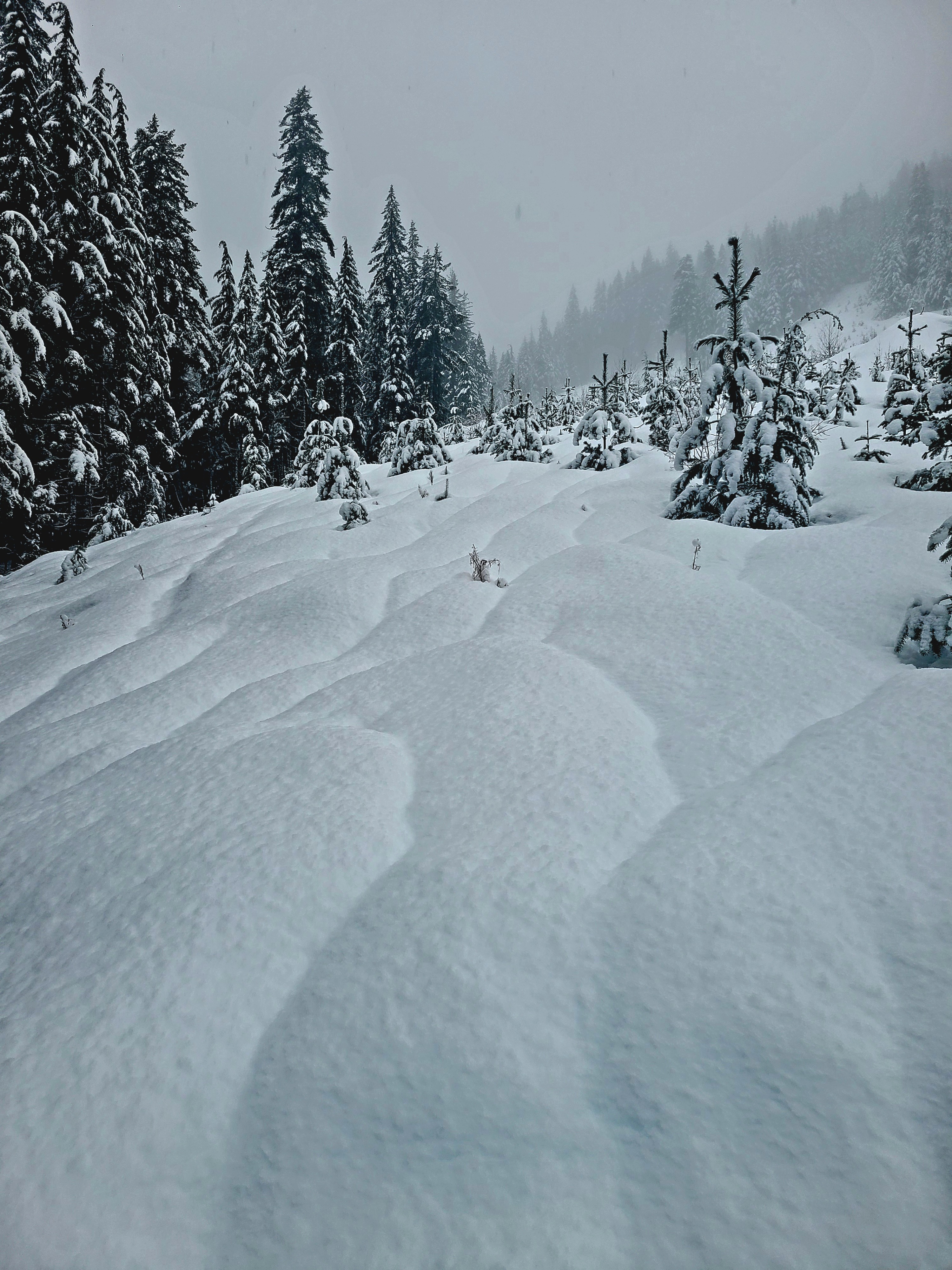
It wasn't the most pleasant day for traveling at lower elevations. However, I wanted to gather information on how the snowpack has changed due to the frequent and relatively warm storms that have impacted our region. Below 3500ft, the snowpack was saturated and deep for trail-breaking; ski penetration was 25-30cm. Above 3500ft, it was just cold enough for a new melt-freeze crust to form and accumulate slightly drier snow above it. This made for easier trail breaking since the crust was supportable for skis. Older interfaces in the snowpack were still reactive in stability tests, but wet avalanches were today's primary hazard at these lower elevations.
It was snowing heavily above 3500ft, raining below. I was quickly saturated through my Gortex and thankful for my insulated rubber fishing gloves.
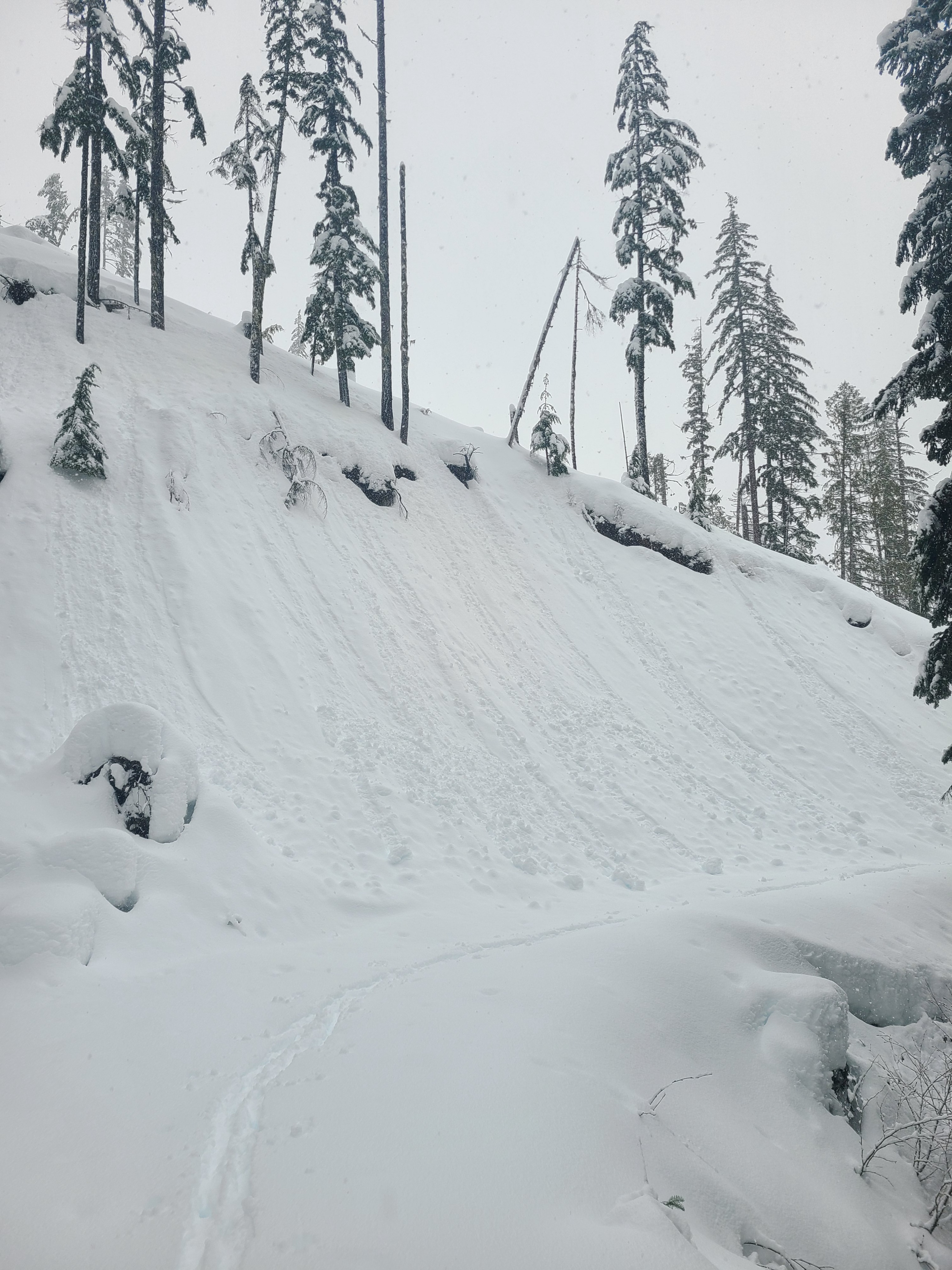
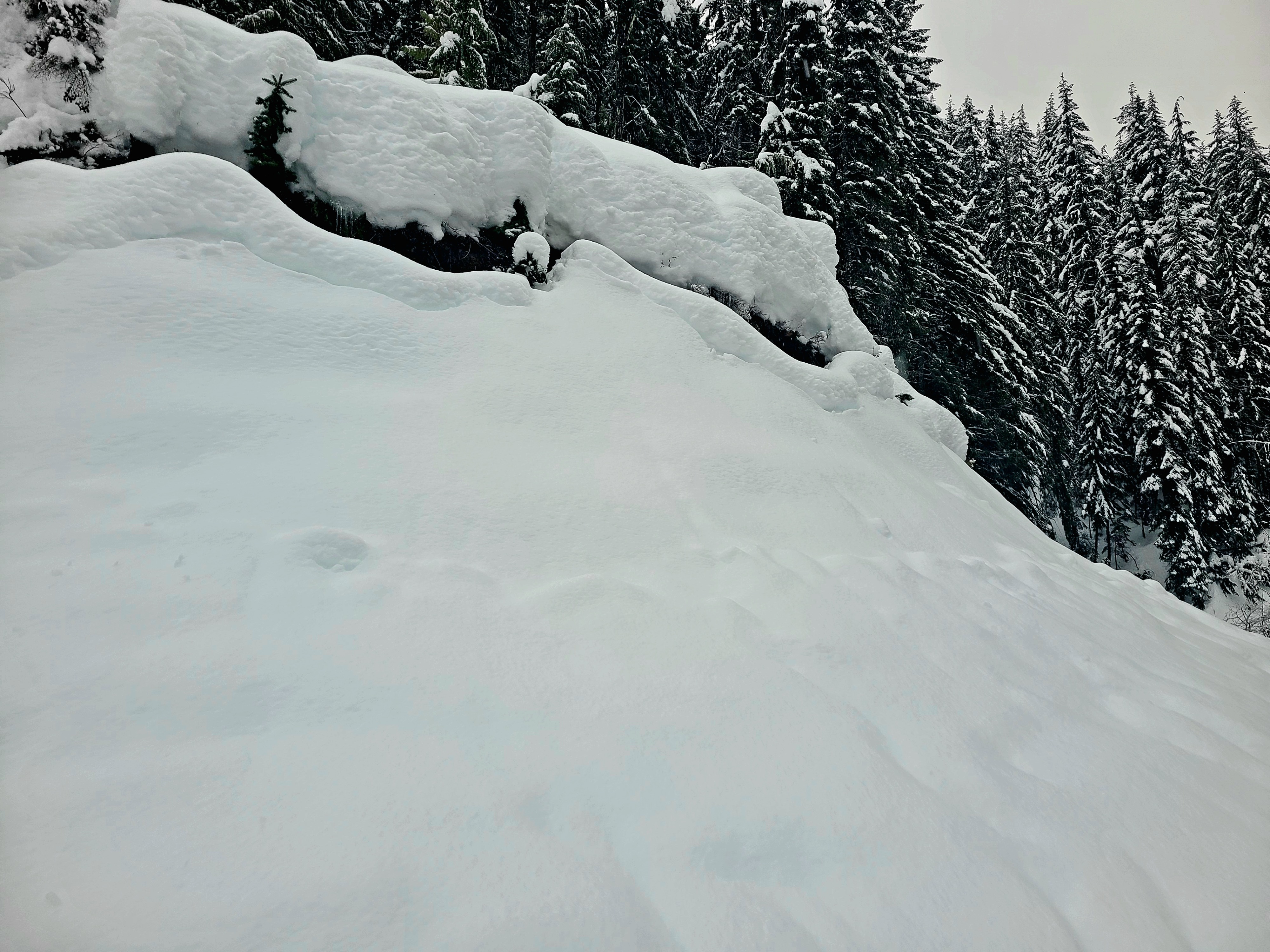
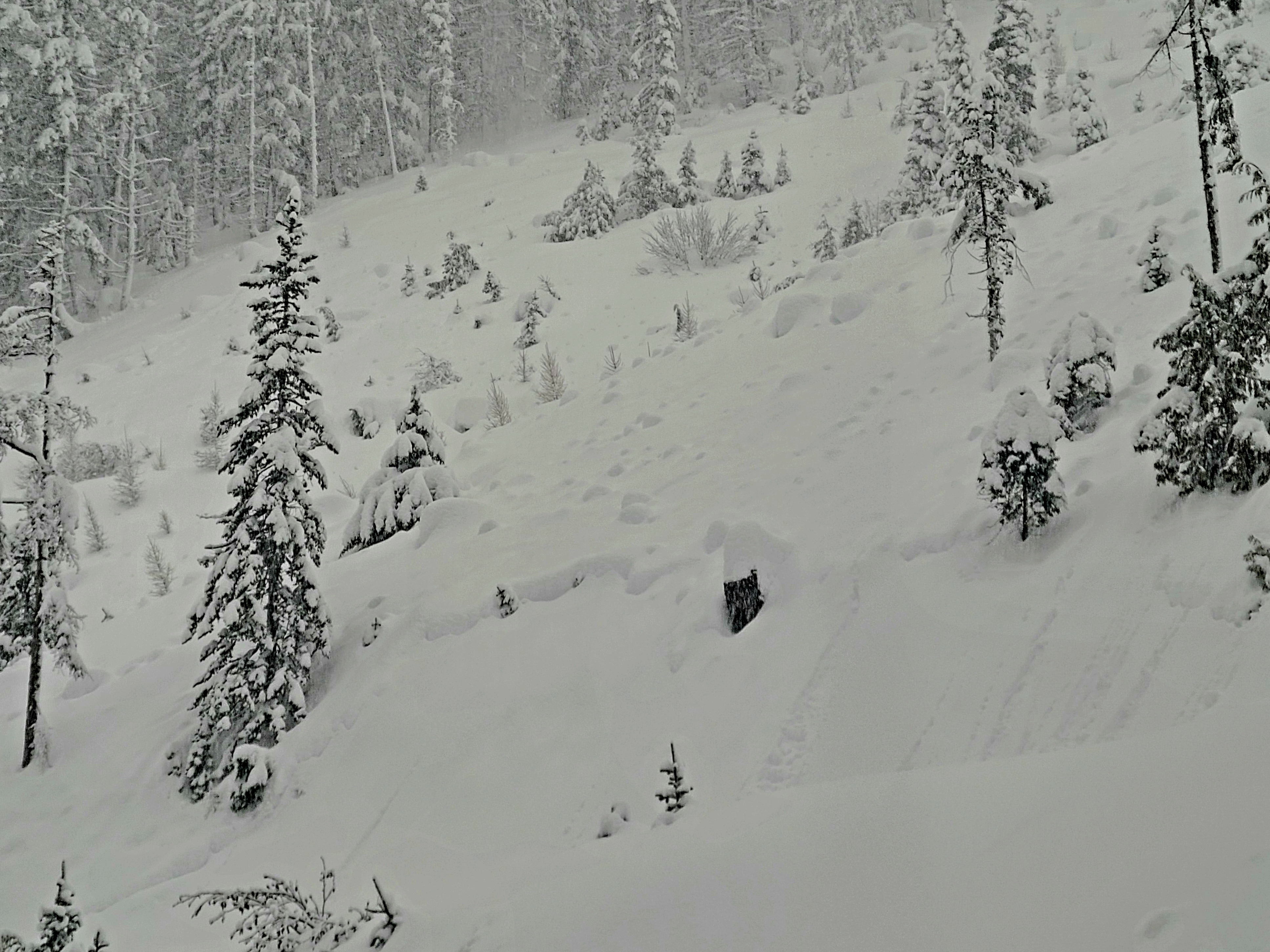
There were many rollerballs and small loose, wet avalanches off steep road embankments. I also observed a few slab avalanches that occurred during the widespread natural avalanche cycle over the Christmas Holiday.Weather
- Cloud Cover
- obscured
- Rain Elevation
- 3500ft
- Recent Snowfall
- 15cm
It was a wet one out there! I left the trailhead at 8:30am, and the precipitation was snow, but just barely. As I gained elevation, it stayed cold enough to remain as snow, but it was too wet for accumulation until about 3500ft. Above that, wet snow was accumulating rapidly, snowing about 2cm/hr (S2). Precipitation began to taper around midday and it was all rain below 3500ft on my exit.
Snowpack
Heavy, saturated snow with runnels was the norm below 3500ft. Above that, the snowpack became increasingly dry with elevation, and a new melt-freeze crust existed below the new snow (12/28).
I dug down to the Solstice Crust, buried approximately 70cm deep in this location, on a north aspect at 4100 ft, HS=149cm.
The upper snowpack consisted of 15cm of wet, new snow over a 2-3cm, breakable melt-freeze crust. The mid-pack is moist, layered snow that has accumulated since 12/21. Notable interfaces still exist, particularly the 12/22 interface, which produced moderate compression test results (CT14 RP ↓52cm). This interface produced multiple avalanches throughout the zone. It's mostly comprised of weaker, decomposing grains, but there may also be some faceted grains within this layer.