
Quick report
- Cracking
- specific
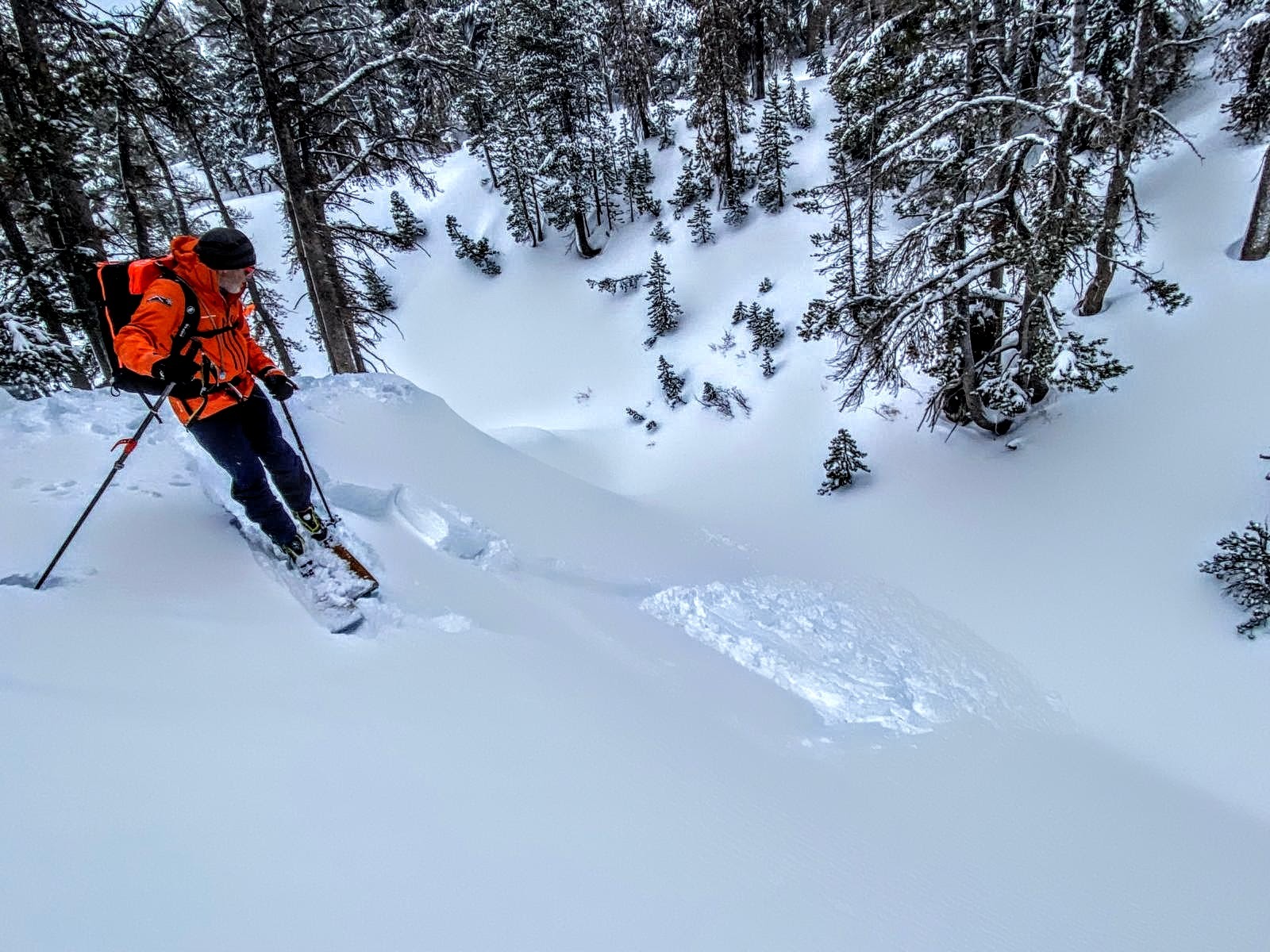
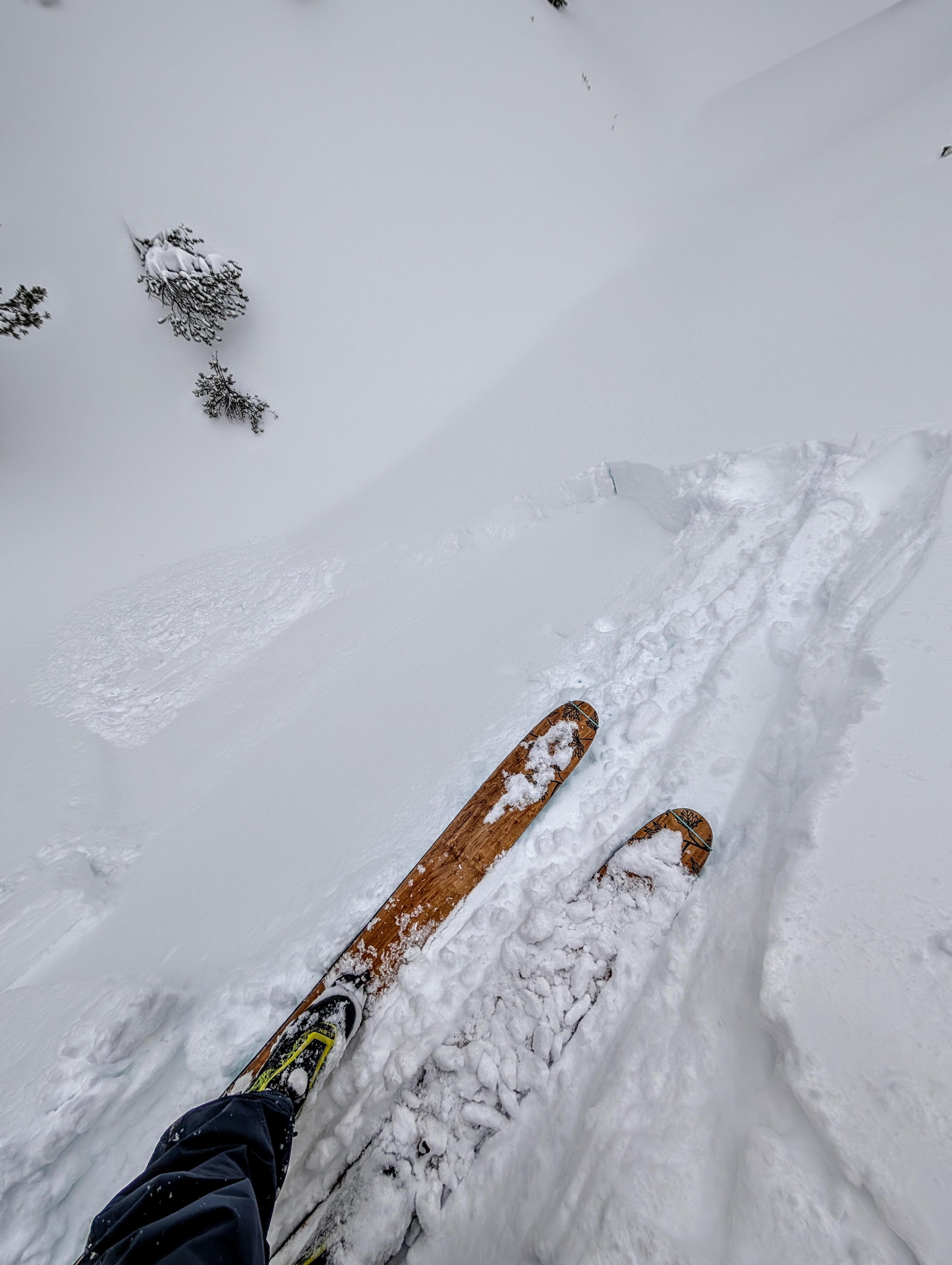
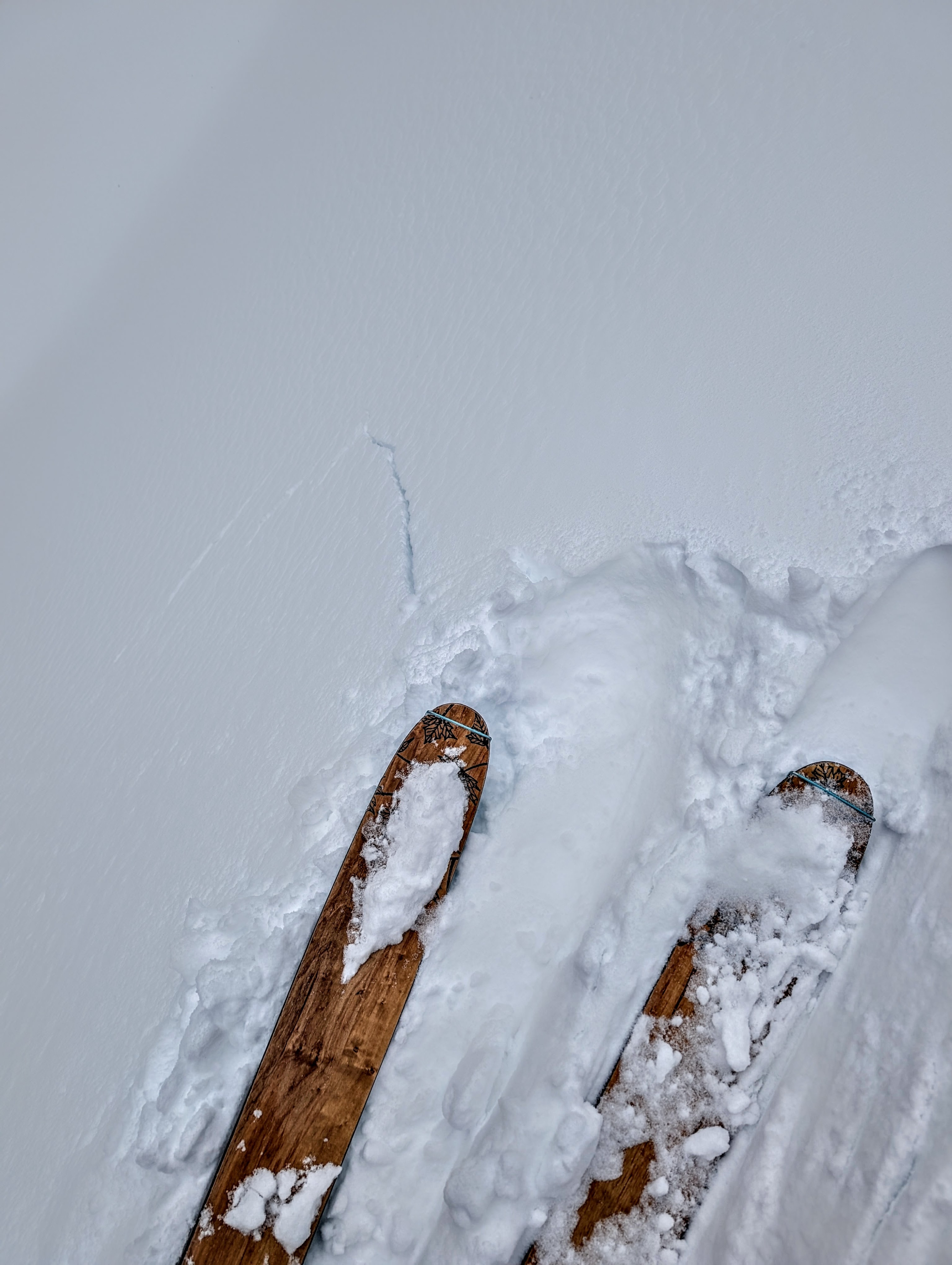
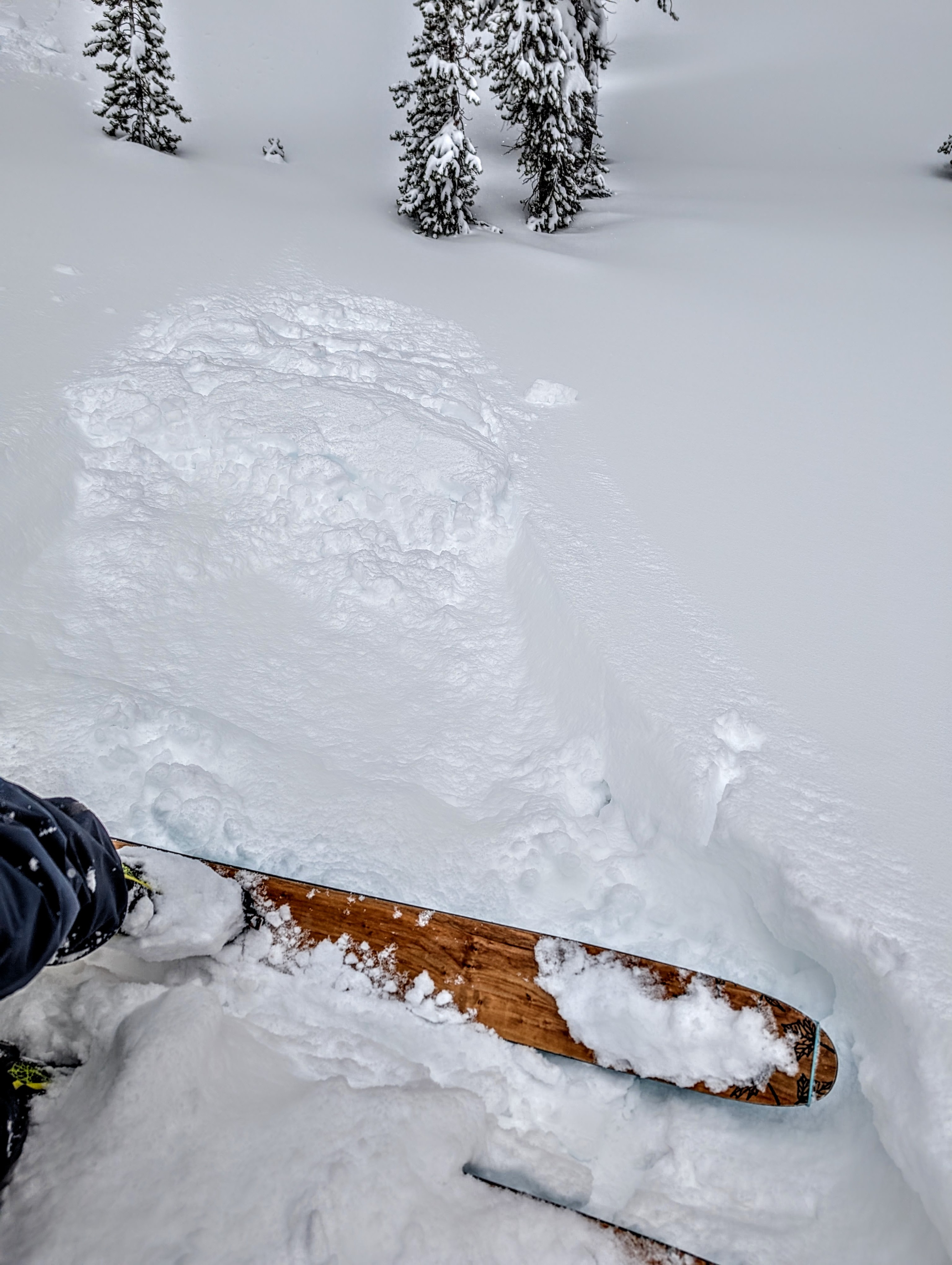
As we skinned into Relay Peak, we could feel density changes in the storm snow, with heavier storm snow on top of lighter snow. Our route took us past a few test slopes in mostly sheltered terrain. Ski kicks above those slopes triggered shooting cracks, one soft storm slab avalanche, and a ski-width wide sluff of new snow. All of these failed at the interface between the new and old snow.
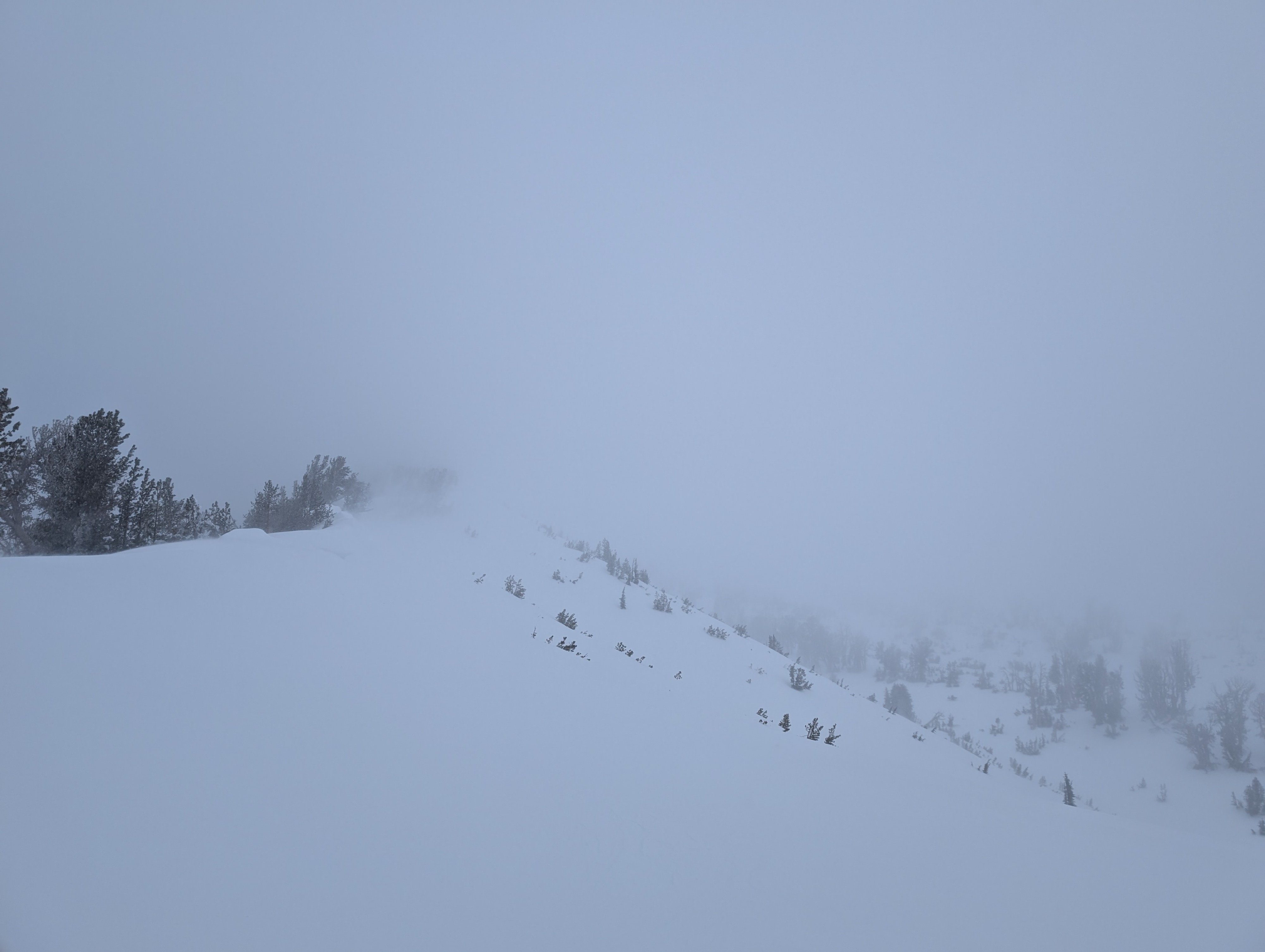
The more wind-exposed slopes along the ridge of Relay had more signs of wind effects like cornices, blowing snow, and slabs of wind-drifted snow. We only approached small test slopes. The cornices above the test slopes failed easily, and ski kicks also triggered shooting cracks in these test slopes. We tried to look for other signs of instability higher on Relay Peak, but blowing snow and low clouds limited the visibility.
Weather
- Air Temp
- 30 °F
- Cloud Cover
- overcast
- Wind Loading
- moderate
- Recent Snowfall
- 20
- Snow Avail For Transport
- large amounts
Wet roads turned snowy around 6500 ft as we drove to Mt. Rose this morning. Snowfall decreased in intensity as we went farther east. By the time we parked, it was snowing lightly and decreased to flurries by the end of our tour. New snow amounts measured about 6 to 8 inches. In the afternoon, snow levels were above 7200 ft as we drove home.
Snowpack
20cm of upside-down new snow (light to heavy) rested on a dense layer of old snow above a rain crust that formed Sunday night. A layer of old facets existed below this rain crust. These facets would clump together easily when squeezed, but we still got an ECT failure that propagated on that facet layer after 28 taps (ECTP 28).