
Quick report
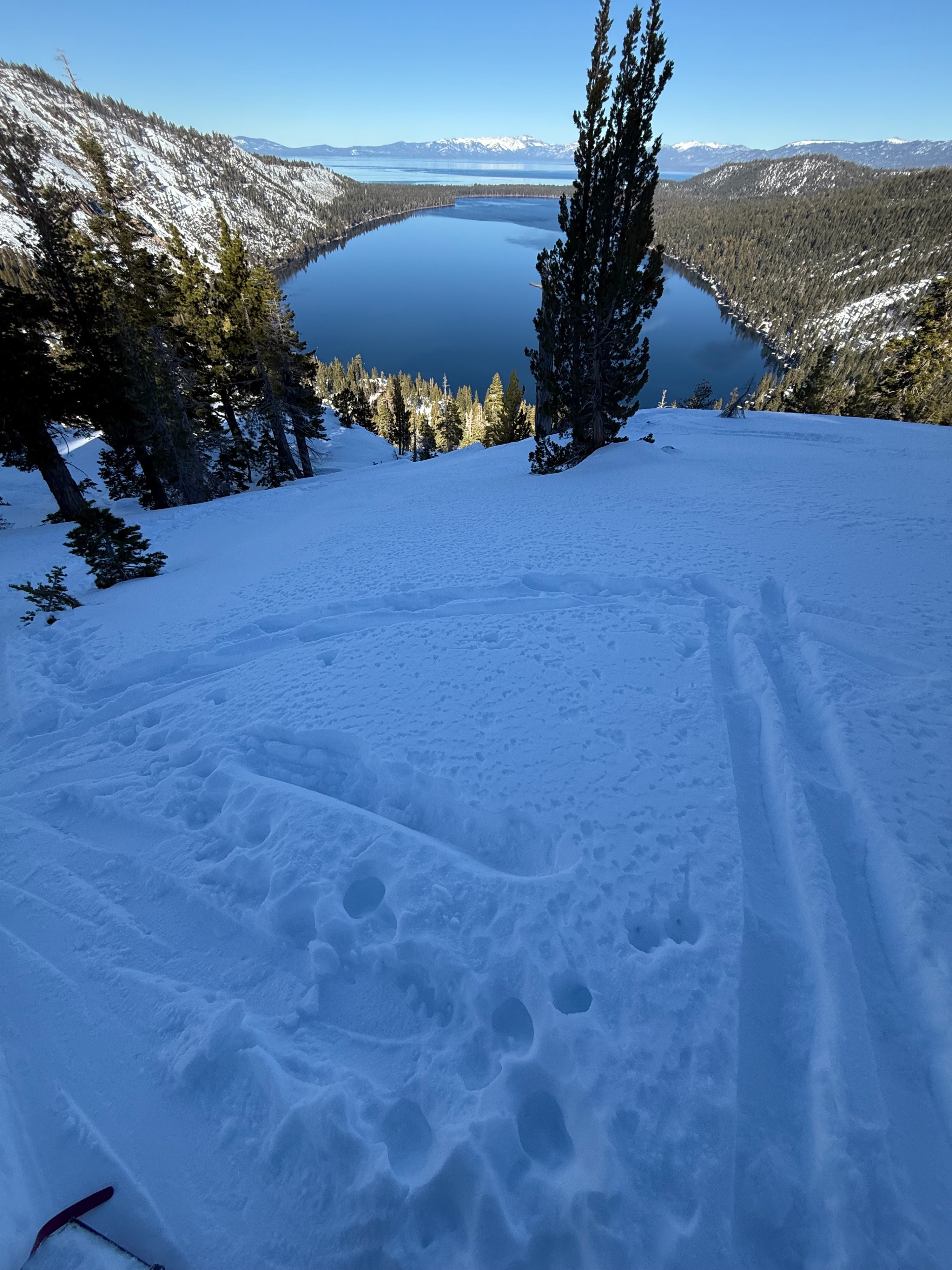
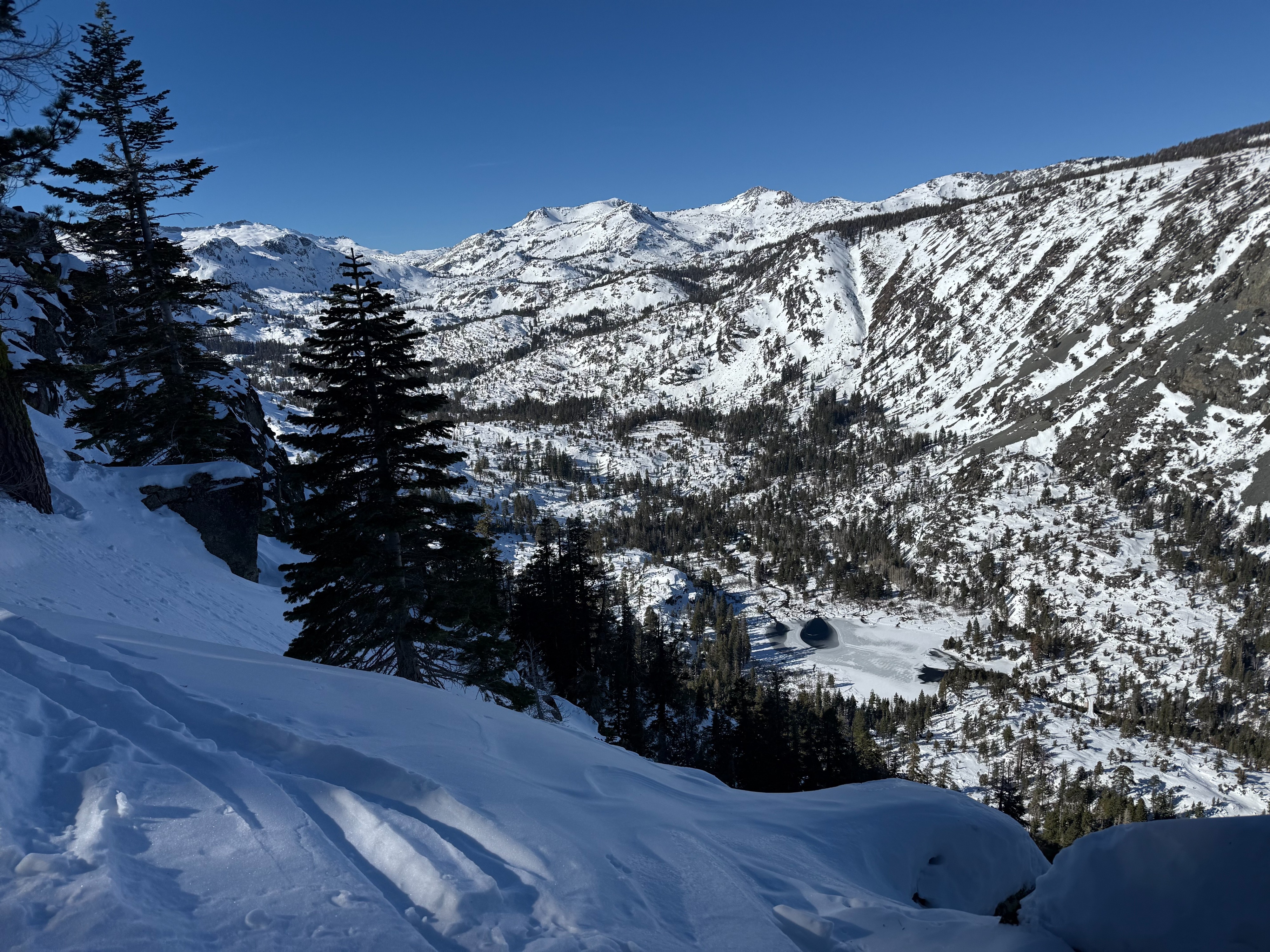
Overall the riding conditons were great... if you can find them. Ghost tracks from the past week were really prevalent. It looked like a ski resort in most/some areas. You can link a few turns in isolated pockets before you need to cross a frozen track. The northern slopes were well filled in and provided the best riding conditions, above 7,000'.
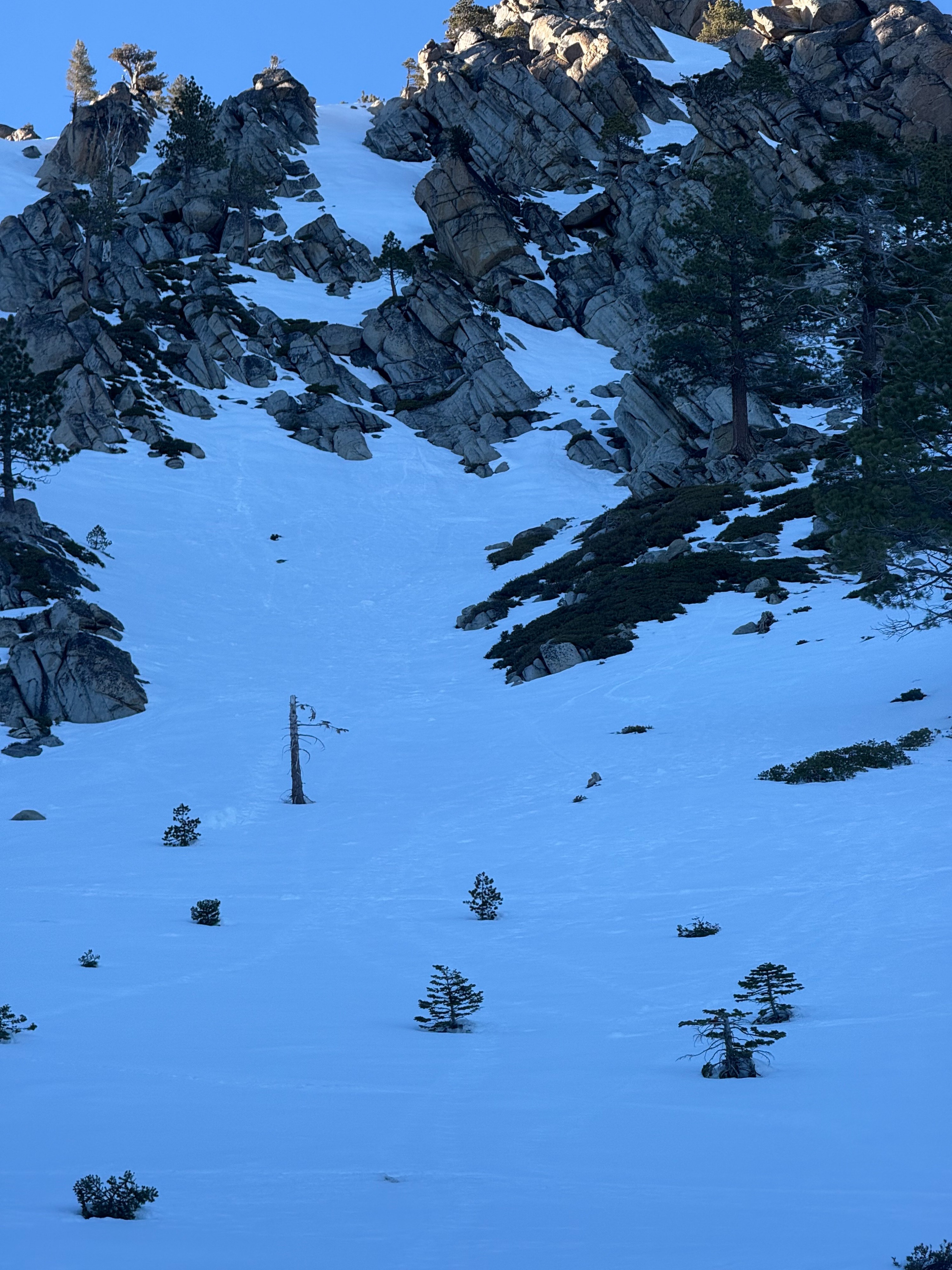
The south side had good enough surface melt to make riding conditons spring like. It isn't fully formed corn; it is still in the "fools corn" catergory. South slopes were shy of snowpack depth and limited alleyways to get through rock bands. It was more defensive riding on the south side than the north. Eastern slopes had a variable melt freeze crust that made for challenging travel. No signs of wet snow instabilites. I saw one rollerball that initiated off a cliff sitting in the sun.
The biggest hazards are things hidding under the snow surface, caused by weak snow and low depth. I hit more rocks and trees today than I have all season. It is the exit from your run that will get you. Breakable crusts and no where to go. Be mindful of the ins and out of your objectives. Higher terrain is your best bet for success.
Weather
- Air Temp
- 40+
- Cloud Cover
- clear
- Wind Loading
- none
- Rain Elevation
- Not observed
- Recent Snowfall
- 0
- Snow Avail For Transport
- none
The winds were calm and the skies were clear. There was a temperature inversion in the morning. The parking lot had the coldest temps. North facing aspects remained cold throughout the day. Any aspect (E, S, W) exposed to the sun was hot. The temperature and sun were having their affect on the snow. Temps increased above 40 F by noon.
Snowpack
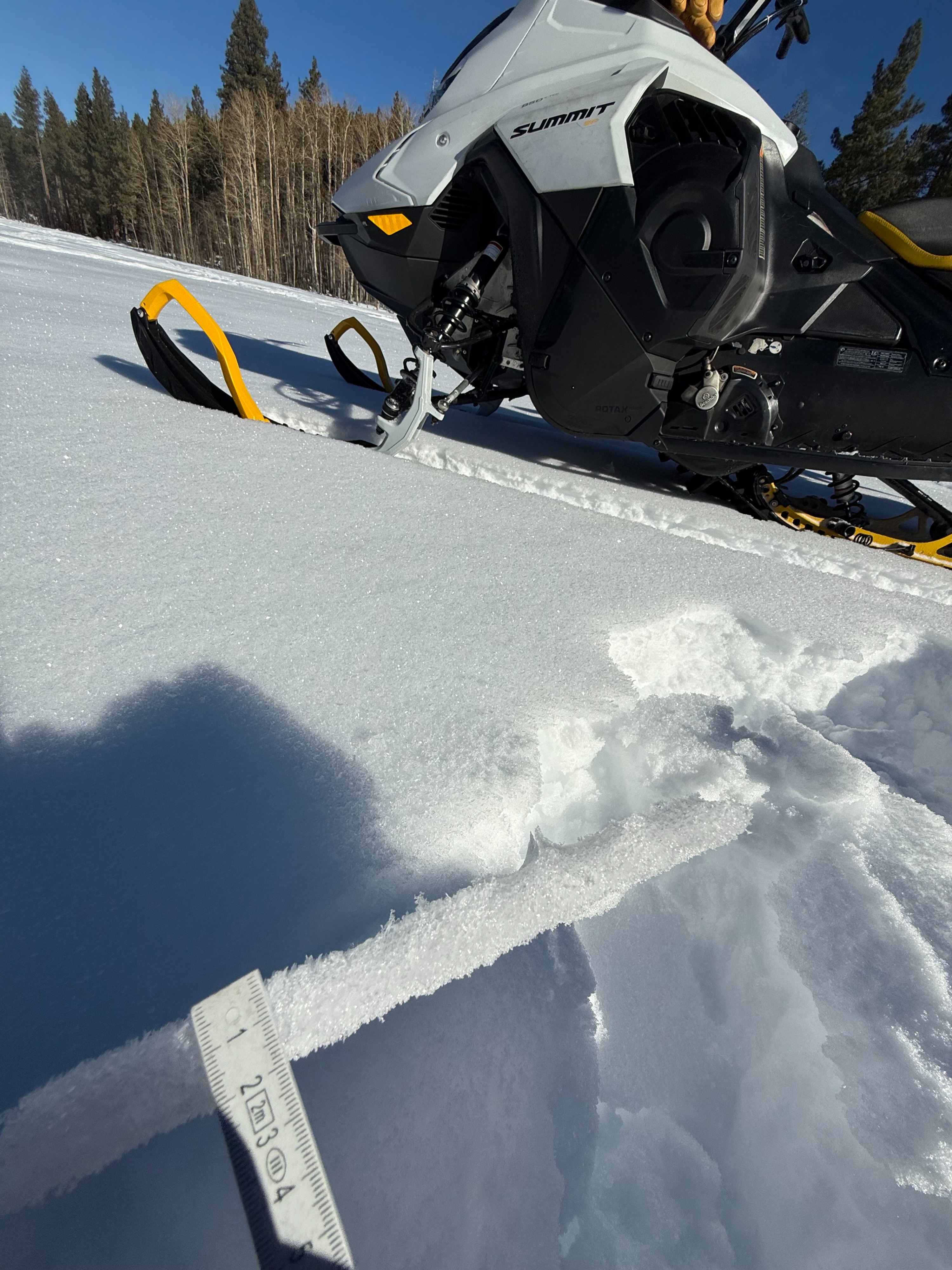
I dug a pit at 7,300 ft on a north facing, steep slope with no trees. I was curious what the snowpack was doing at lower elevations, more exposed to cold temps and with shallower depth. The HS was 91cm. The rain crust was 44cm down from the top. I did a CT(2x), ECT, and PST above the rain crust; the results did not show any worrisome weak layers. There were Near Surface Facets for top 5 cm. The surface snow was fist soft, slowly getting firmer to the rain crust. Boot pen was 28cm, ski pen was 12cm. The snow had a weak structure that made the riding impressively good on north facing slopes. The shallow depth made it easier to hit hidden rocks and trees at the bottom of the run.
There was a melt freeze crust on E- NW aspects. The amount of sun exposure determined whether or not the crust was supportable. Due south was the best warm snow conditions for riding. Eastern aspects had a breakable crust and cold snow beneath it, which made everything sticky. Norths were cold and soft; no crust, no wind affect.
6,400' HS 30-50 cm.
7,400' HS 80-100cm
8,300' HS 100-170cm