
Quick report
Our goal was to investigate the formation and reactivity of new wind slabs and check on the status of the persistent weak layers buried in January.
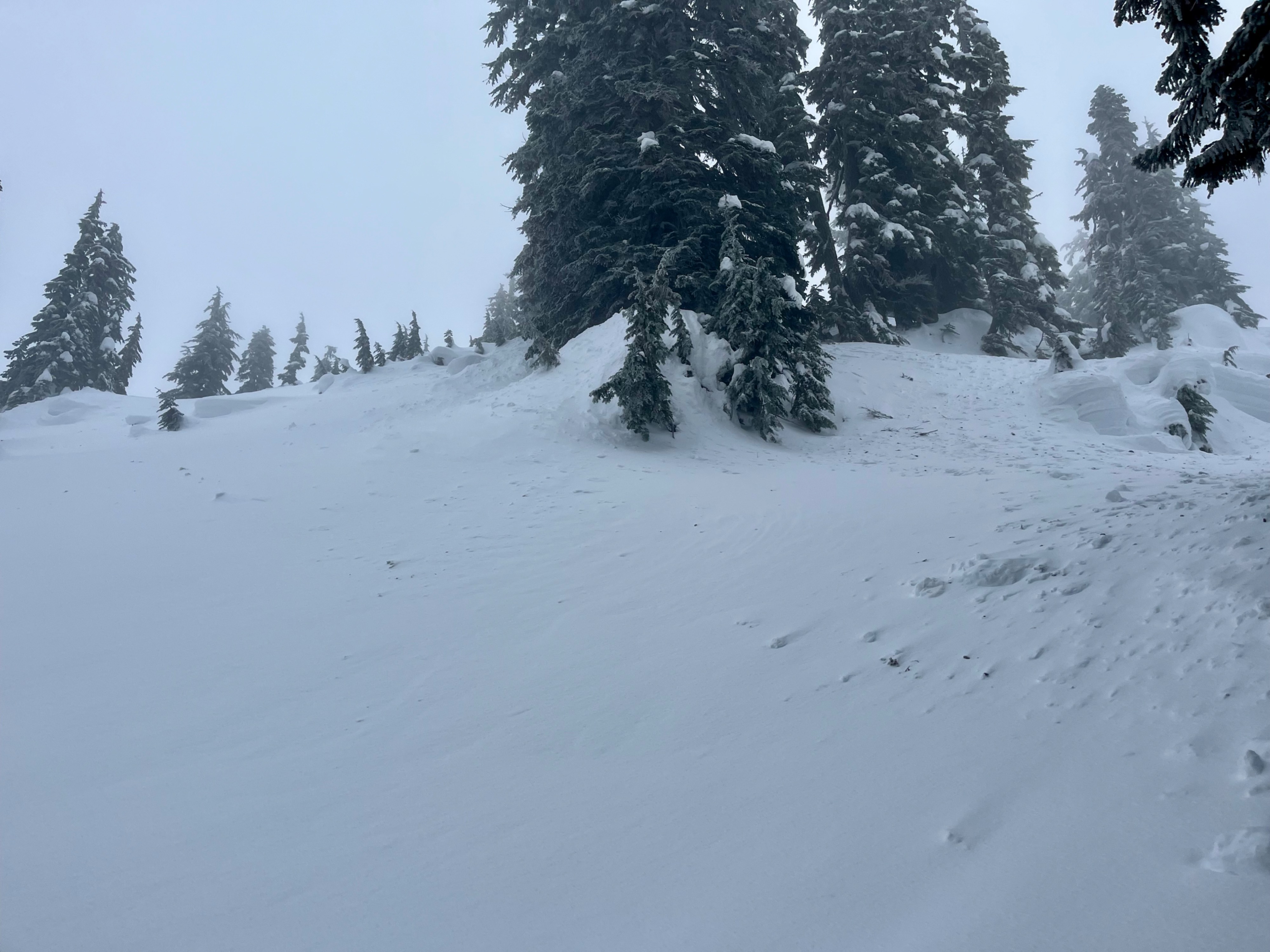
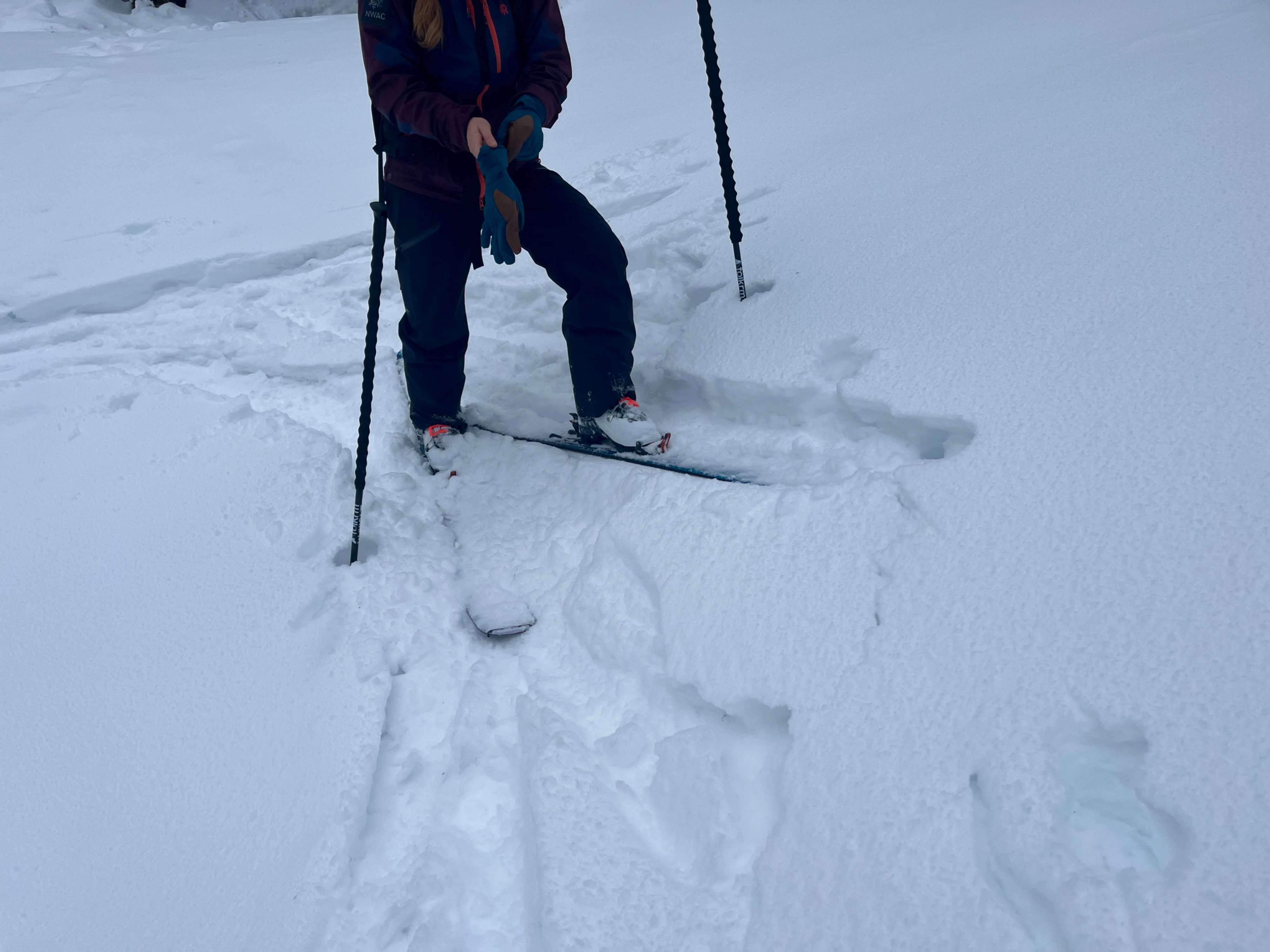
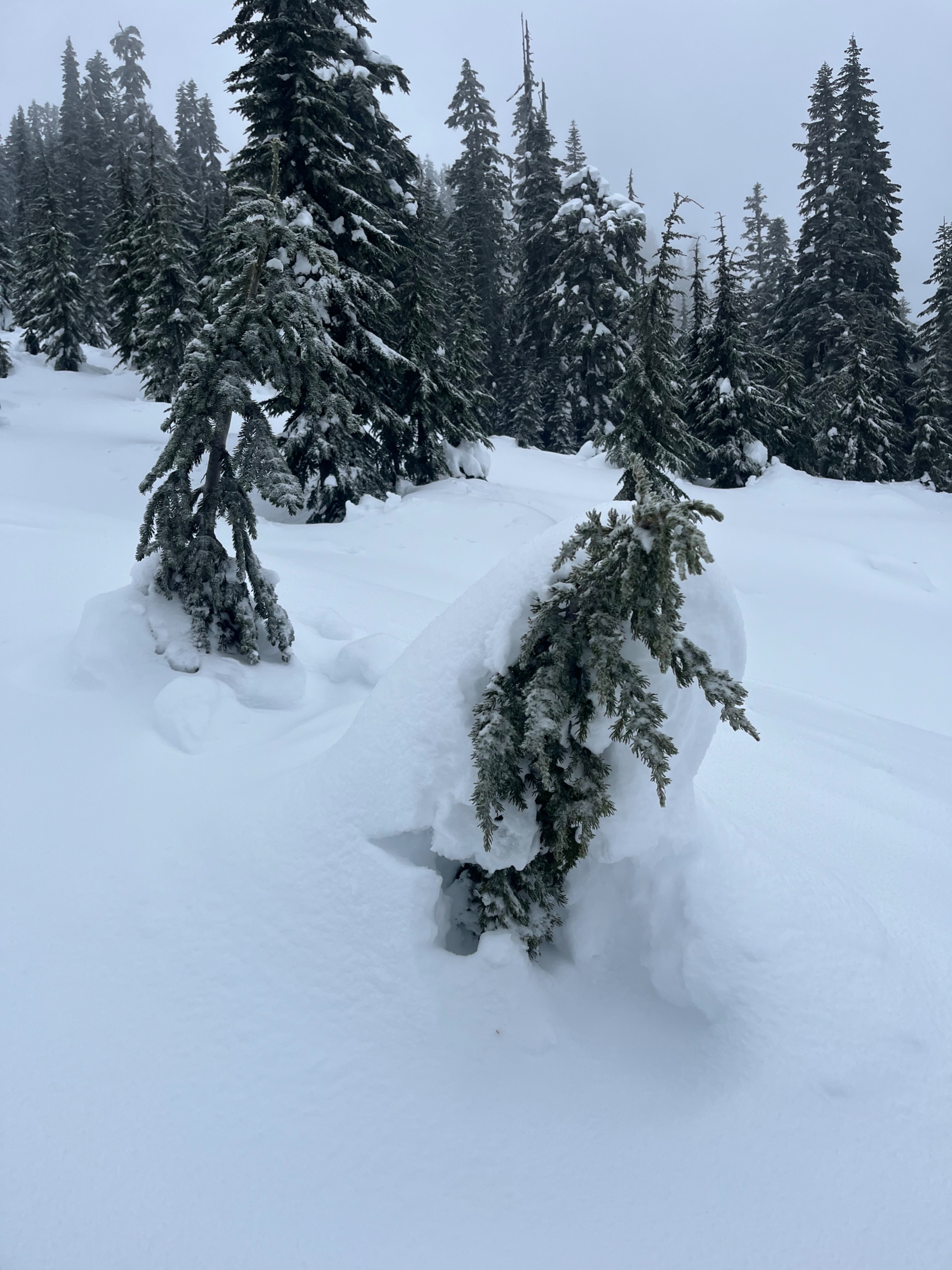
We found wind slabs from about 5000 feet and higher in elevation. They ranged from soft to hard, and 2cm to 20cm (1" to 8"). We were surprised at their abundance and variety. The harder, deeper pockets were isolated, and our skis hardly sunk into them. We were unable to produce any long, shooting cracks or small avalanches on test slopes. These deposits were easy to identify and either target or avoid.
The old snow interface- January Drought Layer- now two weeks old, and the underlying 1/10 layer, were unreactive in tests and appeared to be strengthening.
Weather
- Cloud Cover
- obscured
- Wind Loading
- previous
- Recent Snowfall
- 2
- Snow Avail For Transport
- moderate amounts
Obscured skies above Lake Valhalla, 4900ft, which lifted a little during our outing. Calm to a light breeze with extensive wind transport from previous 24 hours noted. In areas with fog, a thin rime crust was actively forming. It was irregular, not coating all surfaces evenly.
Snowpack
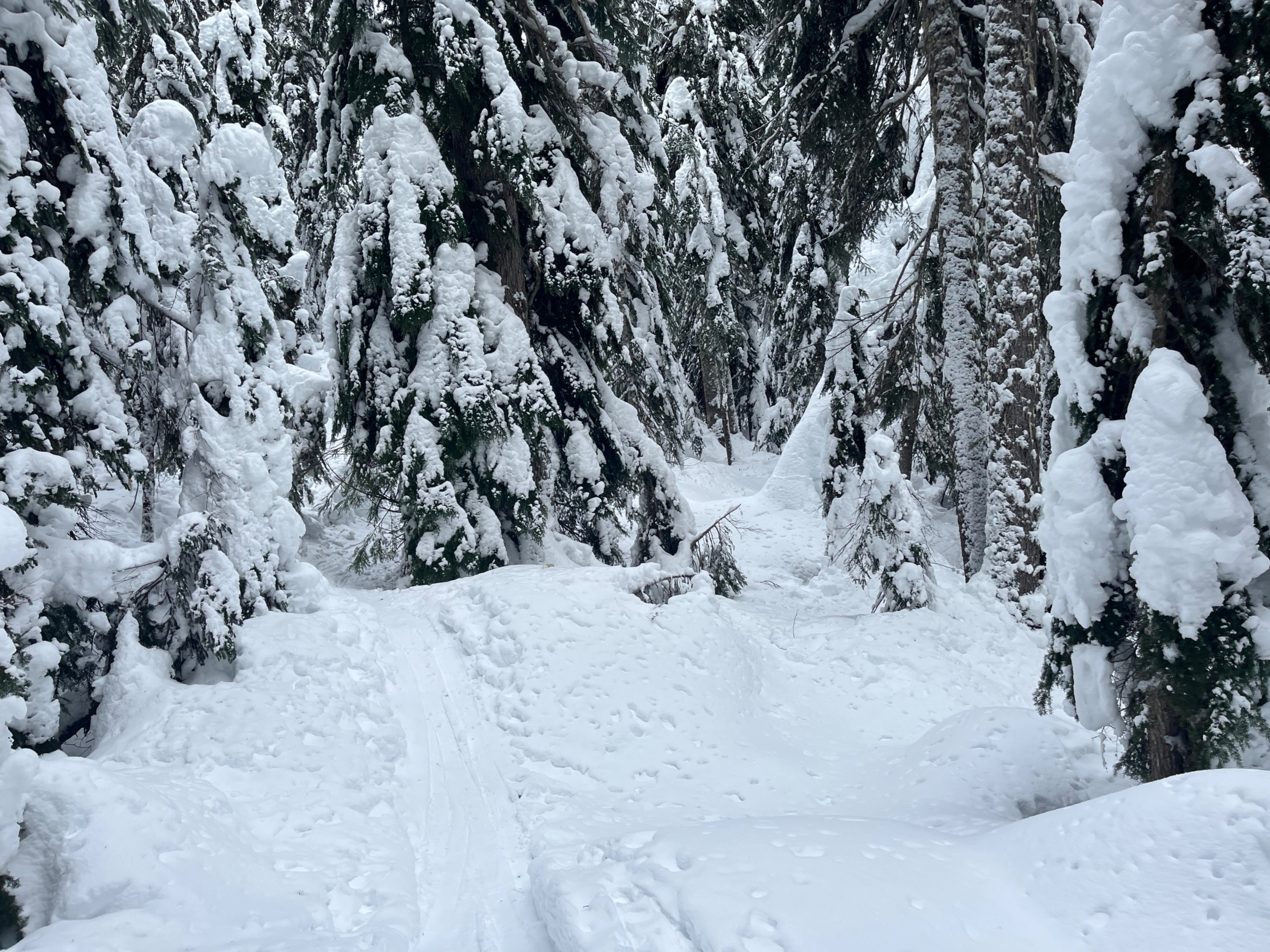
At lower elevations snow surfaces were mainly still soft. As we entered clearings, south-facing terrain had a thin crust at the surface that in many spots had been buried by around an inch of overnight snow.
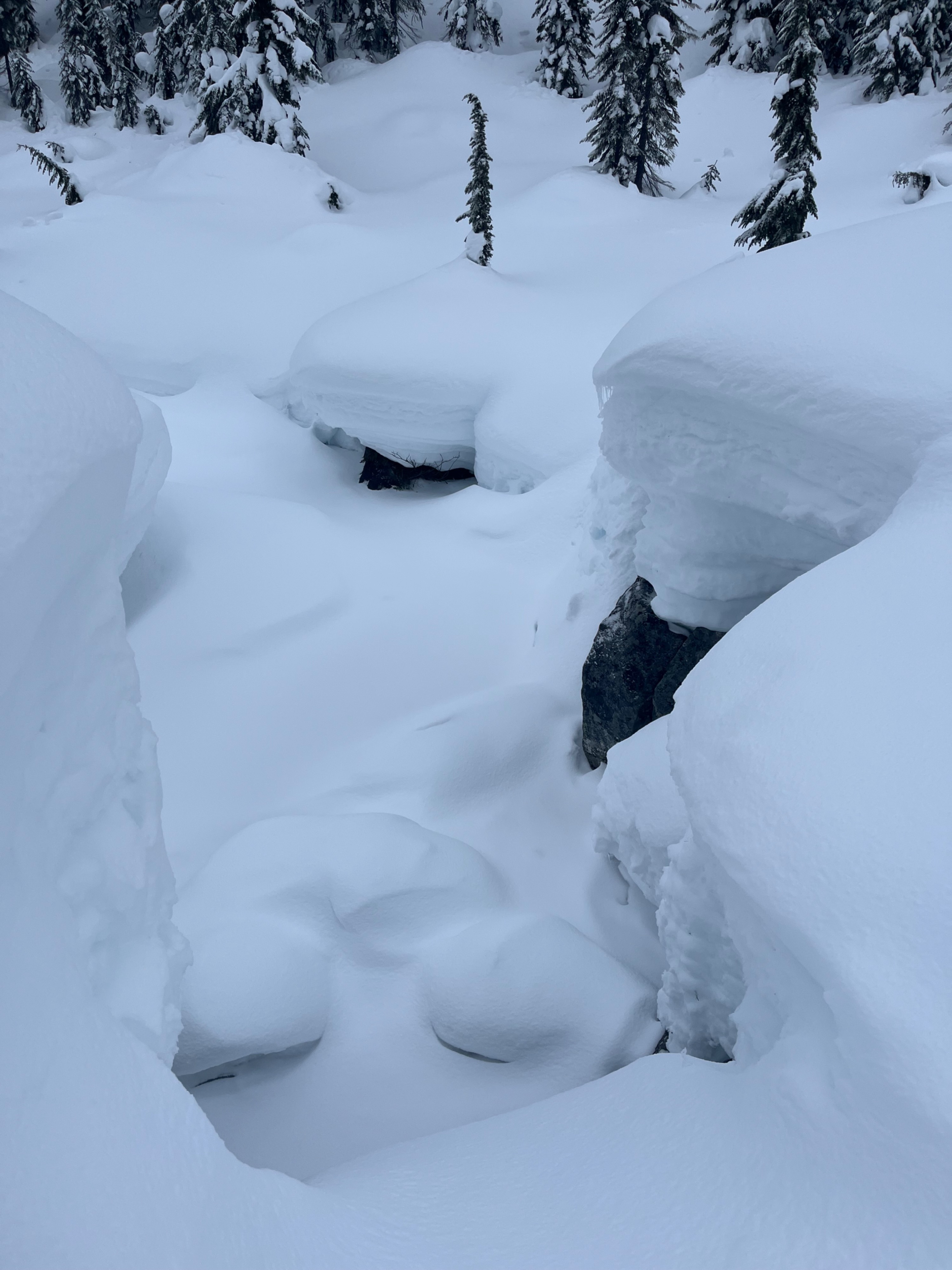
Gaining elevation, from as early as 4000ft we began noticing wind-effect, although it was subtle here. Above 4800ft wind drifting became much more obvious, with stiffer, smooth slabs in some locations and obvious scouring in other spots. Slabs were easily identified and avoided. Drifting was quite abundant, which we found unusual for the area we traveled to.
From about 4800ft we noticed a very thin surface crust developing. It was forming on us too. This was likely from the fog depositing and instantly freezing on surfaces. Proto-riming? The crust was more noticeable in some spots than others.
In our snowpit, the snow generally appeared right side up. Beneath the shallow wind slab near the surface, we identified surface hoar. Overall we didn't identify any weak layers of concern in this pit.
Avalanche
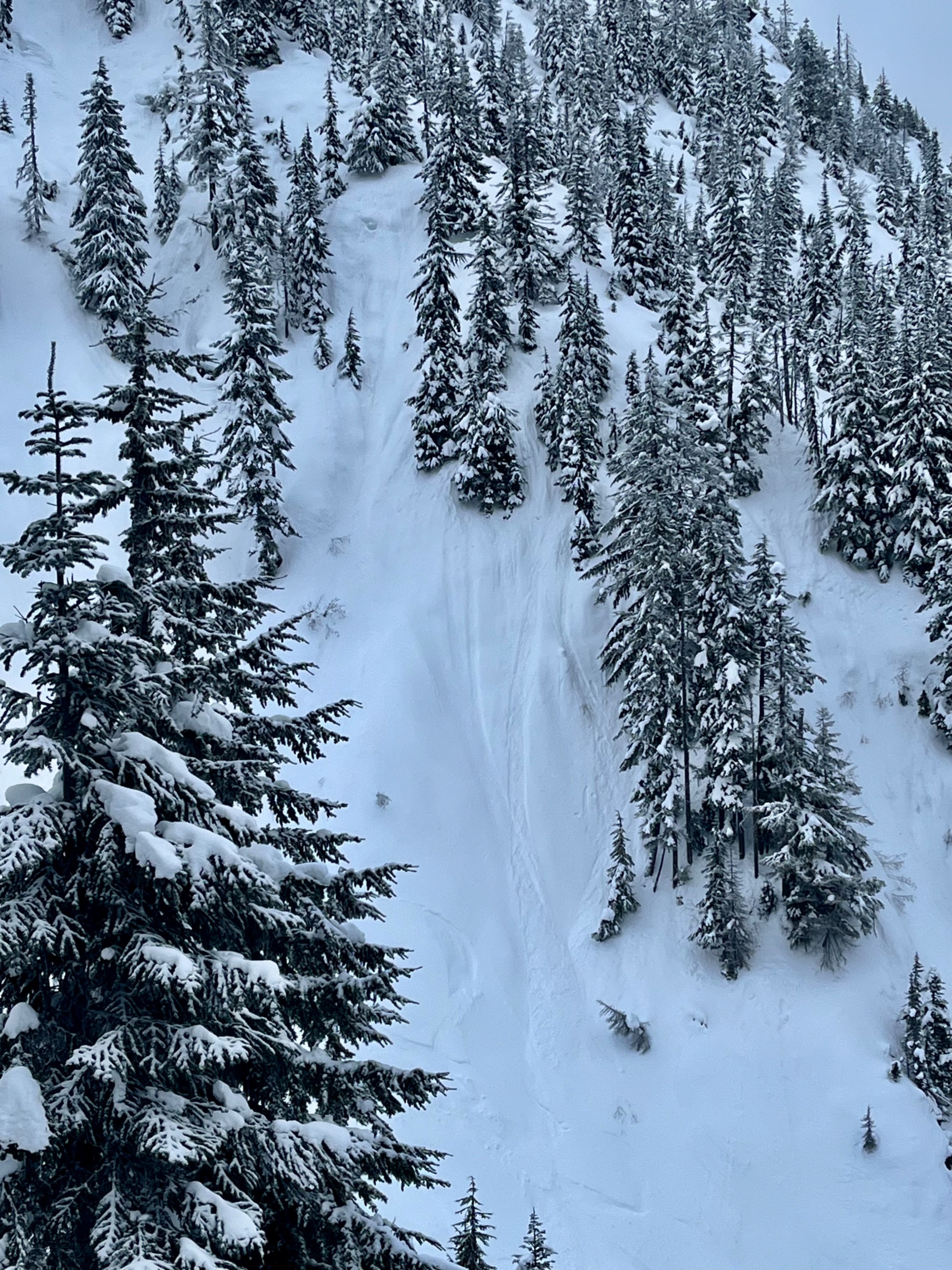
The only avalanches we saw were very small loose dry avalanches, or sluffs, running naturally on very steep slopes in the top 1-2" of snow.