
Quick report
- Collapsing
- isolated
Light winds kept the snow surface cooler than expected. The only rollerballs were on steep south facing slopes out of rocky terrain.
We found soft snow on NE aspects above 6500 feet. We experienced a whumpf on the skin track, which made us feel good about our plan to stick to lower angle angle terrain. We skied a few isolated slopes right around 30 degrees, but only small ones with minimal consequence, and always one at a time.
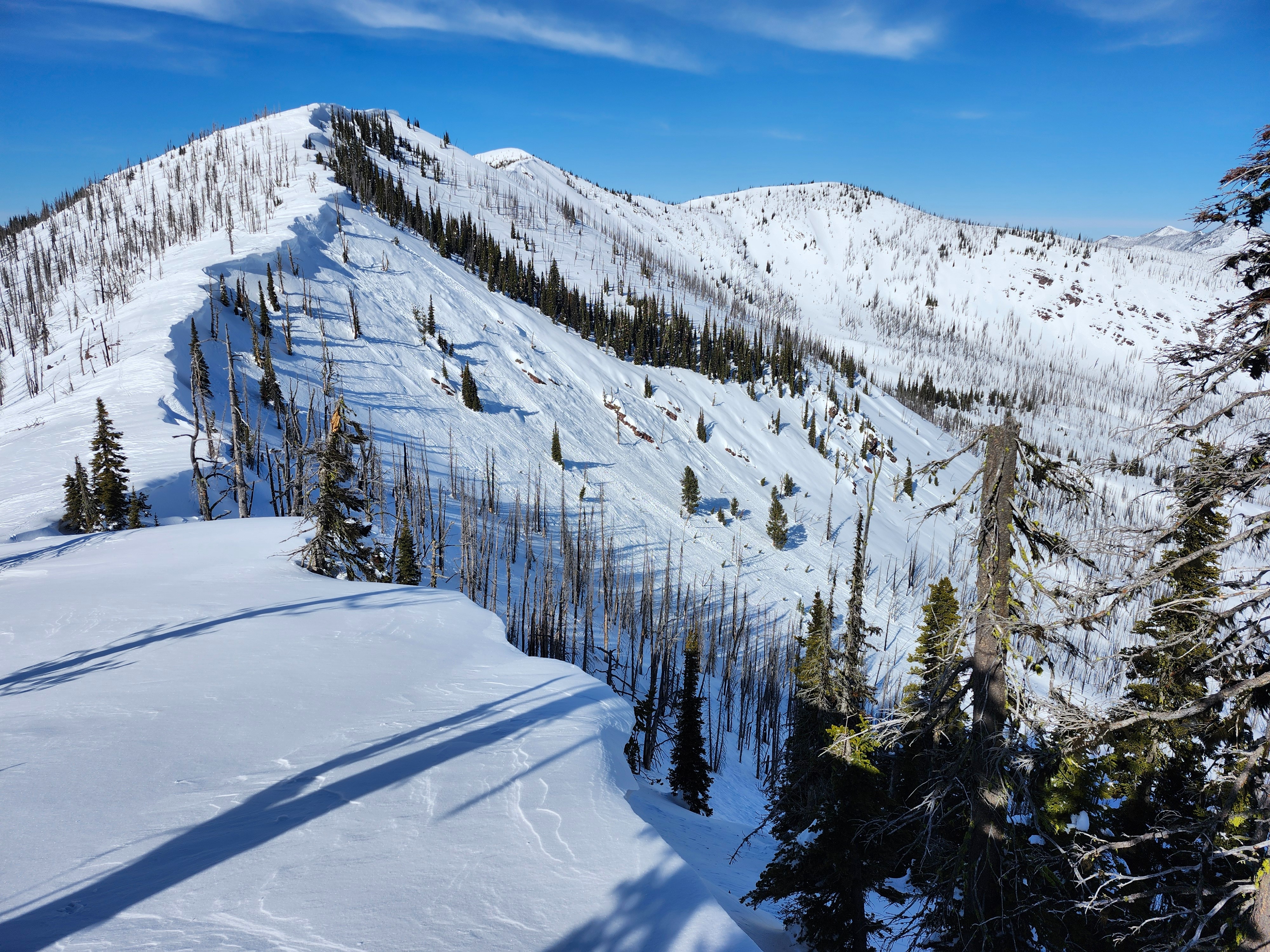
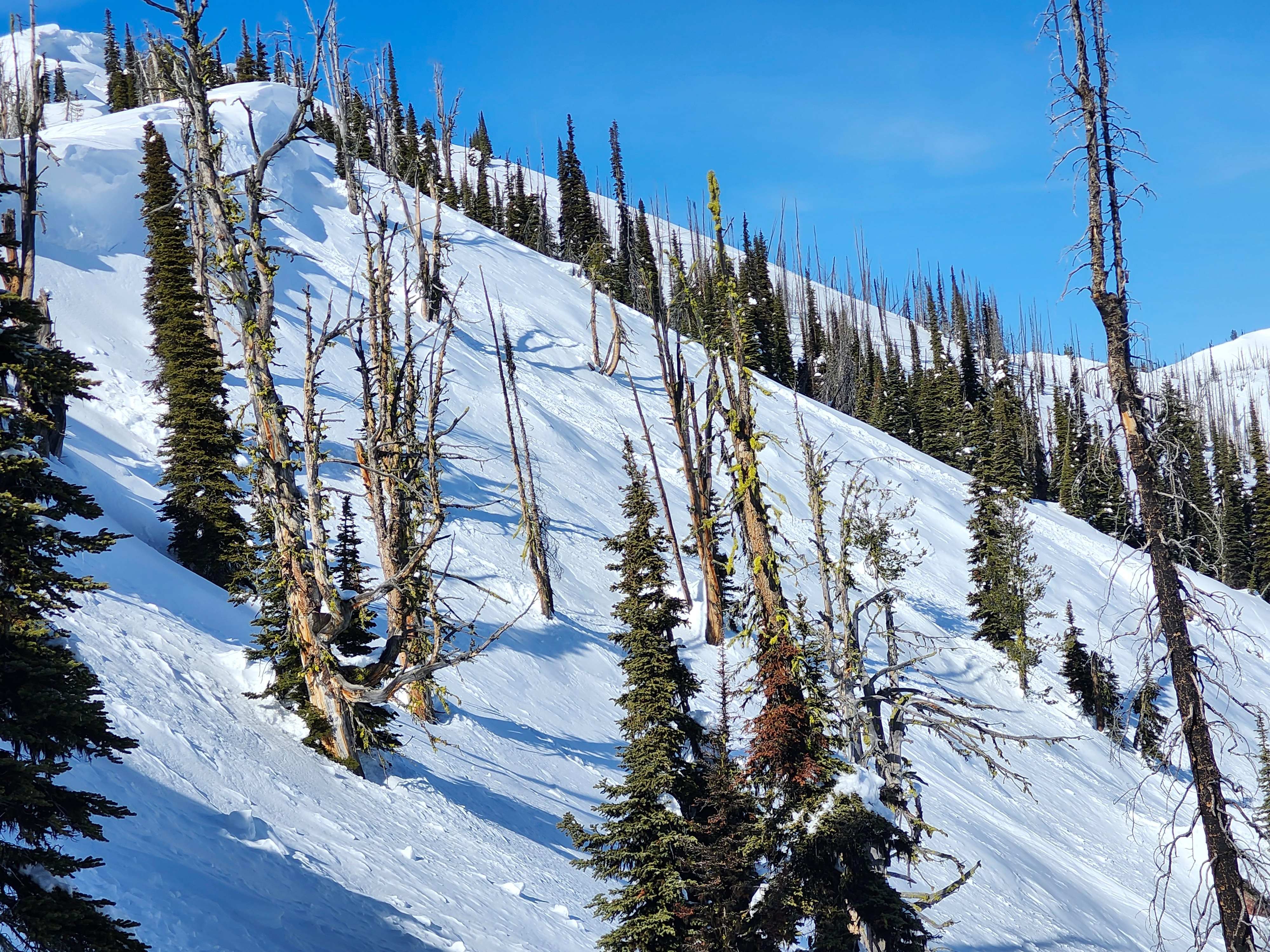
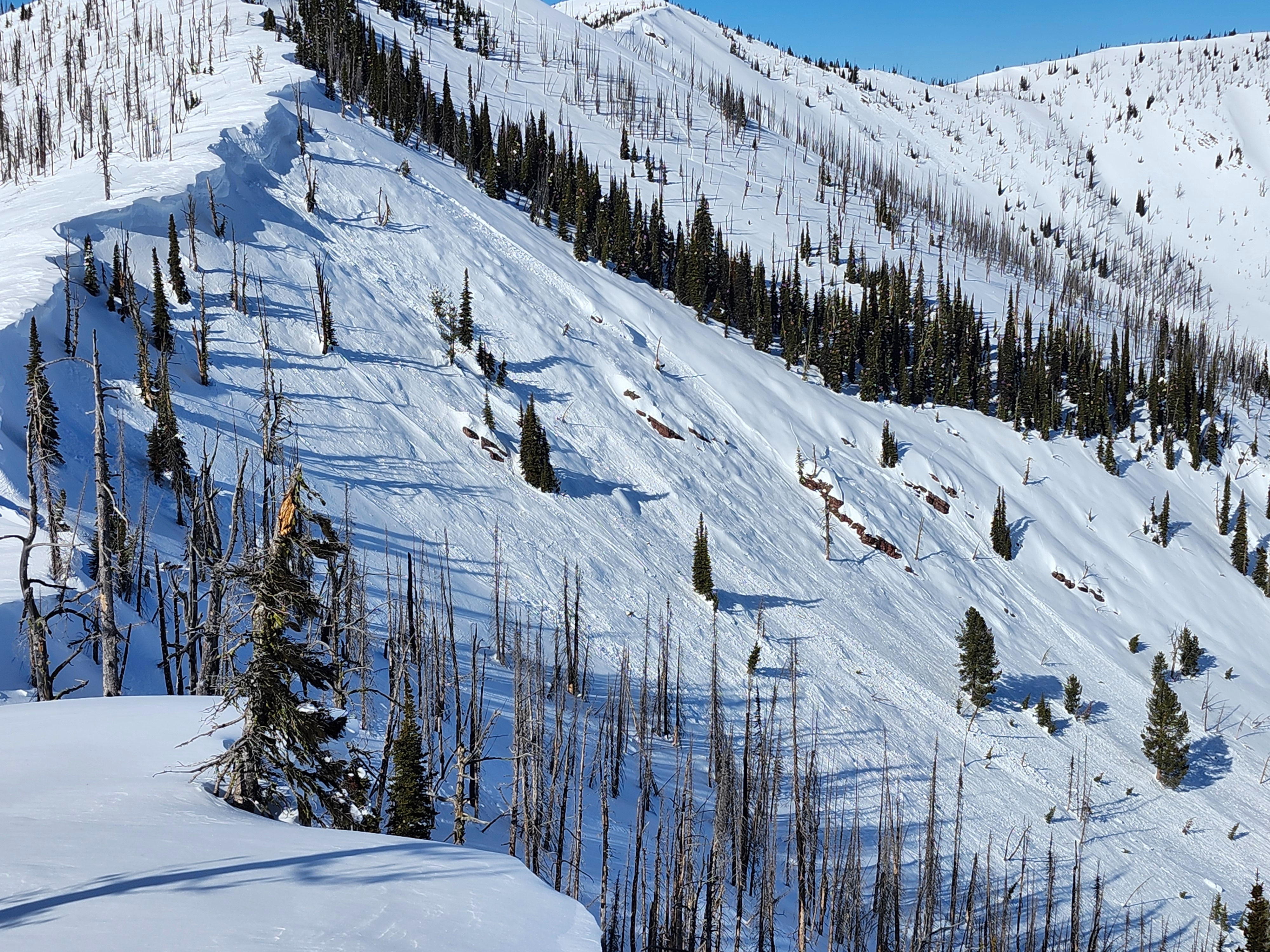
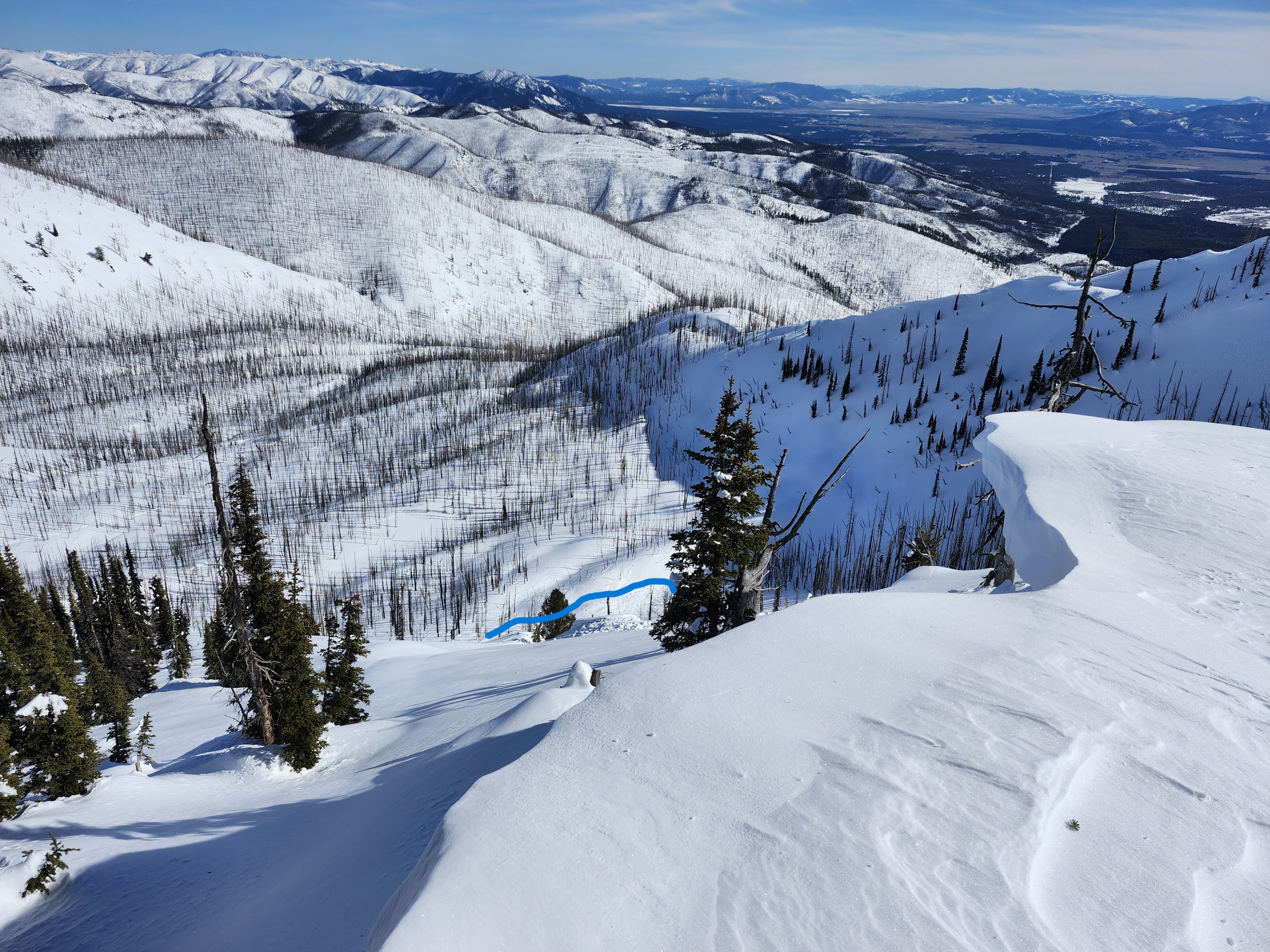
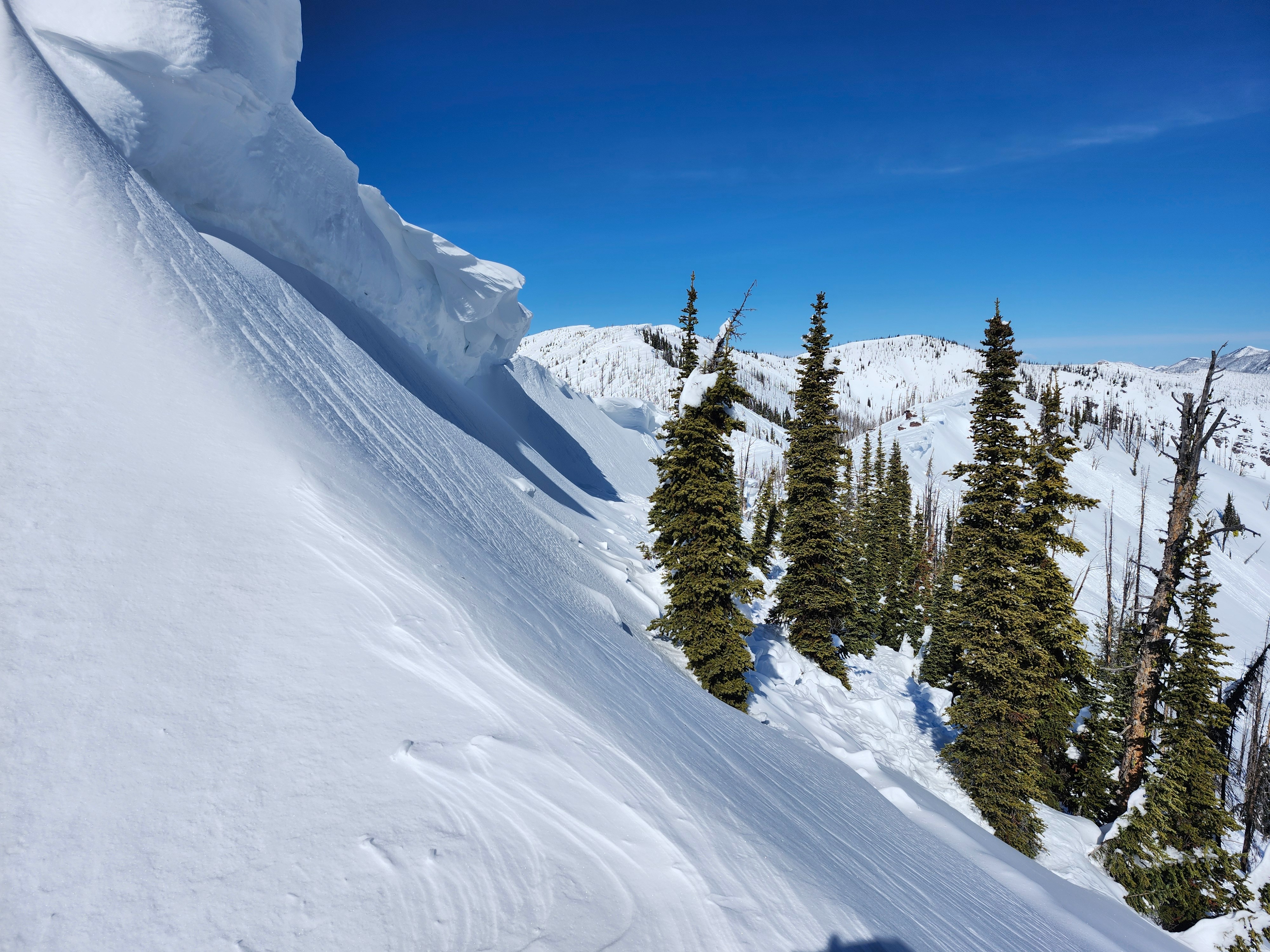
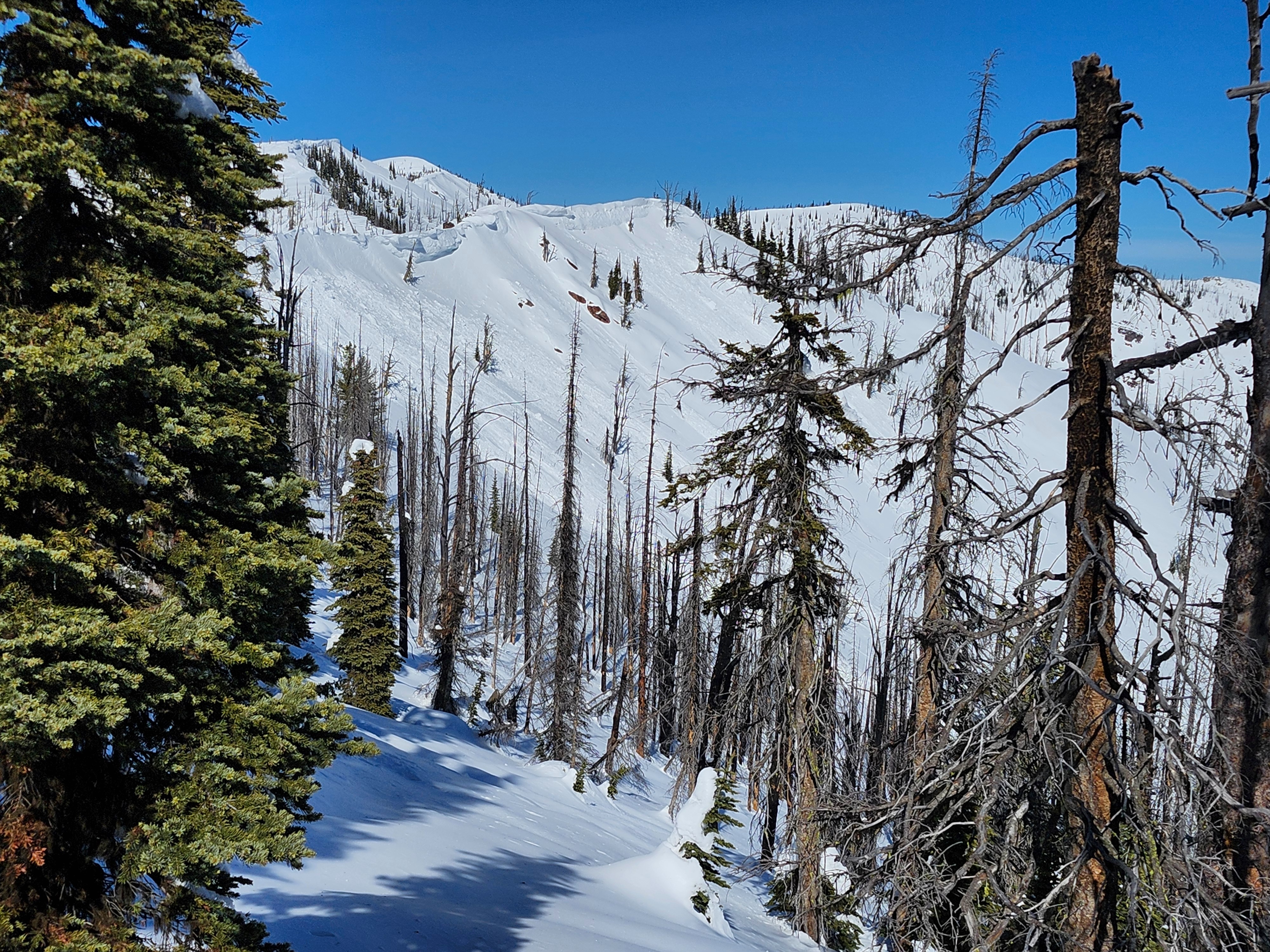
We saw multiple cornice falls and one cornice-triggered size 2 persistent slab avalanche. All appeared to be from the February 25th wind event.
Wind slabs at ridgetop have become stubborn. I stomped on a number of rolls and saw no signs of reactivity. However, I still would not feel comfortable skiing wind loaded slopes large enough to produce a dangerous avalanche.
One collapse on an easterly slope around 7500 feet. Saw evidence of natural avalanches and cornice fall from four days ago.Weather
- Air Temp
- 32
- Cloud Cover
- few
- Wind Loading
- previous
- Rain Elevation
- N/A
- Recent Snowfall
- 0
- Snow Avail For Transport
- small smounts
Consistent light winds kept the snow surface cooler than expected, though temperatures were likely near freezing most of the day.
Snowpack
In most places the snow surface was either hard wind slab or crust, though on NE aspects surface snow was still soft above 6500 feet.
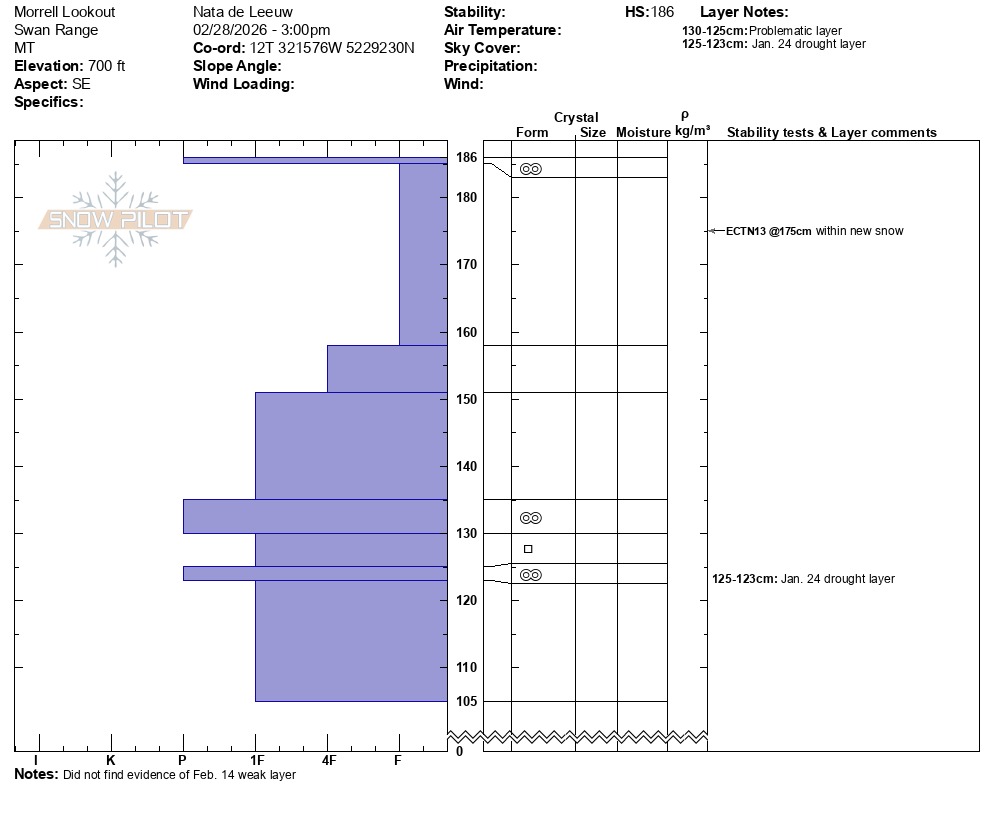
We found the Feb. 14th surface hoar on north through east aspects. On a wind loaded NE aspect at 7600 ft we got a propagating ECT (ECTP26) on this layer buried 1.6 feet (50cm) deep.
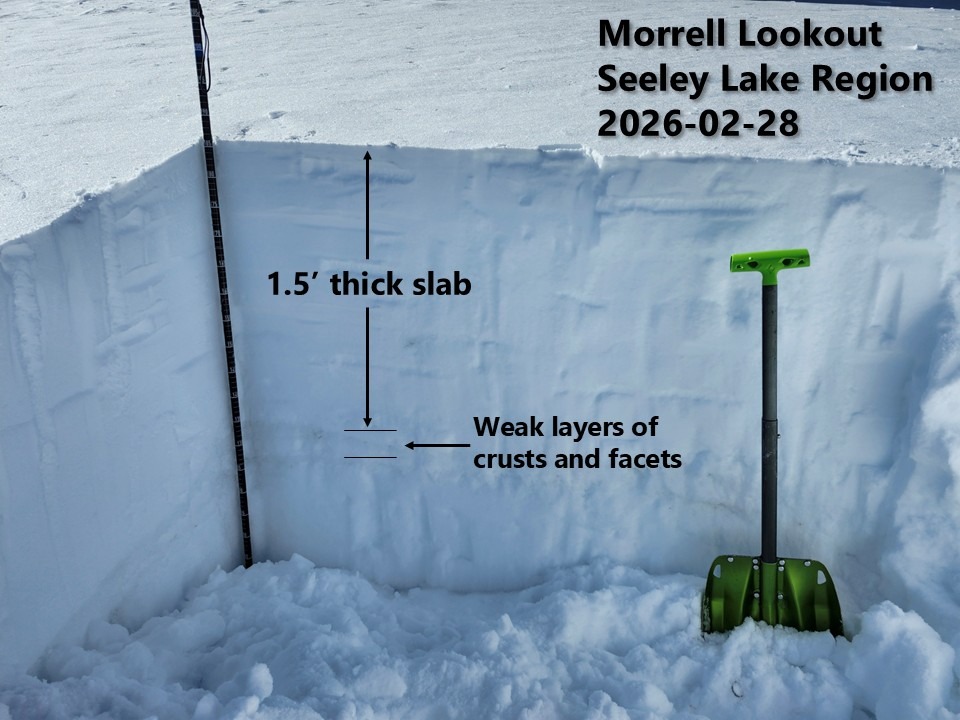
In a SE pit at 7700 feet in a wind sheltered area, we did not find surface hoar. Instead, we found two layers of crusts with facets between, also about 1.5 feet (50cm) deep. This was most likely the January drought layer buried Jan. 24th.
Avalanche
- Size
- D1.5
- Type
- C
- Count
- 2
- Aspect
- SE
- Trigger
- N
- Elevation
- 7720 ft
One size 2 avalanche and multiple cornice falls. All appear to be from the wind event on February 25th.