
Quick report
- Cracking
- isolated
- Collapsing
- isolated
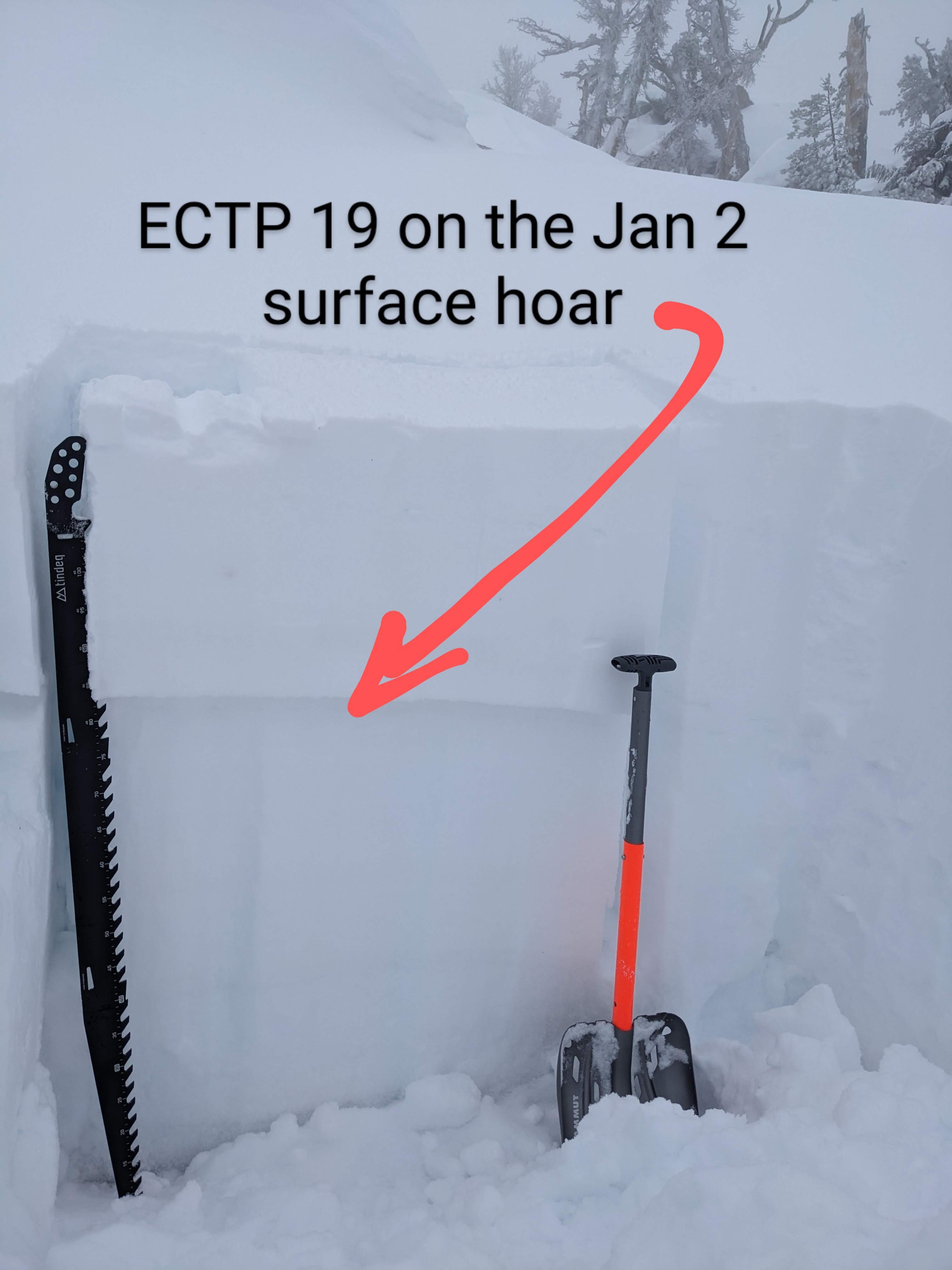
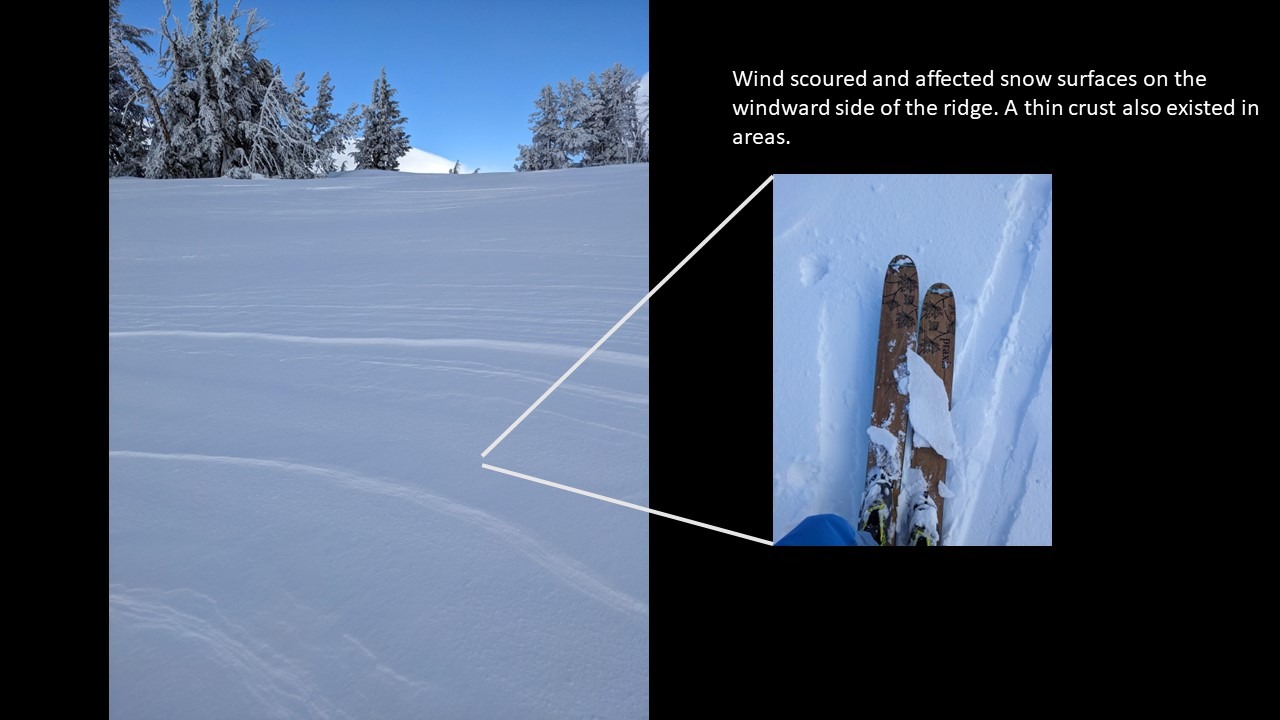
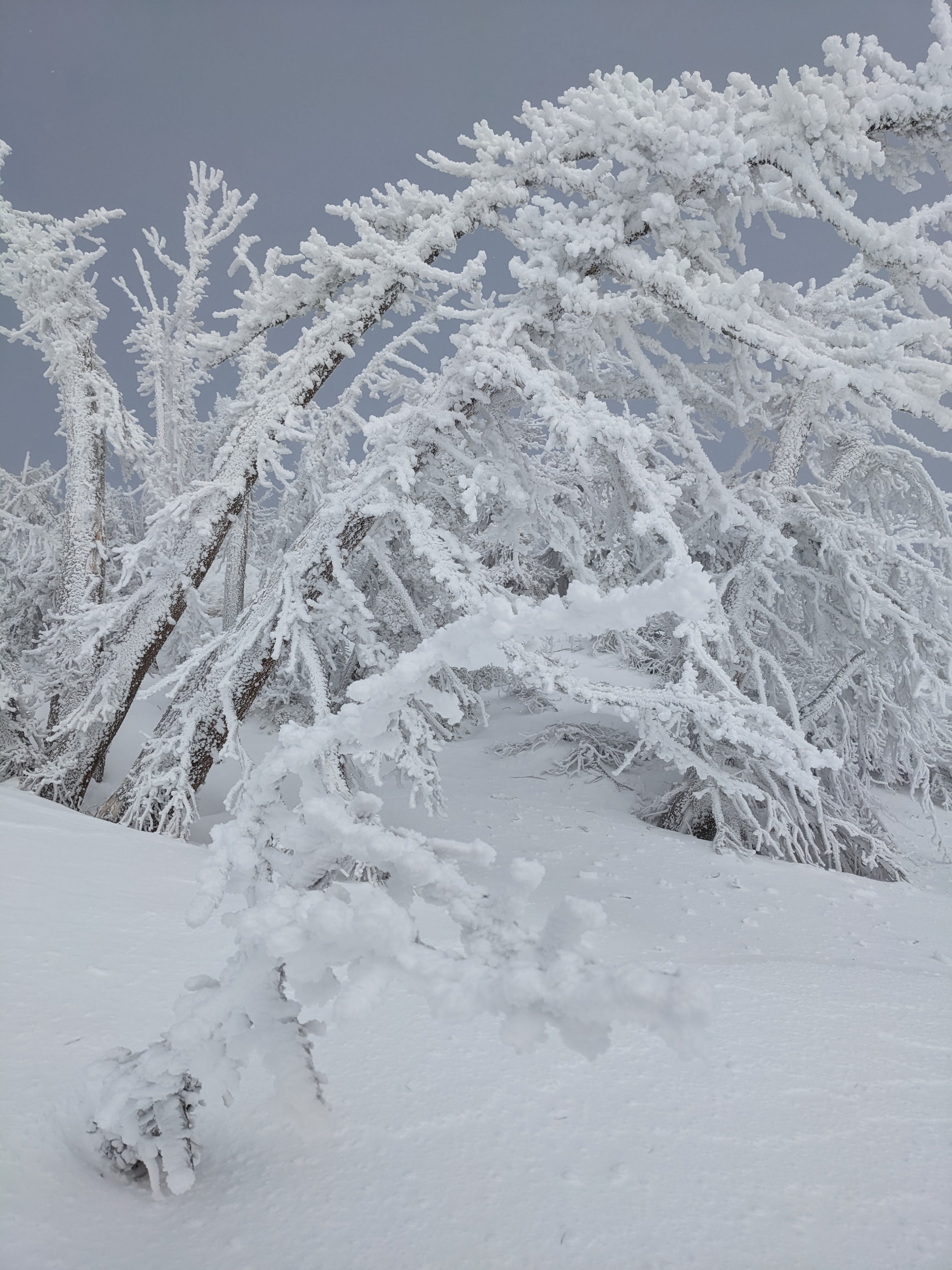
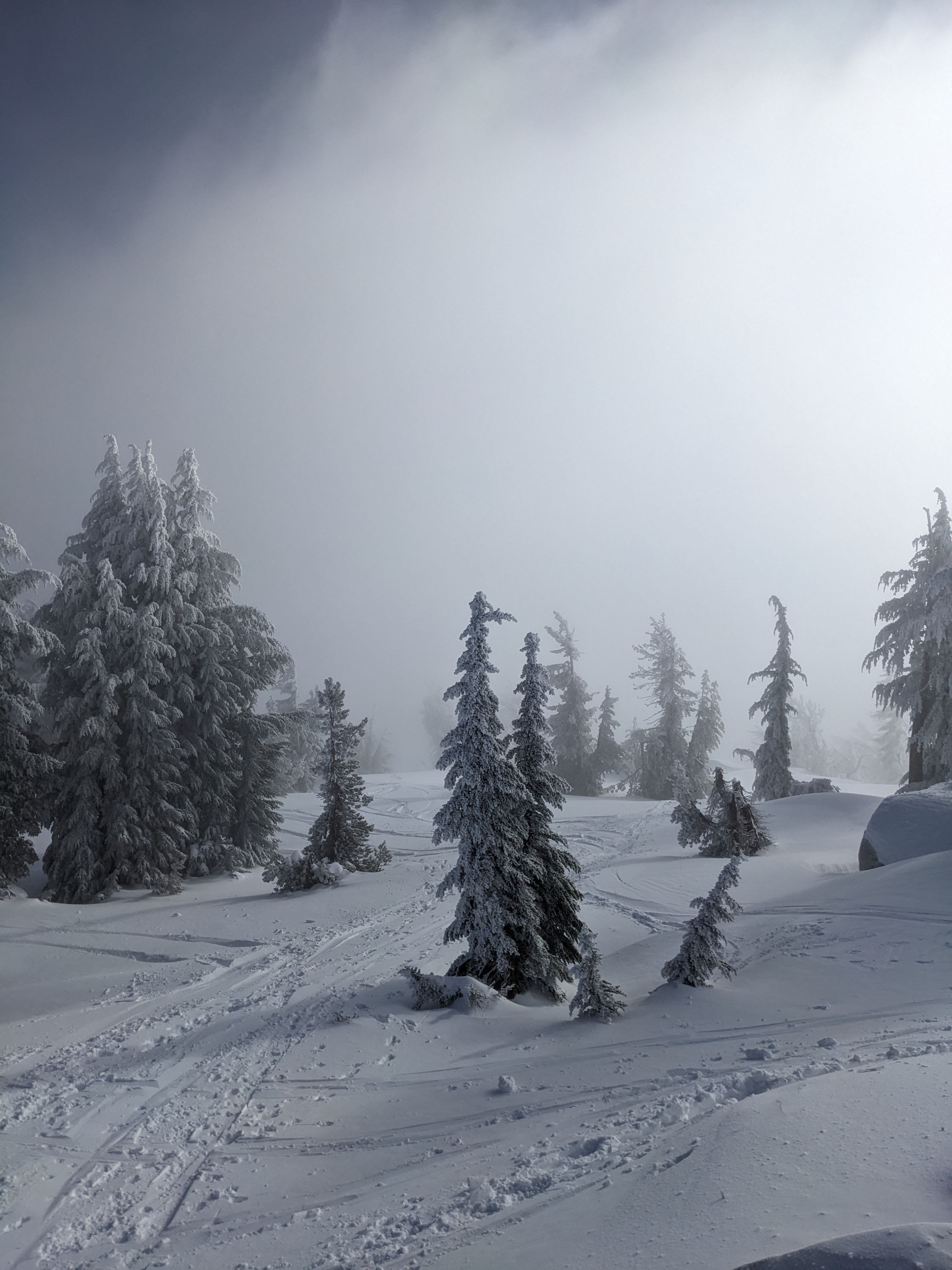
We toured on Chickadee Ridge and up to the Summit of Ophir Peak. Along the way, we could feel upside down layering in the snowpack due to the dense new snow resting on top of lighter snow. Rime covered the trees all the way to the summit. We saw signs of wind loading like scoured surfaces on the south side of the ridge and cornices and piles of drifted snow on the N-NE side of the ridge. We tried stepping on and ski-cutting some wind-loaded test slopes, but our efforts did not trigger signs of instability. However, when we dug into the snowpack on the N side of Chickadee Ridge, we immediately saw the surface hoar layer buried on Jan 2 and the weak snow at the bottom of the snowpack. The Jan 2 weak layers failed in tests and collapsed/whumpfed under our weight as we moved away from the pit (see instability section).
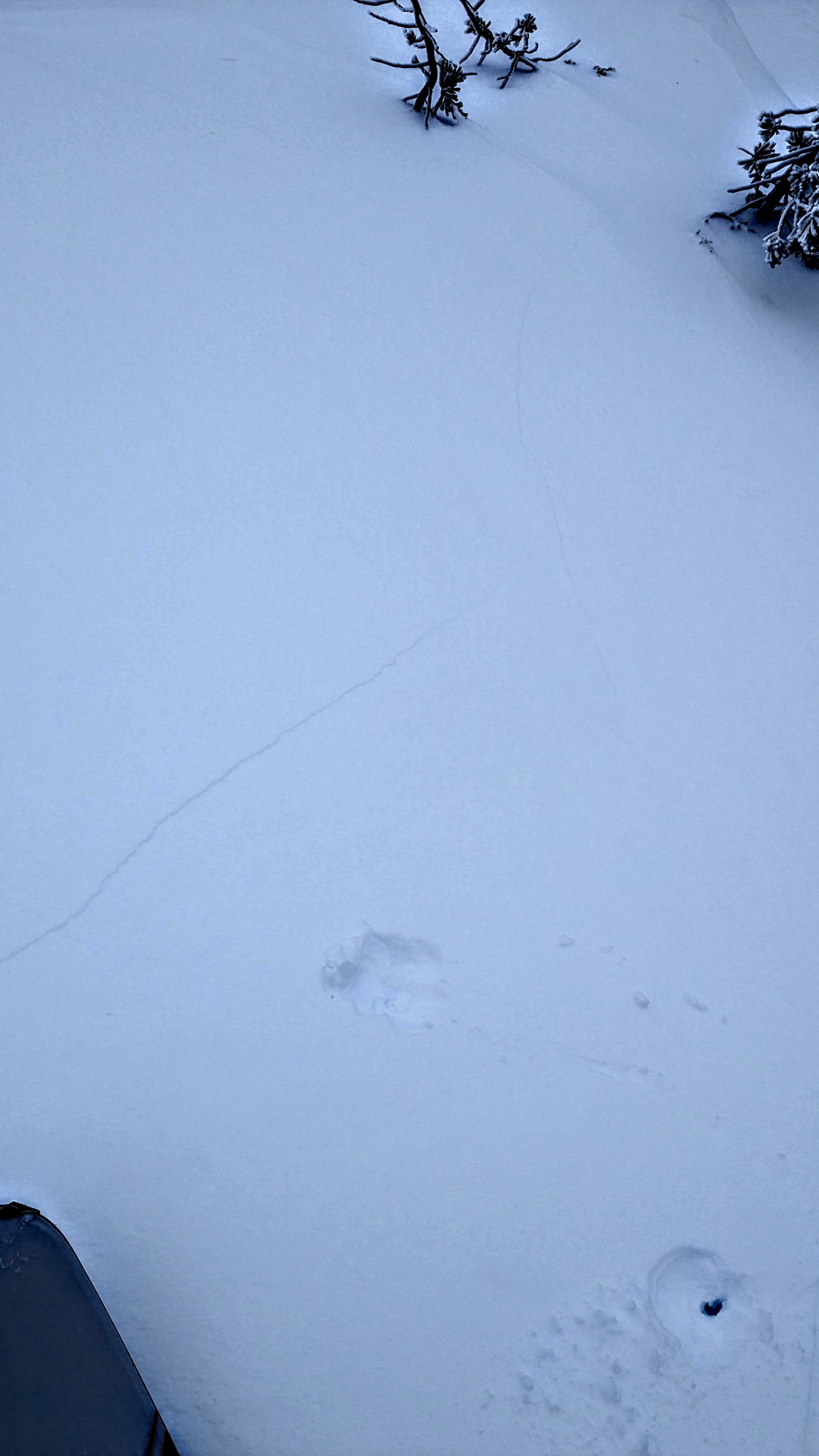
When departing our snowpit, a few feet above our pit location, we triggered a whumpf and a 15-foot-long crack. We dug out the crack and confirmed it went down to the Jan 2 PWL.Weather
- Air Temp
- 31
- Cloud Cover
- broken
- Wind Loading
- none
- Recent Snowfall
- 15
- Snow Avail For Transport
- small smounts
Periodic fog on the peaks.
Snowpack
The Jan 2 PWL was reactive in snowpit tests, and the whumpf we triggered near the snowpit confirmed these unstable results (see instability section). Tests targeting the weak snow at the base of the snowpack did not clearly indicate current instability, but they did suggest that fractures could still propagate on the basal weak layers if those layers break.