
Quick report
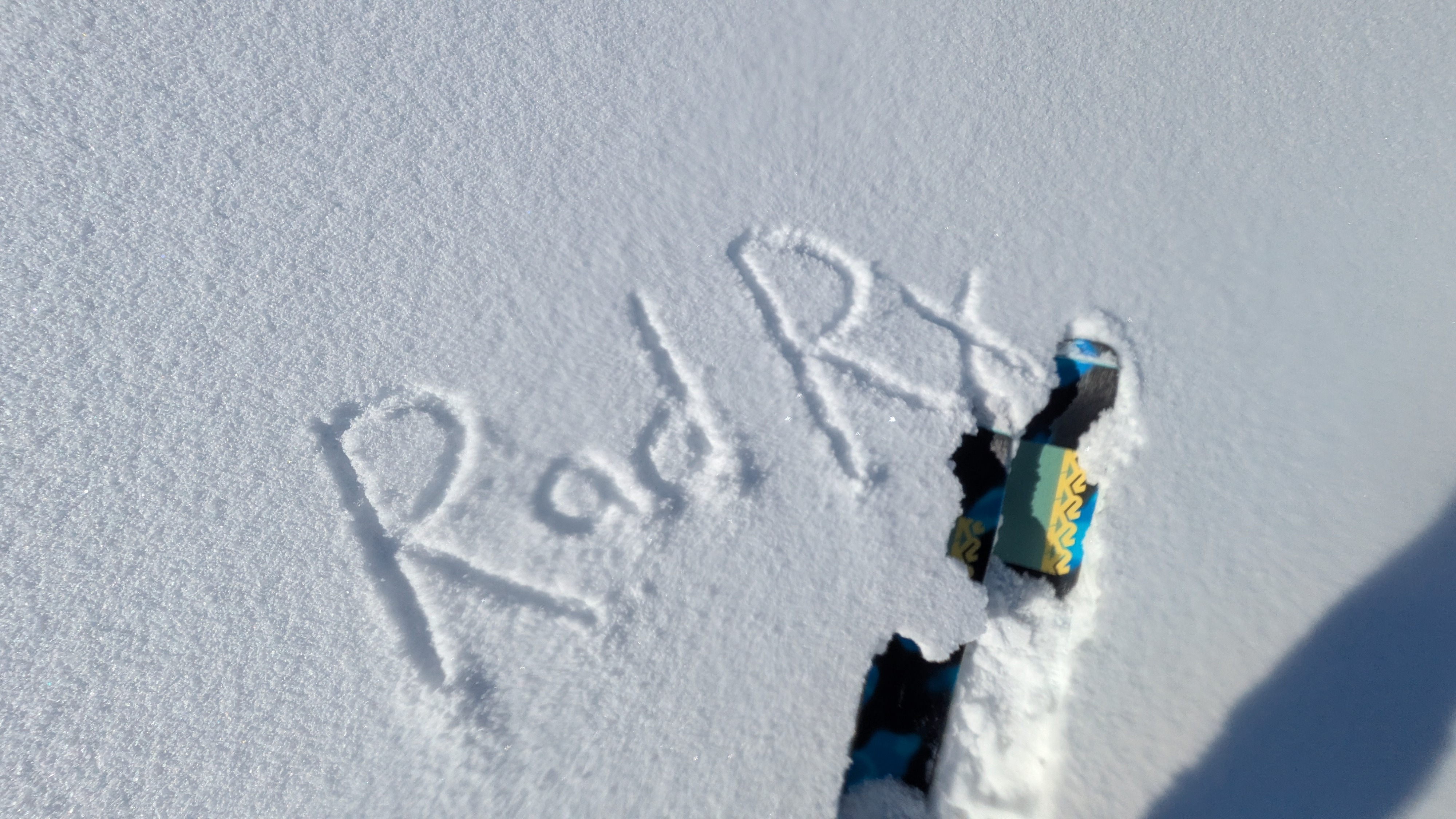
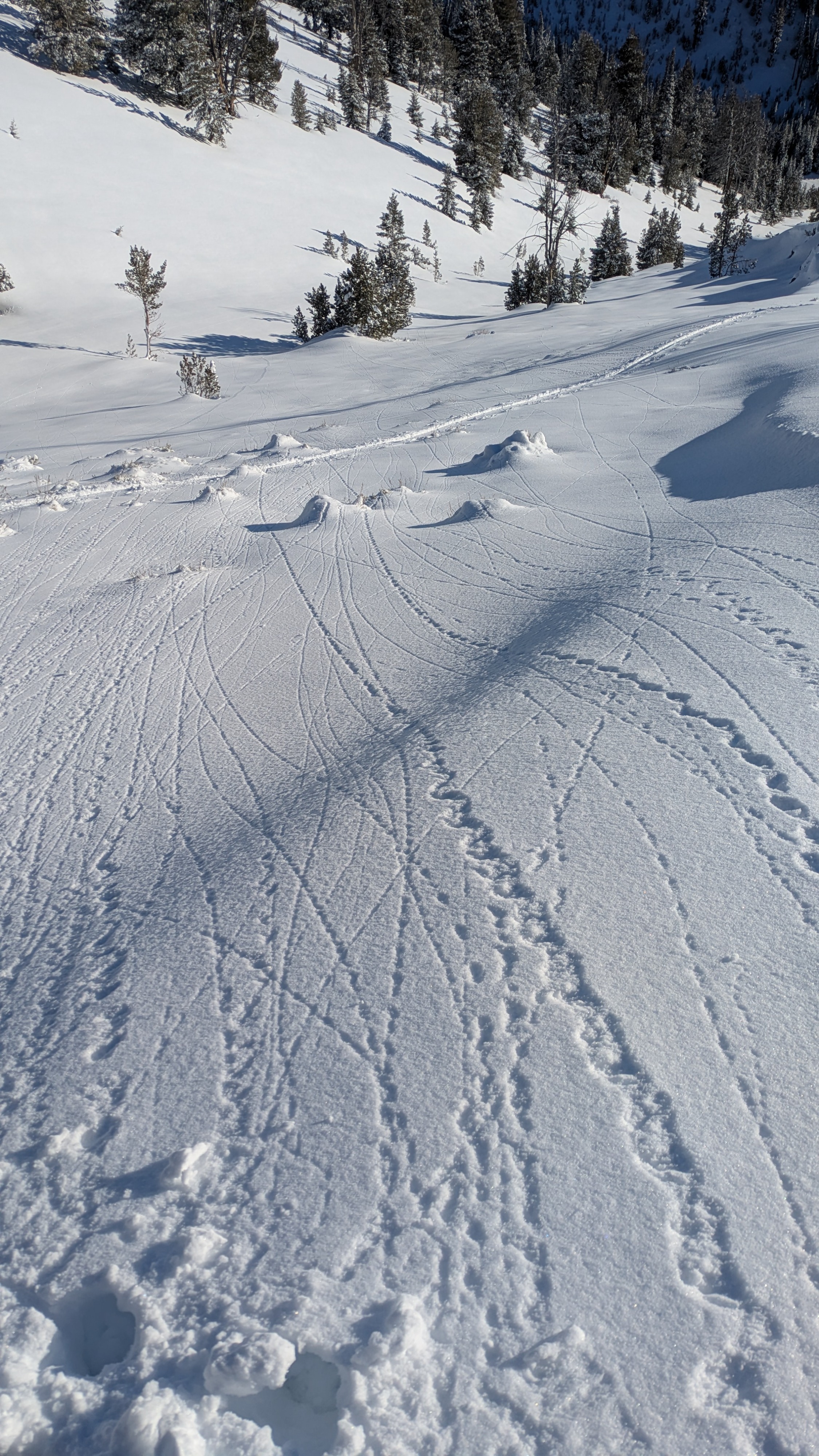
Another beautiful day in paradise, what a treat to have fresh snow on the ground. I targeted solar aspects today, for ski quality and to avoid the persistent slab problem. Success on both counts! I found excellent snow on sunny slopes, moving from SE-S-SW-W through the day, catching cold, dry snow as I went. There was more fresh snow (10-20% more?) over on this side of the street than I found in beaver creek the day before. Unfortunately, we lost a lot of good snow out there today as the sun went to work. Following a generally cloudy morning, skies cleared completely by noon, allowing for uninterrupted sunshine throughout the afternoon. I could see across most of the SAC forecast area, it looked like everybody got this heavy dose of sun. Clouds started pushing in from the S late in the afternoon, limiting solar input south of Galena Summit for the final hour or two of the day. I observed the formation of widespread radiation recrystallization crusts today (see picture below). This was one of the more widespread RadRx events I've watched happen. I found refreezing RadRx crusts+associated facets on SE, S, and SW aspects on slope angles in the low 20s to mid 30s throughout the middle elevation band. They may have been on steeper slopes and higher slopes as well, I just wasn't traveling on those. Unfortunately, these 2/10 crust+facets will complicate the already complex persistent slab picture that is developing. I've been more optimistic about direct solar slopes that took a hard cooking during the drought (S-SW), but these are the same aspects where today's RadRx crusts+facets formed. Bummer. It is quite common to form crust+facet weak layers at this point in February; perfect sun angle and temps... The 2/8 weak layer is currently the primary driver of my terrain selection. Any wind loading that occurred during the storm happened early, and wind slabs are difficult to identify from a distance thanks to the low density duff sitting on top. The wind slabs I encountered on sunny slopes were well bonded and showed no signs of instability. Hazard is greatest in wind loaded terrain where the 2/8 weak layer is at its worst, on the shady side of the compass (E-NE-N-NW). If you've been finding soft snow during the long drought, this is where you were finding it. I'm avoiding steep slopes on these aspects where the slab of snow overlying the problematic 2/8 weak layer may be wind stiffened. I'm expecting this all to become more complex, and safe travel more challenging as loading continues and the slab builds. No cracking or collapsing, no avalanches triggered. Only observed local avalanches were dry loose sluffs in storm snow.