
Quick report
- Cracking
- specific
The combination of new snow and wind was driving our terrain selection today. I observed winds depositing snow into stiffer drifts in exposed middle and upper elevations. In sheltered middle elevation terrain, I observed small, isolated cracking and poor test scores down 1.5' within the new snow.
I observed old cracks in wind features near the top of Copper Mountain. Cracks spanned 50' or so in heavily wind-affected areas. Small isolated cracking also occurred within the new snow in middle elevations. These cracks failed within a storm interface on a density change and seemed to behave like a storm slab.Weather
- Cloud Cover
- overcast
- Recent Snowfall
- 20-30
Broken skies this morning, turning overcast by the afternoon. This morning, the winds were blowing moderate with strong gusts from the SW. Wind direction shifted from SW to W-NW in the afternoon. Winds were transporing low density snow all day. Precipitation began around noon. There were periods with heavy snowfall. 2-4 inches fell during my time in the field.
Snowpack
Wind Slabs:
Wind slabs were my main concern today. Winds were easily transporting the low-density snow that recently fallen. Small wind-drifts began on ridgetops at 7700' and increased in depth and distribution as I climbed in elevation. Typical depth was around 45cm, and F to F+ hard.
Below 7500':
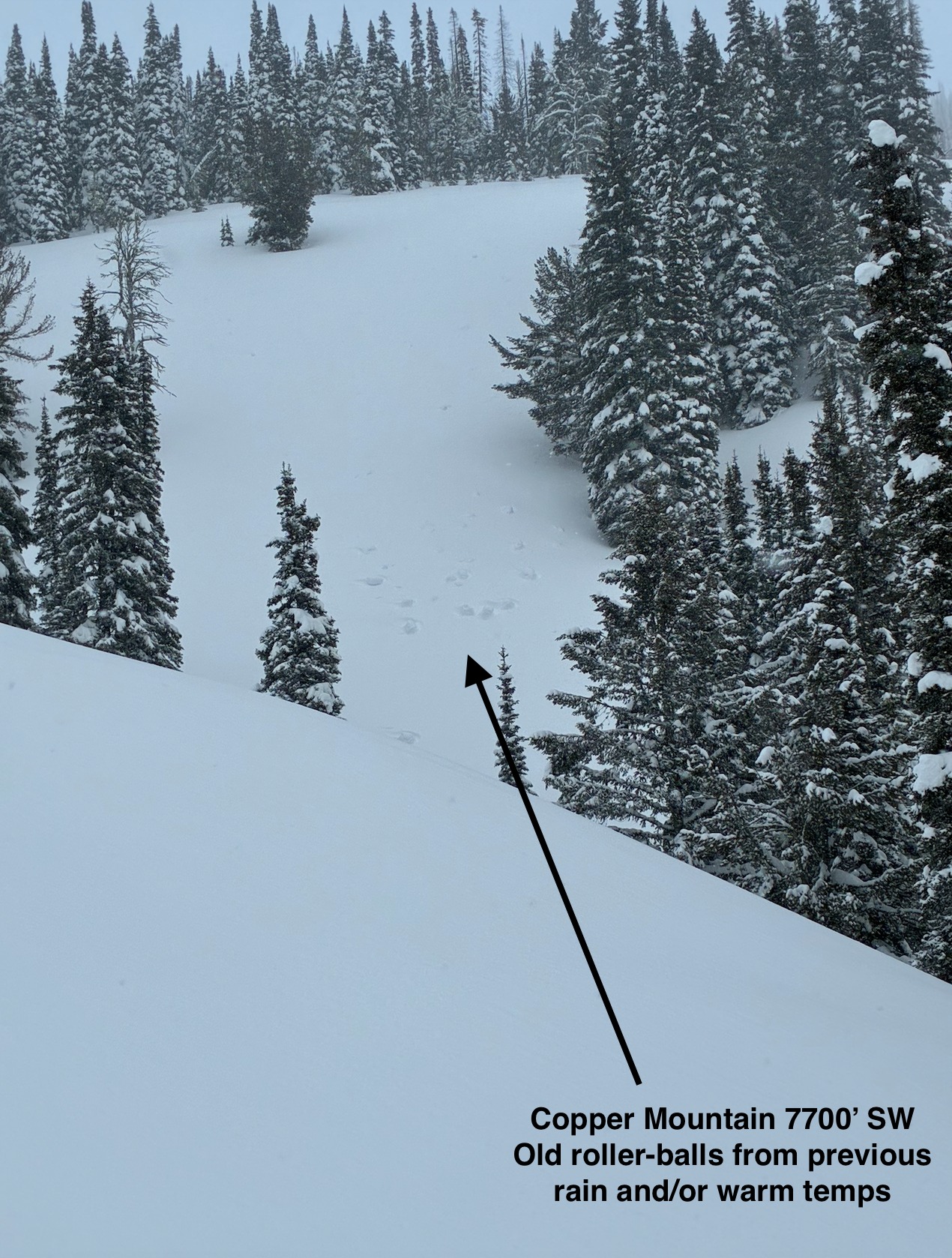
Roughly a foot of new snow sits atop a stout rain crust below 7500'. The snowpack below the crust is a mixture of moist/wet 4F hard snow and melt-freeze crusts. The upper crust has frozen and is supportable for skis.
Above 7500':
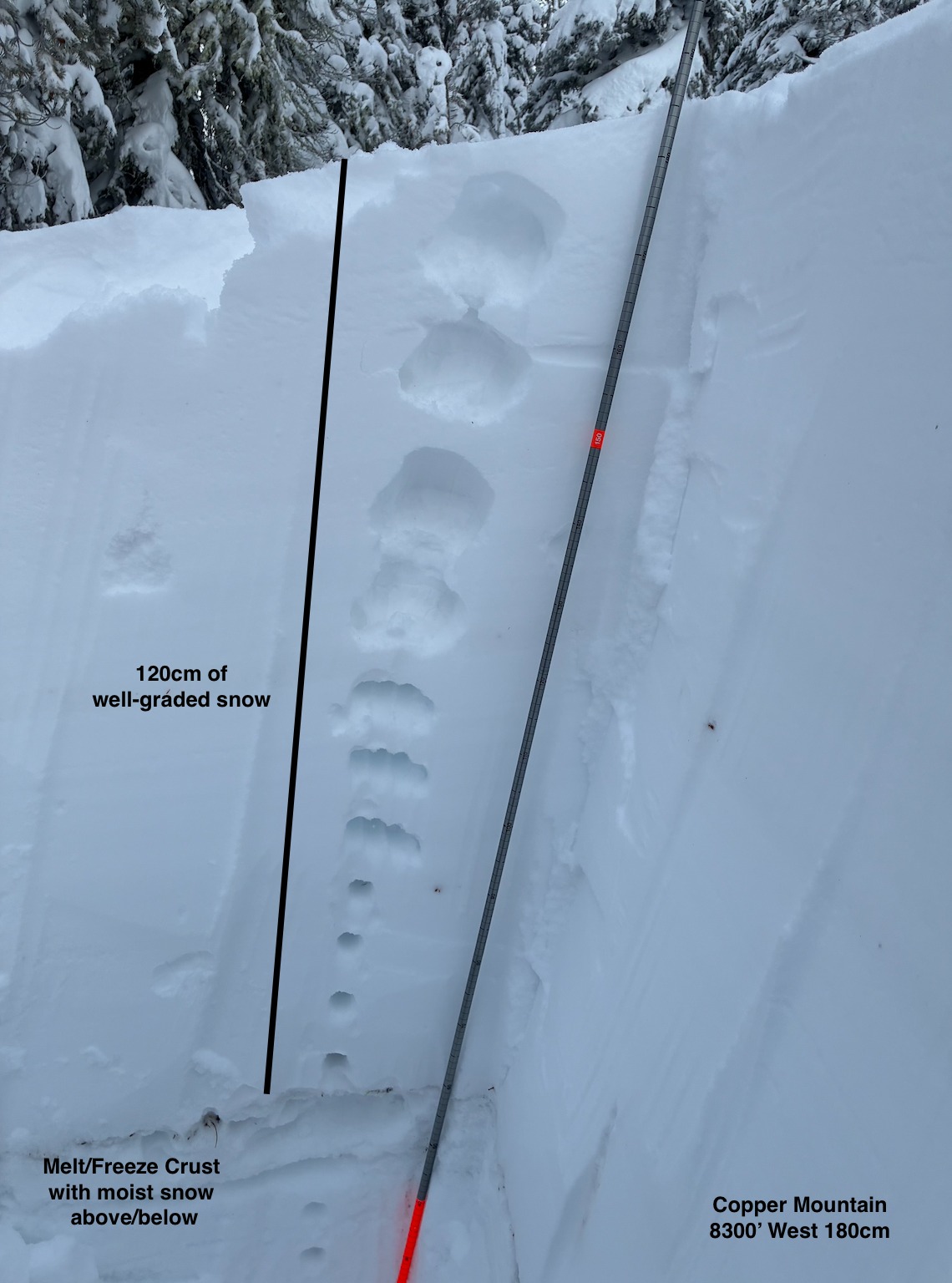
The upper rain crust gradually tapers from thick and supportable at 7,500 ft to nonexistent by 8,000 ft and above. Above 8,000 ft, in non–wind-loaded terrain, I found a generally good snowpack structure. The snowpack is 180 cm deep, with 120 cm of storm snow that grades from F to 1F hard. Below the storm snow, there is a melt-freeze crust with moist snow above/below.
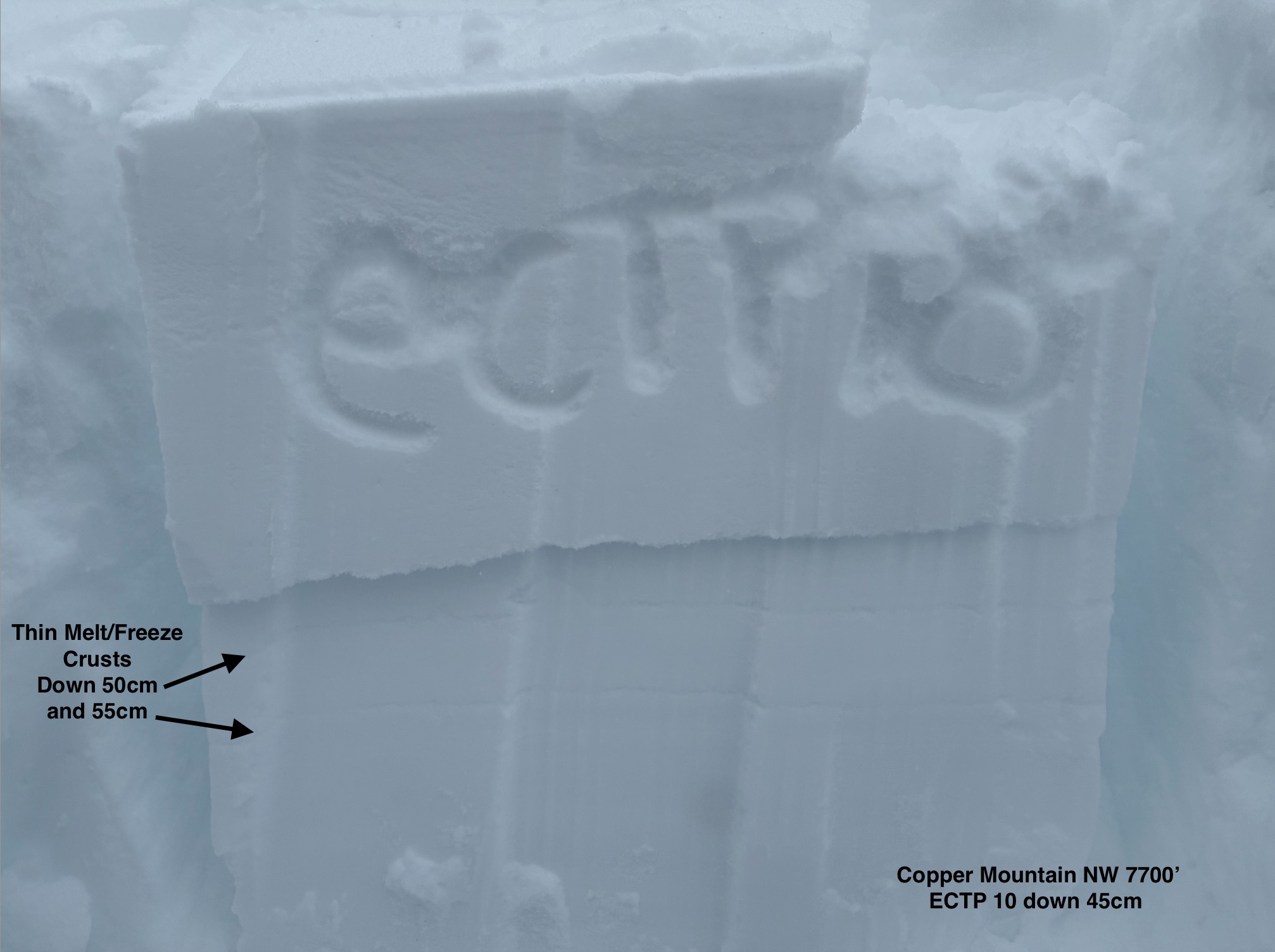
I received an ECTP on a storm interface down 45cm in sheltered terrain. I did not observe faceting present at the interface. Precipitation particles/graupel under a 45cm F hard slab.