
Quick report
- Collapsing
- specific
There is a well-developed 1.5-2' slab that can cause injury or worse. This strong snow sits on top of a stack of weak, sugary facets on the north side of the compass, and a less easily identifiable but still weak and possible to trigger mix of facets and crusts on solar aspects. Avalanches remain a worrisome possibility, with the consequences severe.
Weather
- Air Temp
- Below Freezing
- Cloud Cover
- few
- Snow Avail For Transport
- moderate amounts
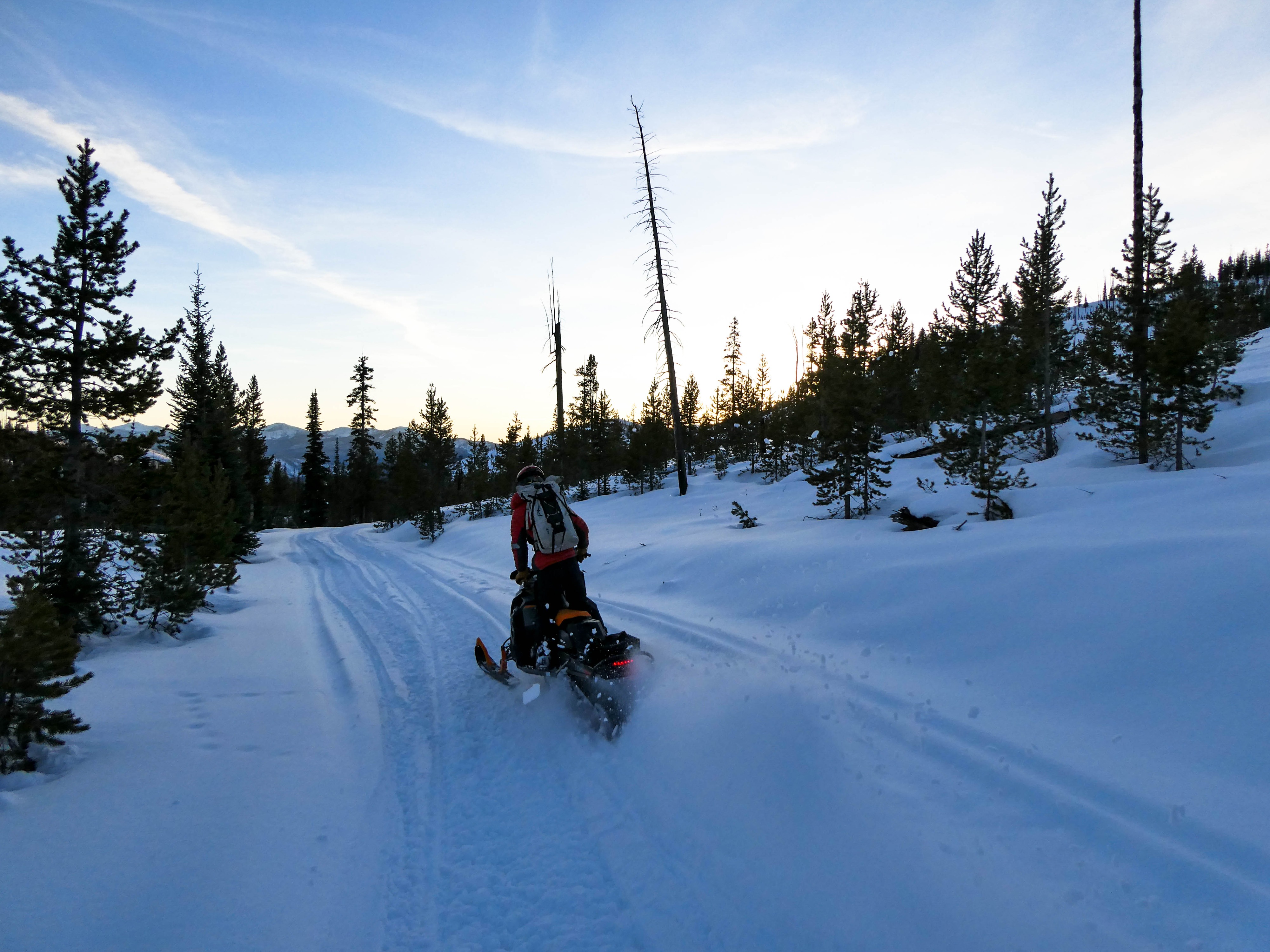
Few high clouds in the afternoon as we left the highway, which stayed with mostly blue skies into the evening. Winds were calm, and temperatures were below freezing. As we rode back out the road close to sunset, a low-lying bank of clouds filled in valleys in lower elevation portions of the region.
Snowpack
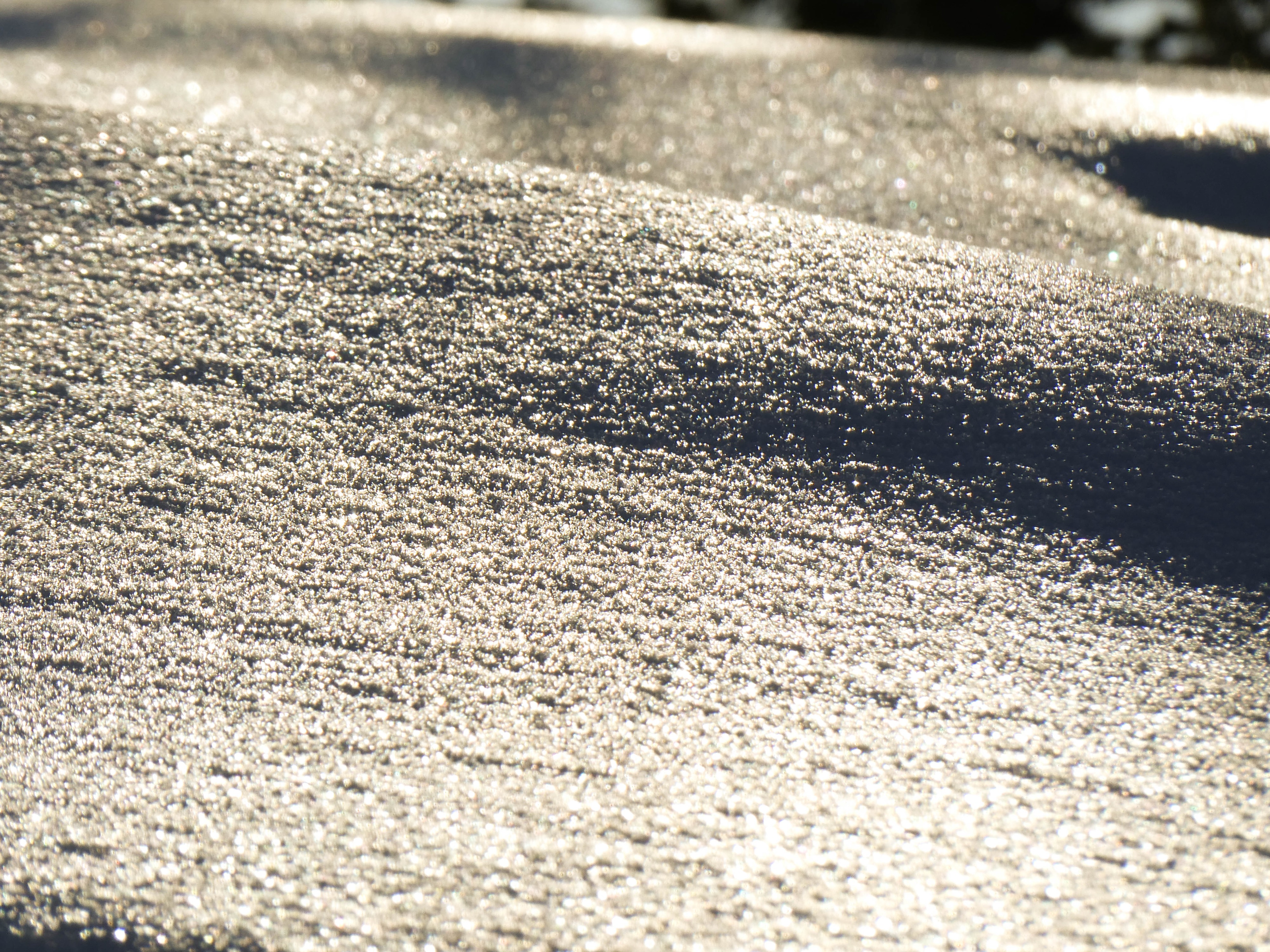
Riding out the road on a golden solstice early afternoon, we found straightforward travel conditions, with a thin small breakable crust on most surfaces over mostly soft, faceted snow. As we parked the sleds and got on our skis near 7600', snow surfaces were soft on northerly terrain at middle elevations, or had a thin solar crust on more southerly facing slopes. Digging a pit on a N-facing slope at 7800' in a snowpack 85cm deep, we found a well-settled and cohesive slab in the top 50cm of the snowpack (F to 1F to 1F+ to P) that was much thicker and well-preserved than in other zones in our forecast area we've observed this week. Stability tests indicated that the persistent slab problem still was present, and the snowpack both unstable and capable of causing damage with this large slab on top of the 11/30 facets (ECTP20 ↓50, ECTP 18 ↓50, CPST 18 & 23/100 to END). The facet stack near the bottom of the snowpack was a little thinner here than in other zones, and not as obviously split in two by the multiple early season storms that deposited them.
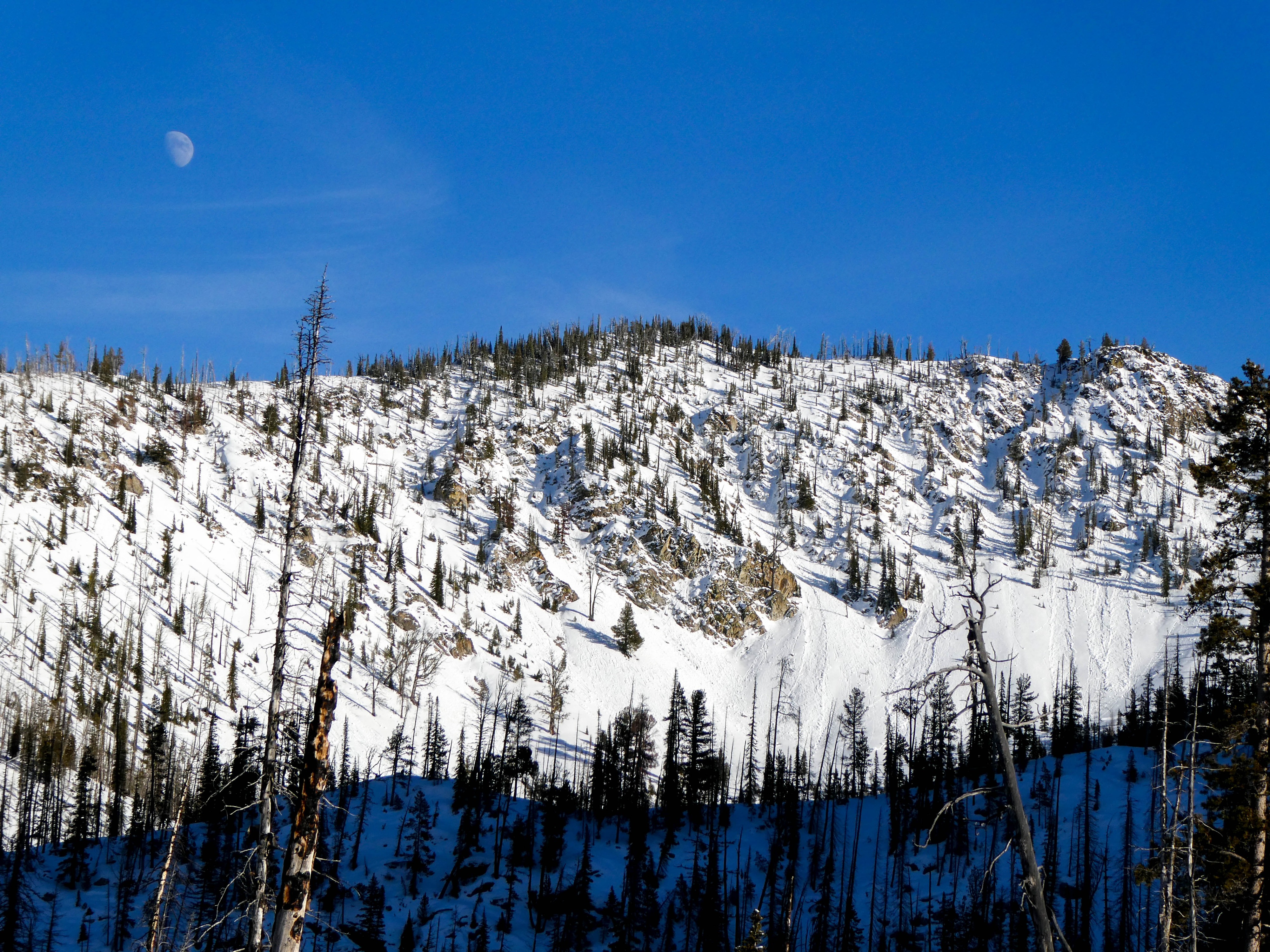
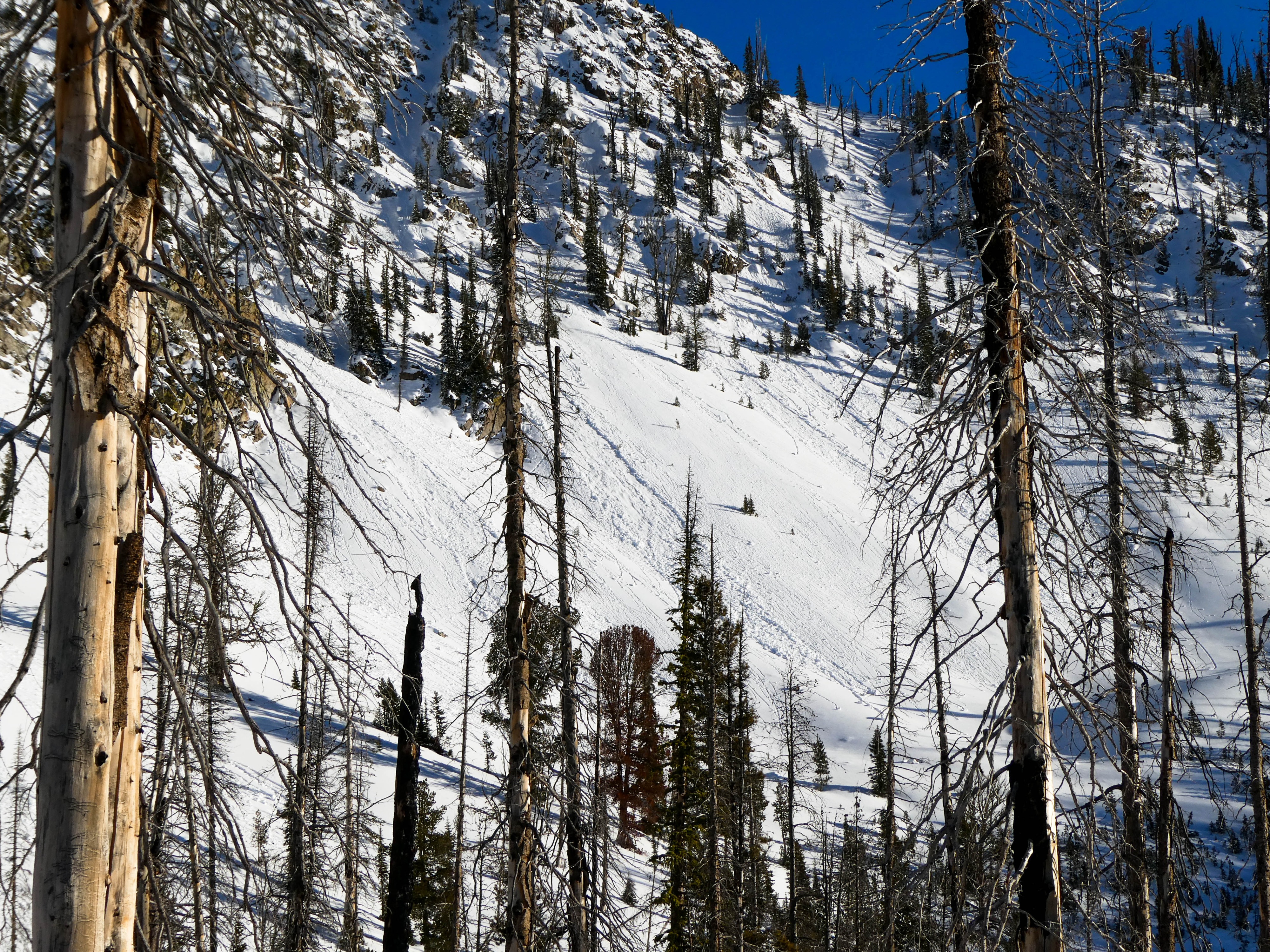
Moving through the terrain, we observed two surprisingly large (D1.5) wet loose slides as well as several smaller (D1) ones on solar aspects. These ran on a crust about a foot down into the snowpack (12/6 crust). Looking ahead, when we get more precipitation this 12/6 crust is going to be a worth consideration to track.
Avalanche
- Size
- D1.5
- Aspect
- SW
- Trigger
- N
- Elevation
- 8450 ft
There were two D1.5 and three+ D1 wet loose slides that appeared to run on a crust in the upper foot of the snowpack (12/6 crust).