
Quick report
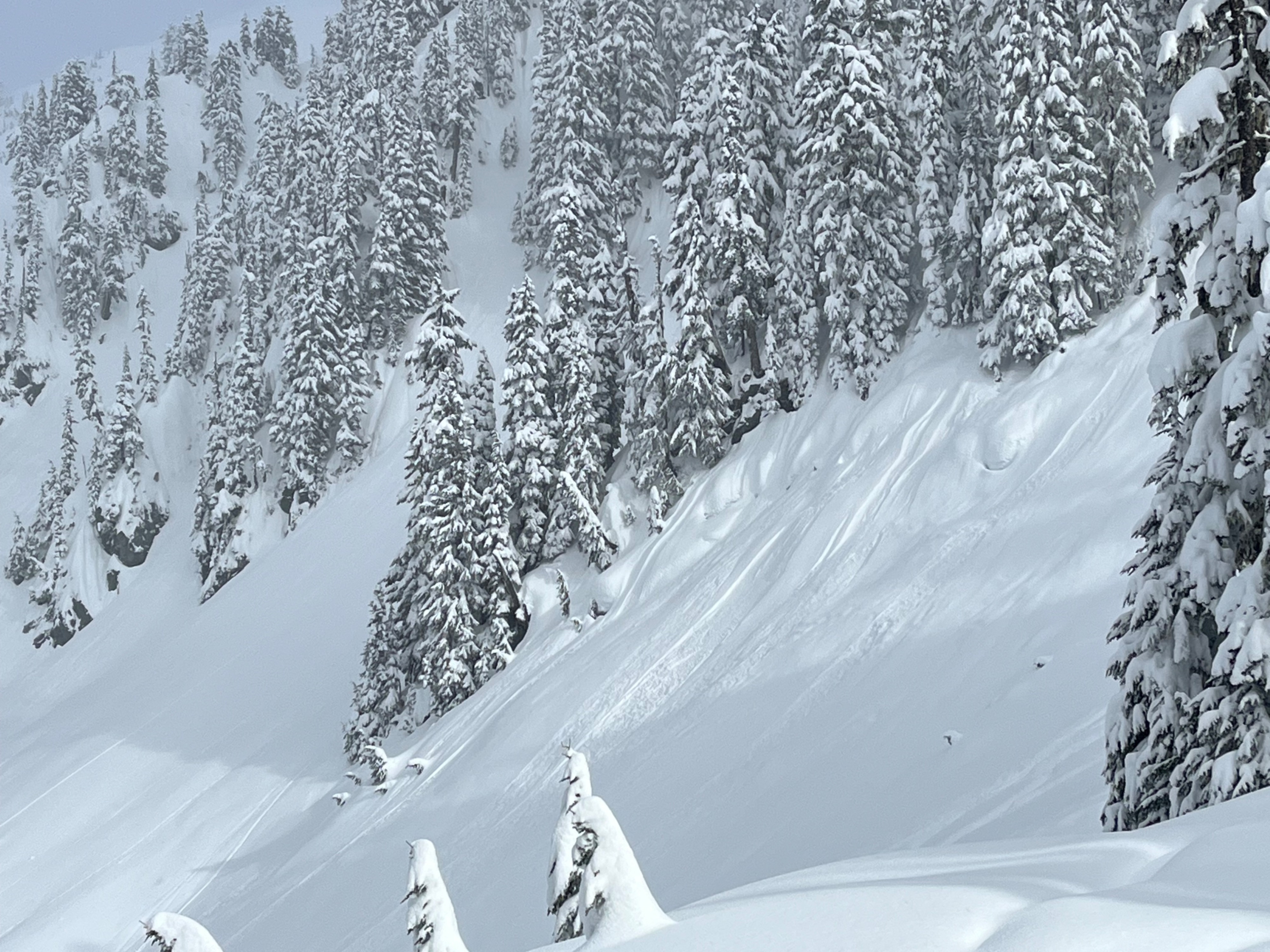
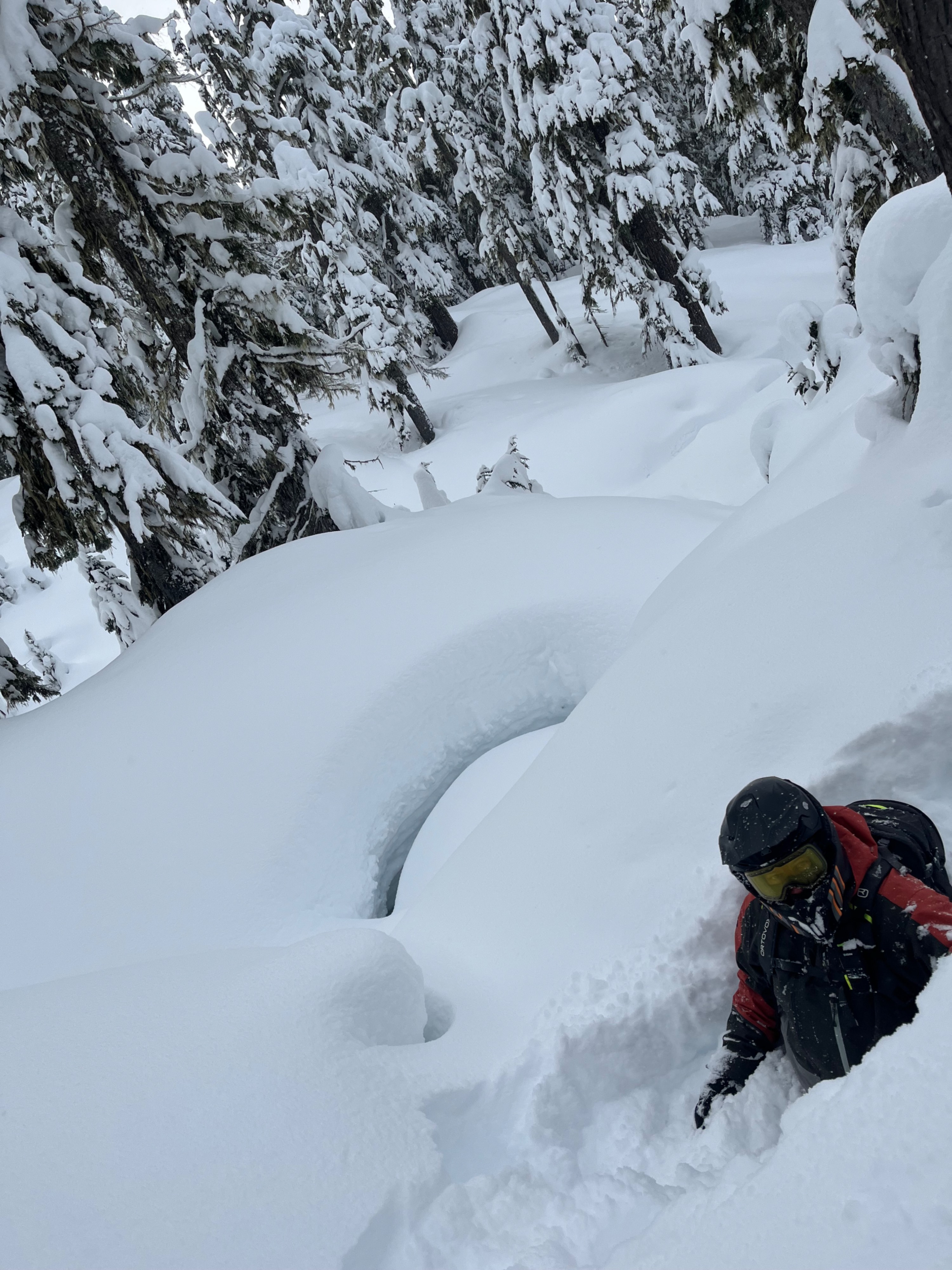
We've finally got a low snowline! It's over a foot deep from low elevations, but very low density with no base. An abundance of light, dry snow exists above about 4000ft and it's deep- about 3 feet on top of the old snow layer. The only avalanche activity we saw was small, shallow sluffs. No slab avalanches, new or old, small or large, were visible. We dug snow pits and focused on the persistent weak layer beneath the new snow, where we found a weak structure. Targeted test results still failed with unstable results. The deep new snow layer is settling out, and today our steps were sinking in about 2 feet, as opposed to the almost 3 feet of a few days ago. We avoided steep slopes but found great riding.
Weather
- Cloud Cover
- overcast
- Wind Loading
- none
- Recent Snowfall
- 100
- Snow Avail For Transport
- large amounts
Fickle weather with overcast/low clouds and light to moderate snow, but some blue patches occasionally appeared, moreso in the afternoon. Temperatures stayed cool, below freezing, but it was warmer than the last few days. There was about 3" of new snow the previous night, and another 1-2" during the day while we were out. Calm.
Snowpack
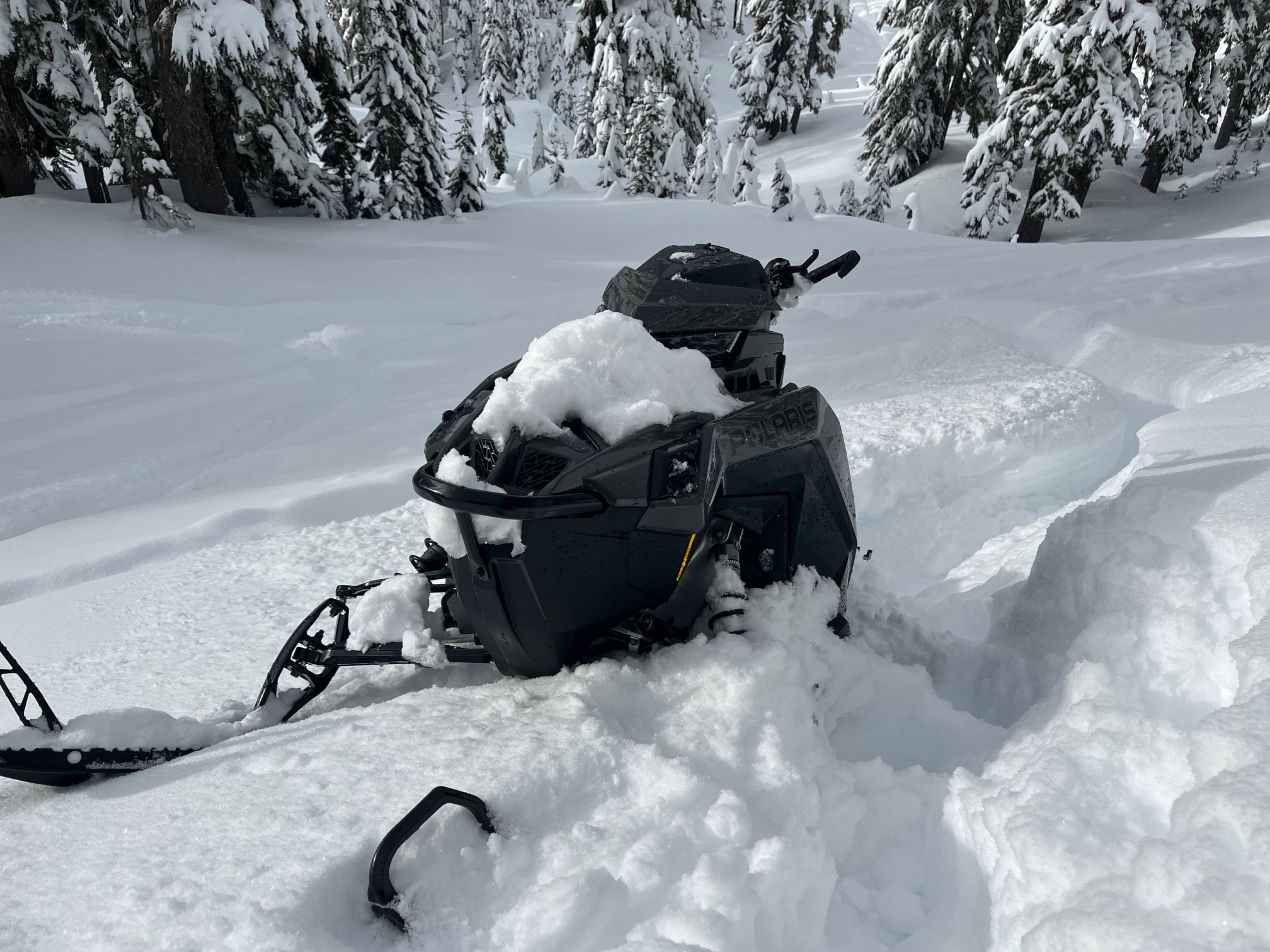
We began sledding at 1000ft, but snow cover was light, fluffy, and thin until about 3000ft. By 4000ft the snow was deep, and had an underlying base. The new snow layer was very low density for the PNW- you might even say blower pow. The deep new layer was right side up, and at our higher elevations (max 5000ft) when we stepped off our sleds we sunk in about 2 feet.
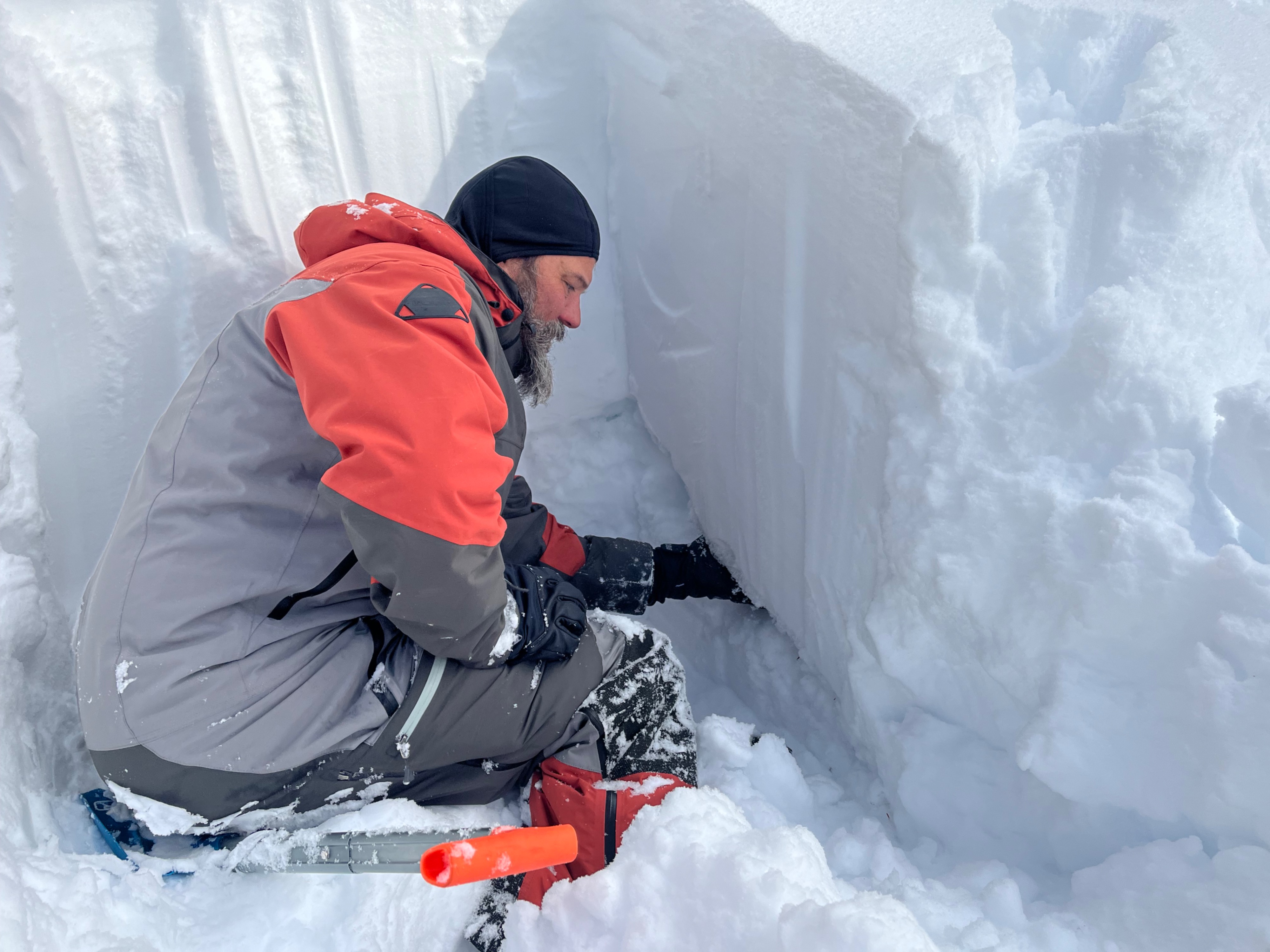
We probed and dug pits in the 4500-5000ft range, finding about 3 feet of new snow over the old snow layer (January Drought Layer). Total snow depths were 8-10ft deep.
Targeting the new snow layer and the underlying January Drought Layer, we identified the usual right-side-up (soft snow or harder snow) slab over a weak, faceted layer. In a NW pit at 5000ft, a Propagation Saw Test failed at 30 out of 100cm, which propagated to the end, indicating unstable results. A deep tap test on the layer yielded a sudden collapse at 23 taps.
A west-facing pit at 4700ft was slightly different, with a thicker crust (2-3cm) over a thicker weak layer of more well-developed facets beneath the storm snow. The crust was very irregular so we didn't do tests on it.
Avalanche
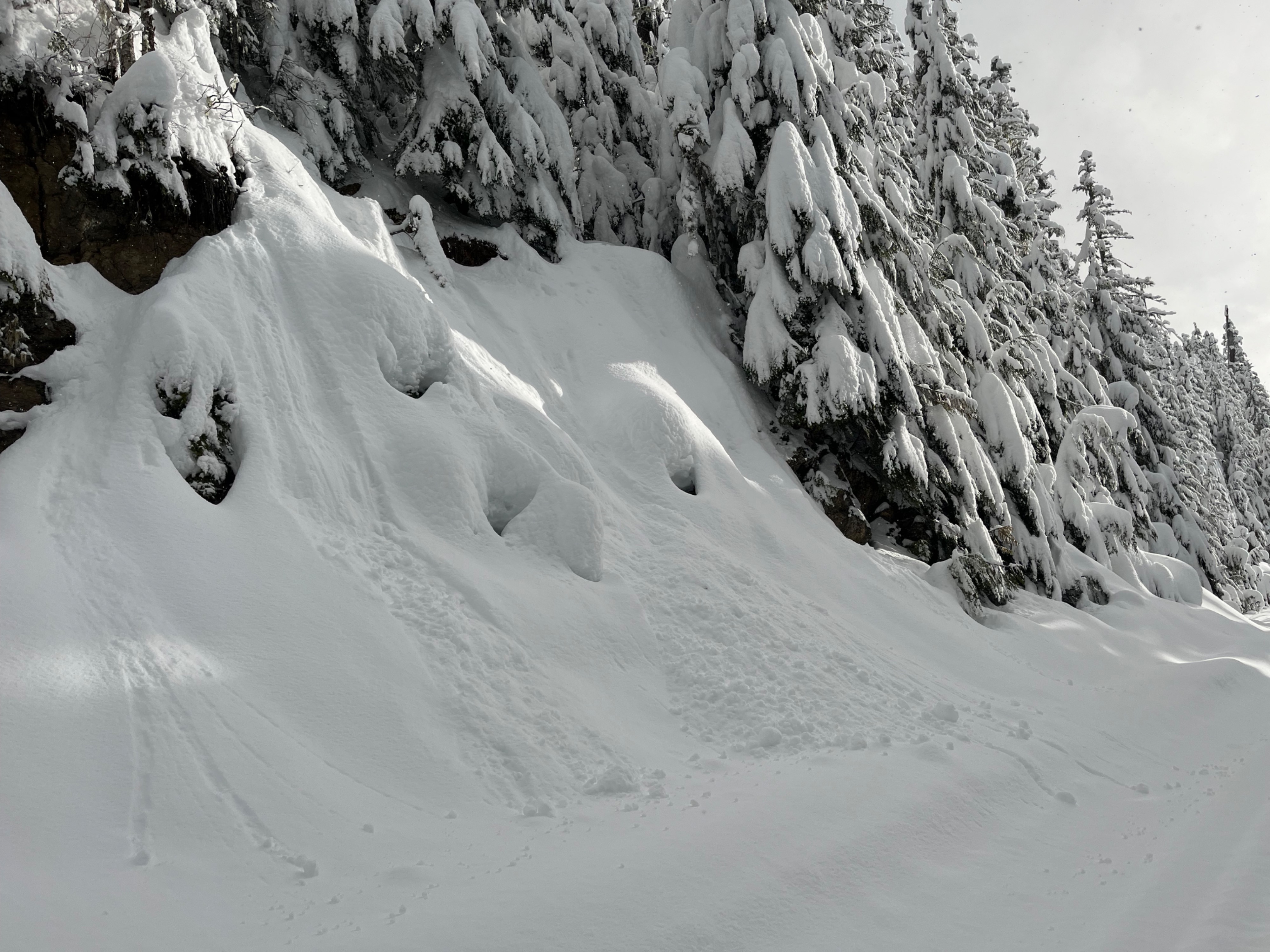
Small loose dry avalanches, or sluffs, were naturally running in the top few inches of new snow. No slab avalanches, shallow or deep, new or old, were seen. More sun in the afternoon resulted in a few tree bombs that initiated more small dry loose avalanches on steep slopes.