
Quick report
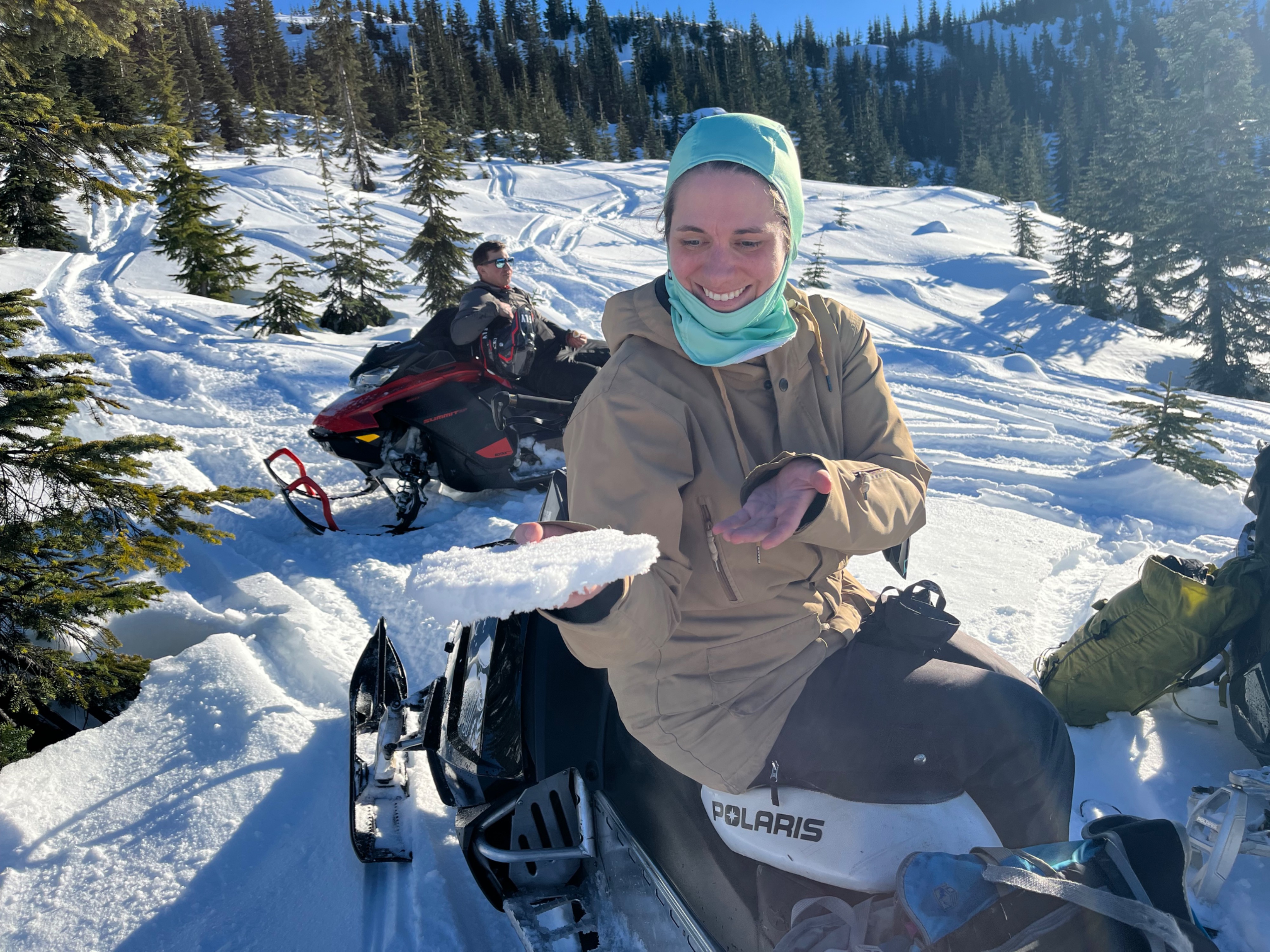
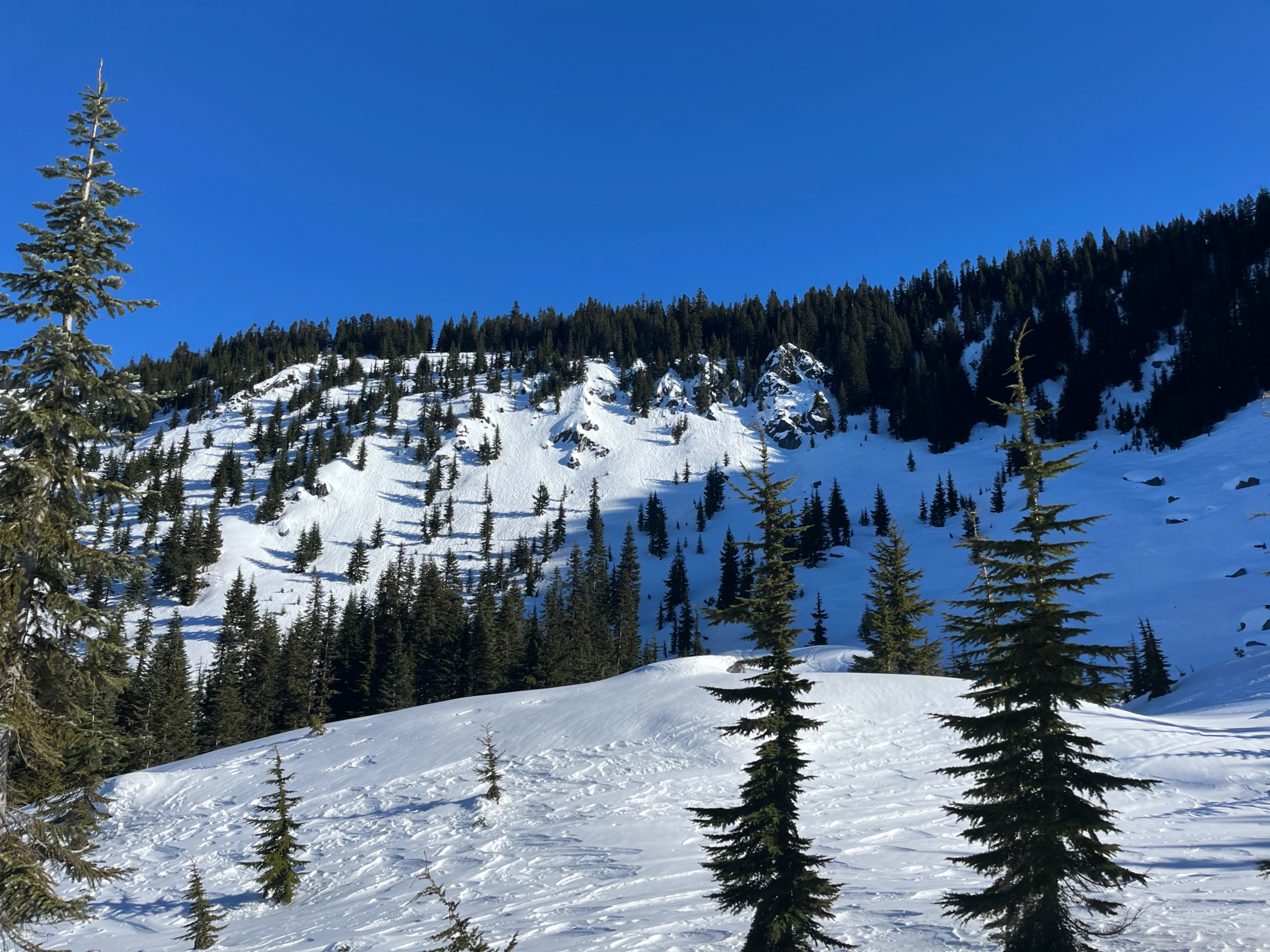
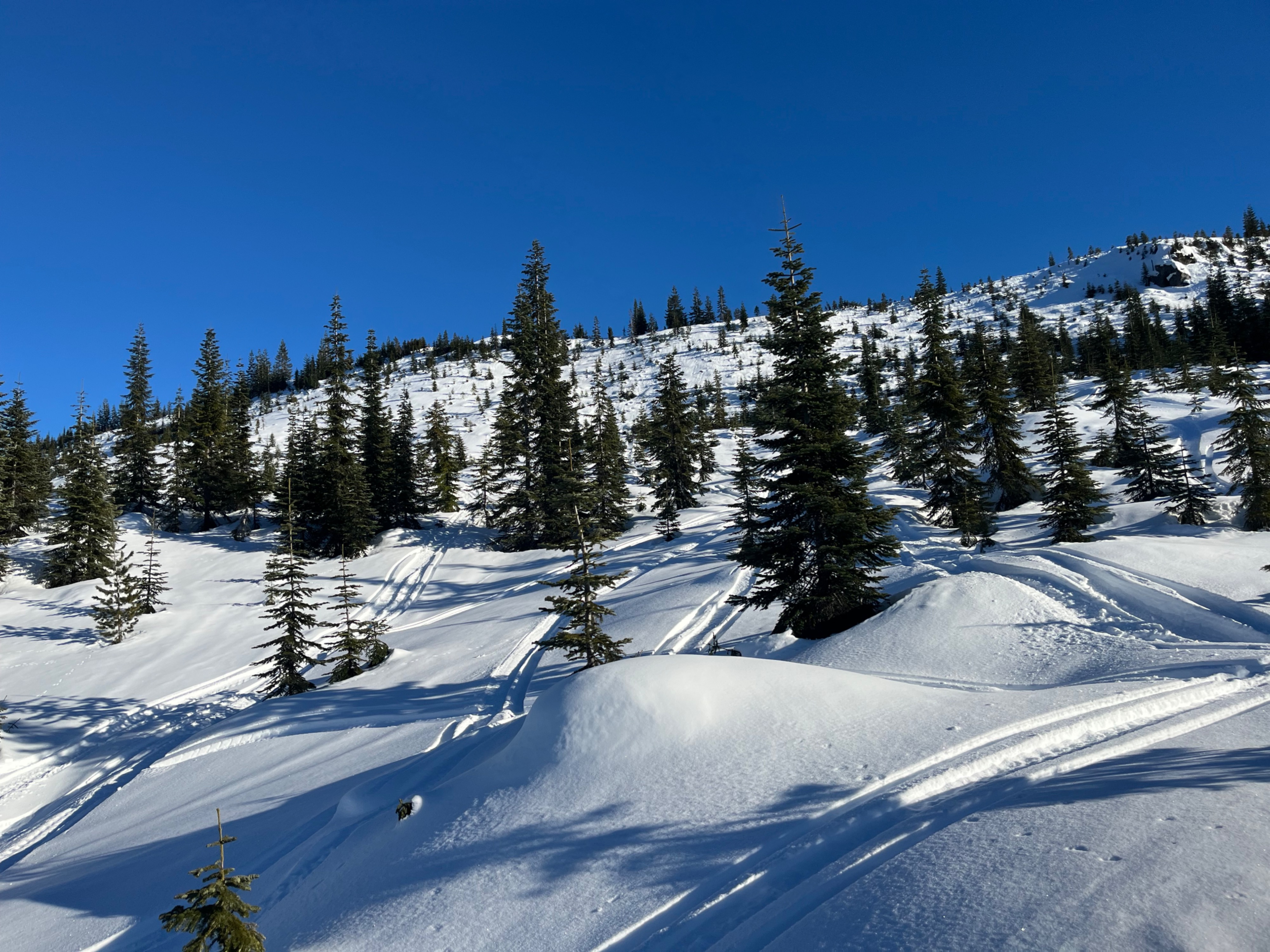
Similar to most places in the Cascades, surface hoar and faceted growths overwhelm the upper portion of the snowpack, along with a few crusts and varying amounts of wind-effect. We were still able to find plenty of soft snow making for good sledding on north-facing aspects. Even north-facing terrain had a thin, soft crust on the surface but it didn't make the sledding unpleasant. Temperatures were warmer today and we felt the need to remove layers when we gained elevation as we made our way to sunny ridgelines. Snow surfaces in steep south-facing terrain moistened.
Weather
- Cloud Cover
- clear
- Wind Loading
- previous
- Snow Avail For Transport
- none
Cold in the shade and surprisingly warm in sun midday, even at higher elevations (around 5000ft). Calm.
Snowpack
Snowline began at about 2800ft. From there, traveling up the valley from about 3000ft and higher, snow was generally soft on the surface, with only a subtle surface crust and about 3-6 inches of snow over the 1/10 crust.
The air temperature was -3°C and the snow surface temperature was -9°C. Shady aspects had temperature gradients just over 1°C per 10cm in the top 40cm. While digging pits, snow felt loose and sugary, but other than the thin surface layer above the uppermost crust with easily identifiable weak grains, the faceted structure in subsequent layers of the snowpack wasn't as blatantly obvious. Tests yielded easy compression test failures above the 1/10 crust.
Shifting to south-facing slopes midday was an abrupt transition from cold to warm. Snow above the 1/10 crust was moist. Beneath that layer, snow was dry and harder than on shady slopes. We didn't see any wet loose activity on steep, sunny slopes.
Avalanche
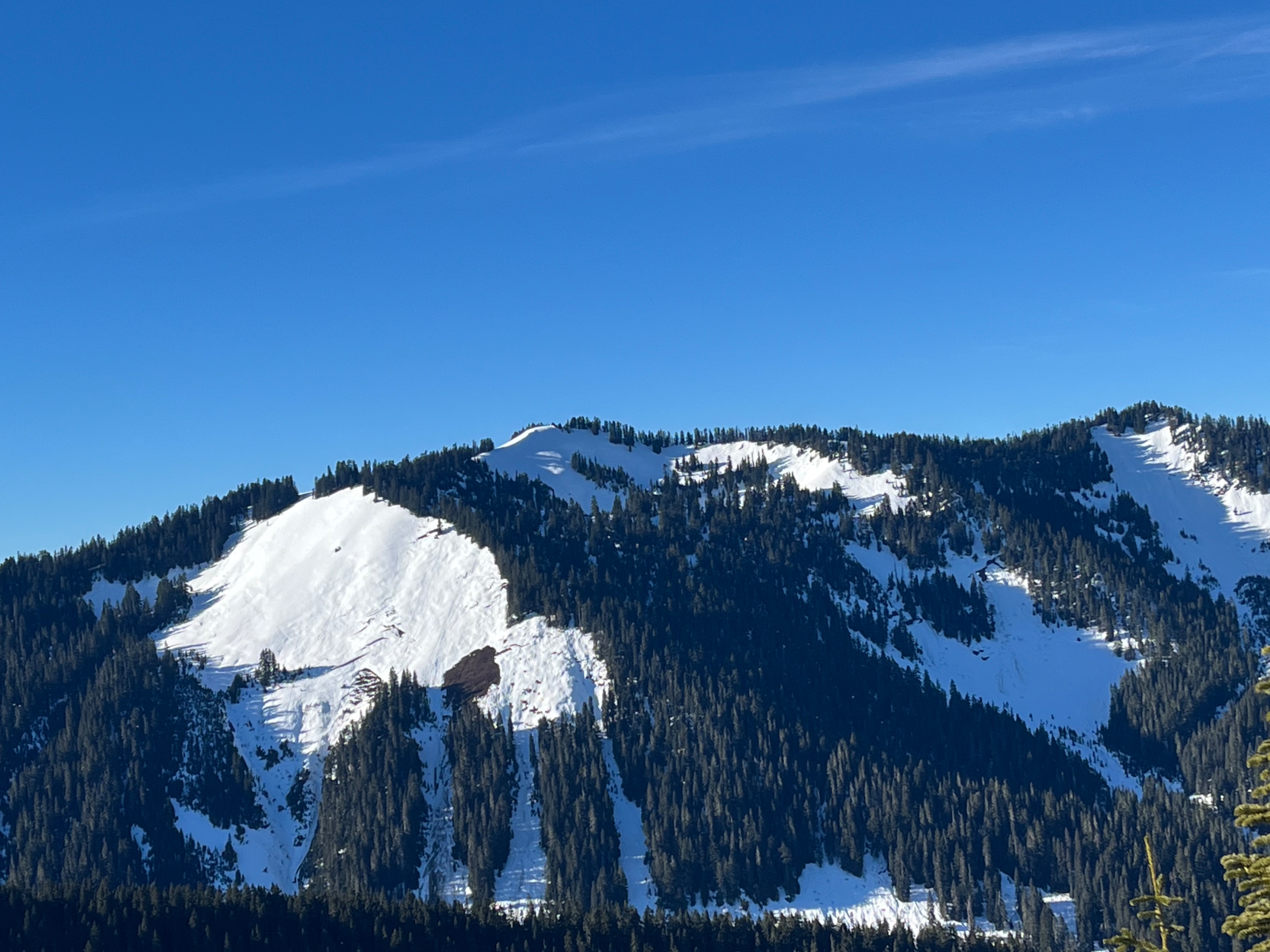
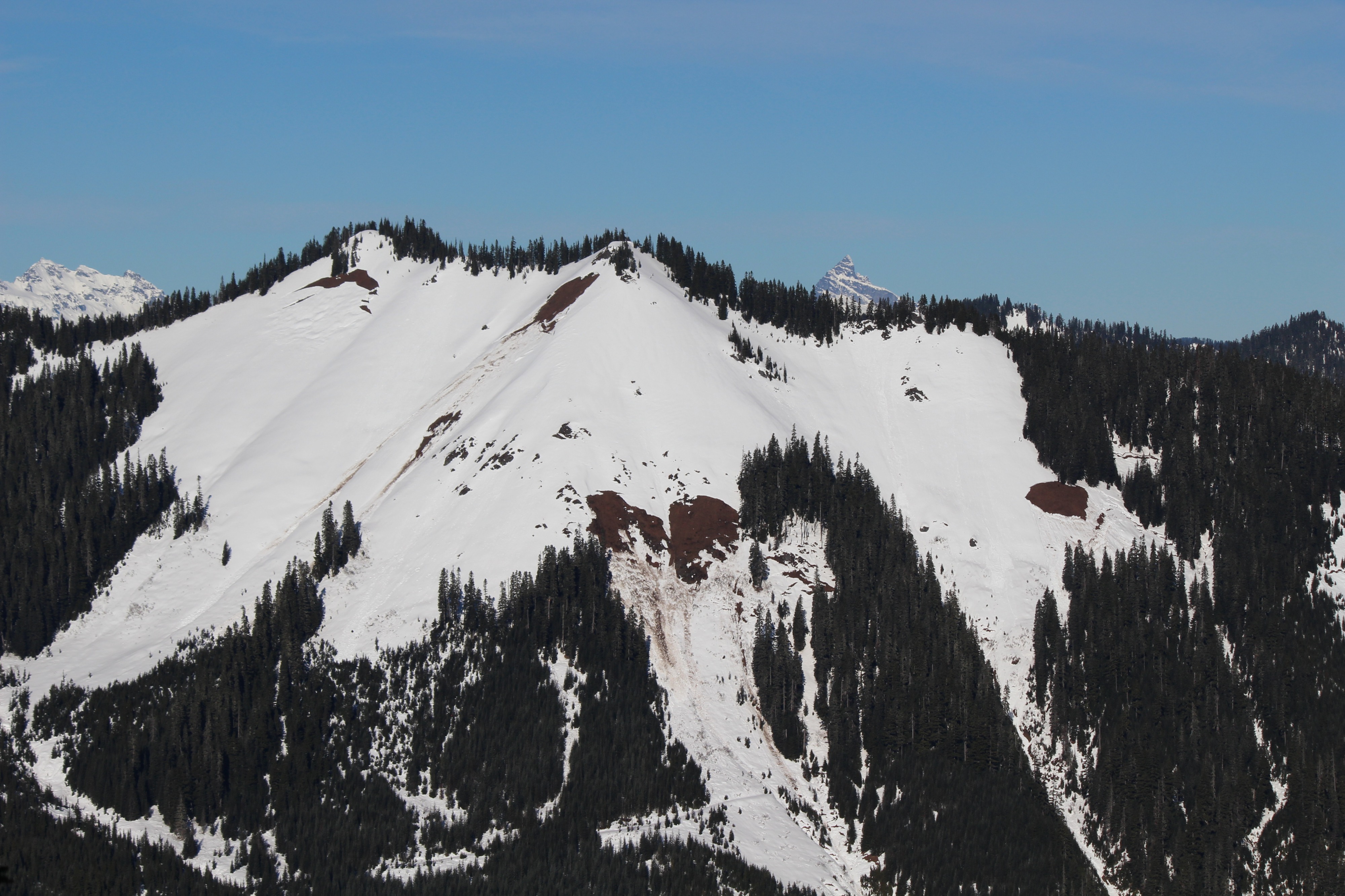
Several old glide avalanches were visible, suspected to all be at least a week old.