

Quick report
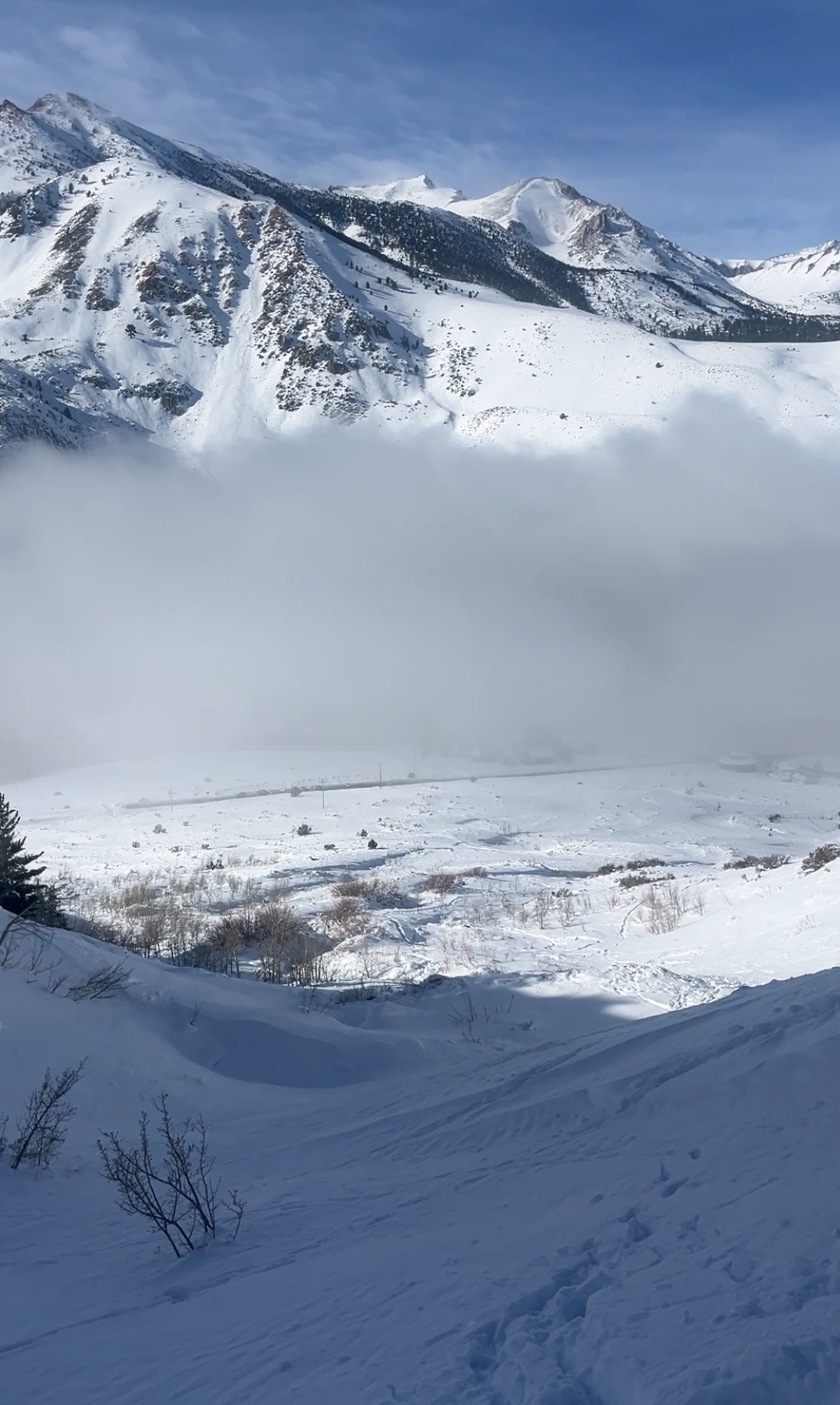
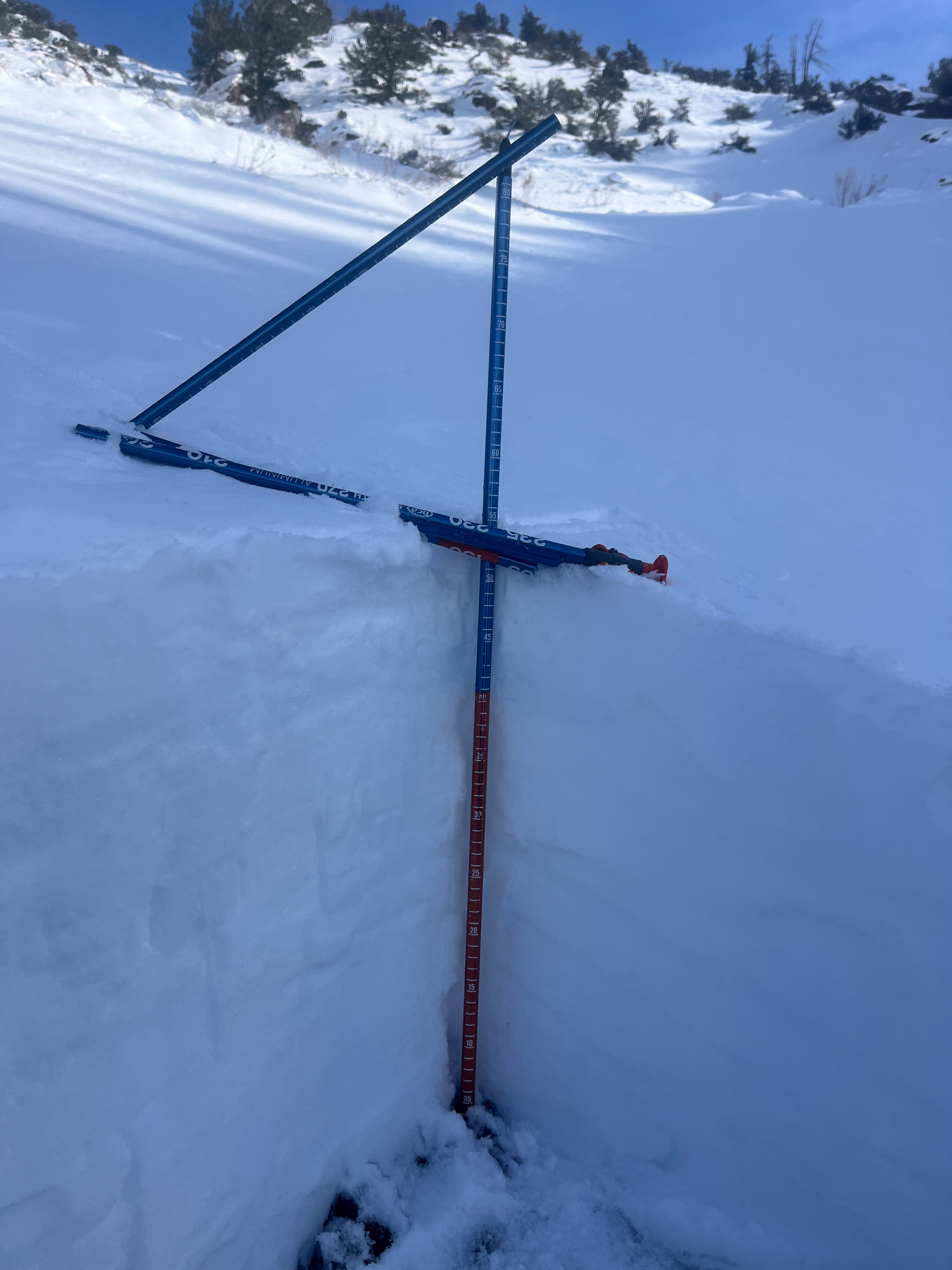
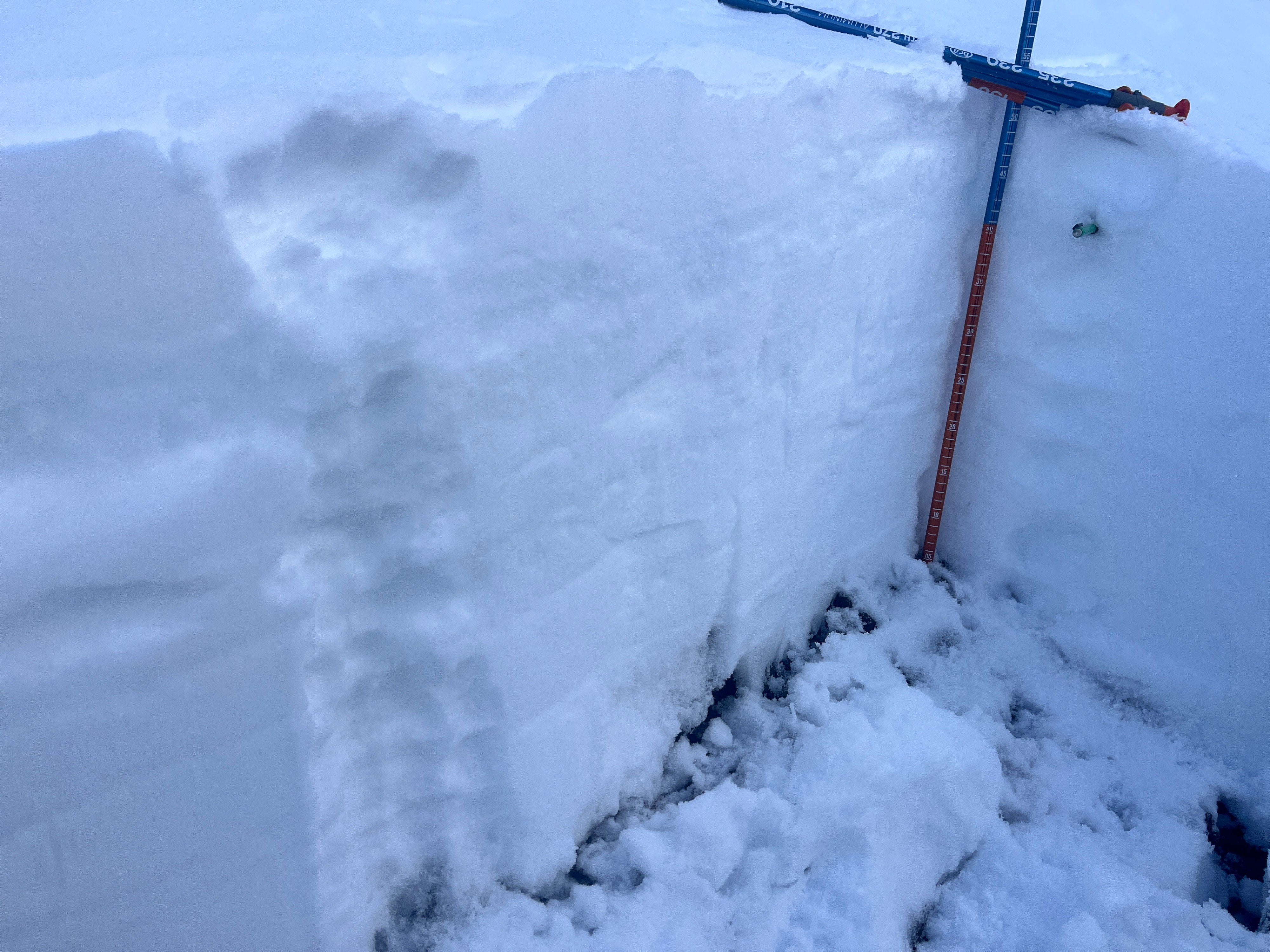
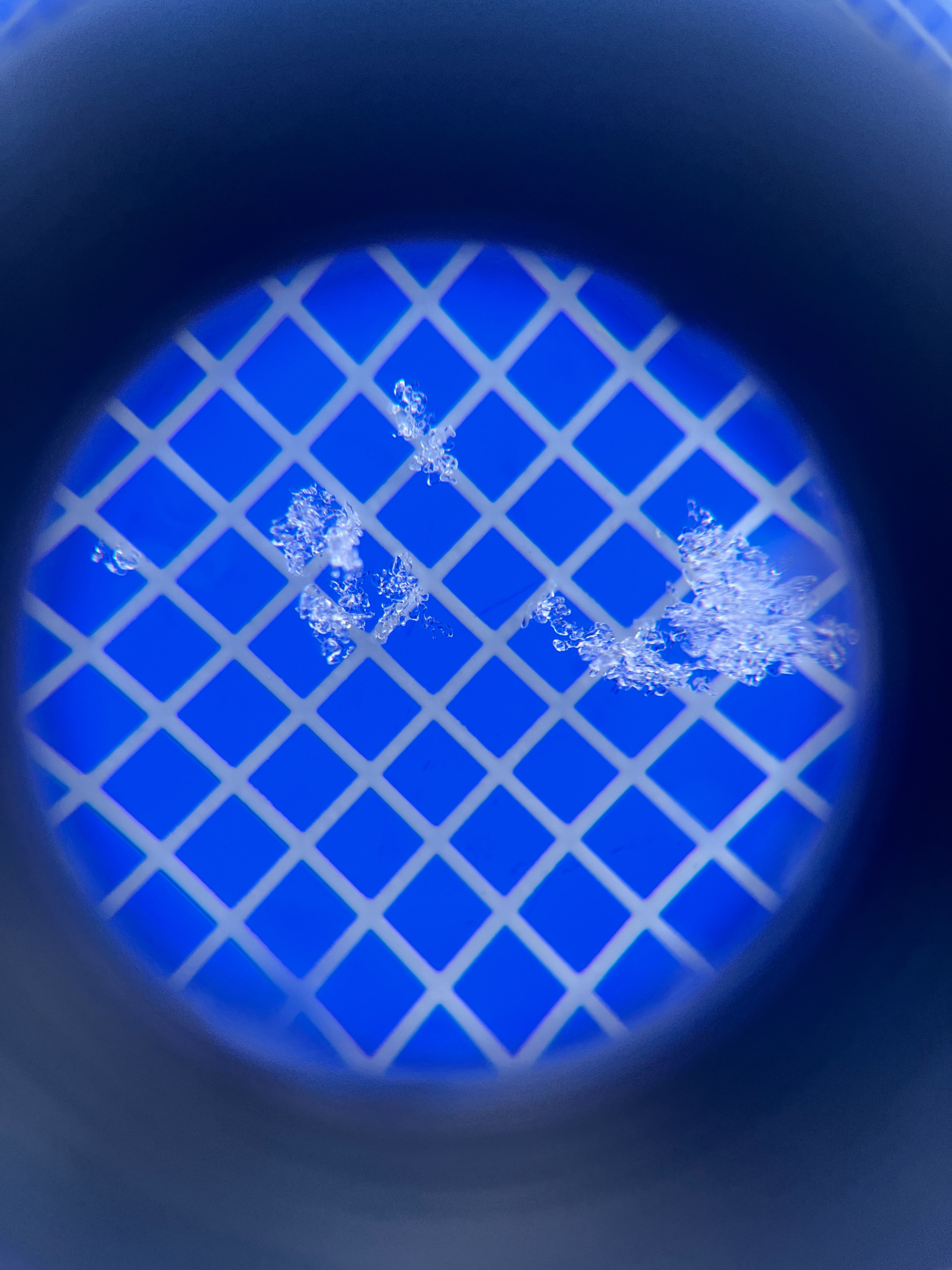
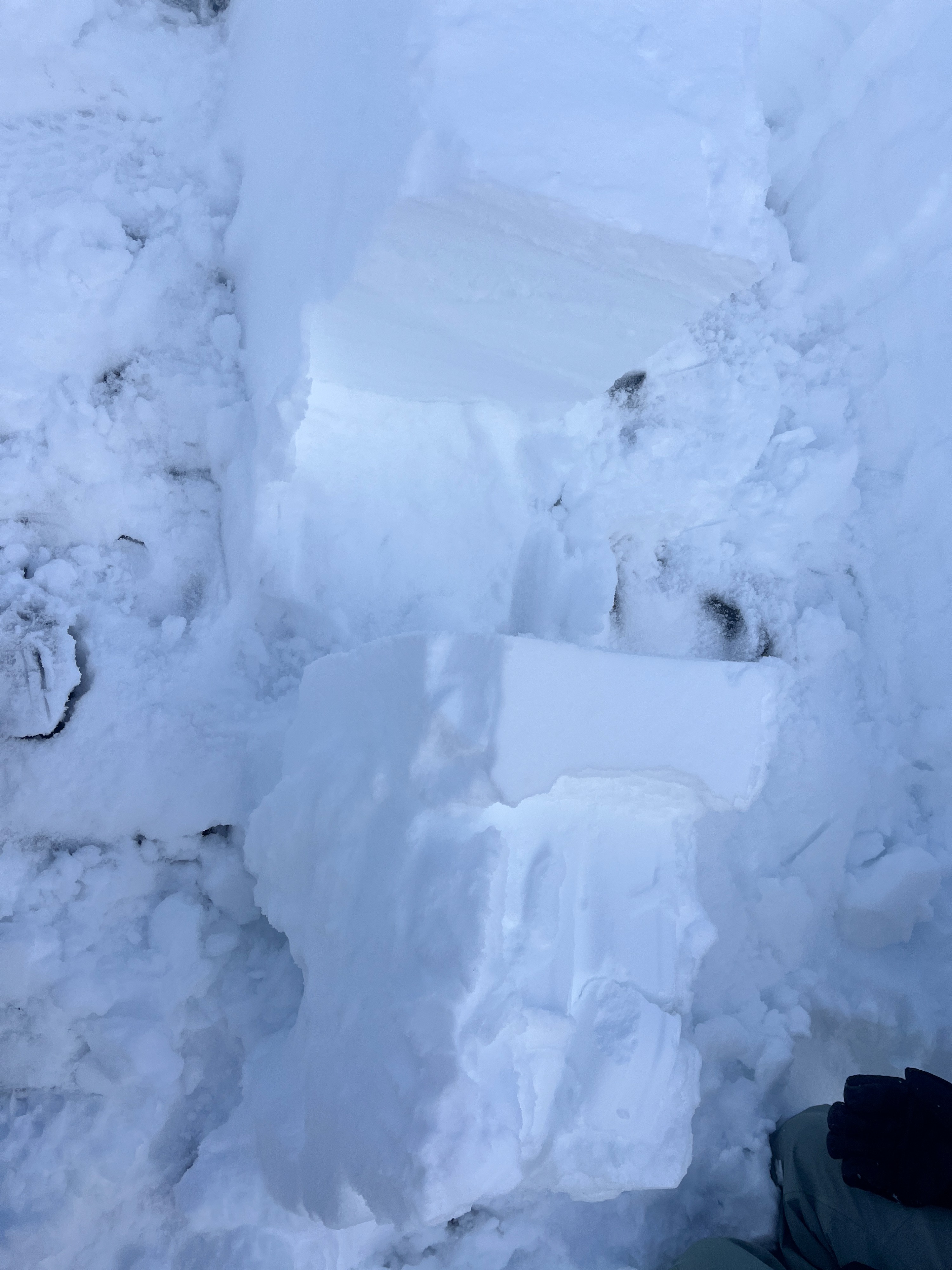
We traveled this afternoon from Alpine Drive up Jawbone Canyon, in the zone of the waterfall, with the primary objective of digging a snowpit and collecting snowpack information during daylight. We left around noon and were digging and collecting data from approximately 1:15–2:00 pm. We began our descent as fog rolled in. On the ascent, we remained above the fog line and experienced clear to partially cloudy blue skies, sun, and air temperatures around 0 °C / 32 °F. During travel, our tracks from the previous evening were filling in with snow transported by wind. We observed areas of wind board with reduced boot penetration, interspersed with spots where penetration remained very deep. By the time we turned around, fog socked in, temperatures continued to drop, and visibility deteriorated rapidly. Sky cover was partly cloudy with low fog moving through the canyon. At the snowpit location (~32.5° slope angle), total snowpack depth was ~53 cm. Hand hardness profile was as follows: 53–43 cm: 4F 43–40 cm: Pencil 40–33 cm: 2F 33–30 cm: Pencil, with pockets of very soft snow ----Thin crust present---- 30–22 cm: 2F 22–21 cm: Pencil 21–16 cm: 2F 16–15 cm: Pencil 15–8 cm: 2F 8–0 cm: Fist The snowpack felt dense and layered, requiring notable effort during testing, with multiple pencil-hard layers and thin crusts separating softer snow. Photos document hand hardness, crust layers, and grain characteristics. Compression testing results were ECTN16 (shoulder), with a diagonal fracture and partial column collapse; no full propagation observed. No cracking, whumphing, or slab releases were observed during travel or at the pit location. We observed small roller balls in isolated, slidey surface snow, including some triggered by dogs. These did not travel far and were limited to surface layers. Aspect showed limited wind loading at the pit location. Snow coverage was generally adequate, though thin in some areas and avoidable with careful travel. Snow grain observations showed limited rounding in upper layers, more rounding along ice/crust layers, and very small, loose grains occurring in inconsistent pockets near crust interfaces (~33 cm. Overall, stability felt generally good during the observation period. We chose to turn around due to rapidly decreasing visibility, falling temperatures, and increasing humidity associated with fog, with concern for crust formation and potential wind loading ahead of the next storm. My observations were collected in relatively sheltered terrain with limited wind loading, where I did not observe obvious signs of instability and ECT results showed fracture initiation without full propagation. This is consistent with the forecast’s low-likelihood, high-consequence persistent slab problem, where concerning structure may exist without strong feedback. Observed wind effects and rapidly changing weather support the forecast emphasis on increasing wind loading and rising hazard beyond sheltered terrain.