
Quick report
- Cracking
- isolated
We found a generally right side up snowpack - soft snow on top of harder (more-dense) snow. The large amount of snowfall over the last week and a half is beginning to consolidate and strengthen. However, a few instabilities linger within the new snow at various mid-storm interfaces. Persistent grains surrounding crust from earlier in the month are slowly heading in the right direction but still warrant our attention for a bit longer. Impressive snow cover and depths at mid and lower elevations for this time of year is limiting your chances of an unwanted aldercation.
Weather
- Cloud Cover
- overcast
- Wind Loading
- light
- Recent Snowfall
- 30 - 40cm since 12/29
- Snow Avail For Transport
- moderate amounts
No precipitation and calm winds today. Mountain fog began lifting in the afternoon allowing across drainage views of slopes.
Snowpack
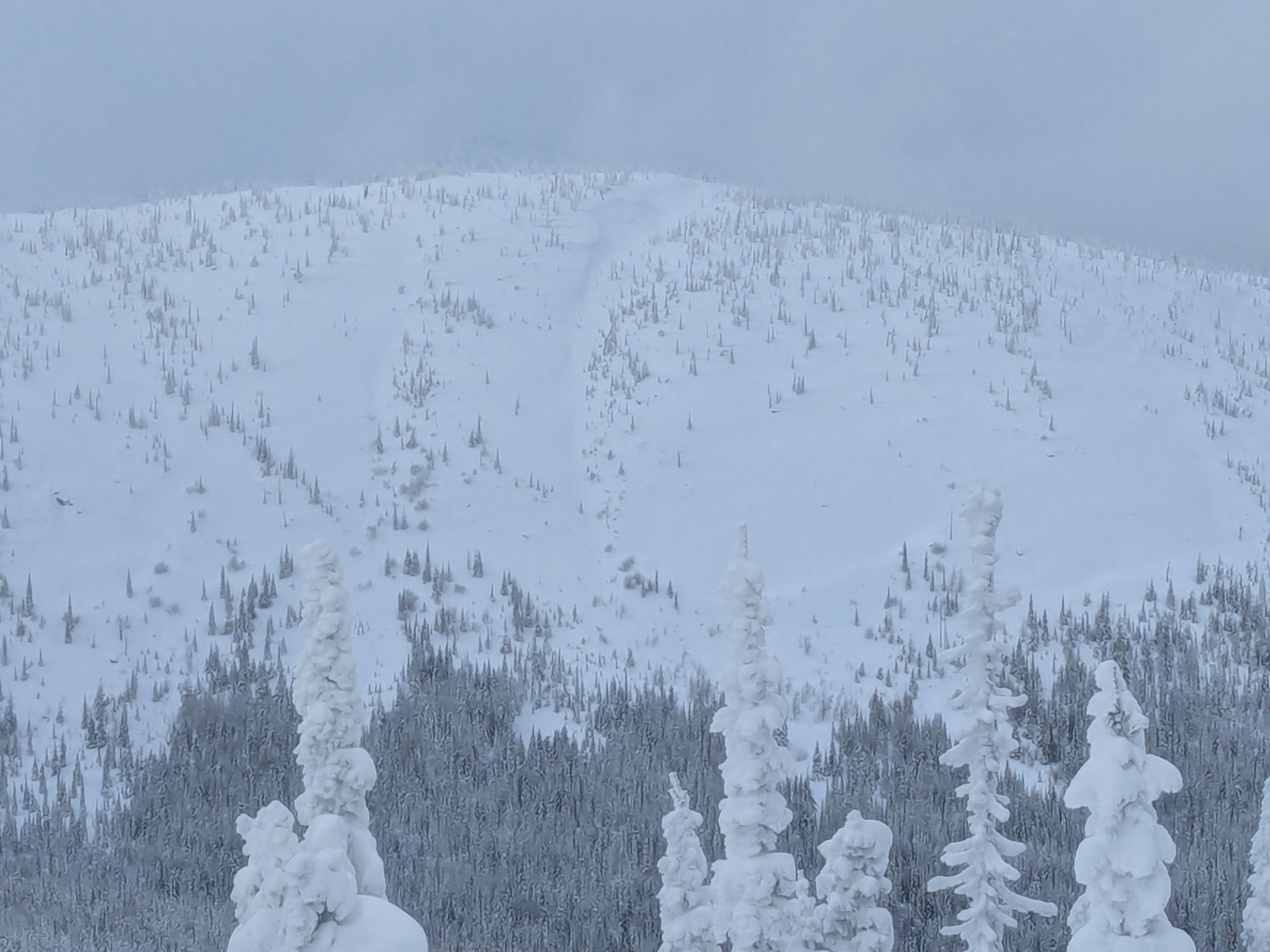
We traveled primarily between elevations 5000 - 6000 on East and Northerly aspects. We noticed across valley southerly slopes with relatively recent wind cross loaded drifts and the north aspect of Joe peak with cornice formation. But overall on our travels we noted a lack of wind effect along a 6000’ ridgeline near Hidden Lake.
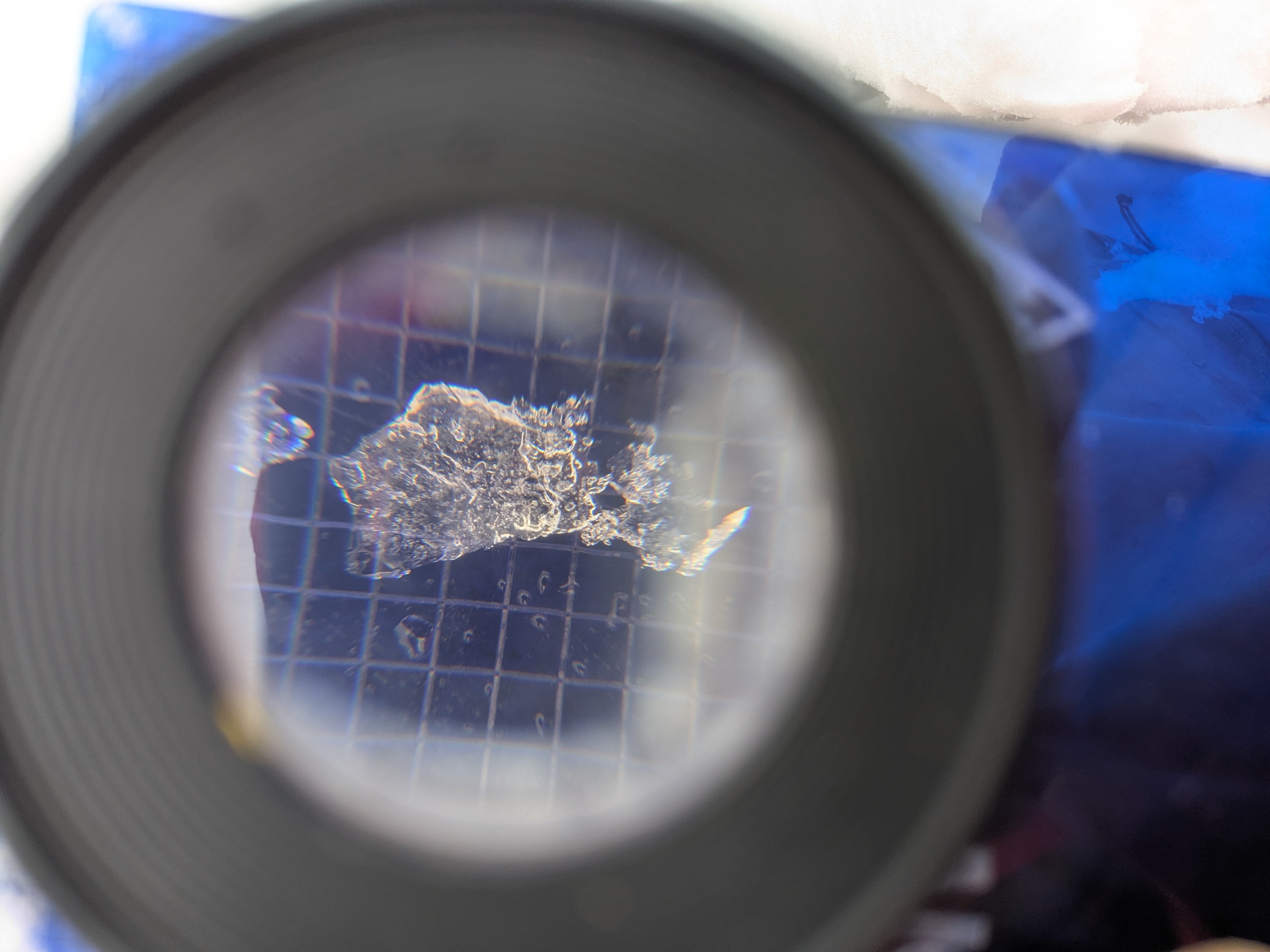
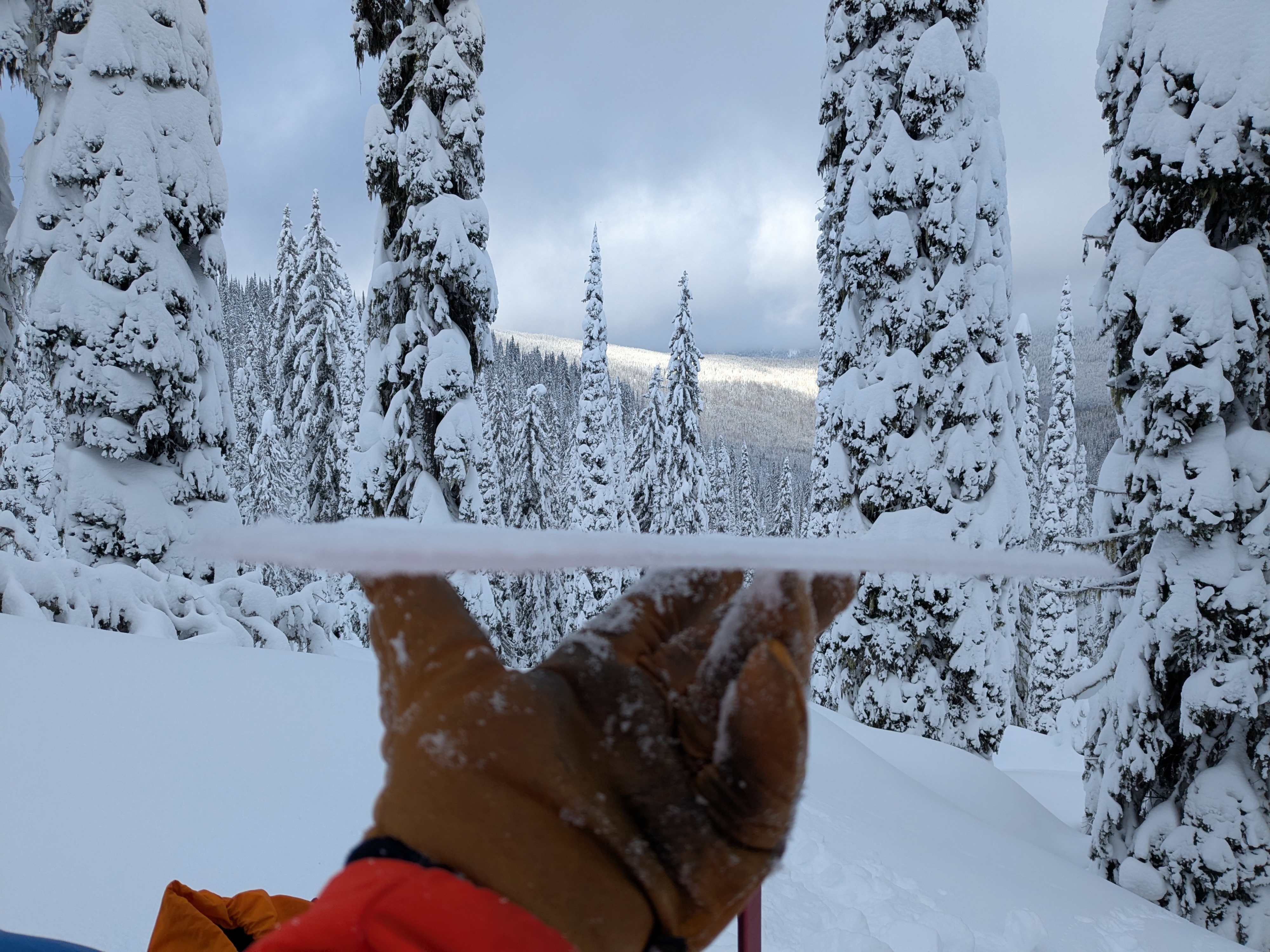
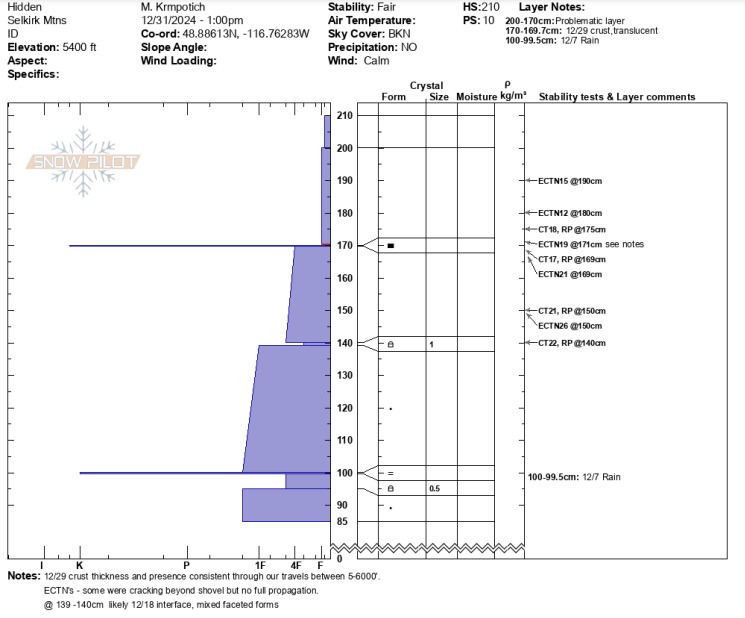
At 5400, we found 30 - 40cm of recent snow since 12/29 sitting on top of a thin (0.3cm thick, K hard, translucent) crust. This crust was consistent throughout the elevations we traveled. Resistant test results here were observed both above and below this 12/29 crust, CT17 and 18 and ECTN 19, 21. Snow hardness increases steadily deeper in the snowpack. A storm snow hardness and interface change down 70cm is one exception to an otherwise consolidating snowpack. Found 100cm down is the 12/7 crust (K hard, 0.5-1cm thick) and below a thin layer of small (0.5mm, 4F/1F hard) rounding facets. Below this is 1F hard small rounded snow grains.
Avalanche
Several mid-storm crown lines visible across multiple aspects. They were mostly filled in so avalanche specifics difficult to discern. They looked confined to the recent strom snow and failed below cliffs, around steep convexities, and on heavily drifted slopes at mid and upper elevations. None likely larger than a size 2.