
Quick report
- Cracking
- isolated
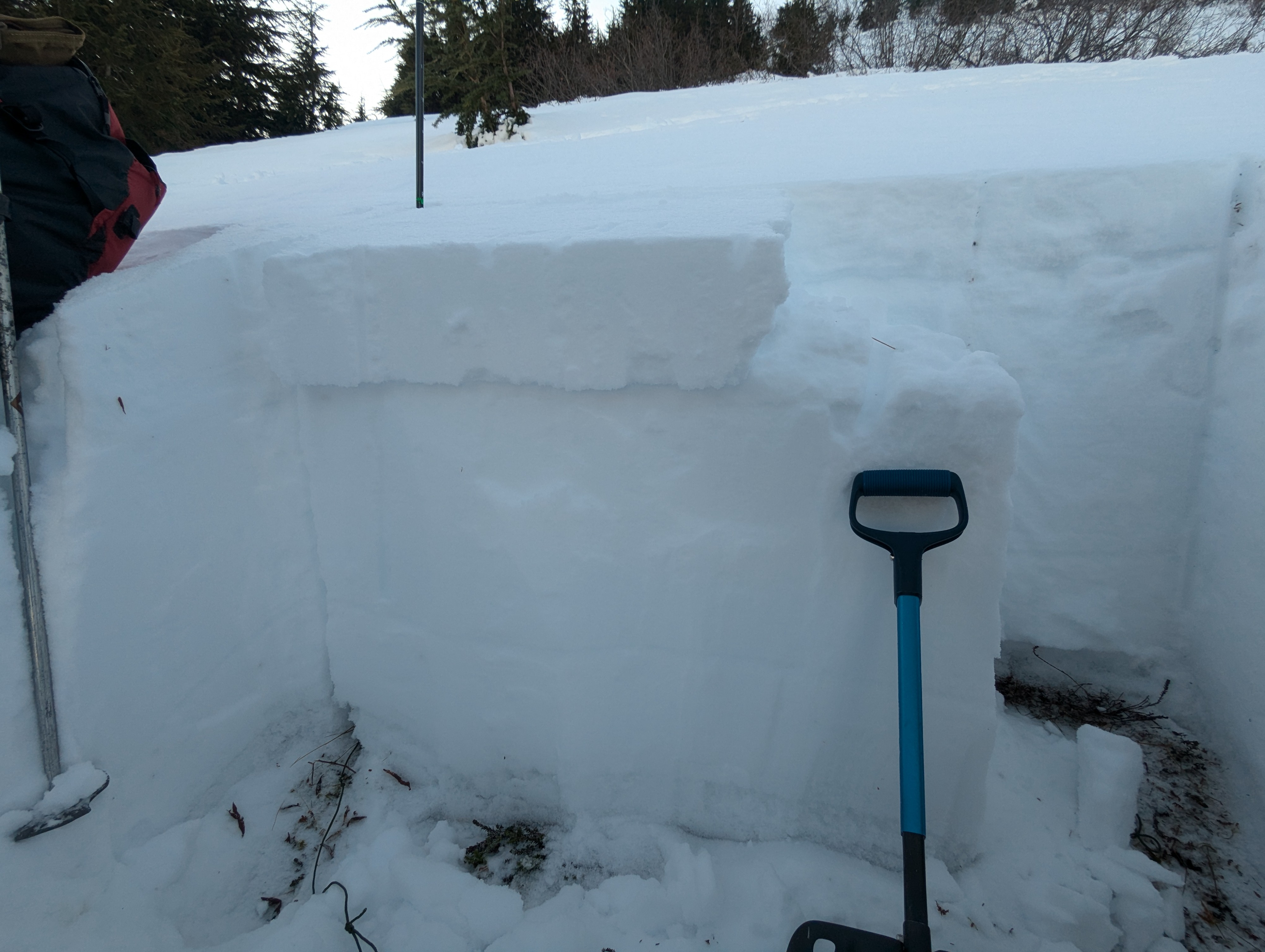
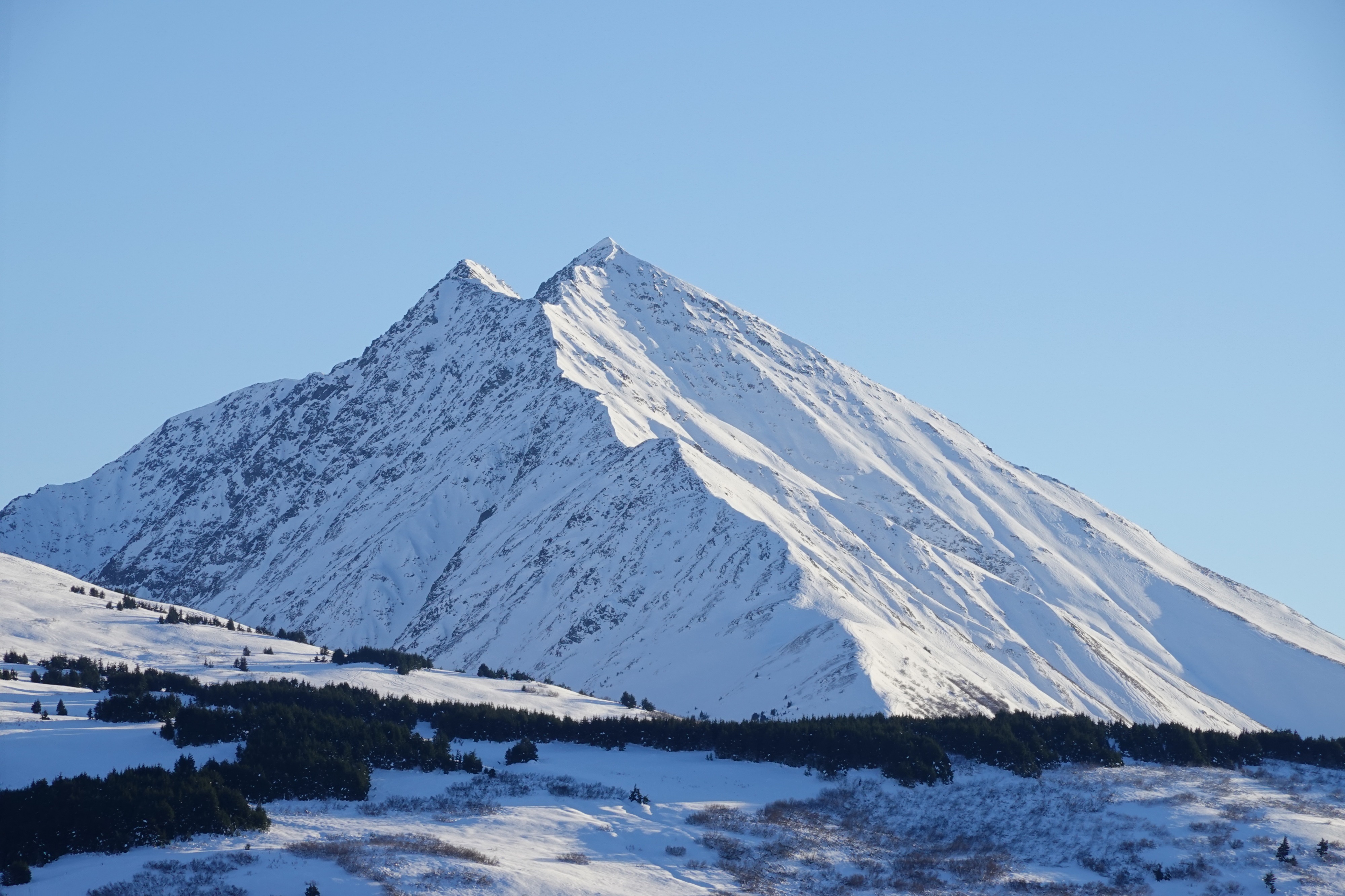
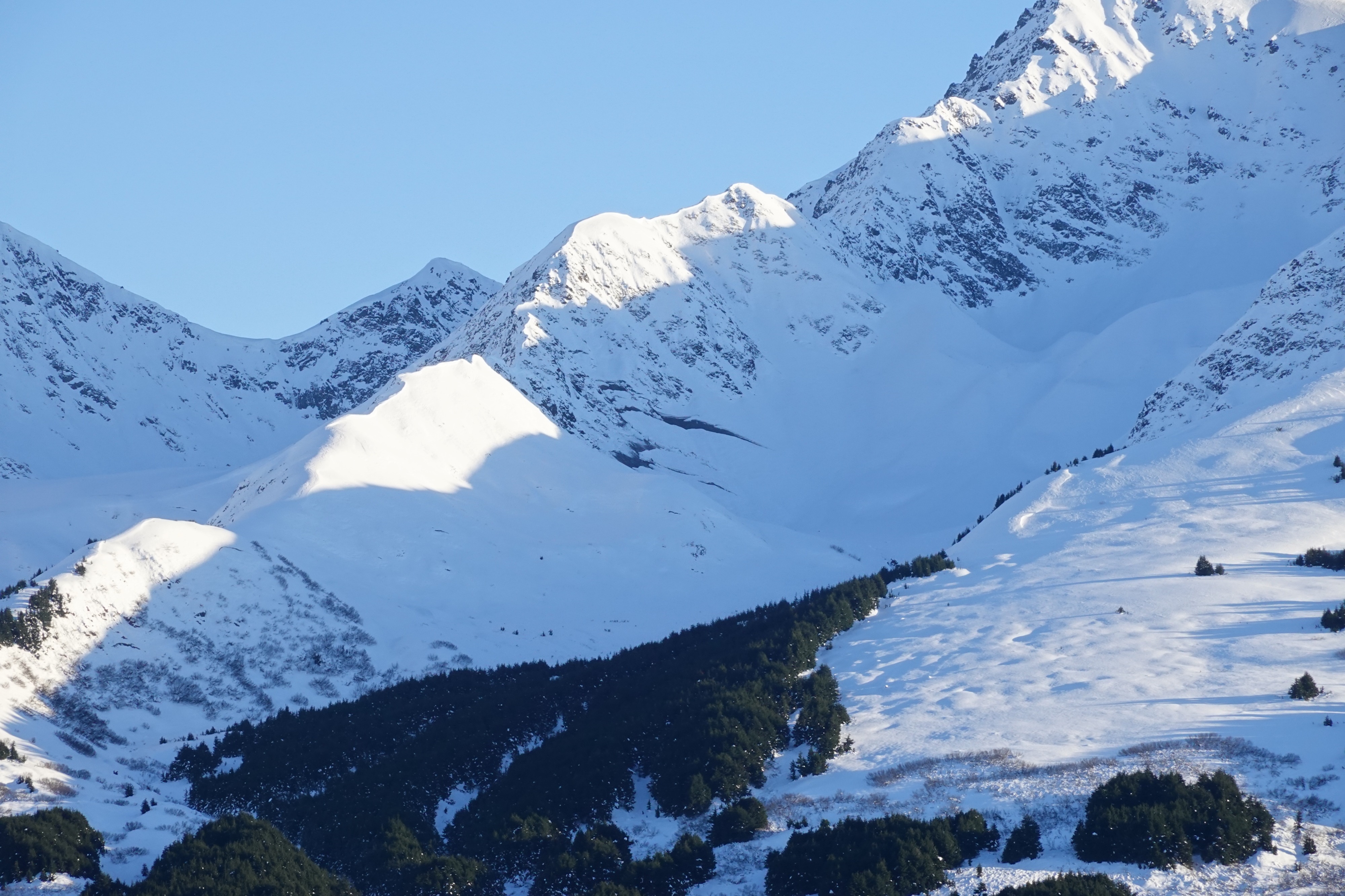
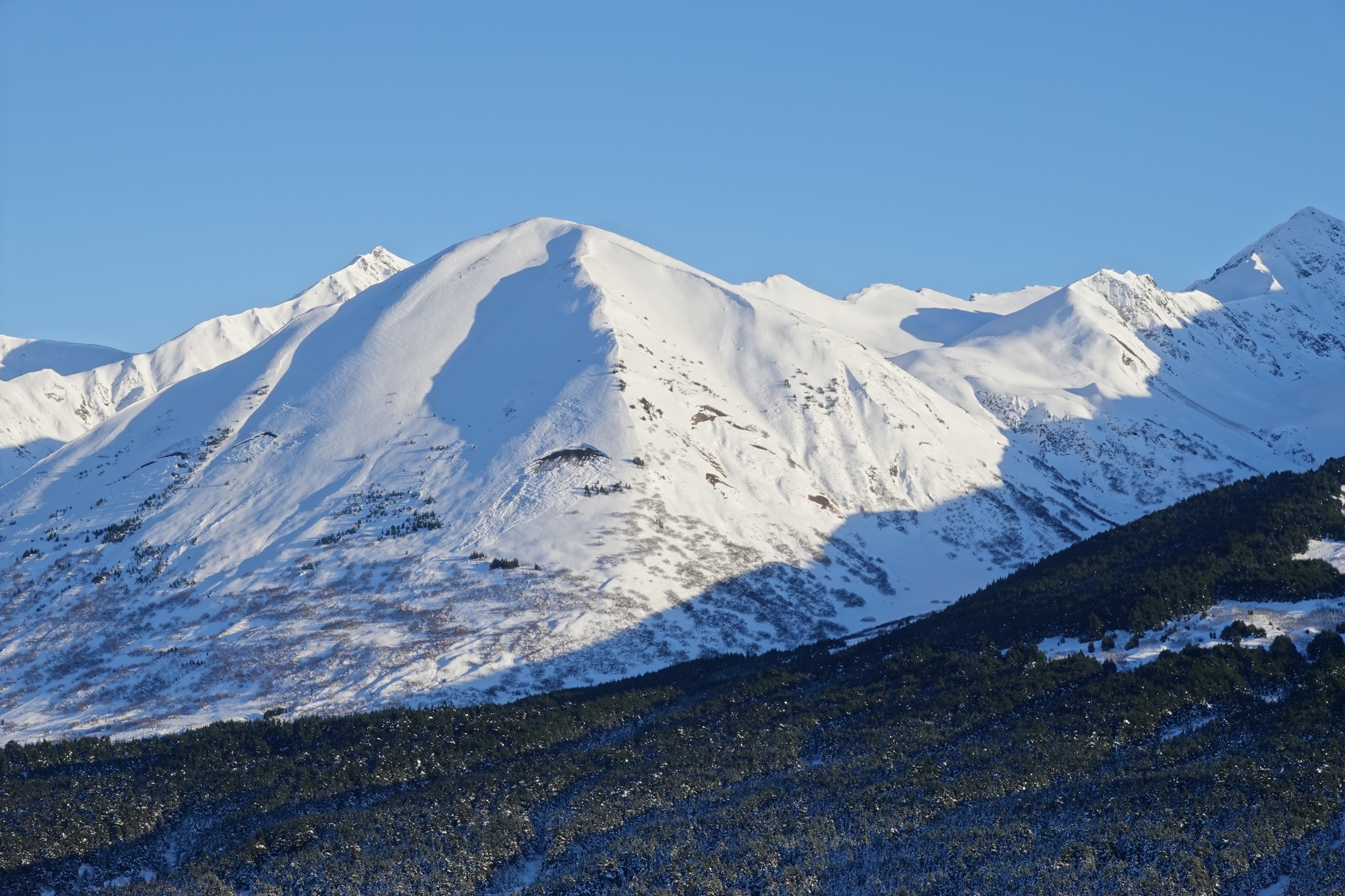
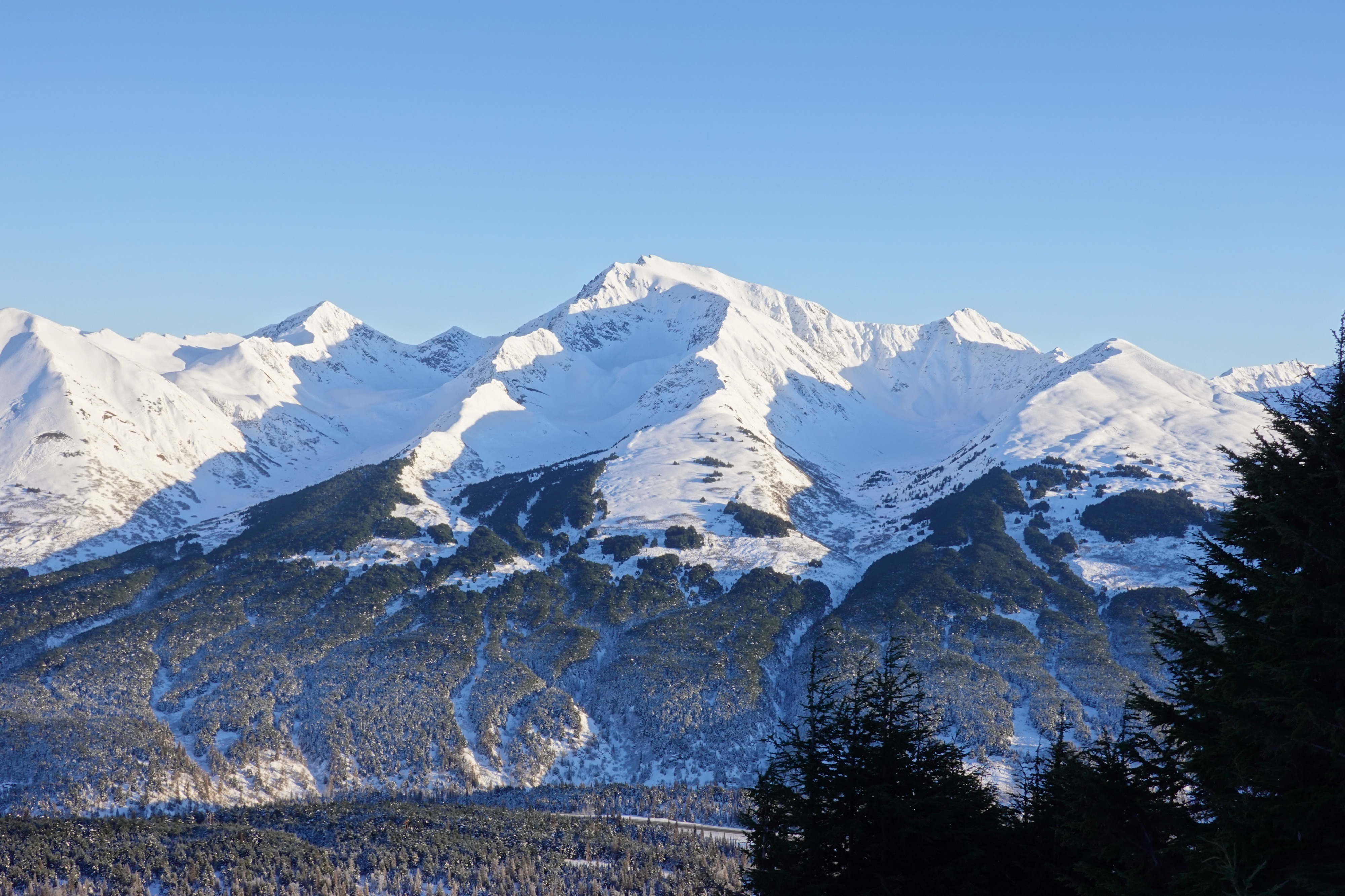
We found soft snow at lower elevations and variable wind effected snow near treeline around 3000'. Our snowpit showed an unstable weak layer in wind loaded areas about 6" deep that failed in our tests and produced several small shooting cracks. Overall, triggering an avalanche seemed possible but the wind loaded areas we saw were relatively small. During the drive and on the tour there were glide cracks and glide avalanches on many peaks and ridgelines.
We saw some small shooting cracks on wind loaded slopes near treeline.Weather
- Air Temp
- 10
- Cloud Cover
- clear
- Wind Loading
- moderate
- Snow Avail For Transport
- moderate amounts
Strong inversion today with negative single digits at valley bottom and temps in the teens at upper elevations. Luckily we had calm to light winds.
Snowpack
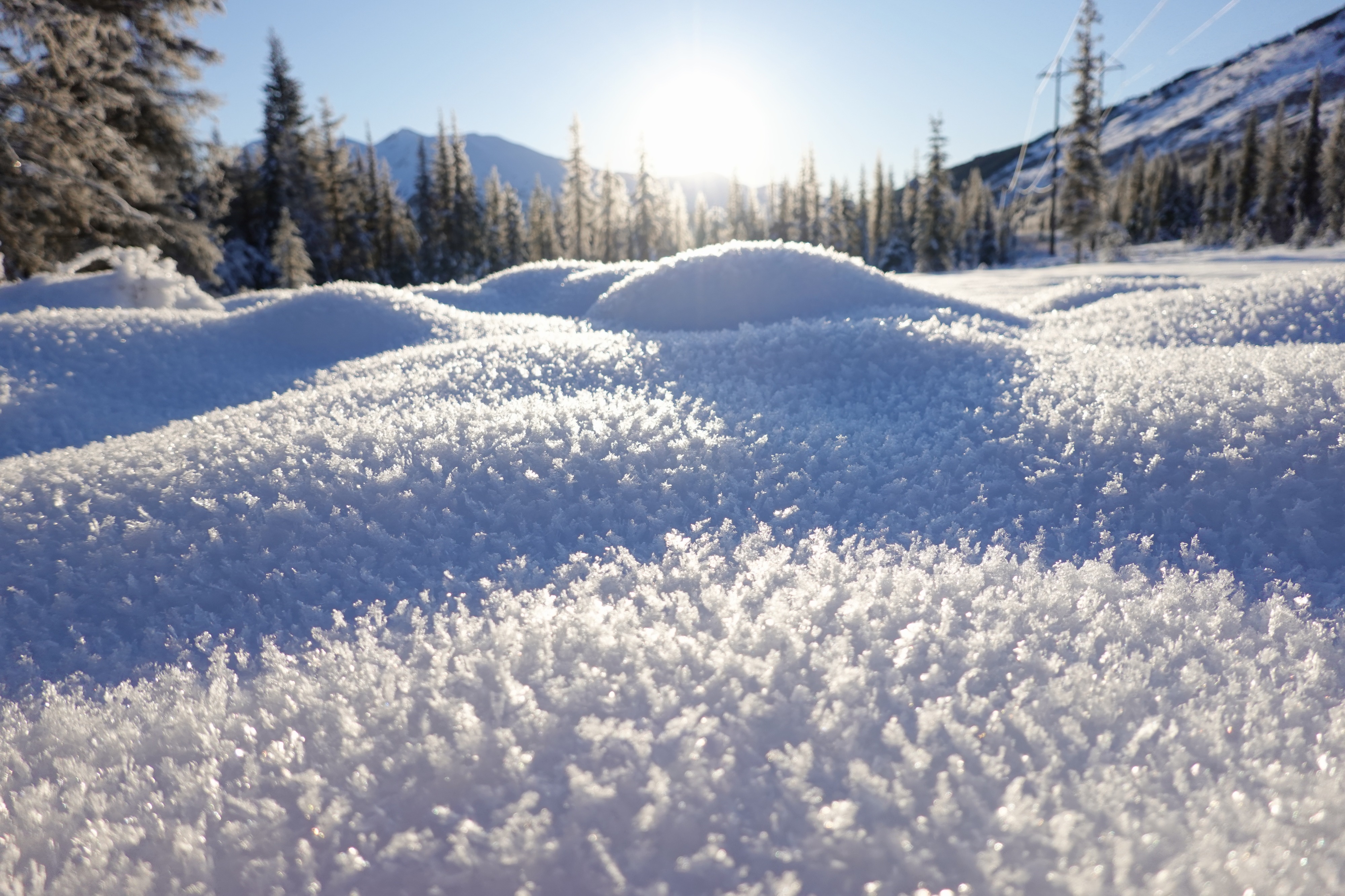
The snow depth was about 1.5' (50cm) at lower elevations and about 2.5' (80cm) deep at our high point around 2900'. There was very large surface hoar growing in the valley bottom and moderate to small surface hoar at higher elevations. In our snow pit we found a weak layer of facets buried about 15 cm deep underneath a stiff layer of wind transported snow. We found concerning test results in both compression tests (CT 2 RP) and extended column tests (ECT P 14). These results suggest that triggering a persistent slab avalanche is possible. The size of the avalanche will depend on the extent of the wind loading but the pockets that we saw were relatively small. Compared to Tenderfoot a few days ago the basal facets looked a little less concerning on Fresno. The layer of melt feeze that was faceting out was not as thick and the faceting process was not as well developed compared to Tenderfoot.