
Quick report
We dug snowpits throughout our trip and got inconsistent results on the buried facet layer 1-2 feet deep. I wouldn't take this to the bank as the data set is too small, but those on south-facing slopes were propagating (ECTP 23 above Goose Lake, ECTP 11 & 13 on Scotch Bonnet) on facets above and below the top melt-freeze layer. On east, northeast, and north aspects, the facet layer was buried closer to two feet deep and was failing without propation (ECTN teens and 20s). Weak layer hardness ranged from 4 Finger to 4 Finger +.
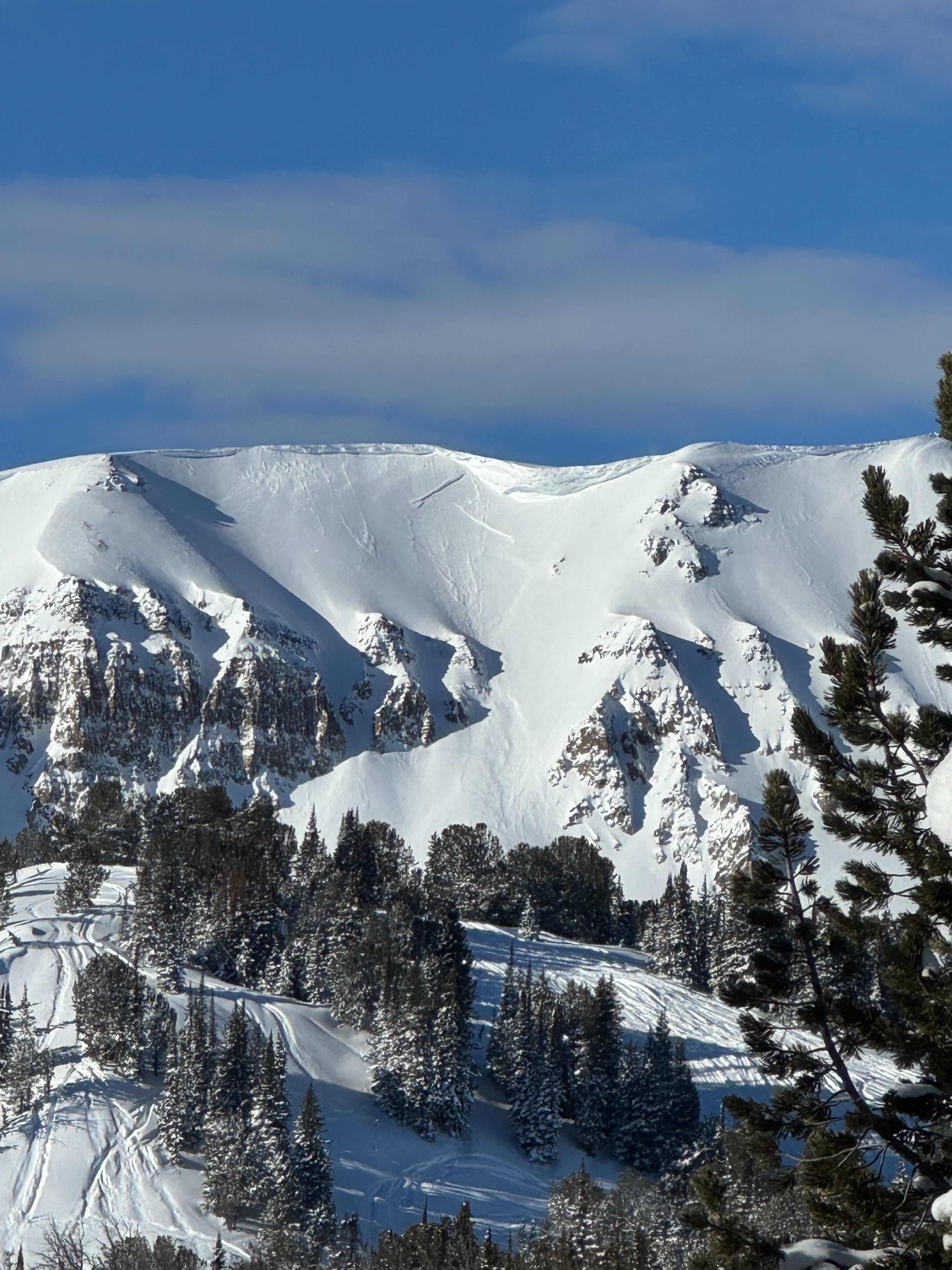
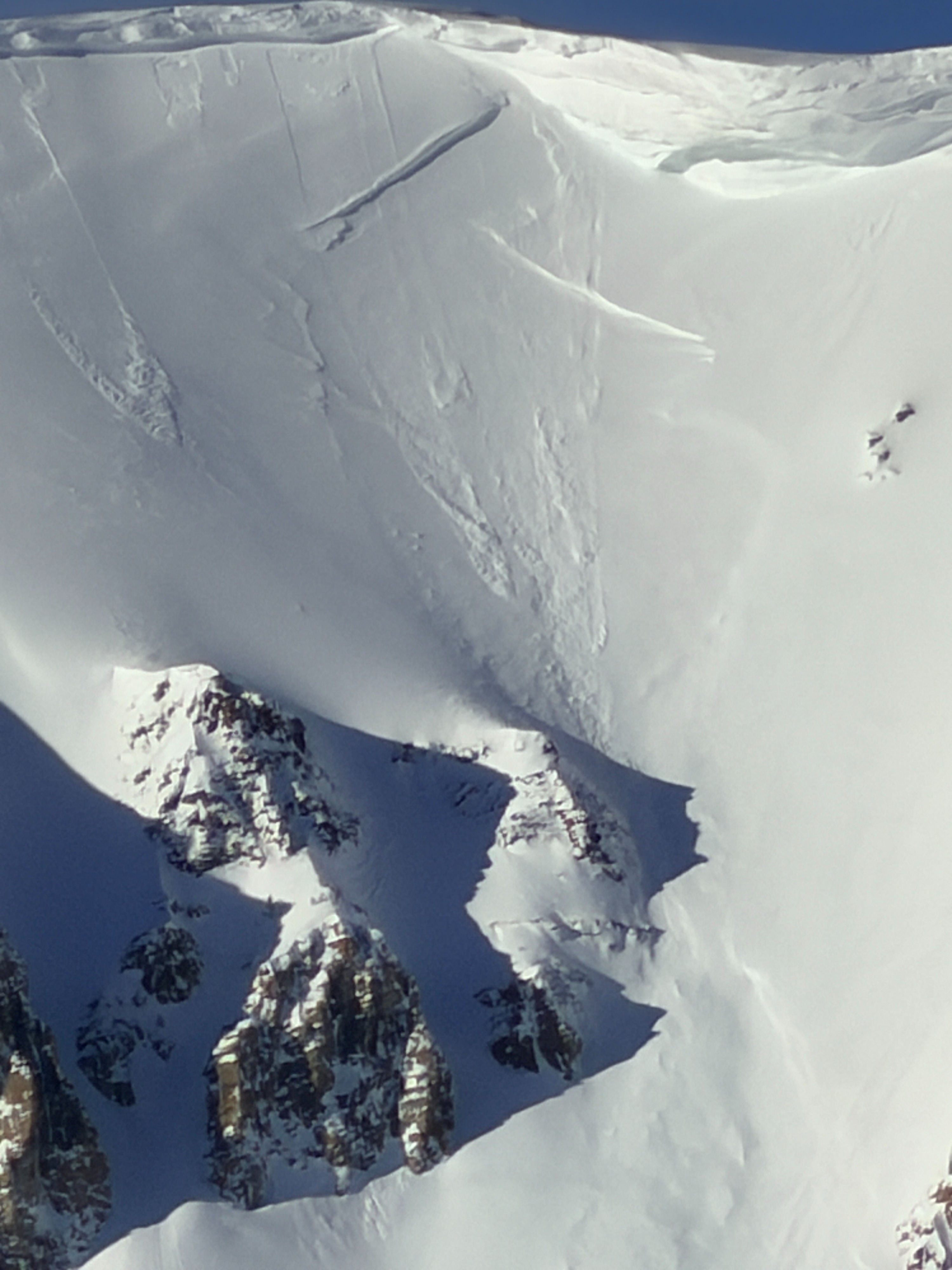
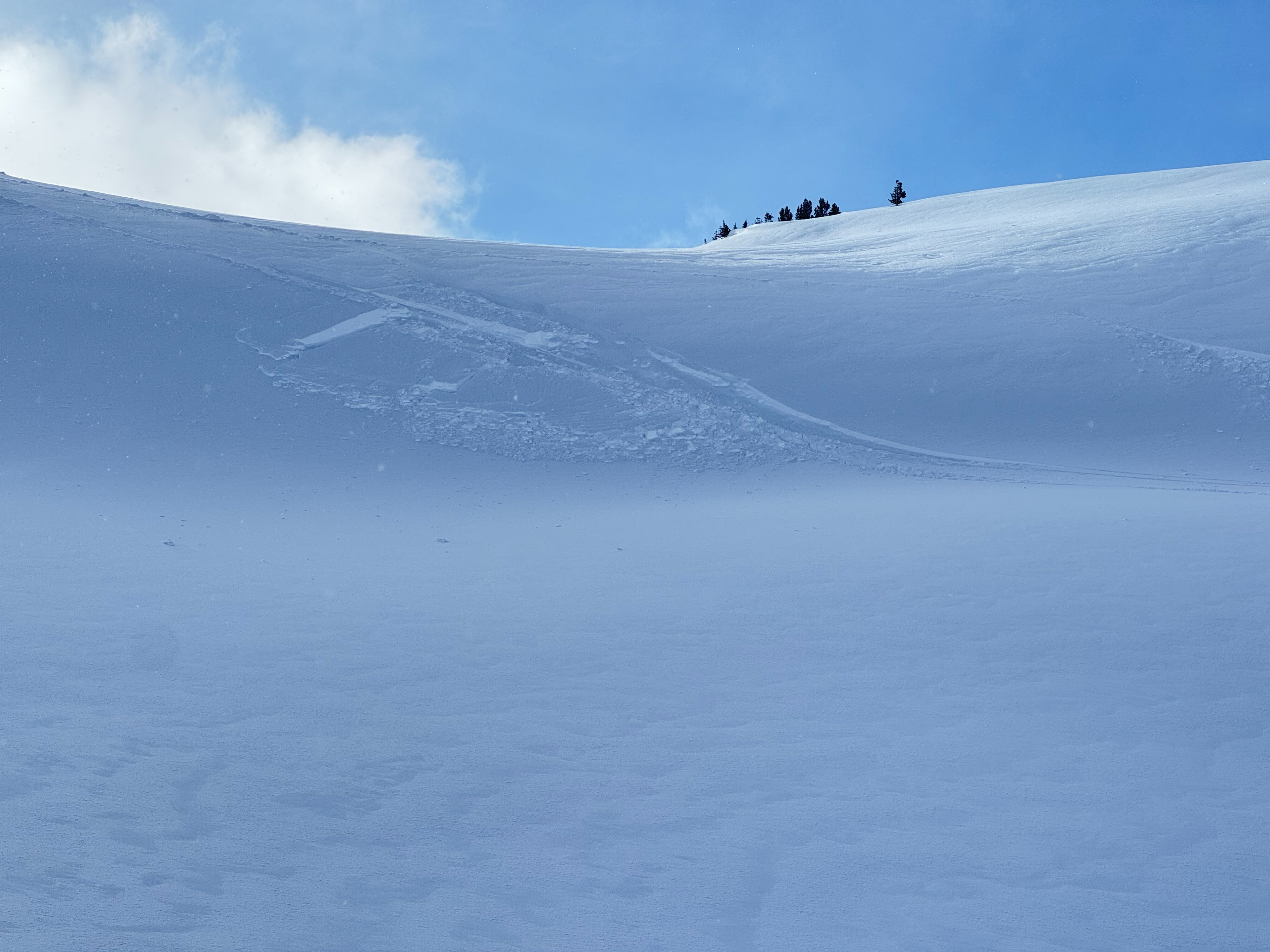
We did not experience any collapsing or significant cracking (small crack in drifts), but did observe two wind slab avalanches. Skiers triggered a small wind-slab on Saturday (observation submitted by the party) and a natural wind slab avalanche broke below the corniced ridgeline on the east face of Sheep Mountain Saturday afternoon or night.
Temperatures rose above freezing on Sunday afternoon and snow surfaces were moistening, but we did not observe any wet snow instability by the time of our departure around 2 PM.
We observed two avalanches. Skiers triggered a small wind-slab on Saturday (observation submitted by the party) and a natural wind slab avalanche broke below the corniced ridgeline on the east face of Sheep Mountain Saturday afternoon or night.Avalanche
- Size
- D2 R2
- Aspect
- NE
- Trigger
- N
- Elevation
- 10300 ft
Natural wind slab avalanche below the corniced ridgeline of Sheep Mountain on a northeast aspect. The avalanche broke between the afternoon of February 21 and the morning of February 22.