
Human Triggered Avalanche Debrief - Humphrey's Cirque/Rustler Peak
Quick report
- Cracking
- isolated
Our tour (Wednesday, March 20) was 24-36 hours after the weird St. Paddy's Day cut-off low storm cycle from March 14-18. The cut-off low sat over Northern Arizona for a while with atypical winds.
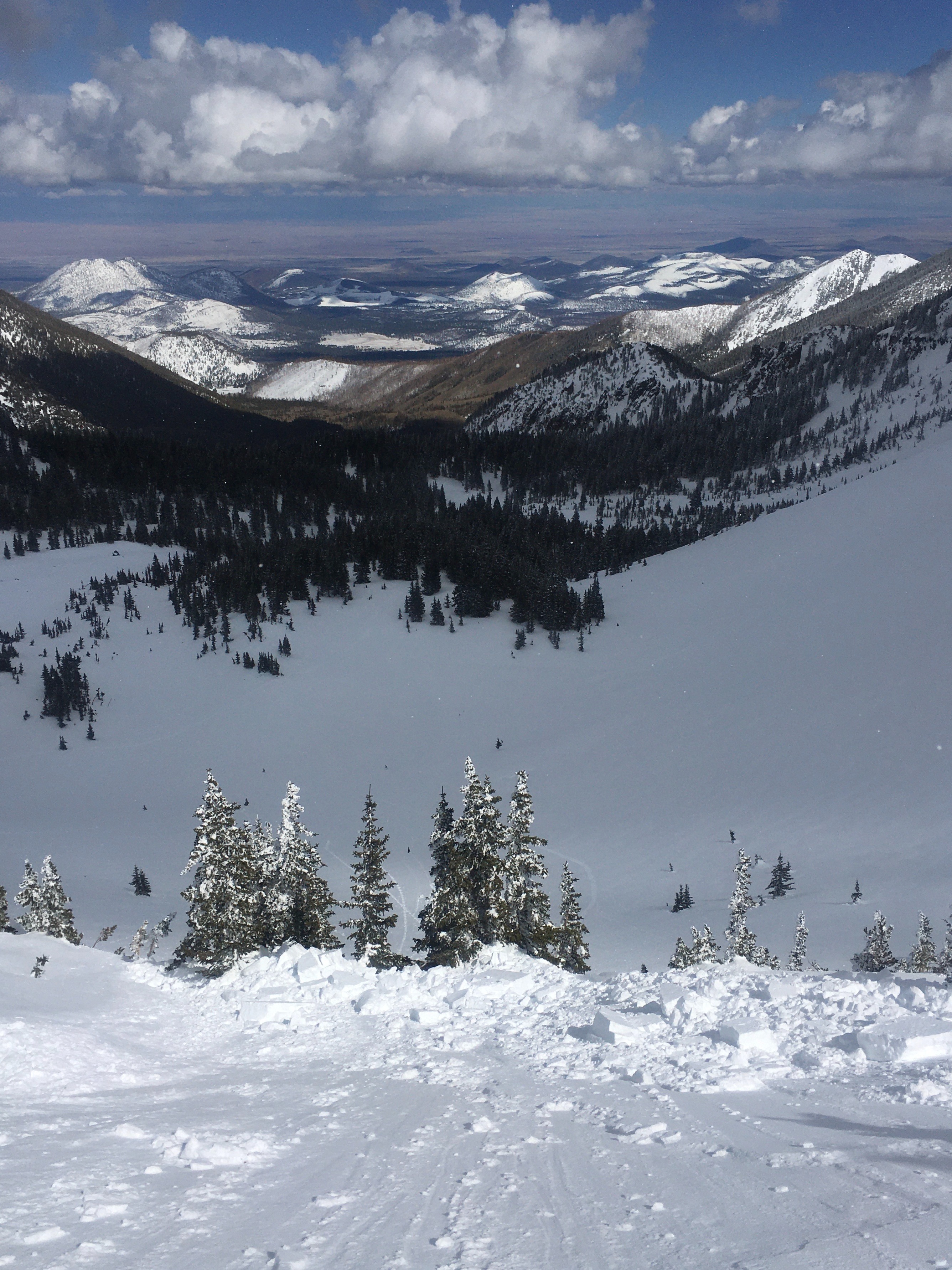
When we got to the cirque near the low saddle, I could see some new snow from 3/18. It was light snow and did have some wind-loaded features near the rocky outcroppings but did not appear to be extensive wind-loading or wind slabs across the slope along the standard cirque exit. Some quick observations showed it was bonding well to the 4f/1f snow below. I did not evaluate the interface between the new snow as of 3/14 and the hard melt/freeze old snow surface about 30-60cm down. The St Paddy's Cycle snow was much thinner in some spots from wind scouring.
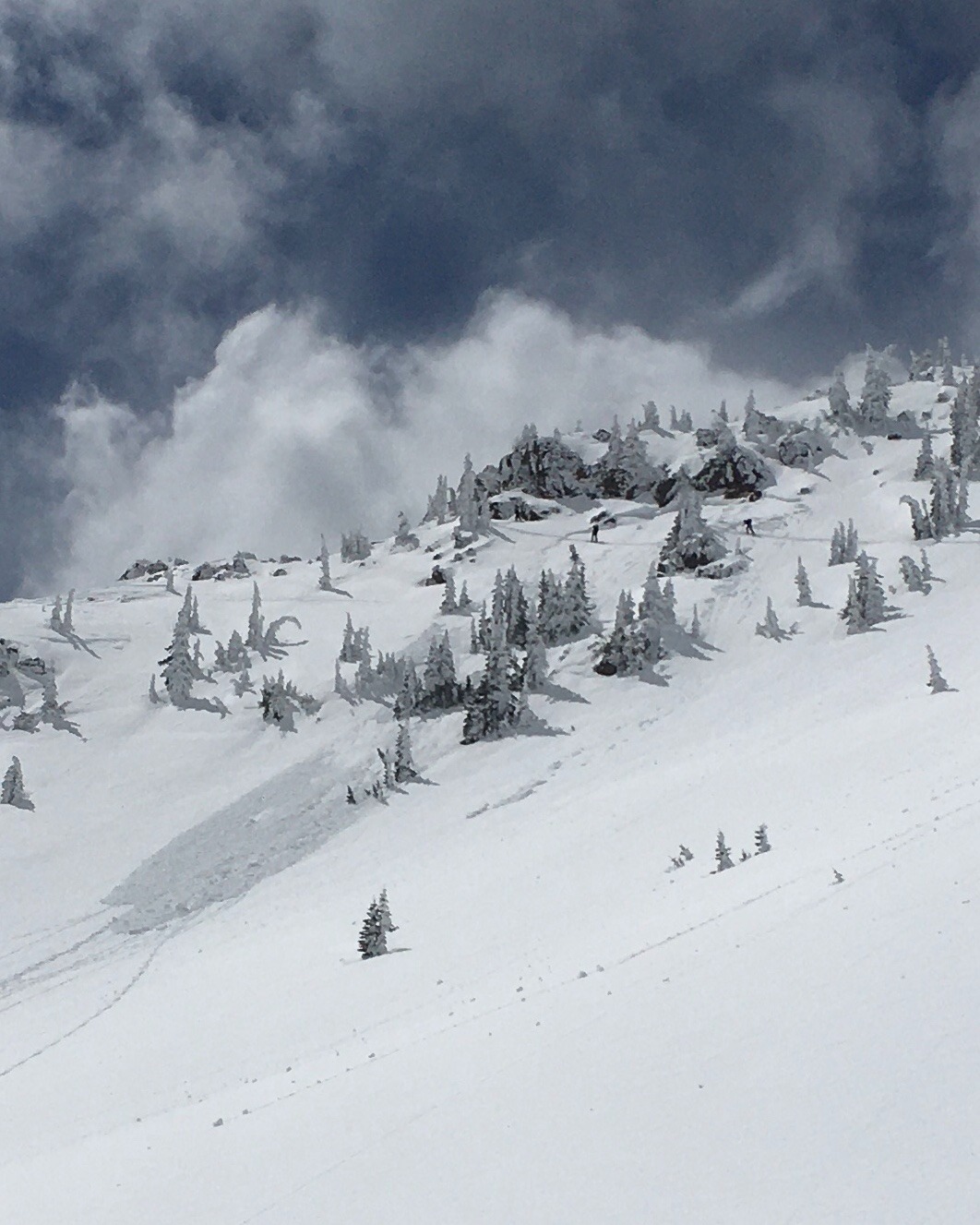
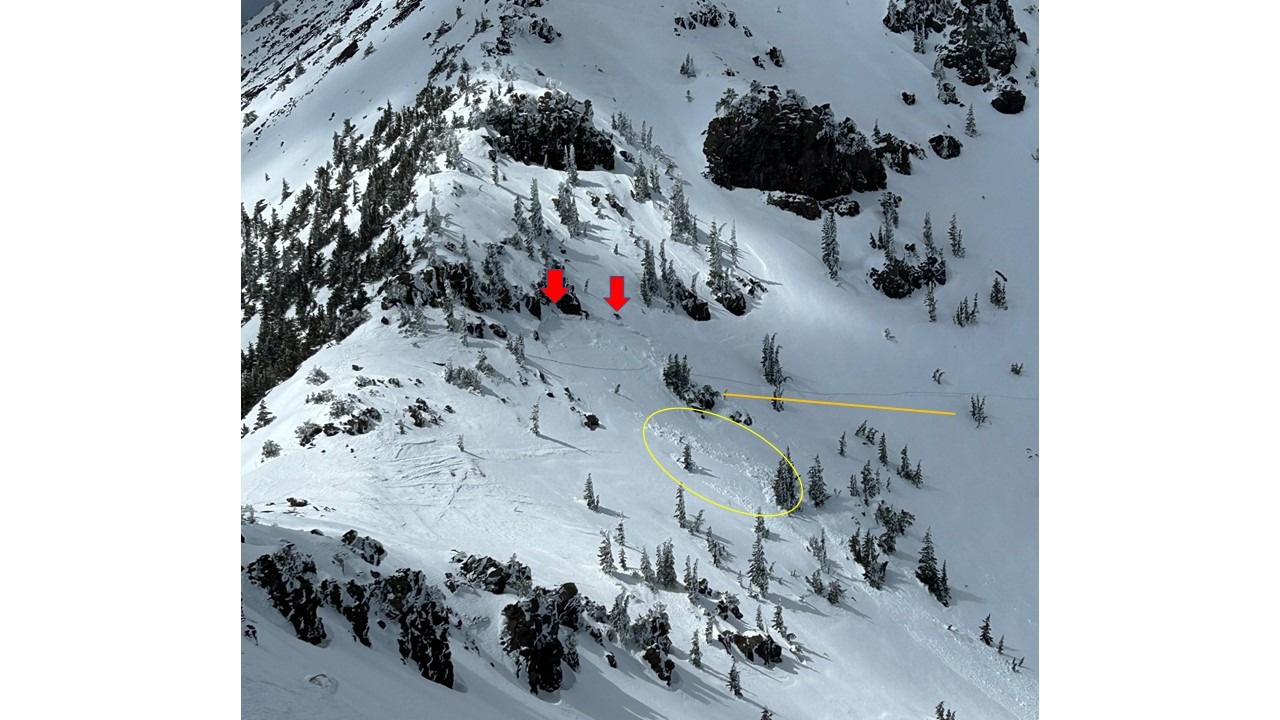
I should have evaluated our future exit out of the cirque back to this spot more closely. Instead, we ascended Rustler Peak. Most surfaces in the E-NE starting zones near Rustler Peak were scoured, hard, and coated with rime. The soft snow looked good about 50-75 verticle feet below and did not appear wind-loaded. We dropped in, and the soft snow was nice. At 12:45, while discussing how safe our "Giligan Fantasy" island of safety was, I heard "AVALANCHE." I looked towards the low saddle (of Humphreys Trail) to see fast-moving snow forming a small powder cloud as it fiercely crashed through a small group of trees, bending some to a 45° angle. It was quick and violent. Fortunately, no one was caught. The person setting the skin track had unintentionally and remotely triggered the avalanche near the low saddle. Later, I discovered that the new (March 14-18) snow was relatively thin (<15cm), where the person triggered the failure. The failure propagated above and ahead. Fortunately, the release above the person self-arrested.
God blessed the other team that started to drop into the cirque after us. I communicated the avalanche to the first person who had just dropped, and they radioed the rest of their team not to drop in due to potentially triggering another avalanche. They made a very respectable decision.
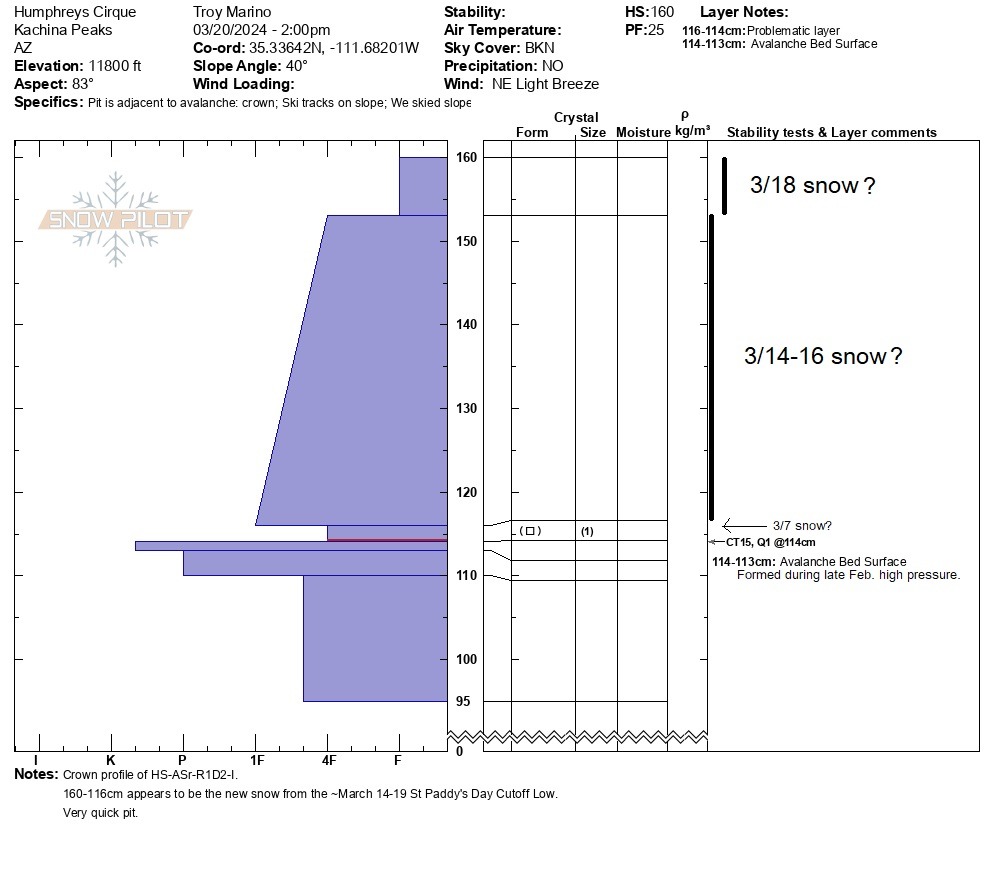
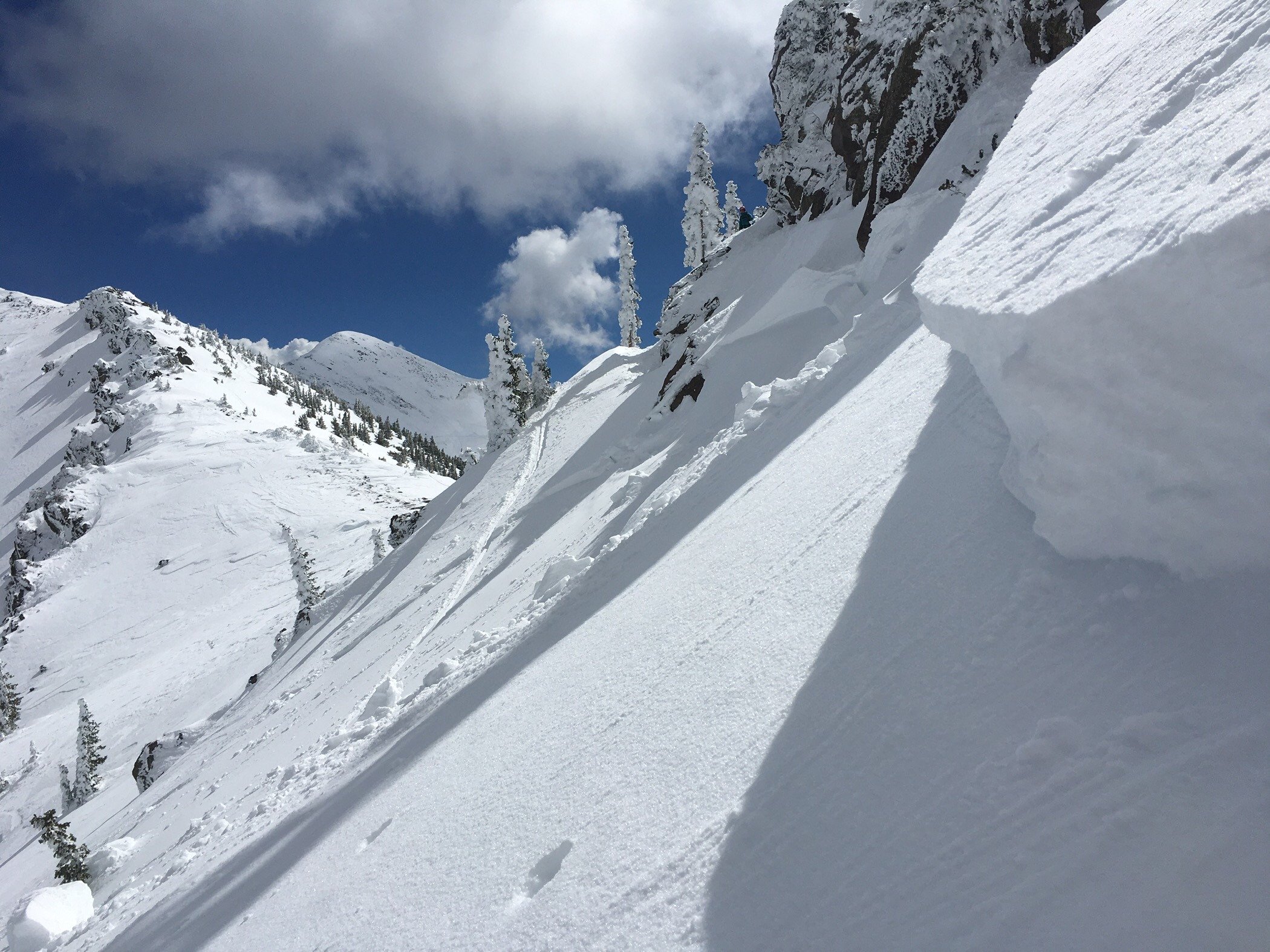
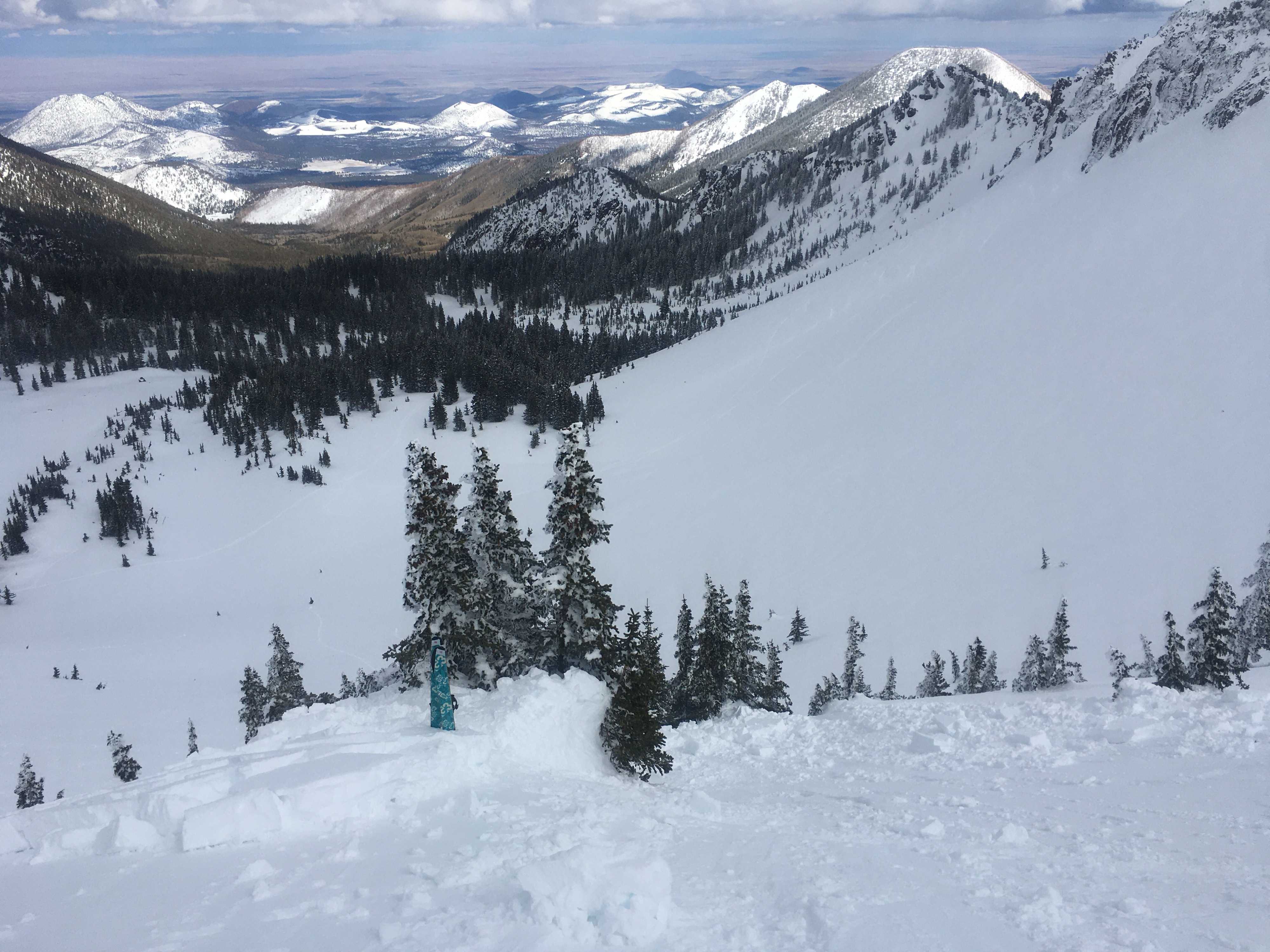
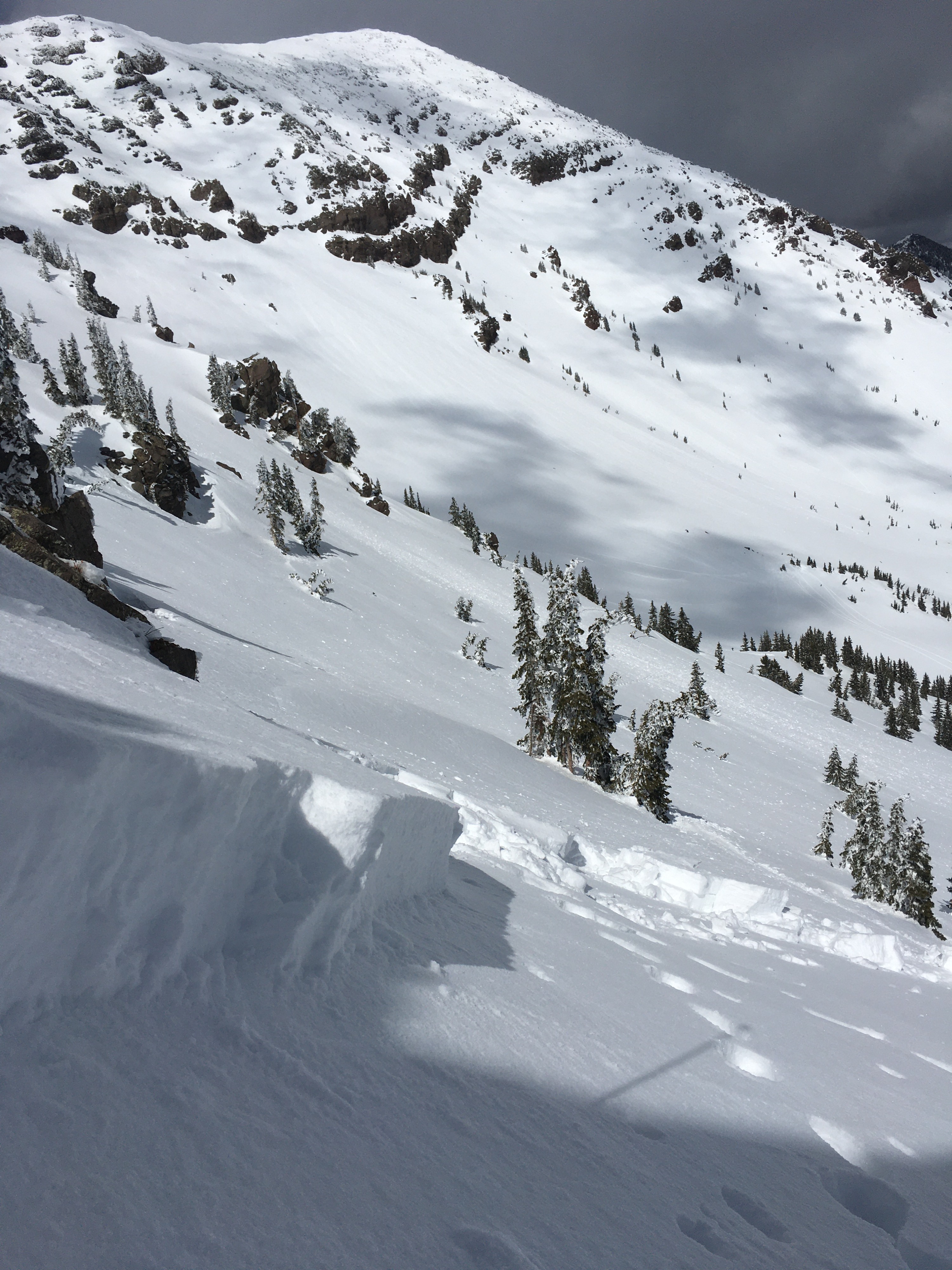
The rest of the people in the cirque exited without incident. As I climbed up to the crown, it became apparent what the sliding surface was, in the slippery skin track only covered by <15cm of new (~March 18) snow. The slick, melt/freeze crust formed during late February high-pressure before the March 7 snow of about 6". Most of the skin track had a different structure than where the avalanche occurred. The avalanche slab was more confined to above 11800' and near cliffs and chutes. See the updated snowpit profile that shows estimated layer formation dates.
Reflections
The person who set the skin track out of the cirque would have been safer ascending closer to the nose (climber right) rather than so far out on the exposed east slopes of Rustler. The nature of the skin track this day made it so people were constantly on top of each other. It is better to traverse around the nose (between switchbacks) to help with the exposure. Some people appeared to have inadequate spacing in the skin track when the avalanche was triggered. They spaced out much more after the avalanche! The cirque is getting increasingly popular, and people are skiing on top of each other. This did not happen today, but groups have skied down these east slopes of Rustler Peak onto parties skinning out of The Cirque. PLEASE BE AWARE OF PARTIES CLIMBING OUT OF THE CIRQUE. DO NOT SKI DOWN ON THEM! Last year, I was skinning out of the Cirque, and two people skied down an east Rustler avalanche chute above and right by me as I exited. One must look into the cirque from different vantage points to be sure no one is below.
More Reflections
Once we got to the low saddle (before ascending the last of Rustler), I should have ventured further out (along a ~safe/protected path) to evaluate the deeper interface of the old snow bonding to the new snow (that started accumulating on 3/14). I would have found the problem or triggered the avalanche (likely from the side or underfoot). I stood on the ridge (near the saddle) not more than 75 feet from where the avalanche released, with my mind distracted. If I calmed my mind and opened my awareness to the mountain, I would have had the clarity to gather more data before committing to the cirque and the exposed exit required to return to Snowbowl. Why did I not consider the near-surface facets and good sliding surface in this pit (near the avalanche) that I dug on March 9? Probably distracted by my addictive side that wanted to lose itself in the bliss of powder turns.
If I had ventured further, I may have noticed that wind cross-loading was more pronounced near rocky outcroppings and the chutes above the exit route (that we would use later).
What was deceiving (to the eye) is that the 1f snow in the slab avalanche (see snowpit) was discontinuous across the east face of Rustler and had a coat of softer snow on top, smoothed over and hiding the more pronounced issue of the 1f slab on top of a faceted, slick and hard bed surface.
In the future, I will be much more careful and suspect of cut-off lows (that park over the peaks). Especially ones with atypical winds. Never again will I not carefully assess my exit route out of the cirque. Every route out of there crosses avalanche terrain. It is a little complex, and the only low-hazard exit option is to ski about 5+ miles down to the bottom of Lockett Meadow Rd. The Cirqe can be a commitment trap, and it has terrain traps!!!
Never again will I think March can't produce persistent slab problems.
Myself and anyone in the cirque on this day could have died. We have been blessed with an opportunity to learn from the mountains.
More Avalanche/Snow Pack Data Notes
HS-ASr-R1D2-I
Crown Width ~75' (23m)
Flank lengths ~30' (9m)
Slope angle at crown 40°.
~35cm average crown depth. ~60cm deepest.
~250-300' verticle drop from crown to lowest debris.
Path length estimated at >200m.
Estimated at 22t (22,000kg) from measurements and assuming 300 kg/m slab density.
D1 avalanche is typically <10t.
D2 avalanche is typically 100t.
We called this avalanche a D2 based on its ability to kill, and its path length was typical for a D2.
The post-avalanche evidence looks a bit small for a D2, but it could have easily killed a person via trauma or suffocation. That is agreed upon by all who witnessed the force of the avalanche and the depth of debris against the trees. I estimated the avalanche velocity when it hit the lower trees at about 17.5m/s (40mph). Using v = √(2ghsinθ), where g=9.8m/s, h=21m, θ=40°.
This was a persistent weak layer under a 3+ day-old storm/wind slab. ~100' fracture width above the person that triggered the avalanche. Fortunately, this part of the slab quickly self-arrested above the person. It was triggered where the 1f slab was much thinner, likely due to previous wind stripping ~3 days ago. The area had a more recent 10-20cm of new snow, likely from ~2 days ago. The new snow was closer to 30cm deep at the deepest point of the crown.
Relative to our route today, the problem appeared specific to the east face of Rustler Peak near and above 11800. Do other high-elevation easterly slopes have this problem? How long until they heal? Will they get more reactive in the warmer (above freezing near treeline) weather forecast for the next two days, or will they start to glue together? It would have been a good idea for all parties (including mine) to evaluate this standard Humphreys Cirque exit more closely before descending into the cirque. This St. Paddy's Day cutoff low was fairly weird and unusual, the way it parked here for a few days with atypical winds.
Still hangfire in this area.
We watched a group remotely trigger the avalanche at about 12:45. We did not experience any cracking or collapsing today. But there was a ~100' long crack above the person that triggered the avalanche. This crack was part of the avalanche, but fortunately this portion of the avalanche self-arrested before sliding onto the person.Weather
- Cloud Cover
- broken
- Wind Loading
- previous
- Recent Snowfall
- ~10-30cm on 3/18
- Snow Avail For Transport
- moderate amounts
More clouds in morning. More sun in afternoon.
Avalanche
- Size
- D2 R1
- Type
- HS
- Aspect
- E
- Trigger
- AS
- Elevation
- 11800 ft
HS-ASr-R1D2-I. Crown Width ~75'. Flank lengths ~30'. ~30cm average crown depth. ~60cm deepest. Full obs at view observation link above, or https://kachinapeaks.org/Observations/#/view/observations/9f7c213e-10b3-42cd-9a84-b39d4934b069