
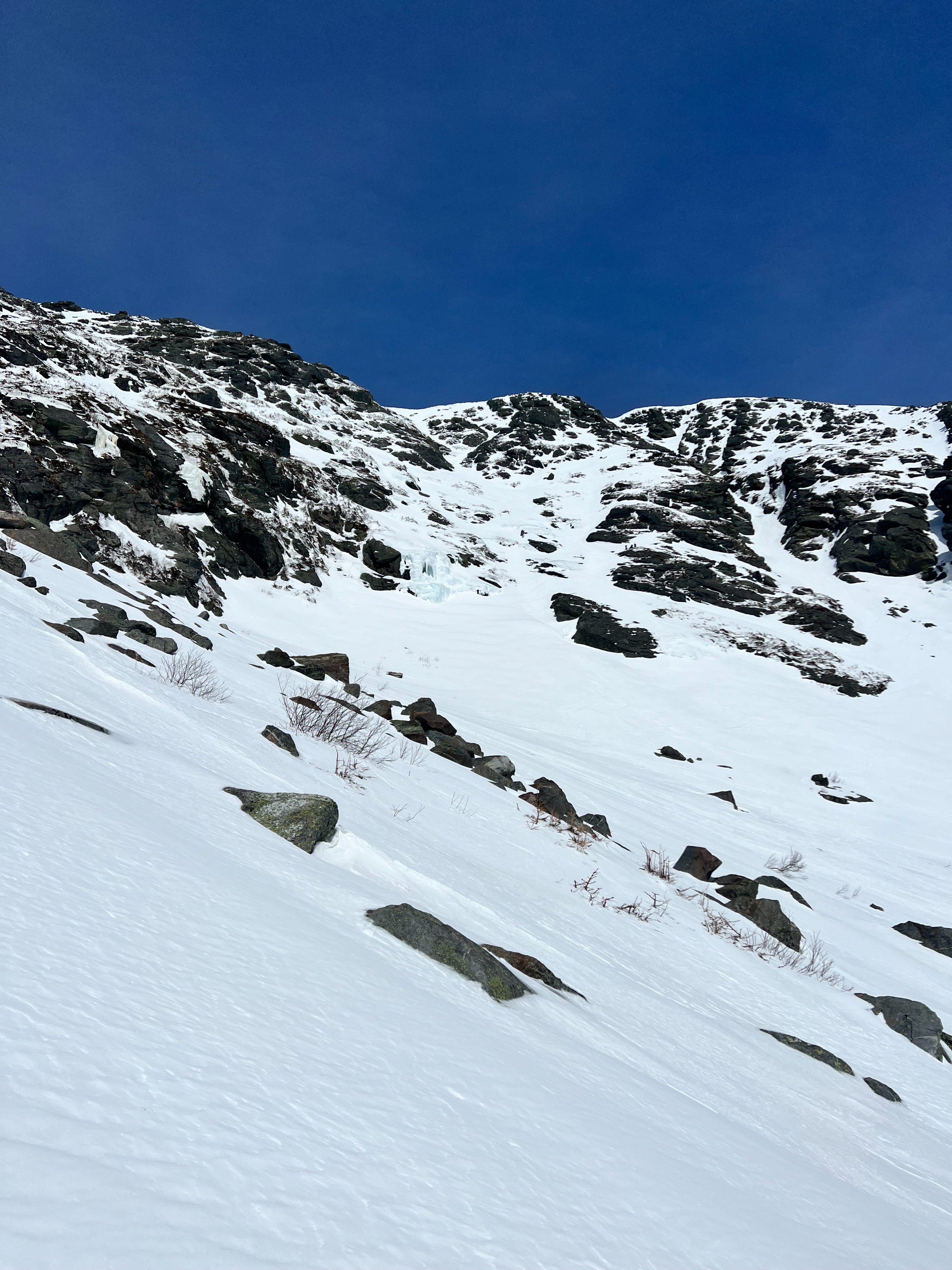
Quick report
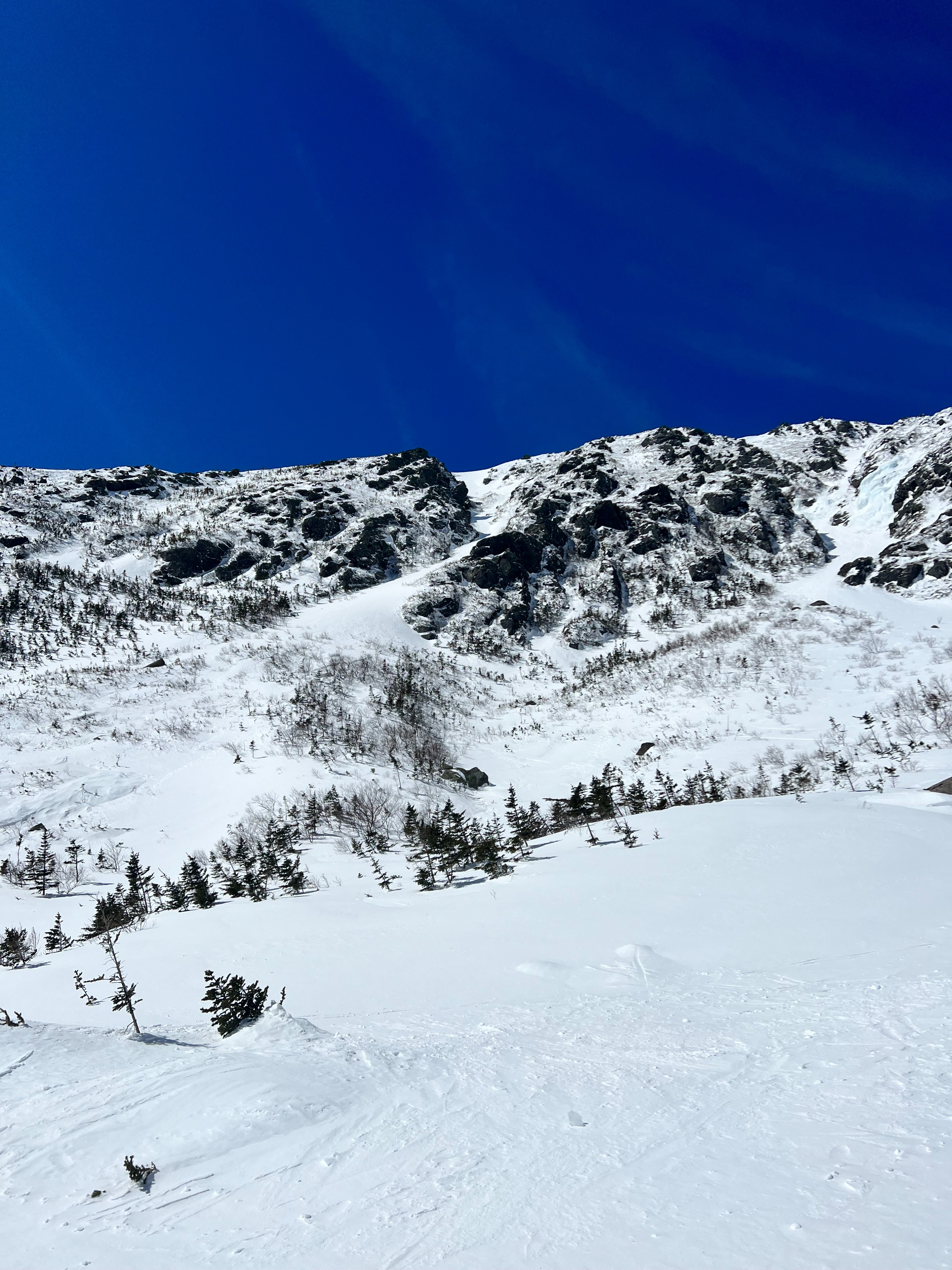
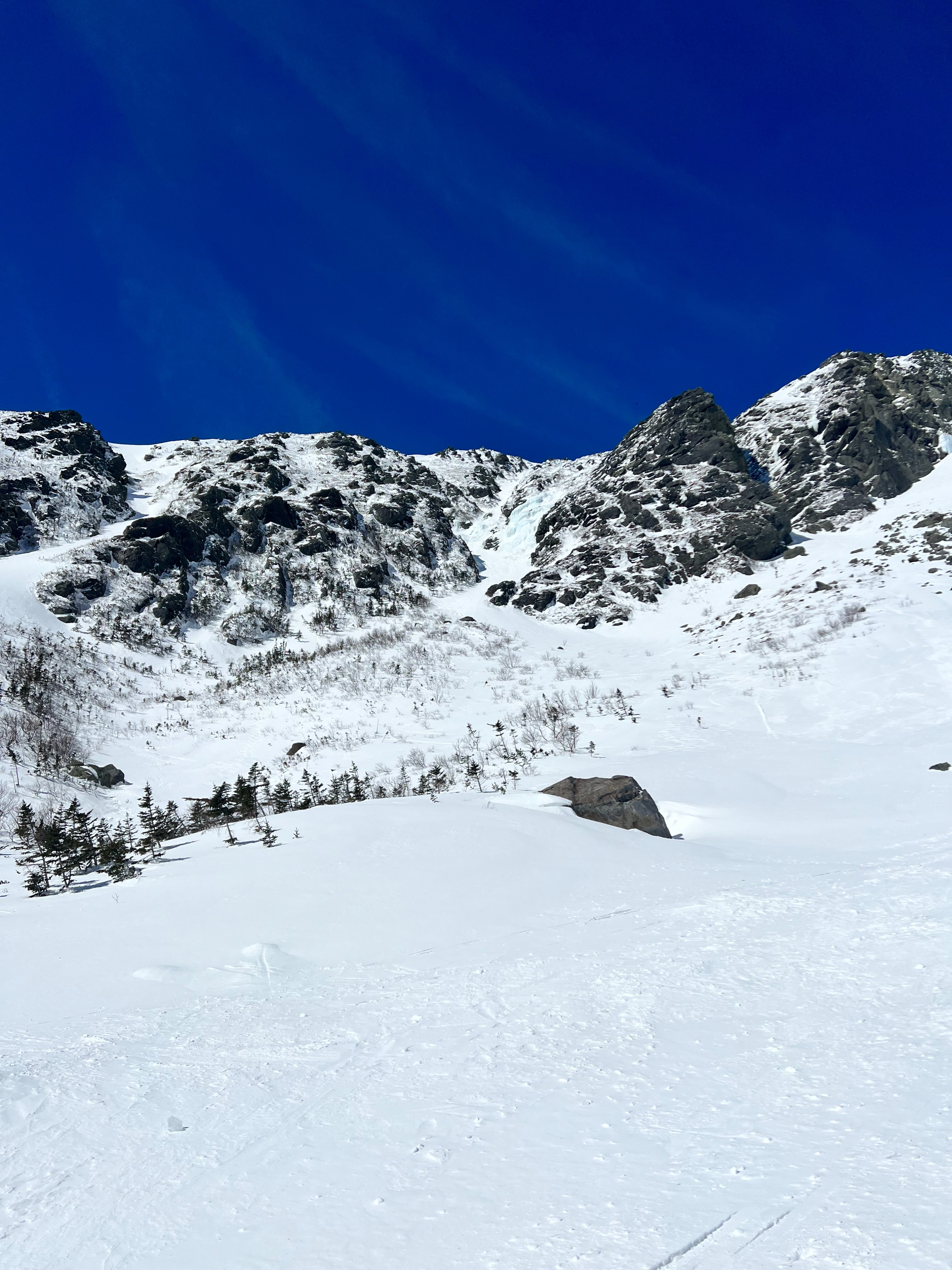
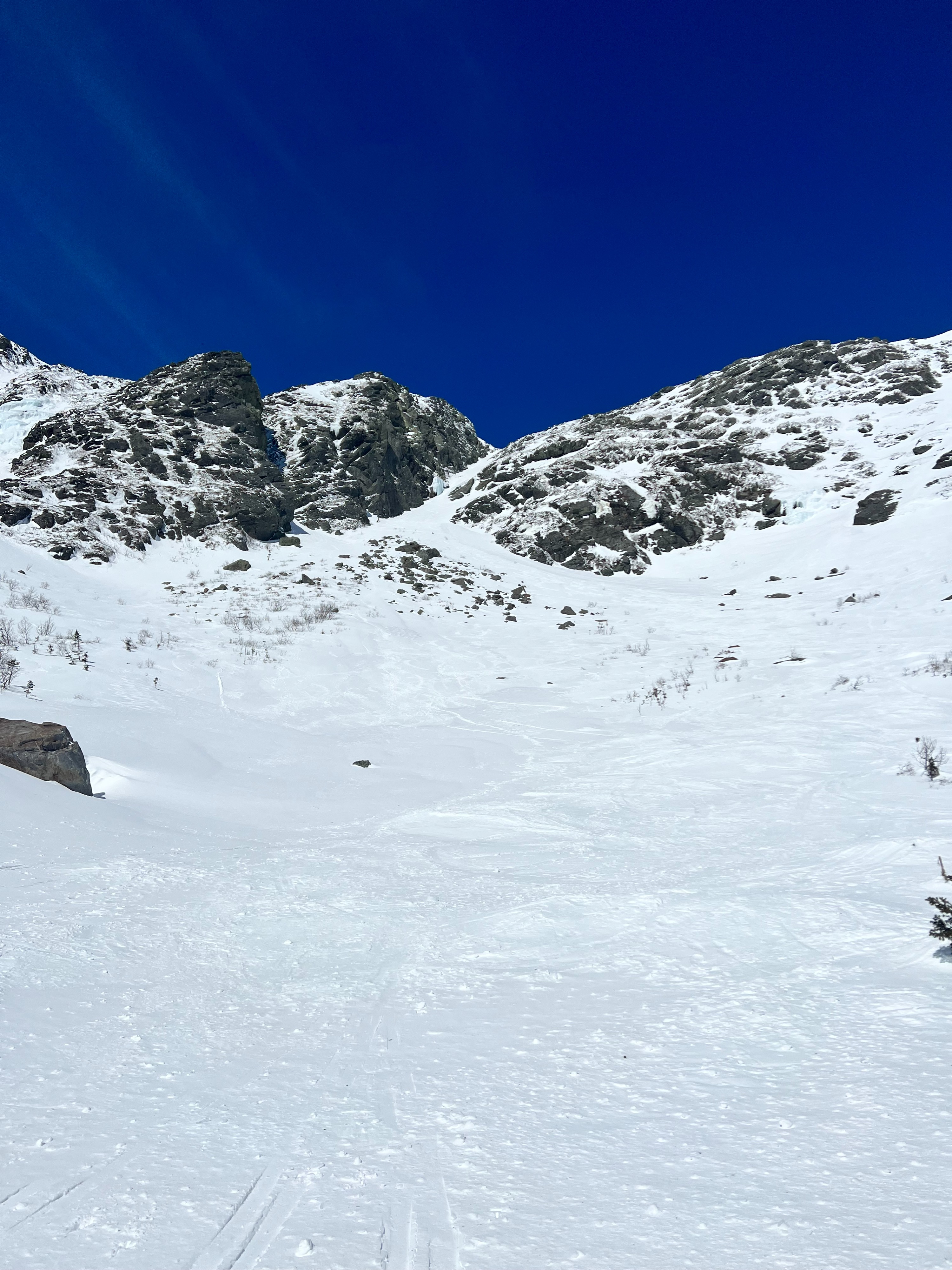
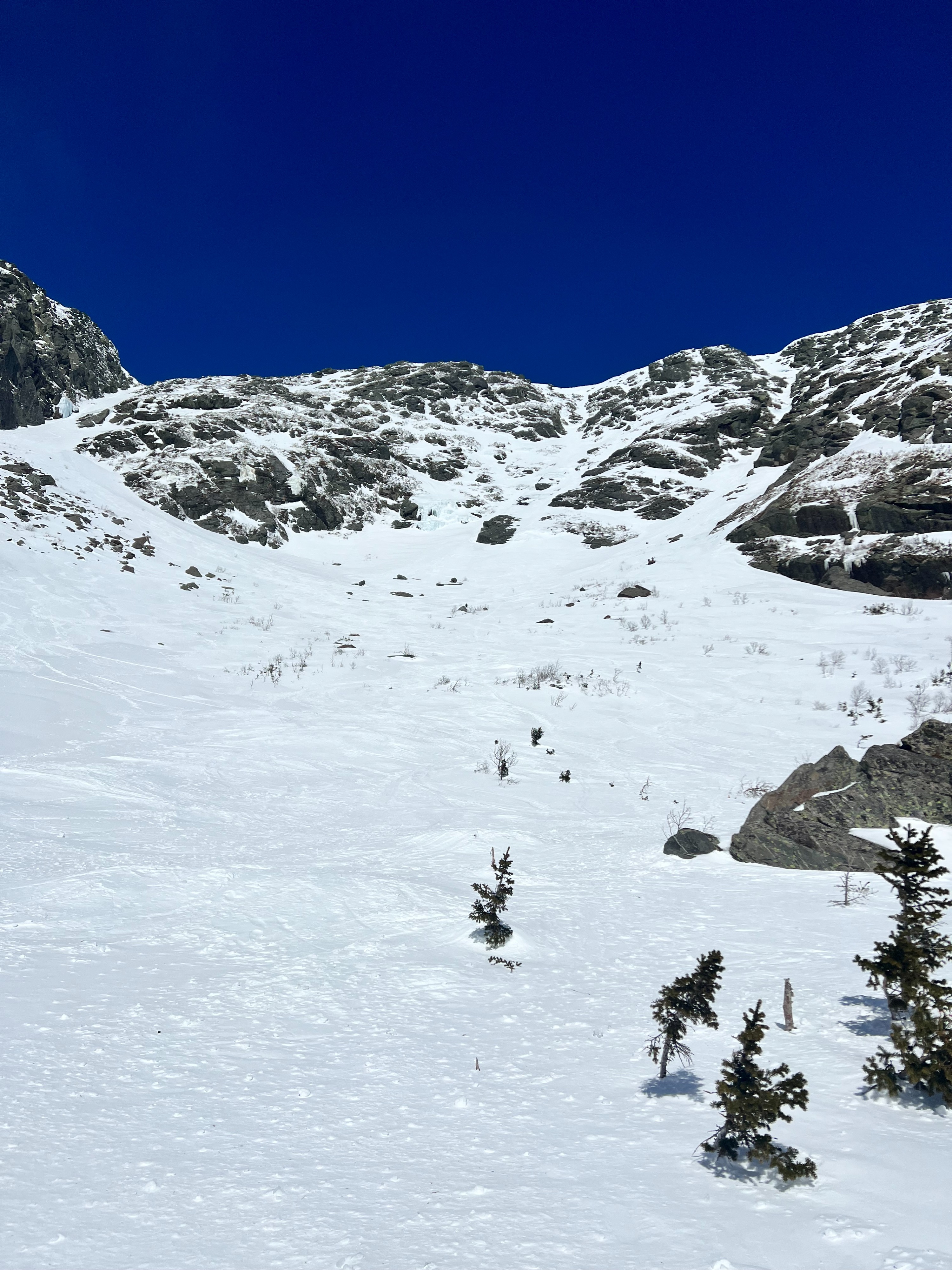
Went into Huntington Ravine to gather observations on the wind slabs that developed from the 3/30 3.14 inches of new snow and strong north and northwest winds that were sustained over 28 hours. In southeast and southern aspects found windboard widespread. Depth was 2 inches to 1.5 feet in observed terrain and composition found was a P surface over 4F on a K hard melt-freeze crust. In east and northeast aspects, found softer and deeper snow of 1.0-2.5 feet that had moderate results with multiple thin weak layers observed in the wind drifted snow on a K hard melt-freeze crust.
Weather
- Air Temp
- 24
- Cloud Cover
- few
- Wind Loading
- previous
- Rain Elevation
- Not Observed
- Recent Snowfall
- Previous 3.14
- Snow Avail For Transport
- none
Few clouds in the sky shifting to overcast in the early afternoon. Warm temperatures with solar warming evident in southern terrain. Light west winds observed.
Snowpack
Observed variable snow conditions in Huntington Ravine. In southeast and south aspects found windboard, firm, and scoured surfaces. Some of this surface snow was glazed with a thin ice coating, other snow was textured from wind effect, and some of the snow appeared smooth. Smooth snow appeared that it might be soft, but underfoot it was pencil (P) hand hardness. Southern aspects were affected by solar-warming when we entered the terrain and the surface was just beginning to soften and moisten.
Observed some aspects that looked to be loaded, but found this snow surface to be P hardness and found no instabilities in terrain up the observed high point of 4640 feet. Hand shears were found to be stubborn and revealed 2.5 cm P hand hardness surface over 9 cm of 4F snow over a melt-freeze crust. Failures occurred within a subtle density change in the 4F snow and with more force on the melt-freeze crust. Over time the top 2 inches of snow was softening in south aspects.
Saw skier traffic in Central and Yale and skiers noted hand shears that increased in sensitivity in steeper terrain but reported stability throughout the descent.
In east and northeast aspects found more sheltered terrain with soft snow that was not receiving as much solar warming. The wind drifted snow was well connected, 1-2.5 feet deep, and soft as boot top penetration was commonly found ~4200 elevation. In a northeast aspect found moderate hand shear results and chose to dig to gather additional information. Failures were planer and on the melt-freeze crust as well as within weak layers in the wind drifted snow.
Pit details were as follows: Aspect: NE Elevation: 4210 feet Slope Angle: 37 degrees Total snow depth: 277 cm
ECTN 26 down 9 cm
CT#1 CT16 SC down 9cm, 12 cm, 21 cm, and 47 cm (on the melt freeze crust)
CT#2 CT13 SC down 9cm and 12 cm
CT16 SC down 21 and 47 cm
The weak layers within the 4F snow are likely from slight variations in wind speeds throughout loading, these were discernible by touch. These results on the CT were all a sudden collapse and planer in shear quality. The repeated CT confirmed multiple weak layers, but based off of travel, observed conditions, and the snow reactivity did not expect to see any propagation when administering an ECT. The snow felt stubborn and that it lacked the energy to translate propagating results, which the results reflect.