
Quick report
- Cracking
- isolated
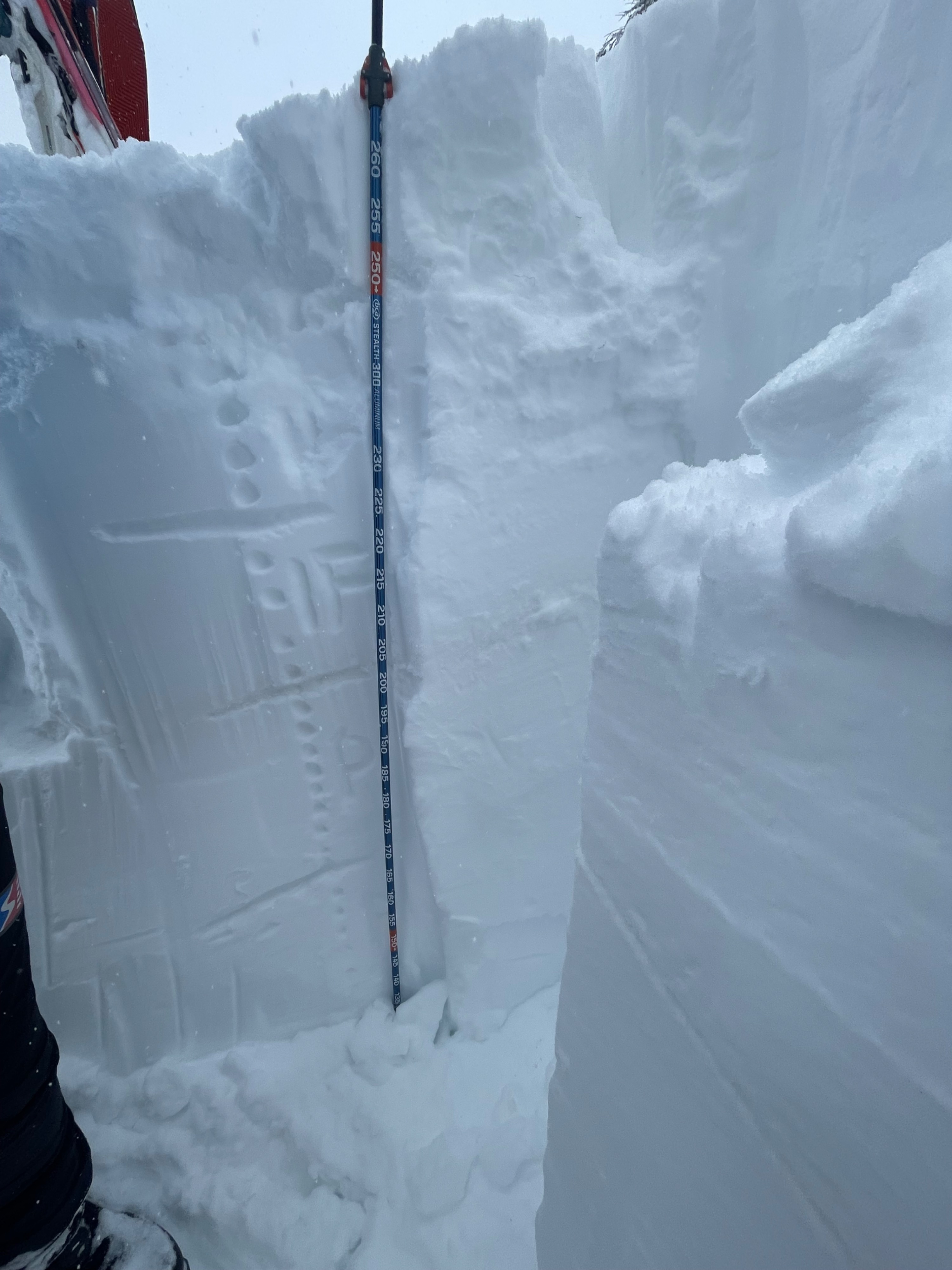
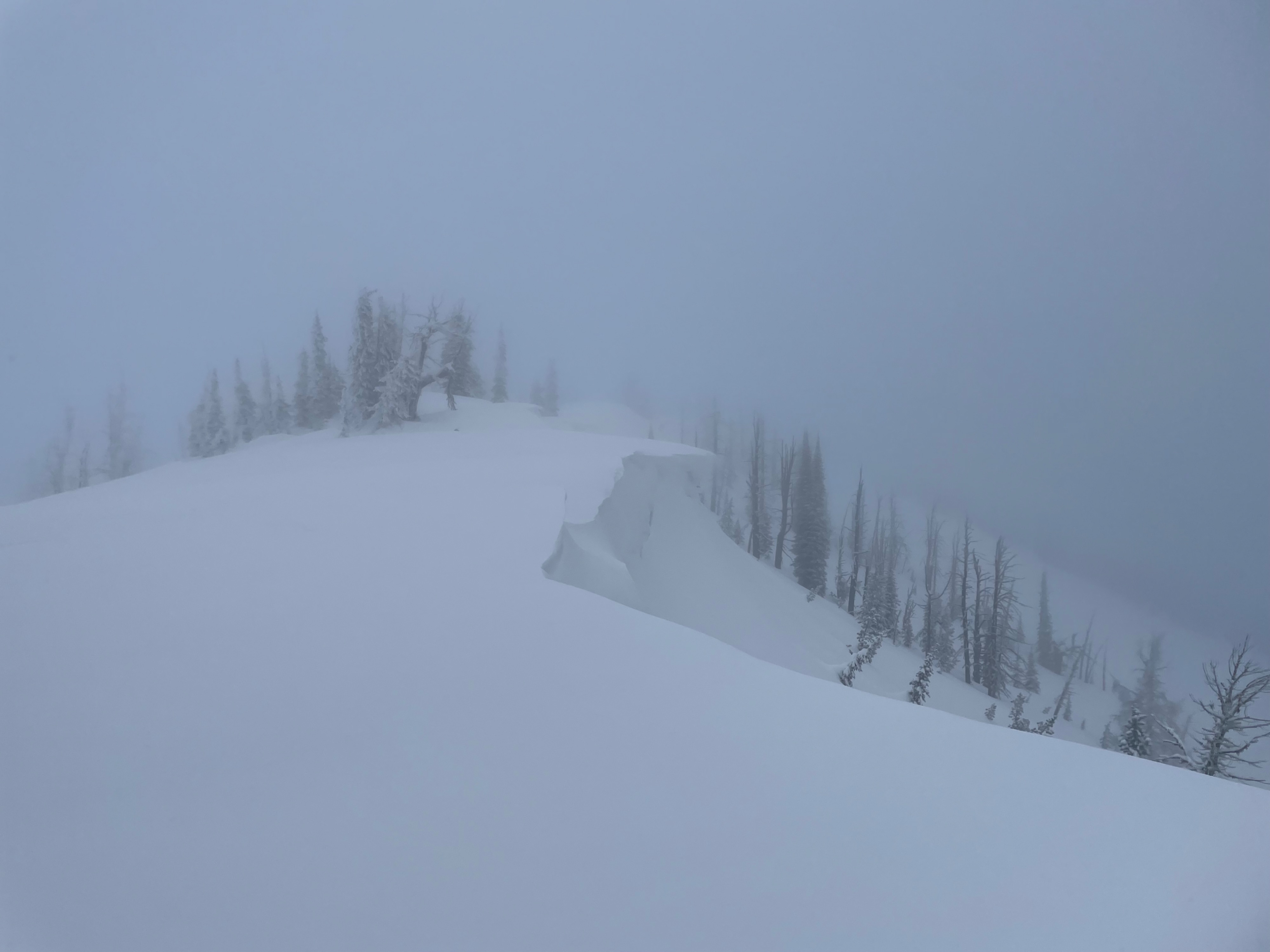
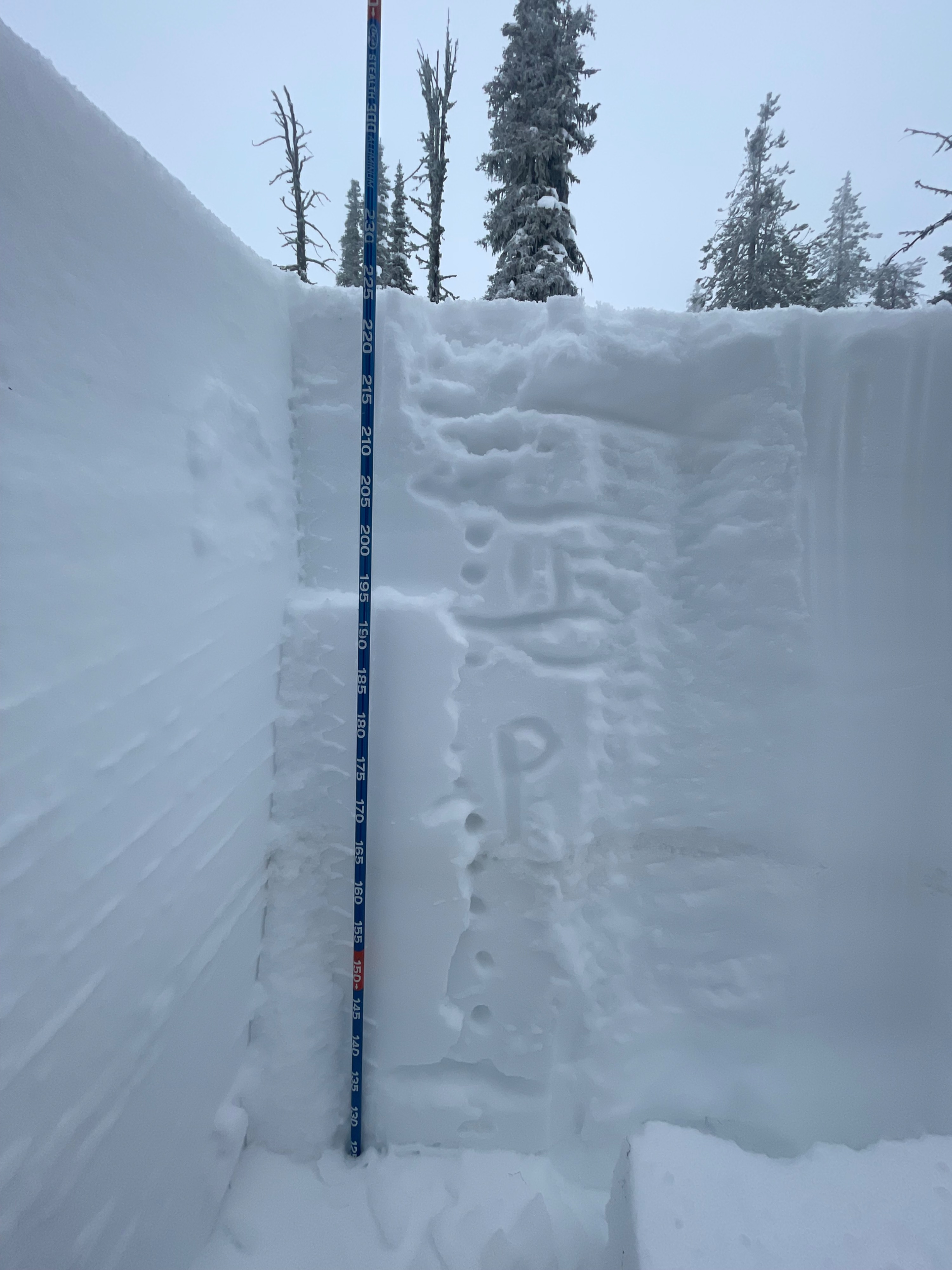
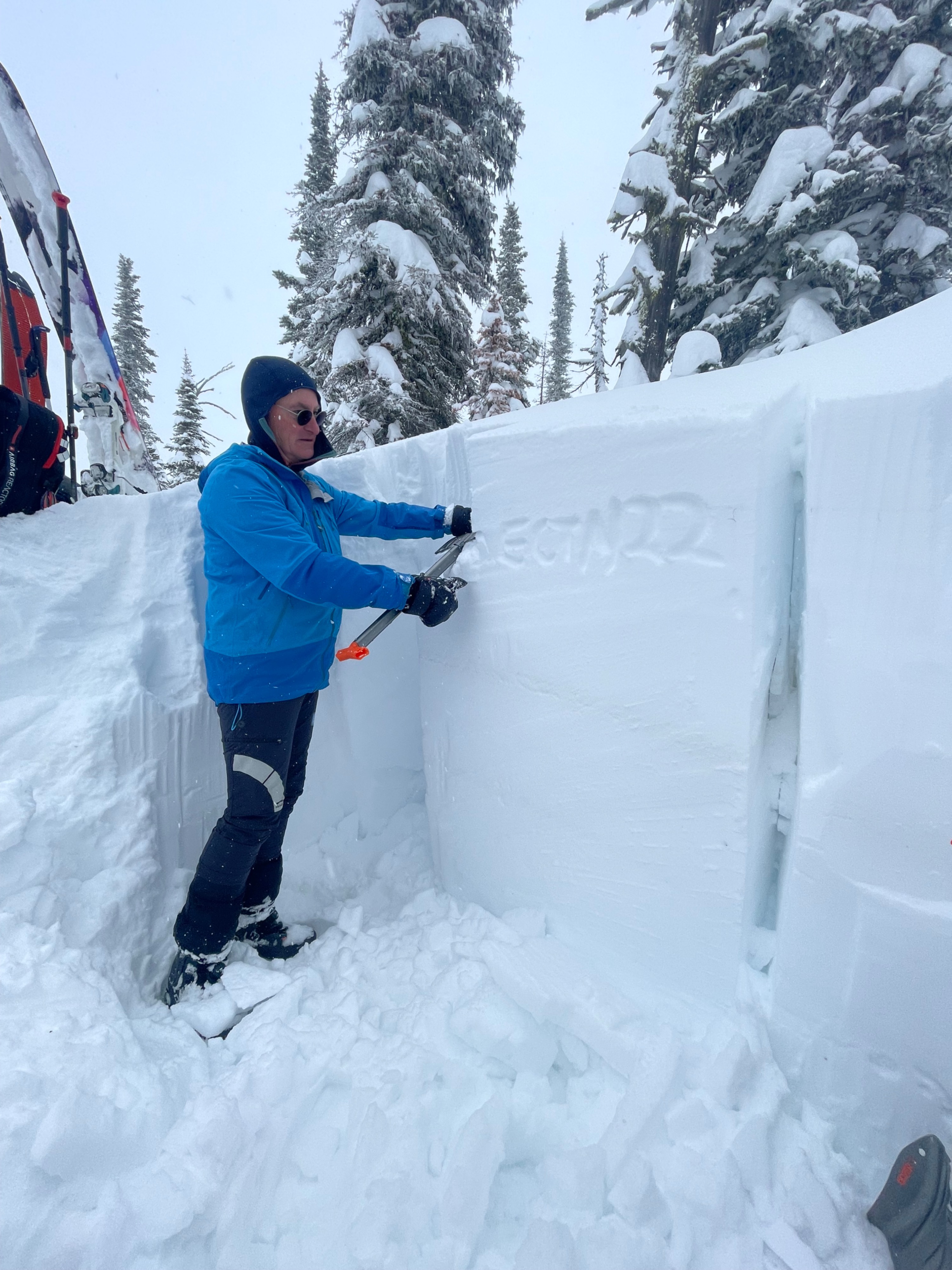
Winds were out of the west-southwest, and were forming small lips on the cornices on the East aspect of the ridge. We had small, barely noticeable cracking in the new snow interface while we skied as the 1st inch or so, likely came down and settled a little bit already. It was likely warmer snow initially and thus a little bit harder than the snow above it . We had medium size graupel on the surface of 6 inches or 16 cm of new snow on solar aspects. It was on a 1-2cm crust. Test pit results showed a right-side-up snow pack with a layer of weak surface hoar under the new 6 inches or 16 cm of snow. Failures in the upper 2’ did not propagate. We did not get results on the buried surface hoar layer that was 105 cm from the surface, which formed 2/25 with a PST score of 47/100 end showing difficulty to trigger with the potential to propagate.
I ski cut a steep 38° roll over and got a D1-dry loose avalanche in the upper 16 to 20 cm. It ran easily and would be a problem in consequential steep terrain.The upper 16 cm of new snow was resting a layer of surface hoar that was reactive in our tests, but it did not propagate as the snow above. It was too soft. There is a little bit of harder snow above it that initially fell, and I think that was causing the cracking, as this new snow gains hardness, it may become more sensitive .Weather
- Air Temp
- 28.4
- Cloud Cover
- overcast
- Wind Loading
- light
- Recent Snowfall
- 16
- Snow Avail For Transport
- small smounts
Winds were light to moderate out of the west-southwest, snowfall tapered off around 11 AM and then picked back up around 1 o’clock. The snowfall was in the form of graupel 2-4mm.
Avalanche
- Size
- D1
- Aspect
- N
- Trigger
- AS
- Elevation
- 7500 ft
This was a small ski cut that ran only about 50’ where the slope got shallower angled. It ran as dry loose very easily on the new snow interface that has weak layers of surface hoar , and likely some near surface facets that formed during our latest high-pressure.