
Quick report
- Cracking
- specific
- Collapsing
- specific
Dangerous avalanche conditions exist. You can trigger avalanches involving dense, 2-3 foot thick slabs on many slopes. Winds built small additional drifts from the snow that fell today. You are more likely to trigger an avalanche where drifts, dunes, and rippled surfaces tell you the wind affected the snow. Triggered avalanches may break wider than you might expect, and can be triggered from a distance away from the slope that avalanches.
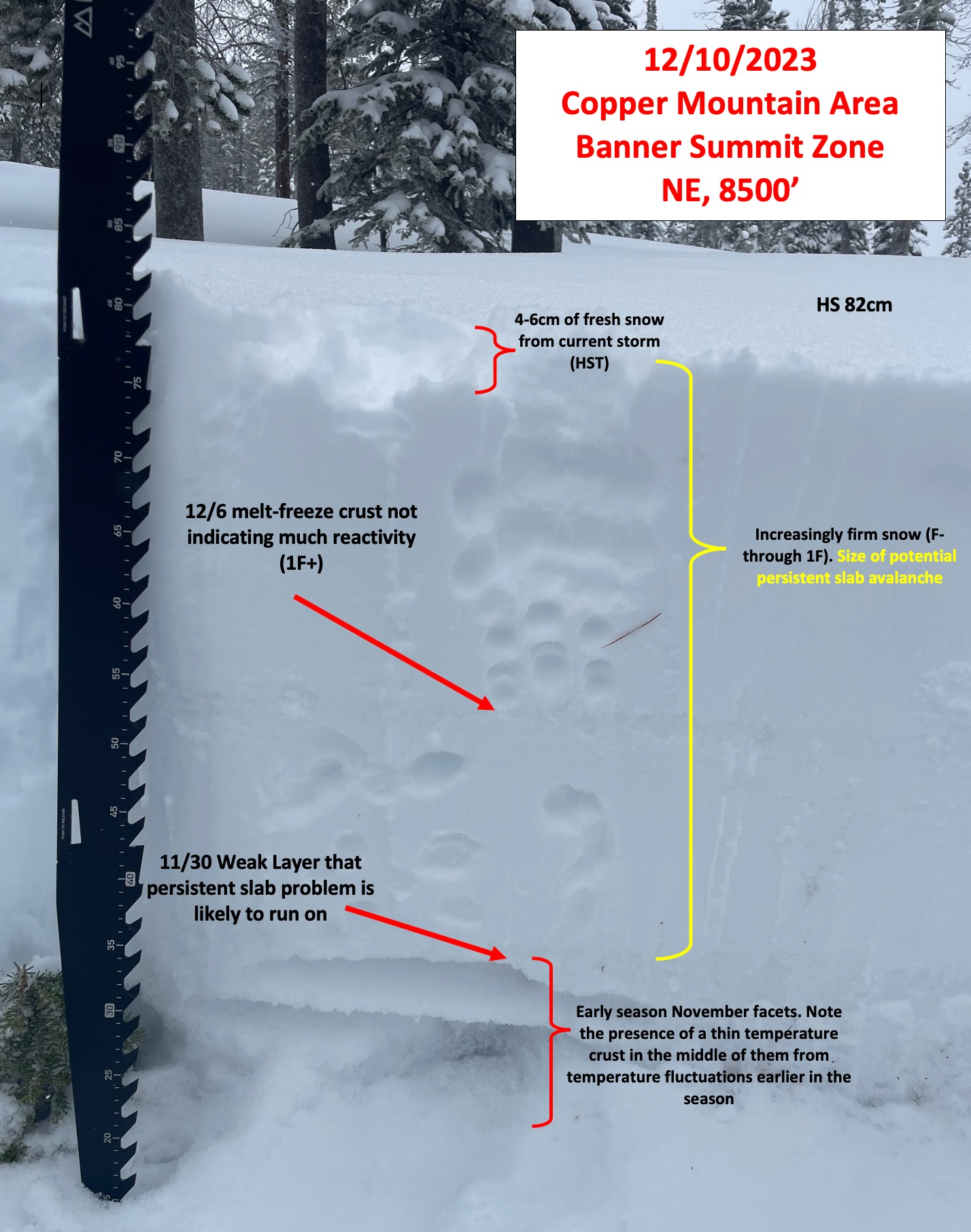
We observed multiple collapses, most of which happening on open broad ridges, or adjacent meadow terrain below 8000'. We observed an old crown (~ 1 week old) from a likely natural D1 avalanche on a NE aspect just below ridgeline at ~8700'. Appeared to be a persistent slab that ran on 11/30 interface.Weather
- Air Temp
- Below 32°
- Cloud Cover
- overcast
- Wind Loading
- light
- Rain Elevation
- All precip fell as snow
- Snow Avail For Transport
- large amounts
Snowfall remained very light but constant throuhgout the day (S-1) with some breaks and periods of slightly heavier snowfall (S1). An inversion was present, with a temperature swing of and estimated 10°F as we climbed from 6600' to 7300'. Skies were overcast (OVC) throughtout the day. Entering the field at 1000, we did not observe anything stronger than light, variable winds throughout our trip. This contradicted the weather predictions for the day in this area.
Snowpack
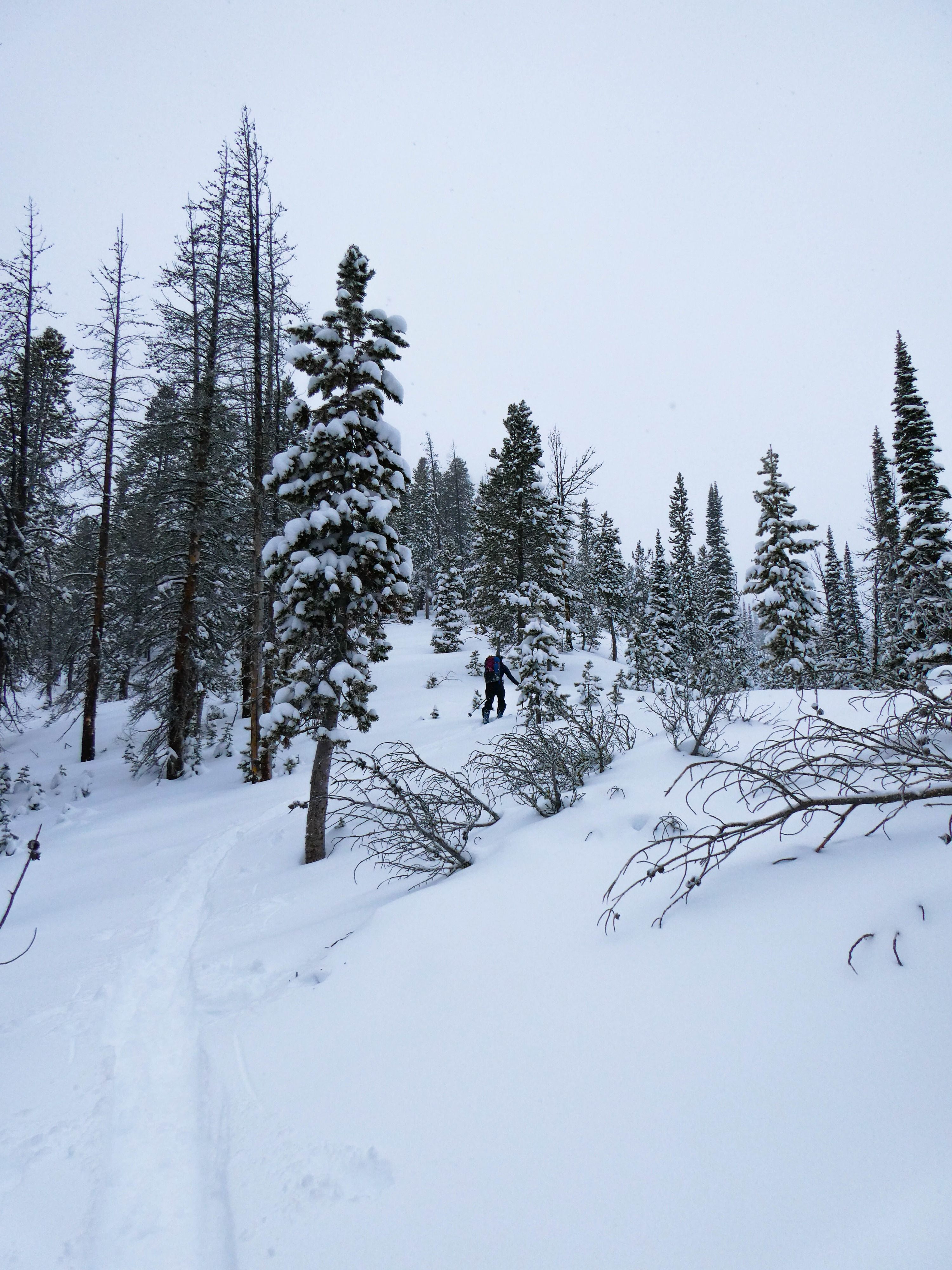
Heading up from 6600', we felt our first collapse at just over 6800' in sheltered, treed SE facing terrain. While coverage made for some log rambling from the road up to 7800', surfaces remained soft with 4-5cm of fresh snow from the storm during the day. Collapses varied in size from a 6' radius to collapsing an entire 300'x300' exposed meadow with a single step. On a SE aspect at 7400' where the snowpack was 55cm deep, we found the persistent slab problem likely to trigger and propagate with only moderate force multiple times (ECTP12 x2, ↓37).
While the winds were expected to be steadily moderate to strong throughout the day, leading us to anticipate many wind-affected snow surfaces, we found mostly light winds throughout the day. The surface of the new snow was largely unaffected, even along exposed ridgelines. Expecting a wind slab problem with the combination of new snowfall and predicted winds, we did not find a new one — mostly old wind slabs that had 4-5cm of new, soft snow on top. At 8500' on a NE aspect where the snowpack was 72cm deep, we found 6cm of fresh new snow. The persistent slab problem was a live and well here in this deeper snowpack, but required hard force to trigger and propagate (ECTP23 ↓44). Due to the variable force required to trigger persistent slab slides on 11/30, there will be few other natural slides as warnings, and it will be hard to believe there is a likelihood to trigger a large avalanche until it is too late.