
Quick report
- Collapsing
- isolated
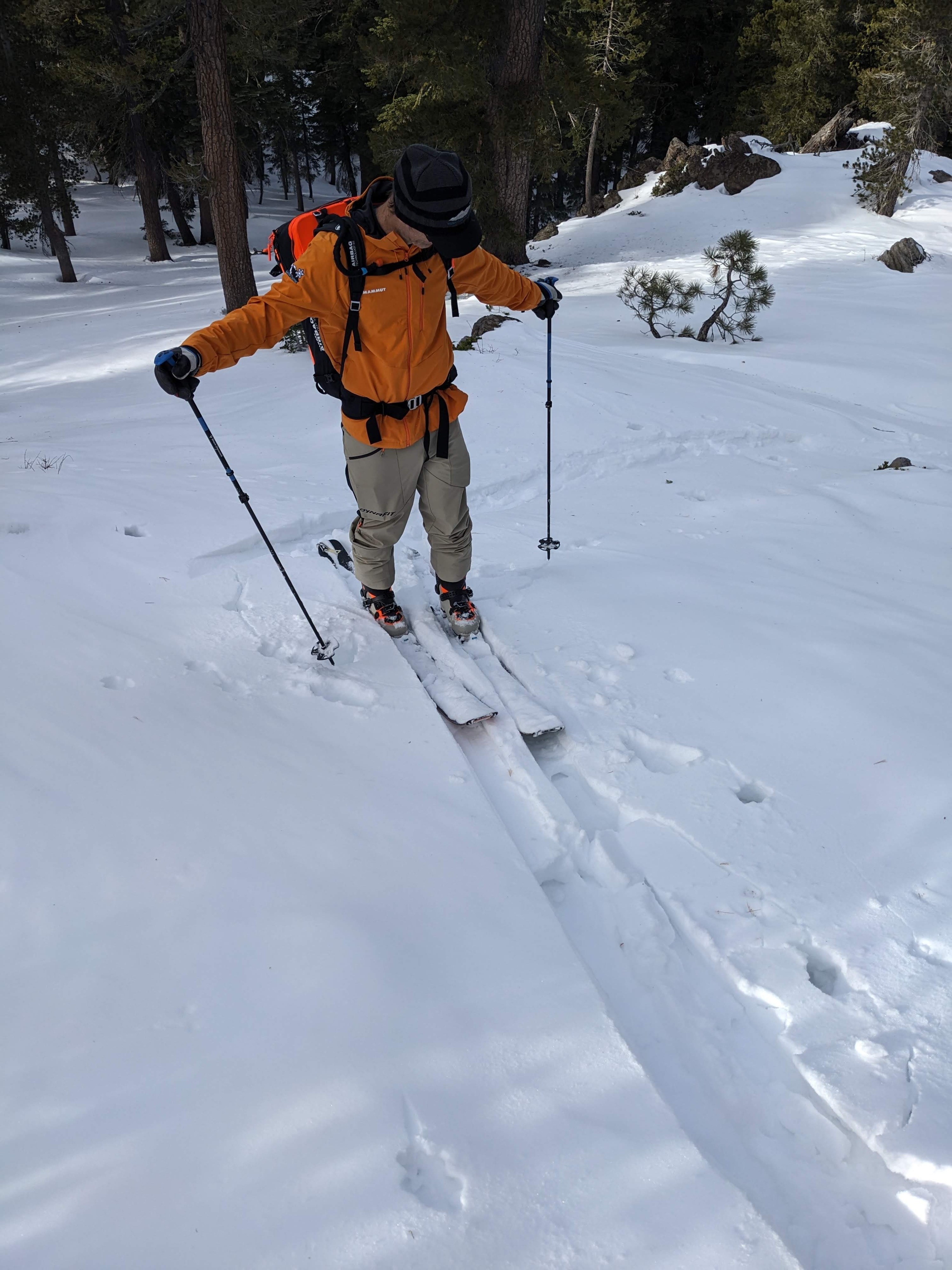
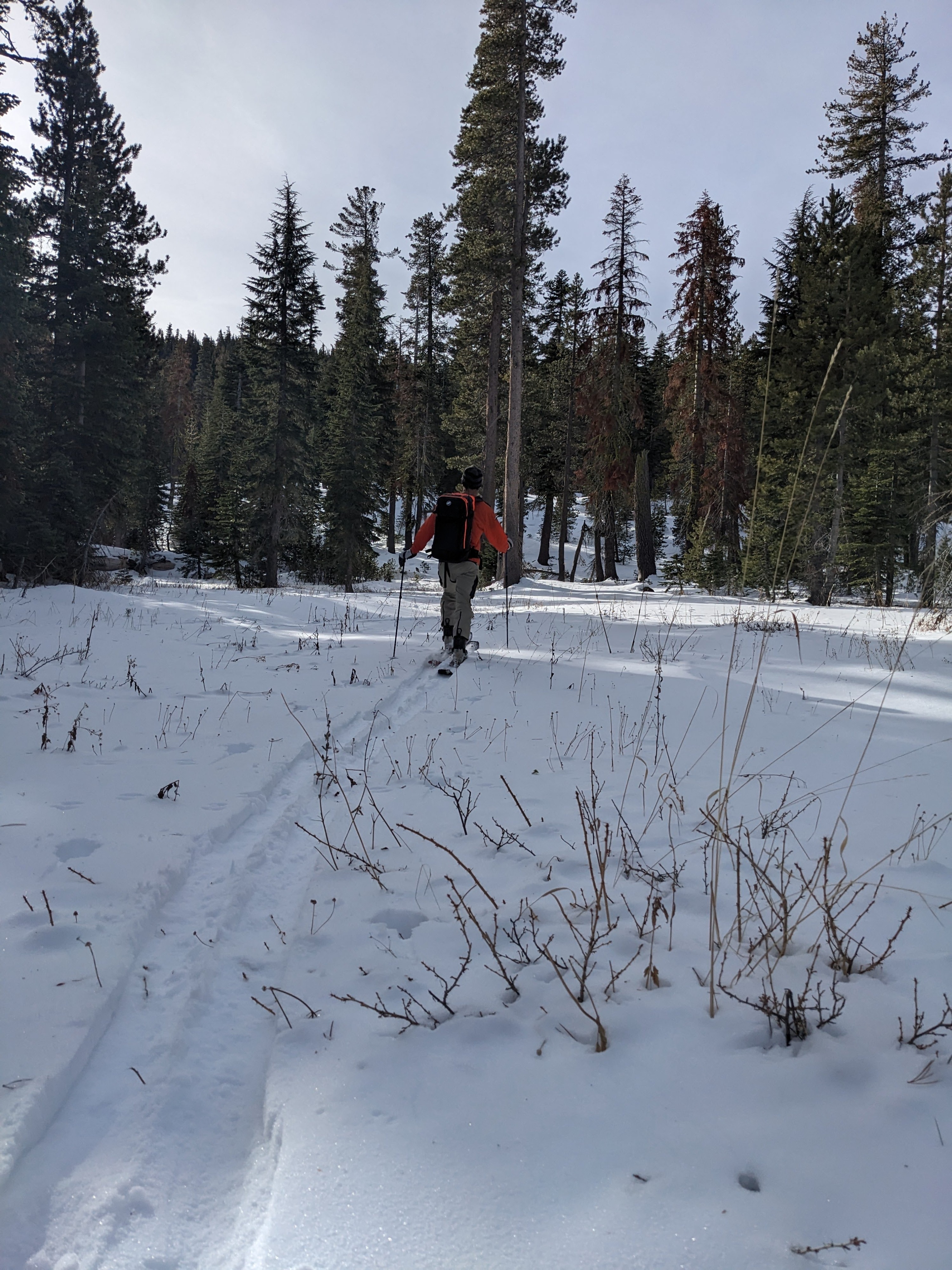
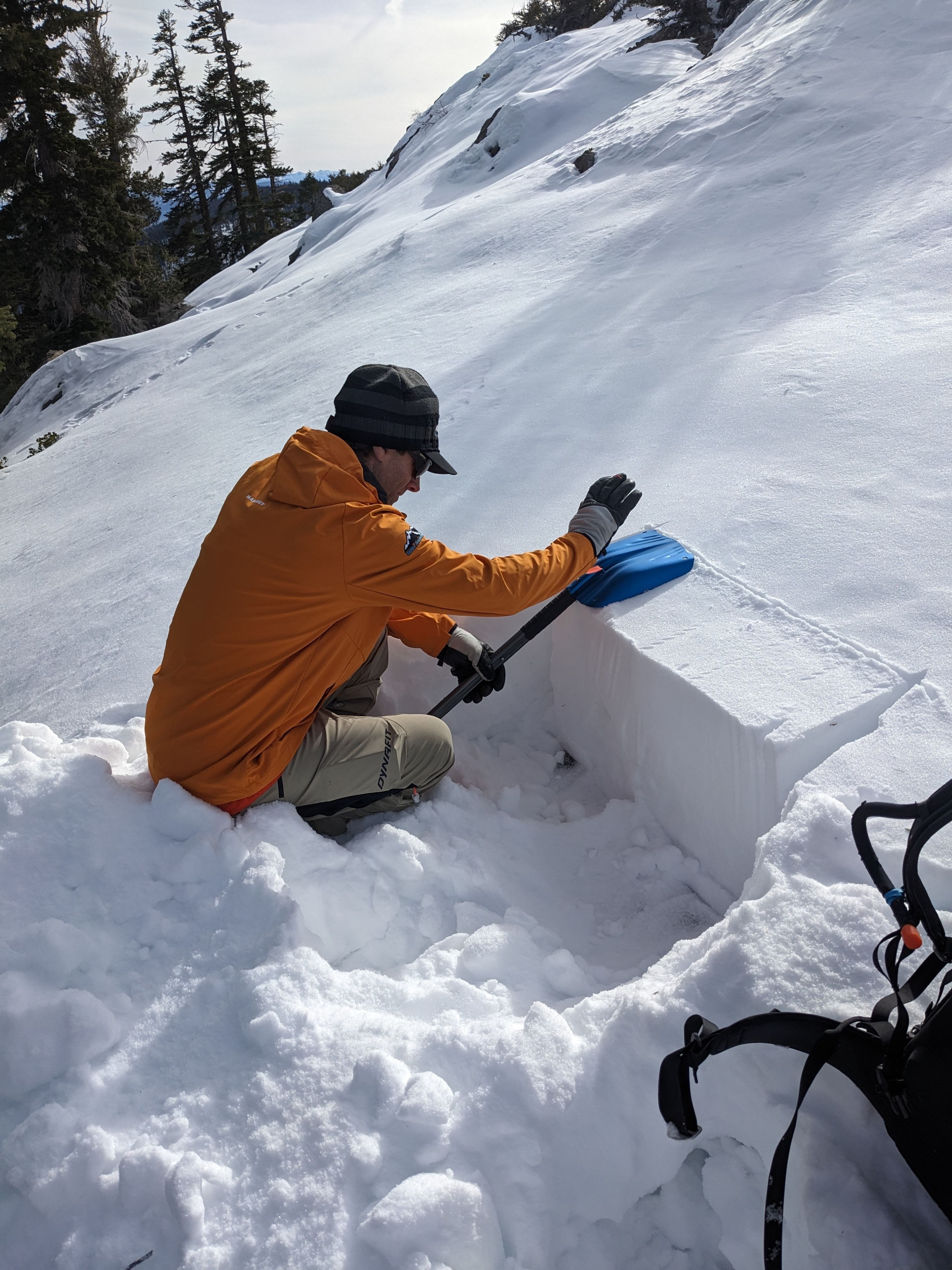
Today, we explored terrain on the NE spur of Mt. Lola between 6900 ft and 8500 ft. Compared to other areas along the Sierra Crest, we found less snow and only encountered more usable snowpack around 7800-7900 ft. Below that, plenty of bushes, logs, and stumps still poked through the snowpack. Like other areas, the buried weak layers weakened as elevation increased. We could feel weak snow with our poles and when we dug into the snowpack, especially above 8000 ft (see the snowpit section for more details). We also felt one collapse near the ridge (see instability section).
We triggered one small collapse when the second person in our group stepped on a wind slab that rested on top of weak facets. Other areas with slab layers on top of facets did not collapse or show signs of instability in snowpit tests.Weather
- Air Temp
- 41
- Cloud Cover
- clear
Clear, calm and warm today above 7500 ft.
Snowpack
Below 7500 ft, the snowpack remains thin in this area. The snow near the surface at these lower elevations has become sugary and weak (near surface facets), with surface hoar resting on the snow surface. Above 7500 ft, the snowpack got deeper with less well-developed near-surface facets. However, the bottom half of the snowpack consisted of old and still weak facet layers. These buried weak layers become weaker as elevation increases. Snowpit data also showed slab-like layers on top of these persistent weak layers.