
Quick report
General ambient warming, in association with cloud cover and light amounts of warmer storm snow, may work in the favor of strengthening the upper snowapck in the longer term. Looking ahead, this could be a good time to make note of snow surfaces and the character of the upper snowpack, prior to potential burial after the weekend.
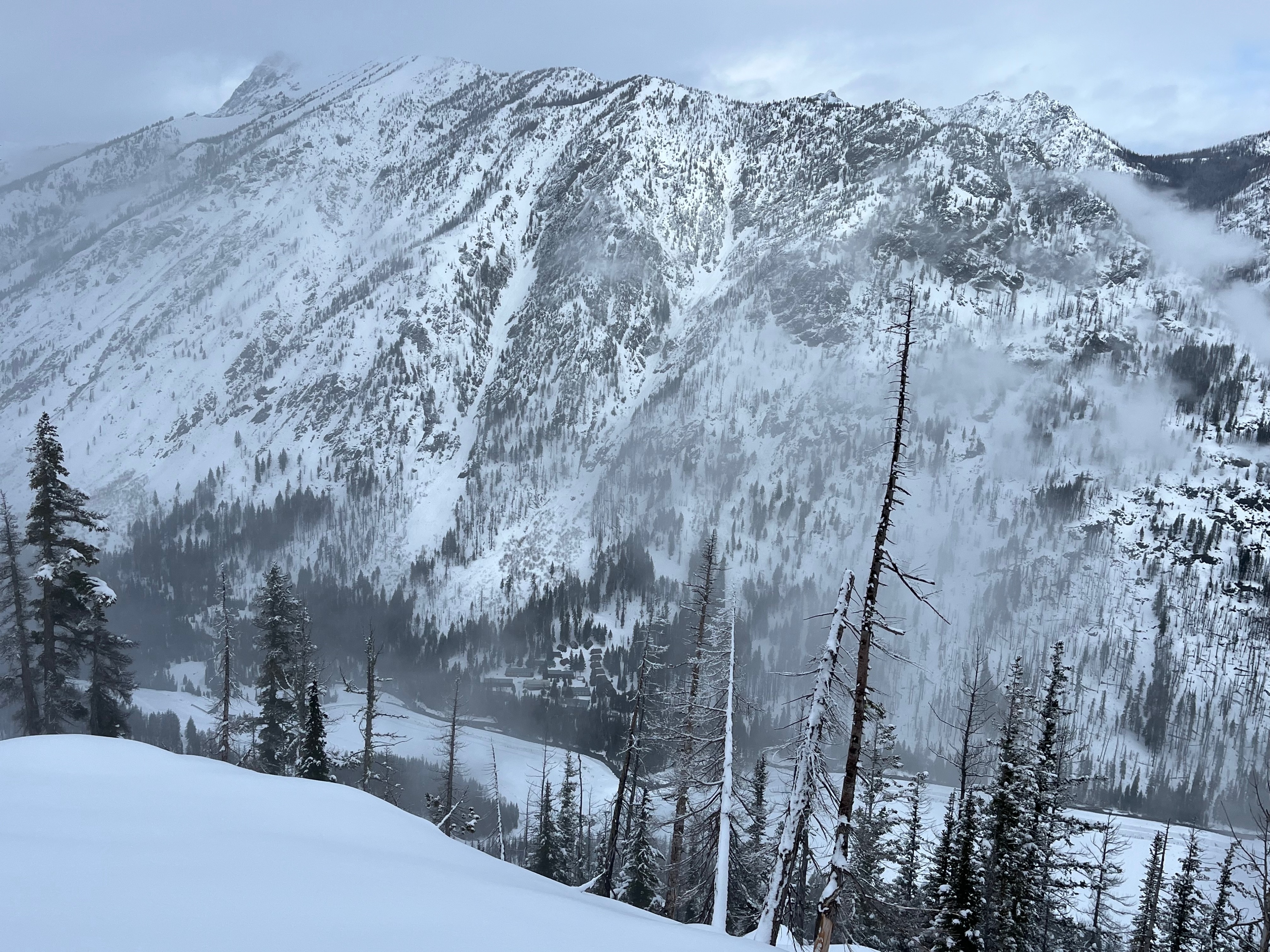
Observed instabilities were limited to sz.1 wet to dry loose activity, emanating from very steep and rocky terrain, in response to solar warming with a few cms of new snow. With some ambient warming of snow surfaces, it may have been possible to trigger sz.1 wet loose avalanches on specific terrain features, near and below treeline, with moist storm snow running on the Early Feb. Crust.Weather
- Air Temp
- 30
- Cloud Cover
- overcast
- Wind Loading
- previous
- Recent Snowfall
- 4
- Snow Avail For Transport
- small smounts
We experienced a couple of cloudy days with light snowfall and calm winds. Temps remained moderate throughout, hovering around O°C. Moist snow was falling on the valley floor, becoming somewhat drier with elevation.
Snowpack
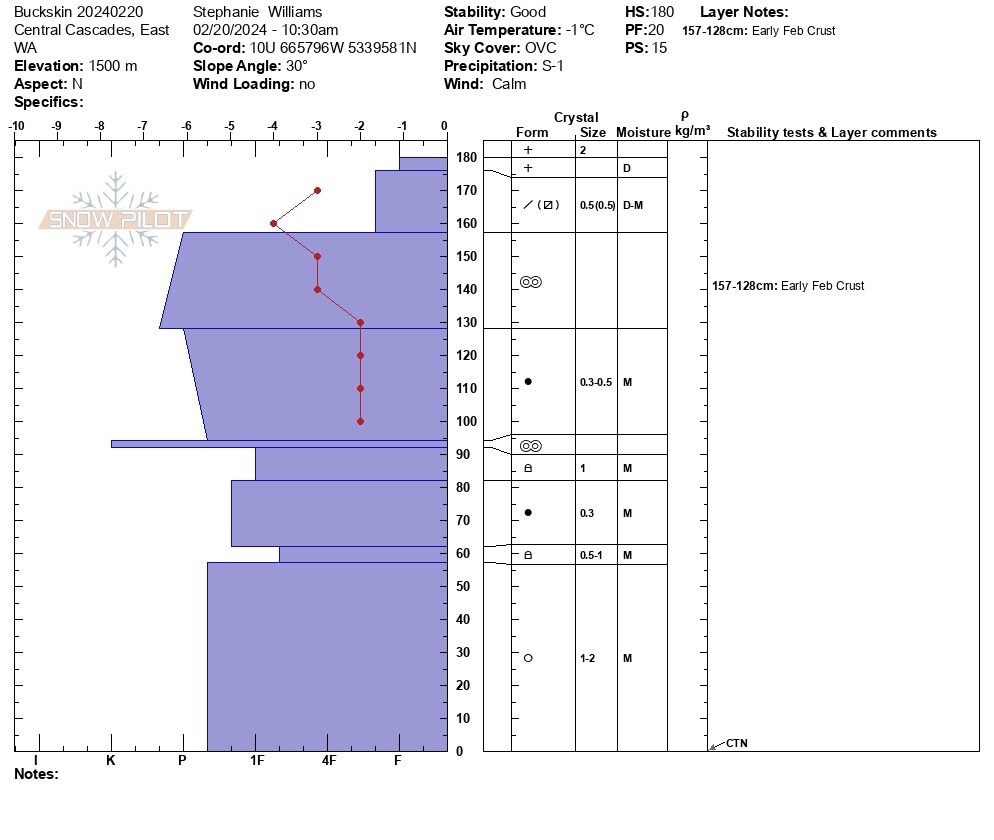
Snowdepths throughout the Railroad Creek Valley range from about a meter near Holden Village, to upwards of 2 meters in the alpine. As is the regional norm, the late Jan. / Early Feb. crust is very robust and supportable. (often >30cm thick and >P hardness) Incremental snowfall accumulations since early Feb. have yielded 20-60cm over the crust, generally with a favorable bond. Prior to Feb.19, the relatively cold temperatures contributed to fairly widespread near-surface faceting (weakening) of snow surfaces, which was preserved on most aspects, other than steep southerly. The more-recent cloud cover, mild temperatures, and moist storm snow is probably mitigating this tendency, at least near and below treeline. Above treeline, surfaces experienced scouring, stiffening and inconsistent loading, in association with the southeasterly wind events around Feb.16-17.
Lots of visiting skiers radiated out from Holden Village over the holiday weekend, adorning the landscape with many tracks, but reporting little in the way of instability. Prior to the most-recent warming, isolated windslabs in the alpine were probably the most-pertinent concern. Some skiers reported altering plans and changing routes, upon encountering wind-stiffened snow in alpine cirques and below cliffs.
Steep south-facing terrain holds a very well consolidated (frozen!) snowpack with light amounts of recent storm snow adhered to the surface.