
Quick report
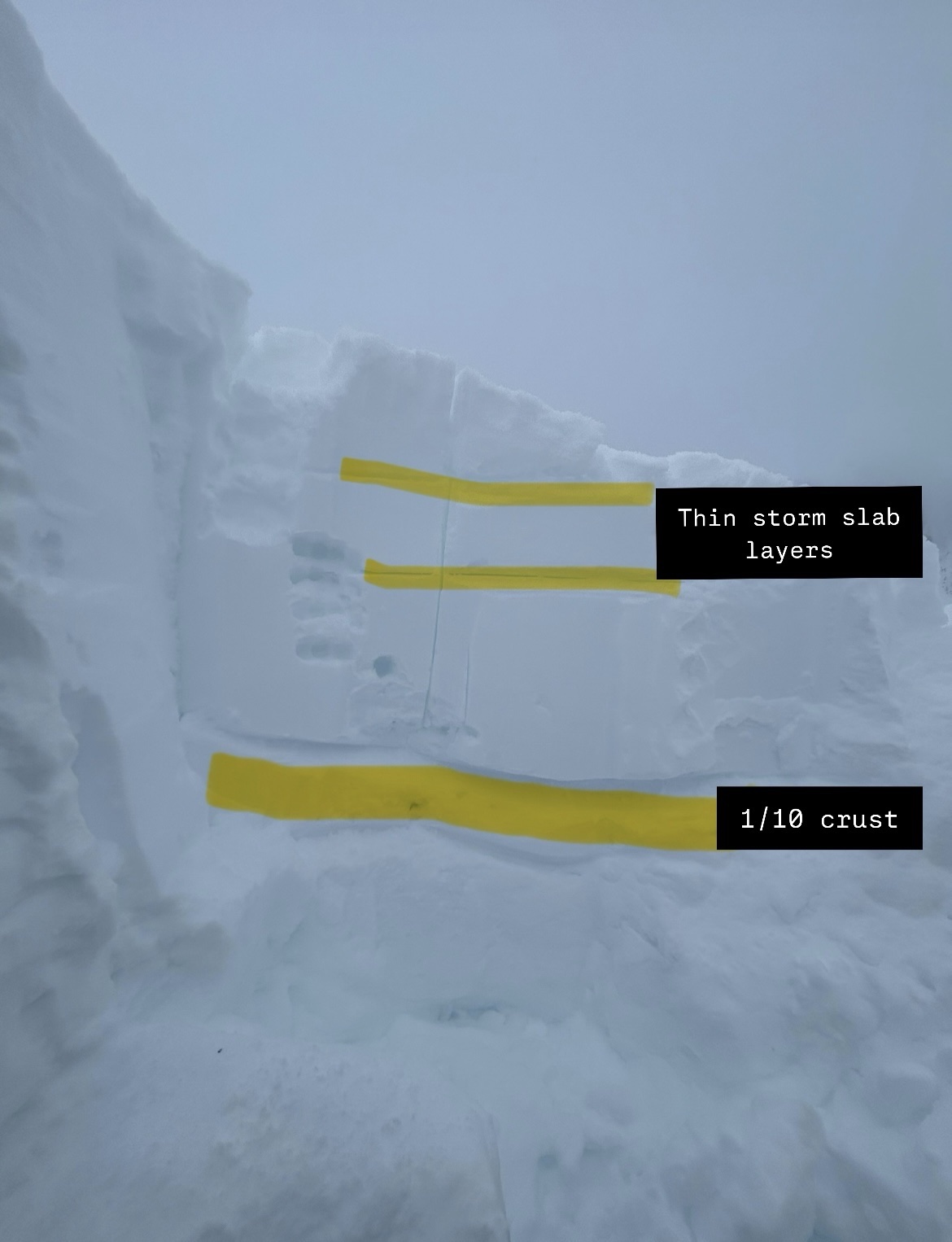
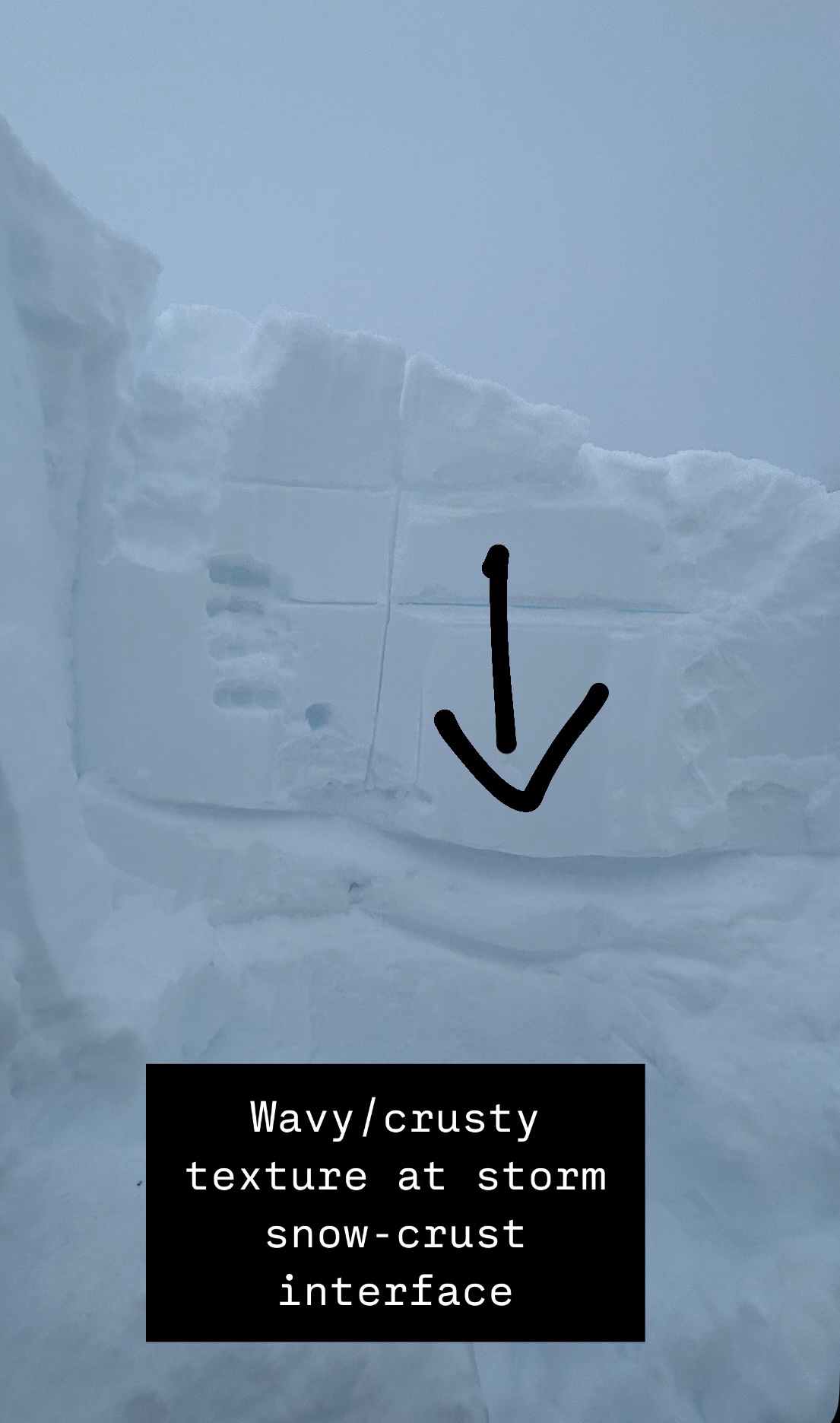
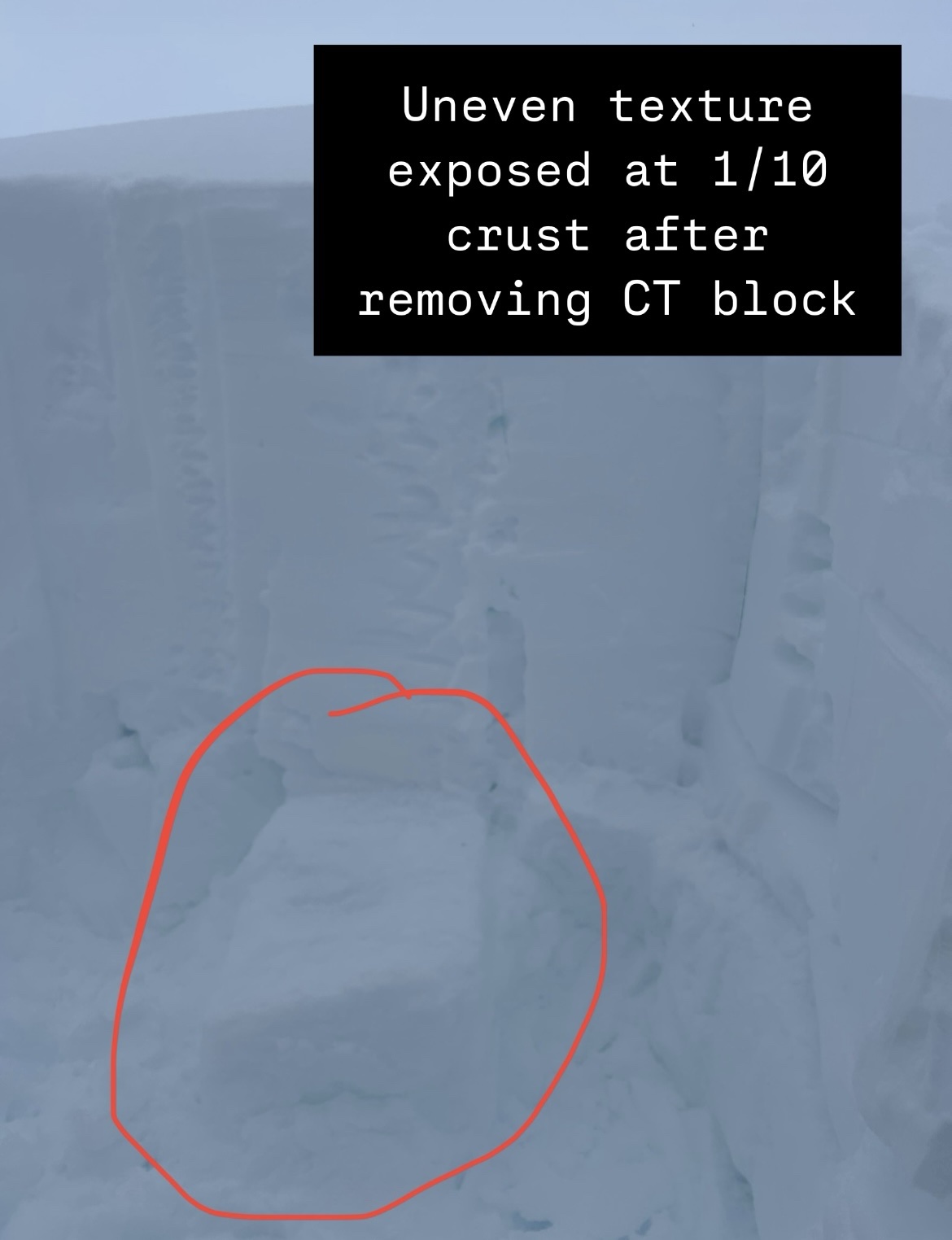
I dug a snow pit on a 26° SE aspect @ 5150’ near Huntoon Point today. Performed 3 CT tests within the same pit. CT results yielded CTM15x2 RP 20-22 cm down on a soft storm slab and CTH26x1 RP/SC 88 cm down above a thick crust (presumably the 1/10 interface). At the storm snow-old snow interface, I observed a mix of 0.5 mm facets and decomposing fragments. The column fractured above the 1/10 crust on the faceted interface (88 cm down). Fracture character appeared mostly planar but not entirely. The 1/10 crust was variable in thickness across the pit ranging from 2-6 cm and had a textured crusty/wavy appearance (see picture). This crusty texture likely impacted the fracture characteristics of the CTH26 test result. Had the crust been more uniform, the block may have sheared easier and more planar. Takeaways: There are still facets between the new storm snow and old 1/10 crust on this SE aspect. Under stress, the block fractured on this faceted layer (3 ft down) but only once out of 3 CT’s. The textured nature of the crust in this pit leads me to wonder if the other 2 CT’s didn’t produce results at this interface because the wavy texture dampened/interrupted the facets found at this interface. The variability of feedback between the 3 CT results in this pit, and my two other colleagues digging on other south aspects today, confirms my suspicion of a persistent slab problem forecasted by NWAC. Application to tour plan: Persistent Slabs require a wide margin for error due to their spatial variability. The most reliable way to manage Persistent Slabs are to make conservative terrain choices. I didn’t feel like testing my luck today with the avalanche problem being difficult to pinpoint and burial depths consequential. Even though all this light pow is eye-catching after the January drought. Weather obs: Air temp 14°. Skies were mostly cloudy to cloudy. Visibility was flat above treeline. 0-5 mph winds at Huntoon morning to late afternoon.