
Quick report
- Cracking
- widespread
Dust on crust doesn't quite sum up the conditions I encountered today. While the crust below new and recent snow was very obvious and slippery throughout the day, the new/recent snow was dense and deep enough to make it feel like...just a bit more of something...
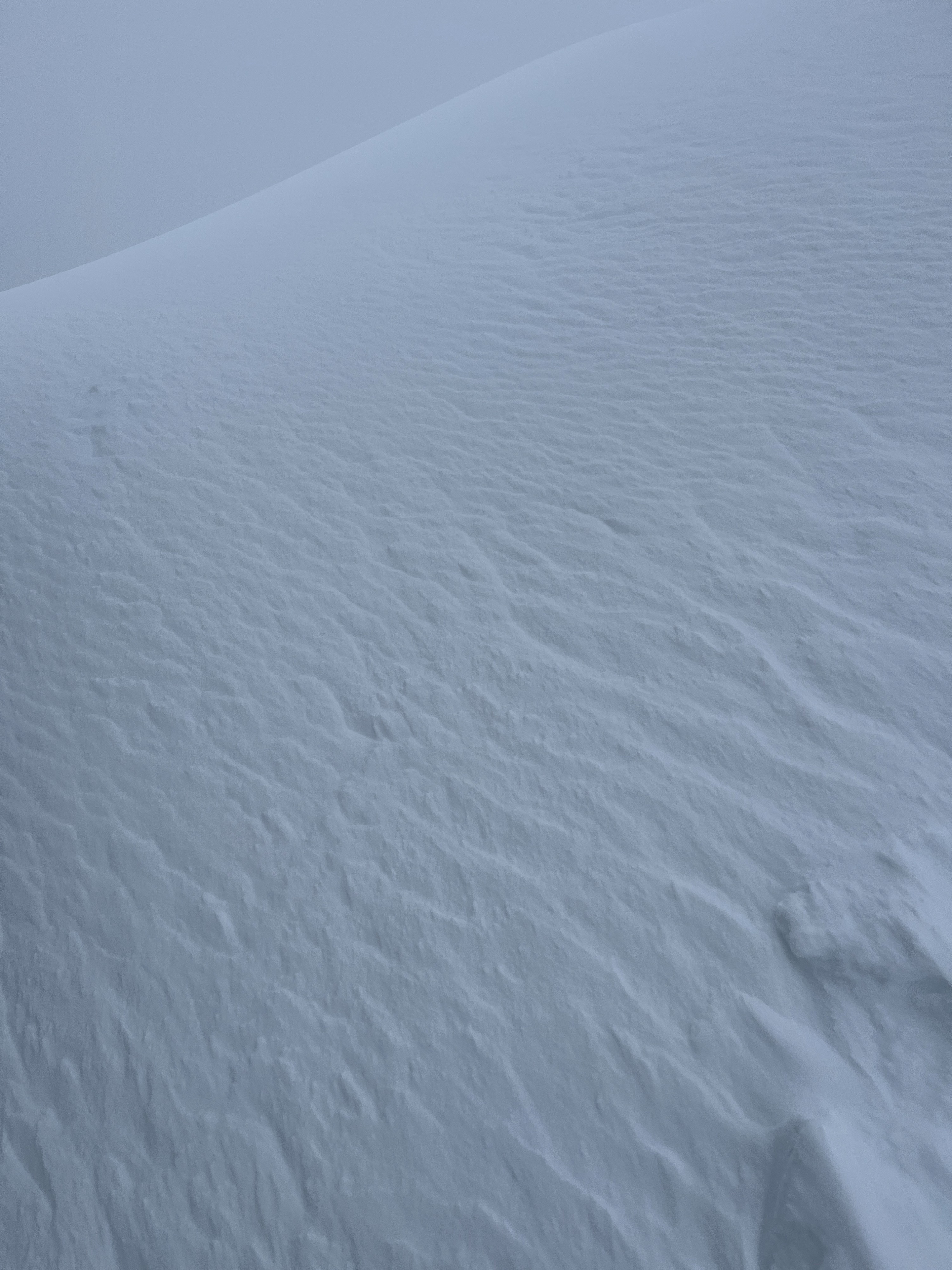
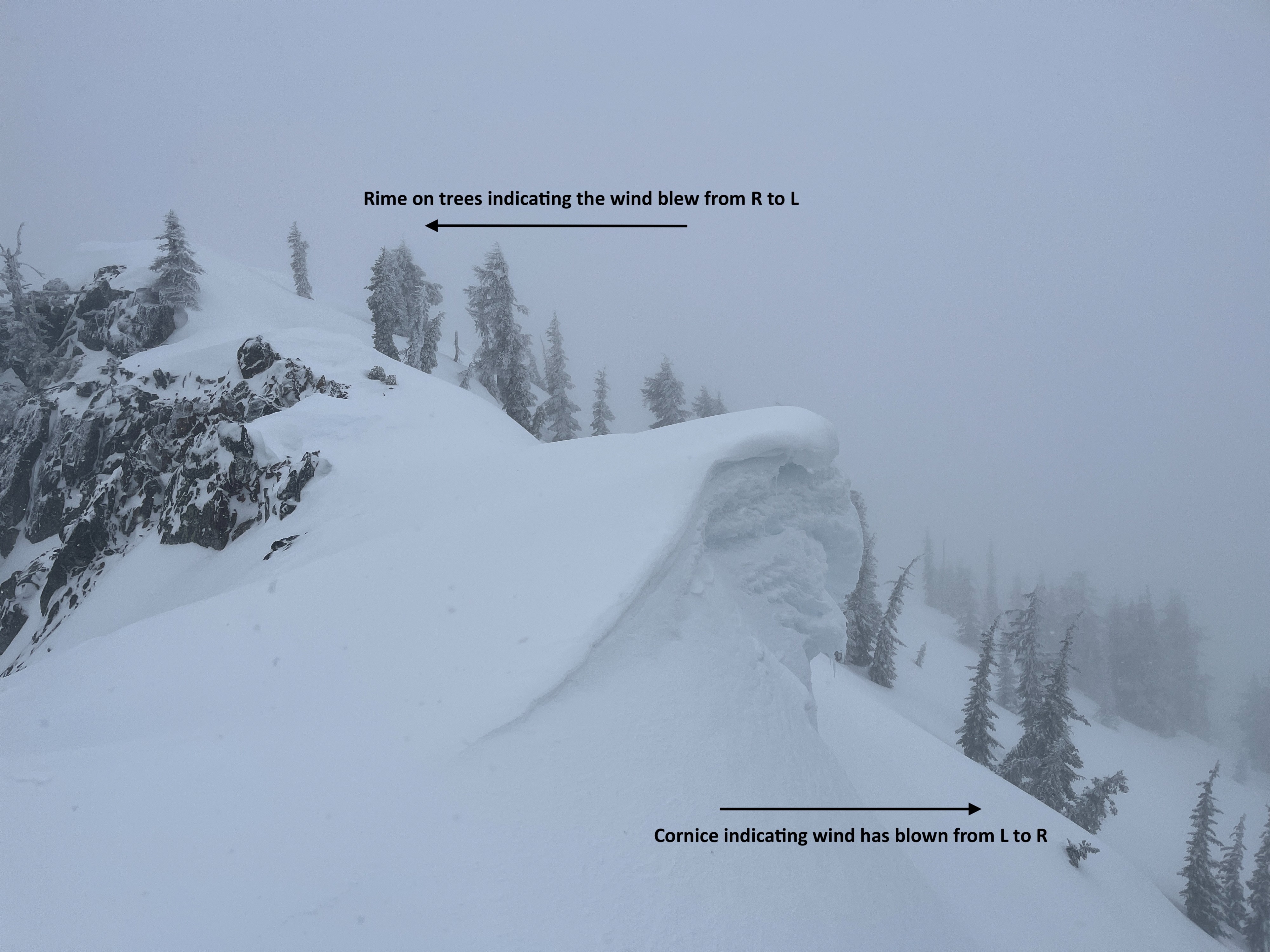
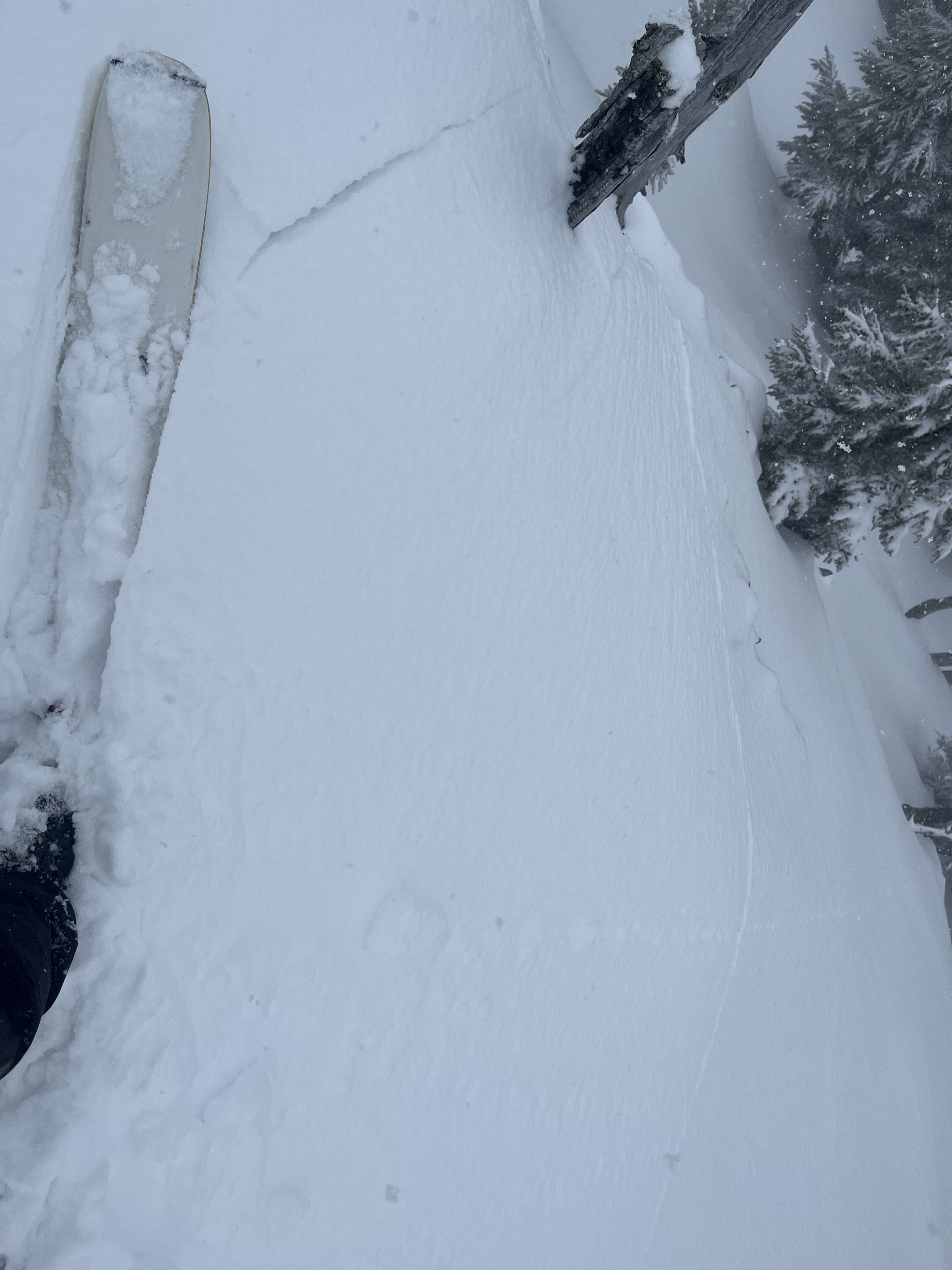
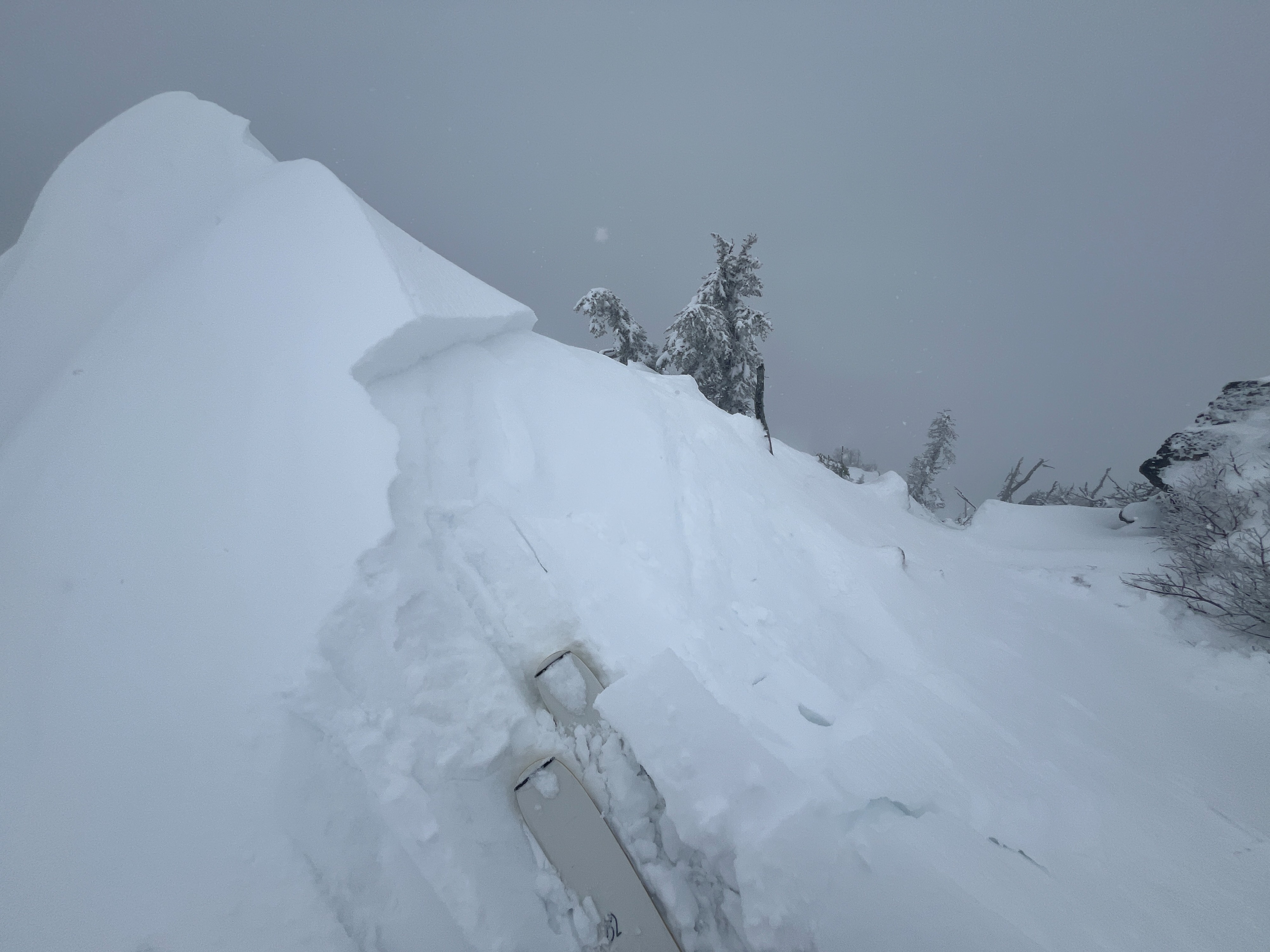
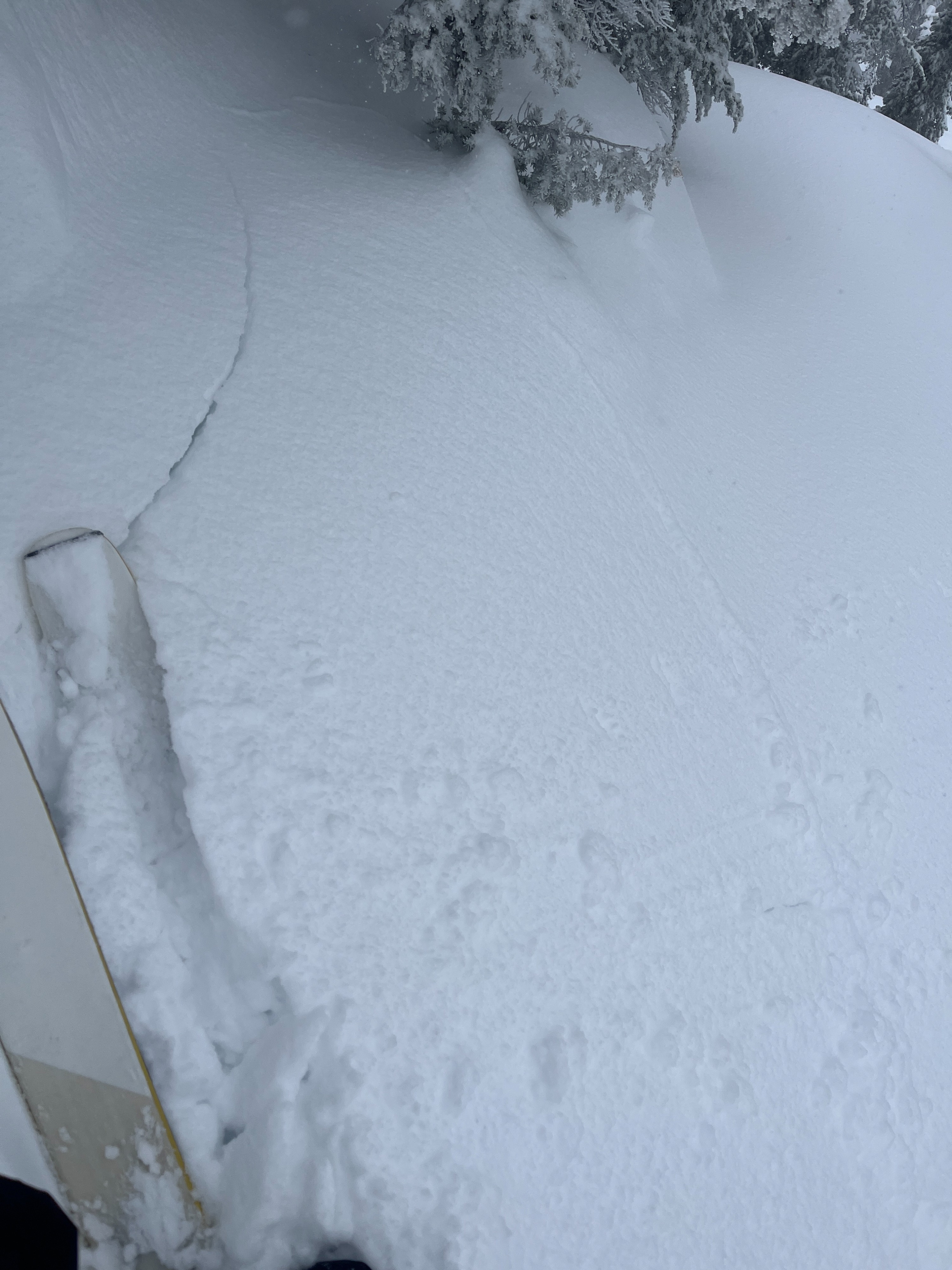
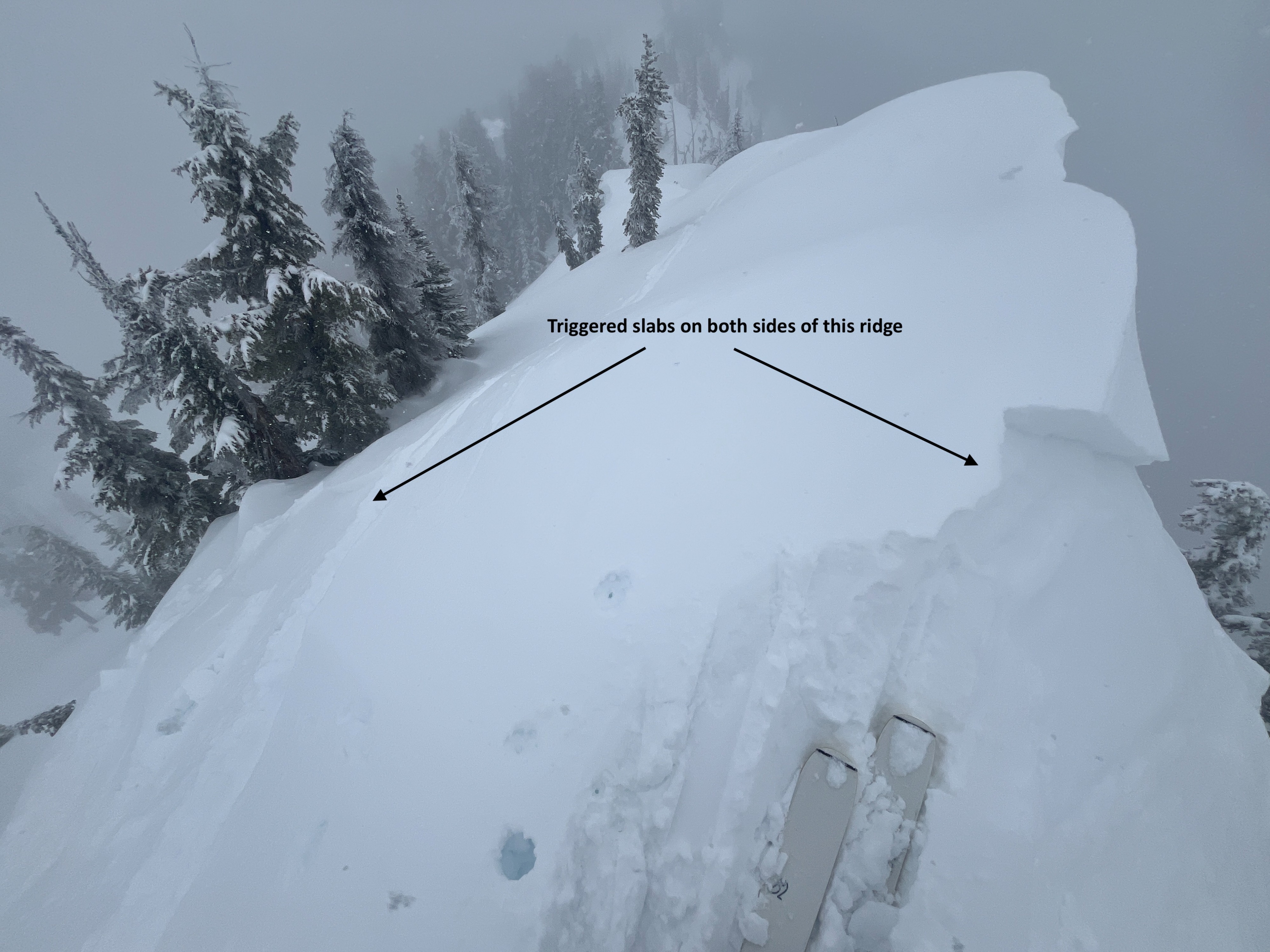
I was a bit surprised that despite slipping and sliding my way up to ridgeline, triggered slabs of wind affected snow didn't want to slide quite as easily. That being said, it was easy to initiate the cracks and I suspect that at even higher elevations, conditions might've been a bit more touchy.
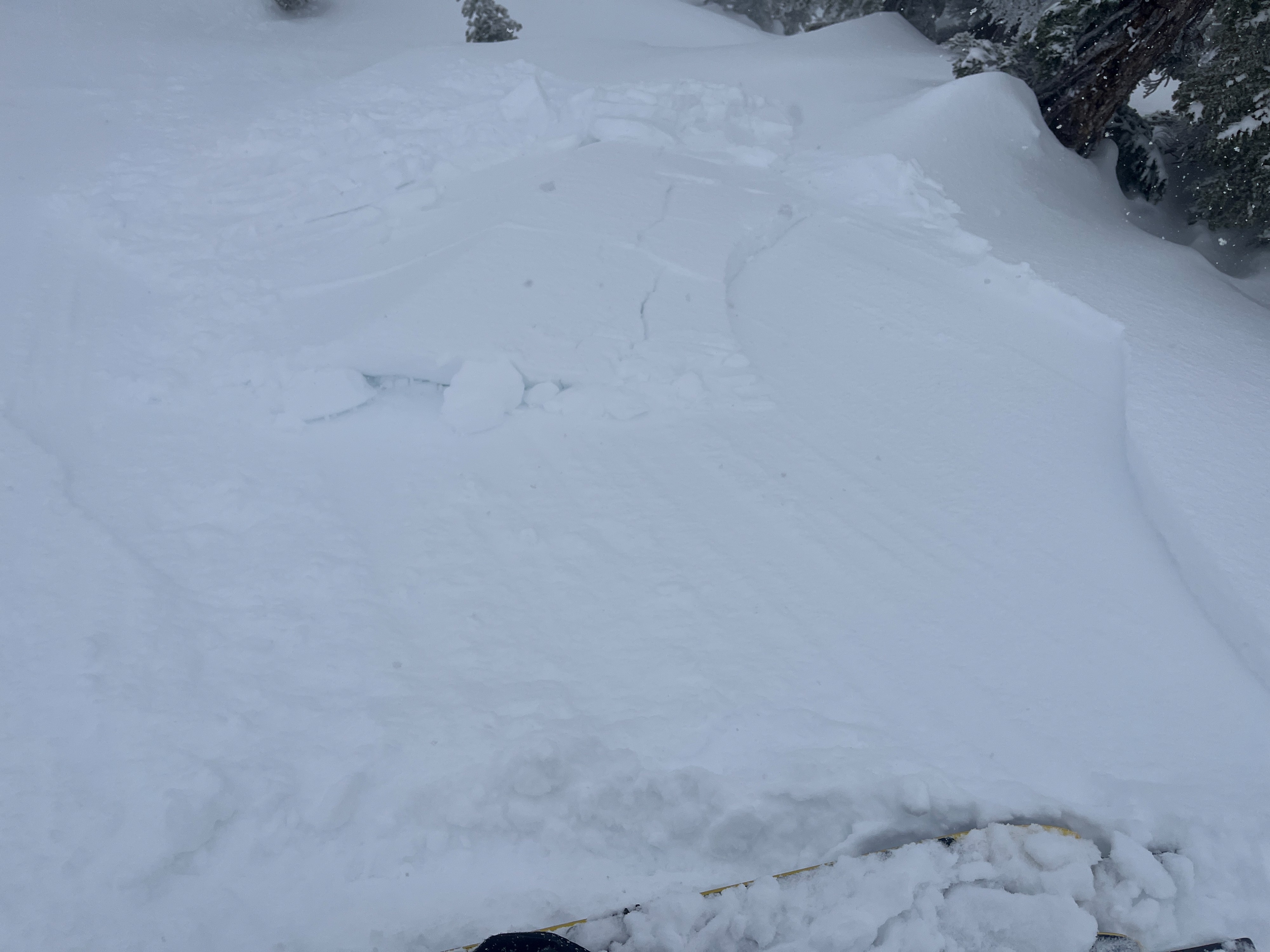
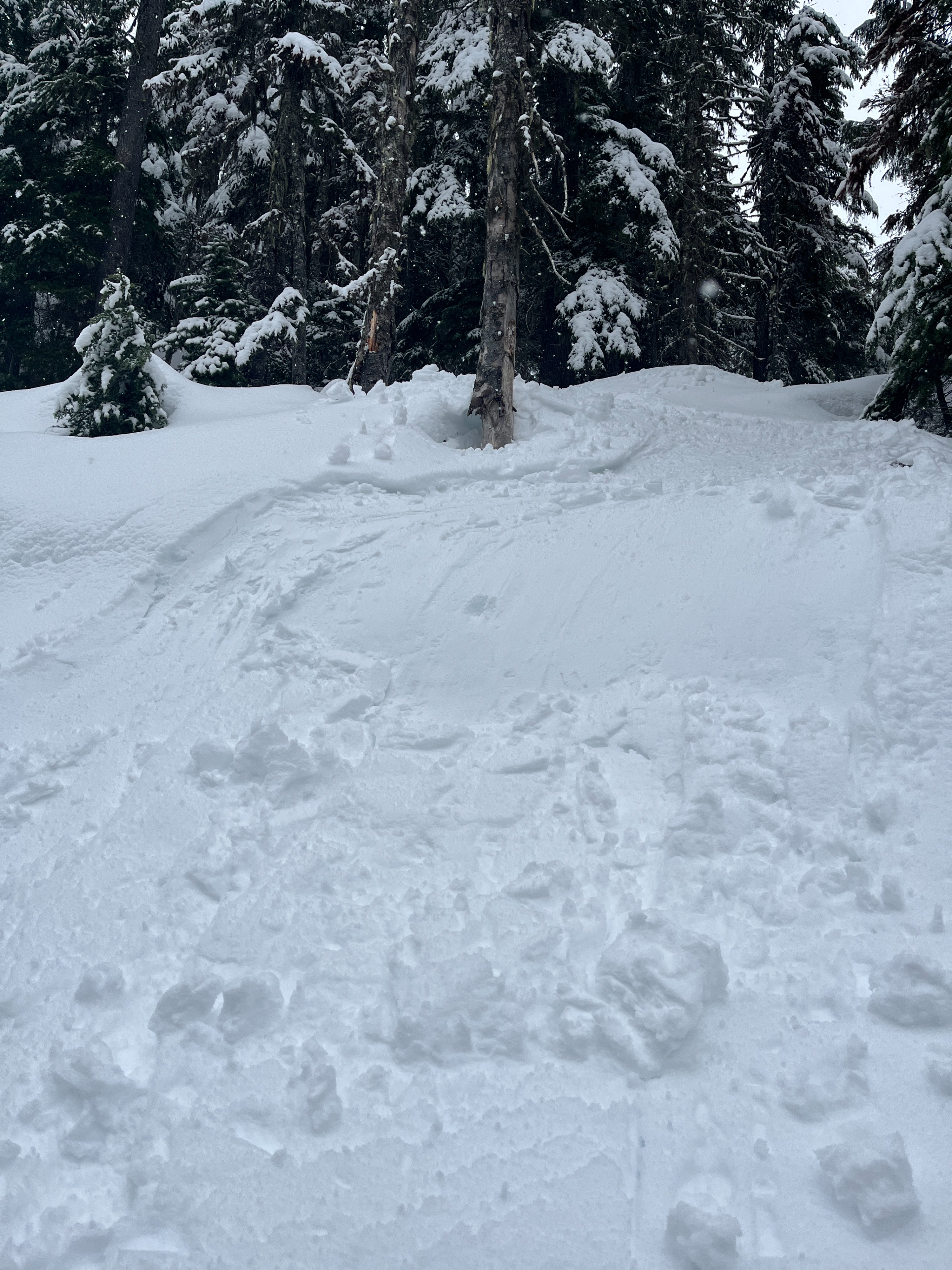
I was able to easily trigger shooting cracks in wind transported snow. It was a bit harder to "push" the cracked slabs downslope. I also observed that the snow slabbed up a bit in the afternoon and I triggered a very small little storm slab on a sheltered, lower elevation road cut.Weather
- Air Temp
- 23-37
- Cloud Cover
- overcast
- Wind Loading
- previous
- Rain Elevation
- 2600 (morning), 3100 (afternoon)
- Recent Snowfall
- 23
- Snow Avail For Transport
- small smounts
The truck read 37 degrees at the trailhead in the morning. It was very lightly raining as well. As I began my route, precipitation petered out but I noticed a dusting on the trees starting around 2600 ft. For an hour or so, snow did not fall. It started up again around 11a, beginning very light then increasing to light. The wind was calm with light gusts at ridgeline. I recorded 23 degrees around 5600 ft in the early afternoon. Temperatures increased as I descended and the snowfall became more dense. As I continued my descent, the snow switched to rain around 3100 ft.
Snowpack
Beginning around 2600 ft, there was a dusting of new snow on the ground. This incrementally increased to 2-3" at 4100 ft, and to 4-7" by 5800 ft. Including recent snow, there was a total of 9in/23cm. The snow below 3100 ft was moist/wet from rain. Below any new/recent snow at all elevations and aspects I traveled on was a very supportable and slick crust that made for tricky travel at times.
I dug a pit on a north aspect at 5674 ft. The depth of the snowpack at this location was 145in/369cm. The depth of my snowpit was 67in/169cm. I found 7in/18cm of new snow over an almost imperceptible sun crust that previously formed during a break in the action. Below this crust was another 2in/5cm of recent snow. All of this overlayed that crust that was knife (K) hard at this location but my boot penetration did go deeper than the crust. Below was various layers of rounded grains, very thick melt freeze crusts, and an ice layer. I dug deep enough to observe the January Drought Layer (JDL) and found it to be rounded and sintered. I performed a compression test and got a moderate non-planar fracture on the upper pack sun crust (CT13 BRK). An extended column test yielded a moderate, non-propagating result on this same layer, then a hard non-propagating result on the K hard crust (ECTN14, ECTN28). All in all, the snowpack structure in this pit was very strong.
Avalanche
- Size
- D1
- Type
- SS
- Aspect
- NE
- Trigger
- AS
- Elevation
- 5800 ft
Very small intentionally triggered wind slabs along the ridgeline of Red Mountain N.