
Quick report
We traveled back to Tunnel Ridge today to assess how conditions are evolving. Triggering an avalanche here has been about as easy as one could imagine over the past few weeks, and we were curious to see if the sensitivity of the JDL has decreased at all since a few good storms and some significant wind.
Here's our takeaways:
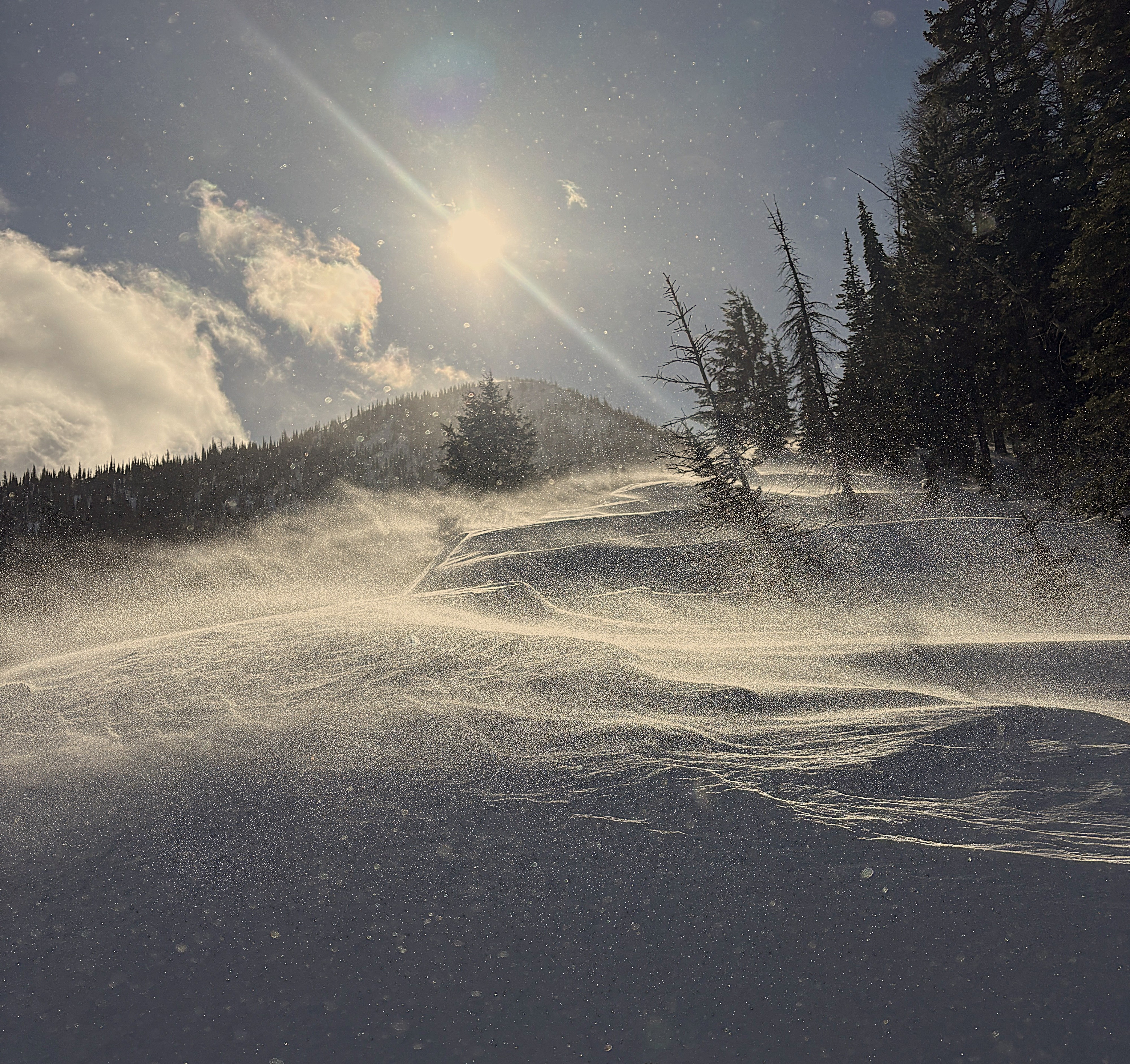
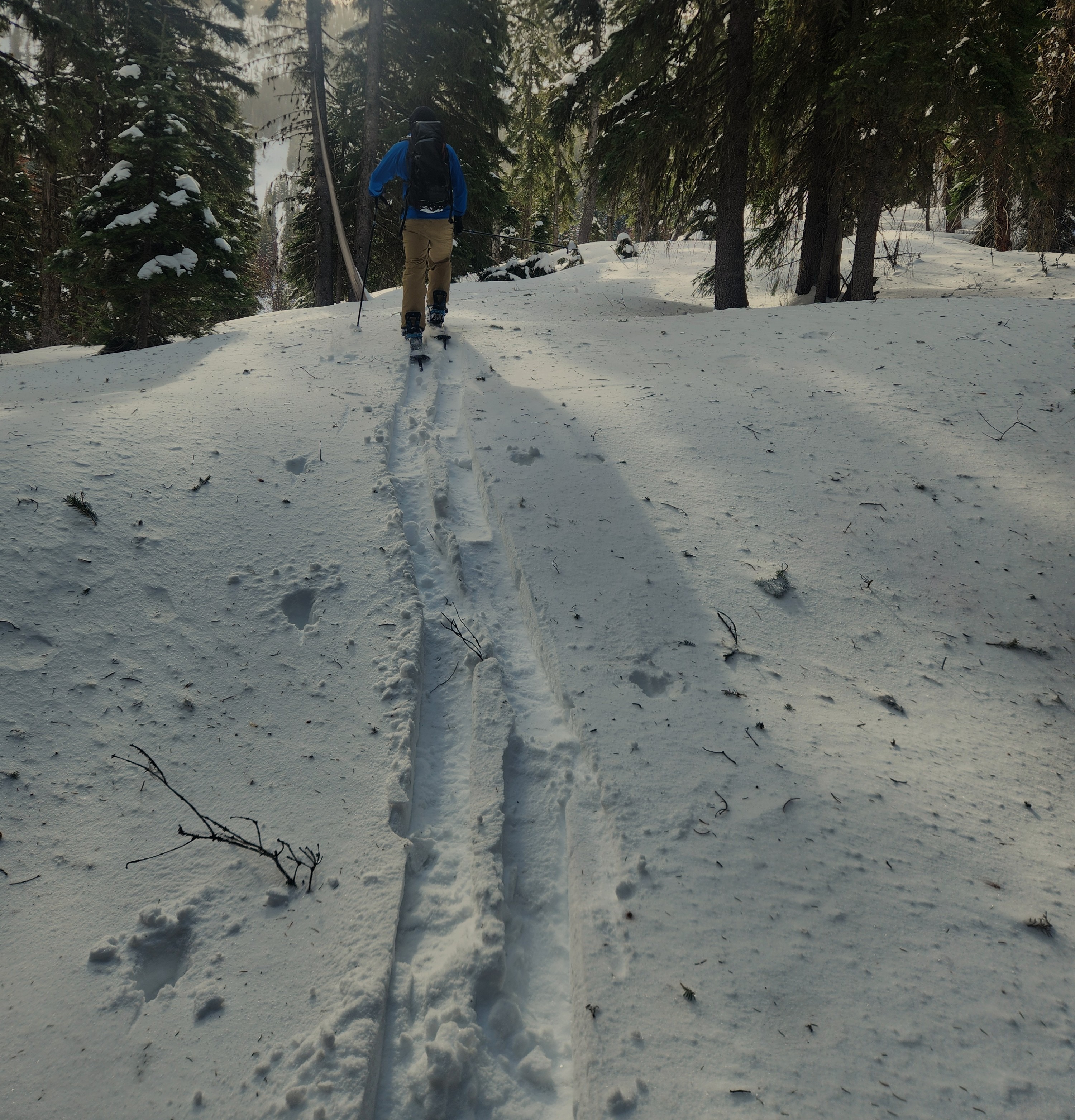
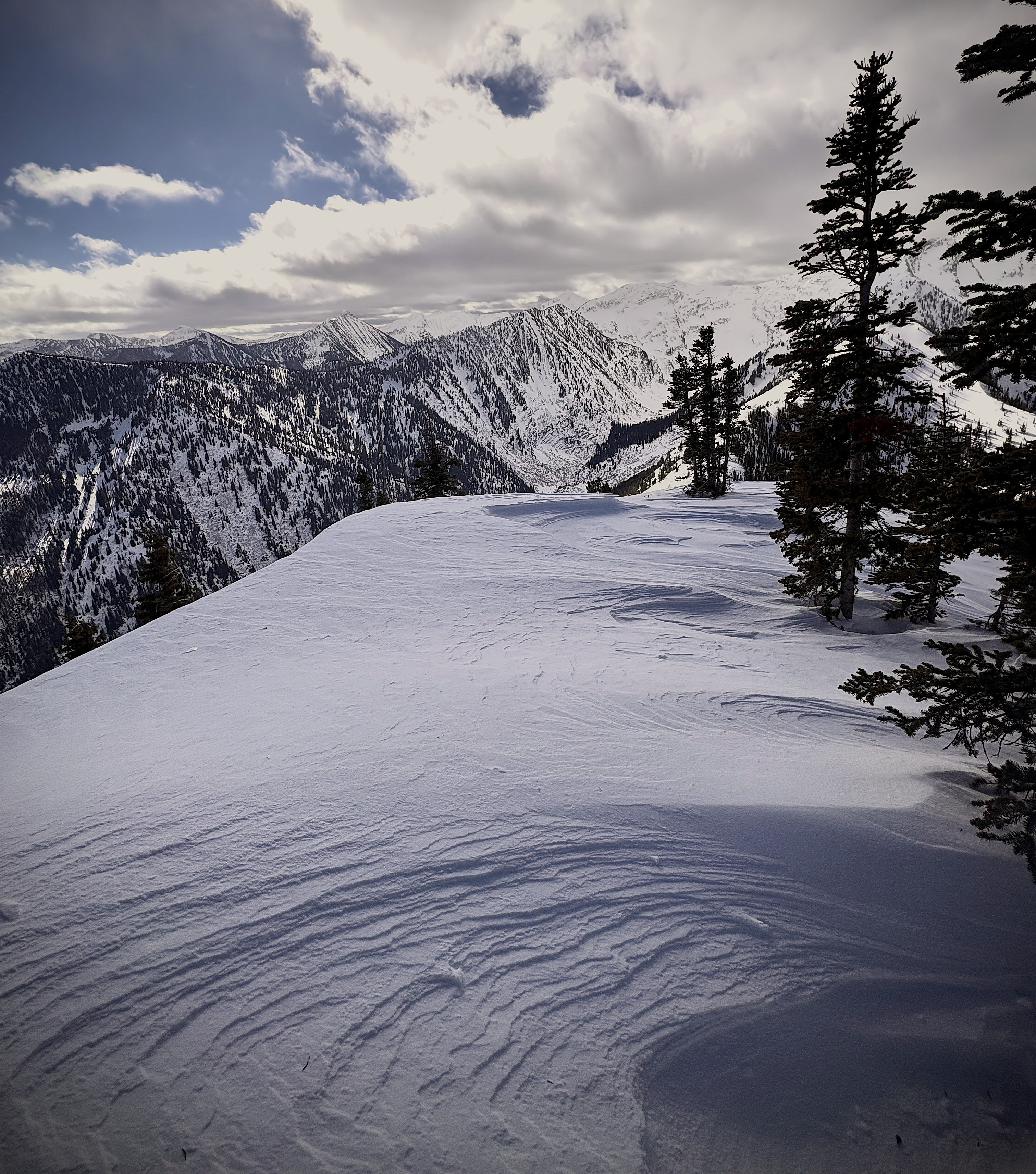
- The wind has reshaped the snow surface in a major way. Despite a foot or so of recent snow, ski penetration is only an inch or two, even in tightly treed terrain.
- Winds were ravaging down into the low- and mid-elevations, stiffening the snow surface and littering detritus from the canopy.
- Wind slab where we traveled was stubborn, but, we surmised that mid-slope, where most of the blowing snow was being deposited, could have been reactive. Either way, our travel plan kept us way away from those slopes, as that was also where the persistent slab problem lives.
- This stiff surface has encouraged the snowpack in this area to go quiet. We observed no obvious signs of instability on our tour. We did note some recent (at least a few days old) natural slab avalanches.
- The snowpack structure, however, remains highly alarming, and all signs point to even bigger and wider avalanches on the January Drought Layer (JDL) as we move forward.
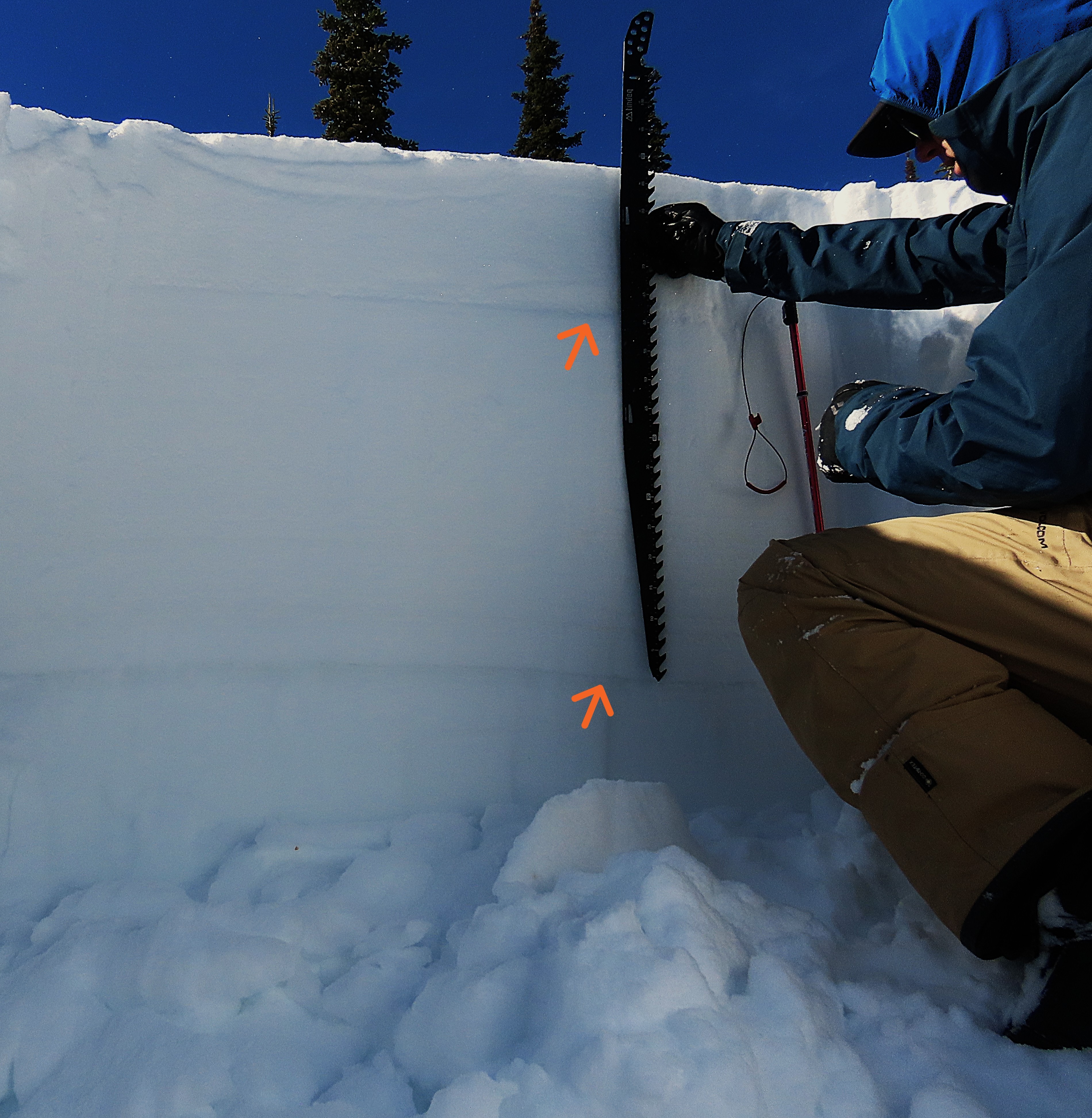
- When you impact the JDL in the snowpit, whether by removing some of the overlying slab, or by cutting the layer during a propagation saw test, the results speak volumes. Once the still-very-weak buried surface hoar collapsed, the crack shot across the column, and a thick, hard slab (3 feet deep where we tested) came trundling downhill on top of us with impressive energy and hardly a lick of friction (see video). If you break this layer, it's a problem.
- While the structure wasn't as alarming, we also got a propagating result in a large column test on a due south aspect (also JDL, but facets not surface hoar).
We kept a super tight margin and enjoyed the surfy new snow on low-angle slopes, while diligently avoiding being on or under any avalanche terrain.
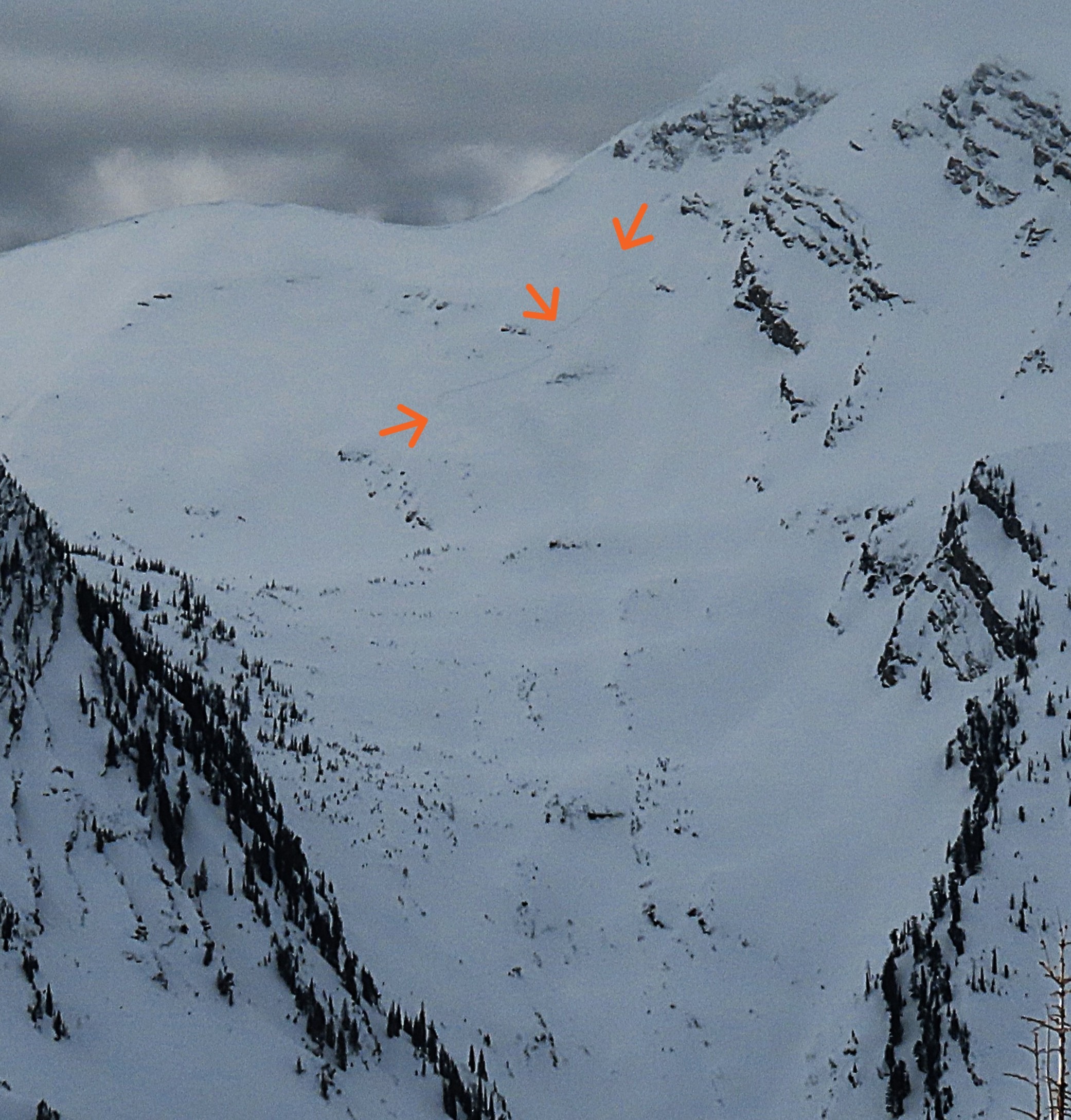
Hard to say the age of recent avalanches. Lots of filled-in crowns, or paths where you could see debris in bottom, but not make out crowns above. Grant could have gone 2/14-2/7, while Nyack looked to be more recent, likely during Monday/Tuesday's storm.Weather
- Cloud Cover
- broken
- Wind Loading
- intense
- Recent Snowfall
- 20-30
- Snow Avail For Transport
- moderate amounts
Temps were mild; the winds were intense with strong sustained speeds and extreme gusts, swirling all around. Lots of blowing snow with debris and detritus being knocked out of the canopy. The wind seemed to exhaust itself by the late afternoon on our drive home.
Snowpack
Pit 1 on a northeast aspect at 6490'
HS 340 cm
Predominantly 1F/1F+ hard slab sitting on the JDL (5-15 mm SH on a crust), down 90 cm
PST 30/100 End down 90 cm on JDL, ECTX, Deep ECT "Run and Hide" on JDL
Pit 2 on a south aspect at 6630'
HS 240
1F/1F+ hard slab, resting on a stout 10 cm thick crust down 40, all resting on the JDL (2-3 mm FC, well developed, on crust), down 65
ECP21 down 65 on JDL
Avalanche
- Size
- D2
- Type
- HS
- Count
- 2
- Aspect
- NE
- Trigger
- N
- Elevation
- 7300 ft
Only noting the two slab avalanches we could clearly identify and attempt to quantify. There were others, but they are older and filled in, and some were distant with challenging light.