
Quick report
- Cracking
- specific
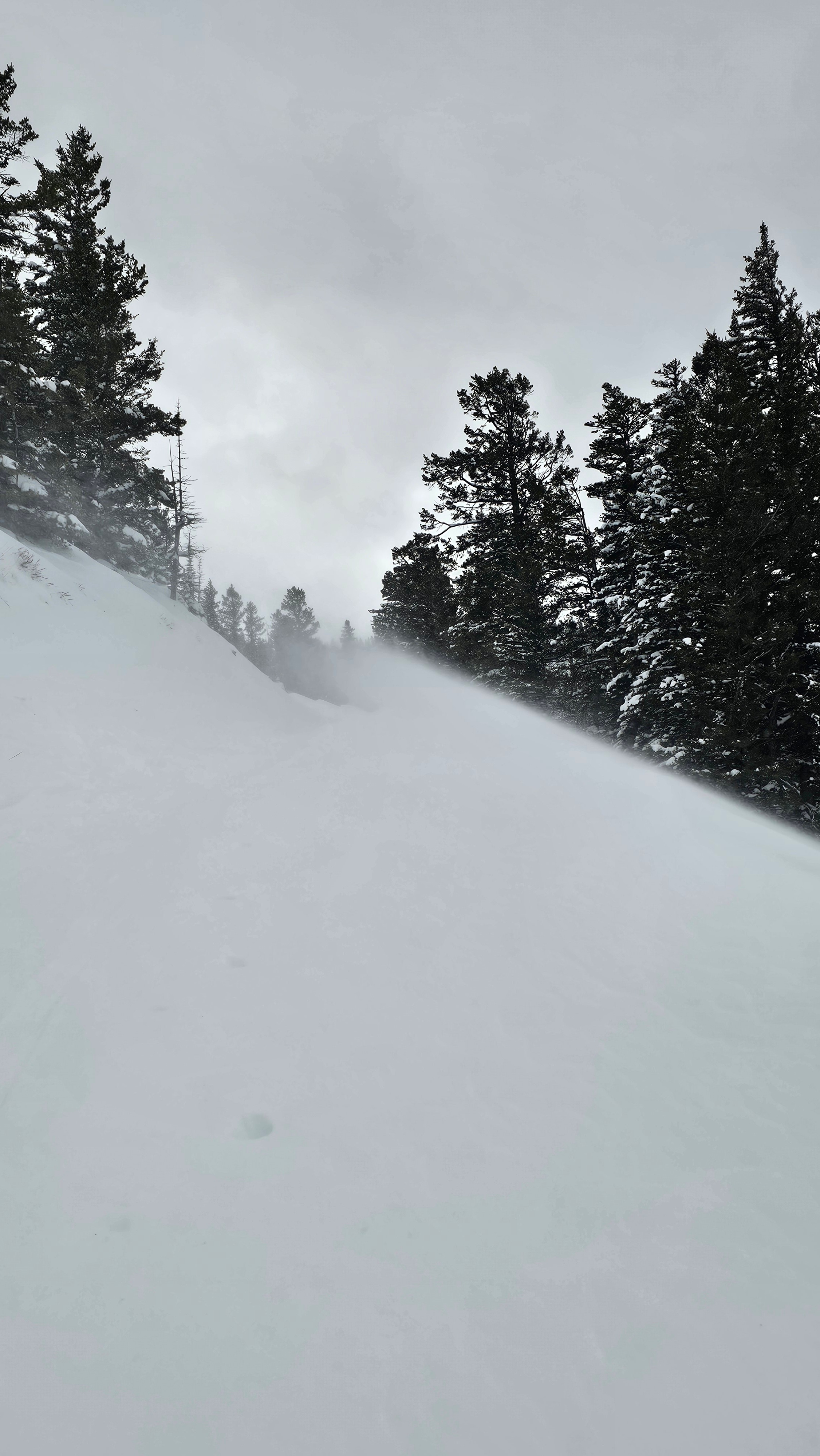
Wind slabs were the main problem I noted today on Teton Pass, with slabs averaging around 10 inches deep, though deeper slabs also existed. There were some soft slabs, but much of the wind affected snow consisted of hard slabs and wind board. Exposed ridgelines, subridges, and windward slopes were thoroughly scoured. I observed cracking within these drifts on test slopes. I would expect these slabs to behave unpredictably in steep terrain, reflecting the variable snow surfaces and loading patterns observed today.
In the locations I traveled, I did not observe propagation or significant faceting on top of the Christmas Crust, but this highlights the challenge of dealing with a weak layer that shows significant spatial variability across a region. Just across the road and slightly higher in elevation, I did observe faceting yesterday. This remains a layer I will continue to monitor closely.
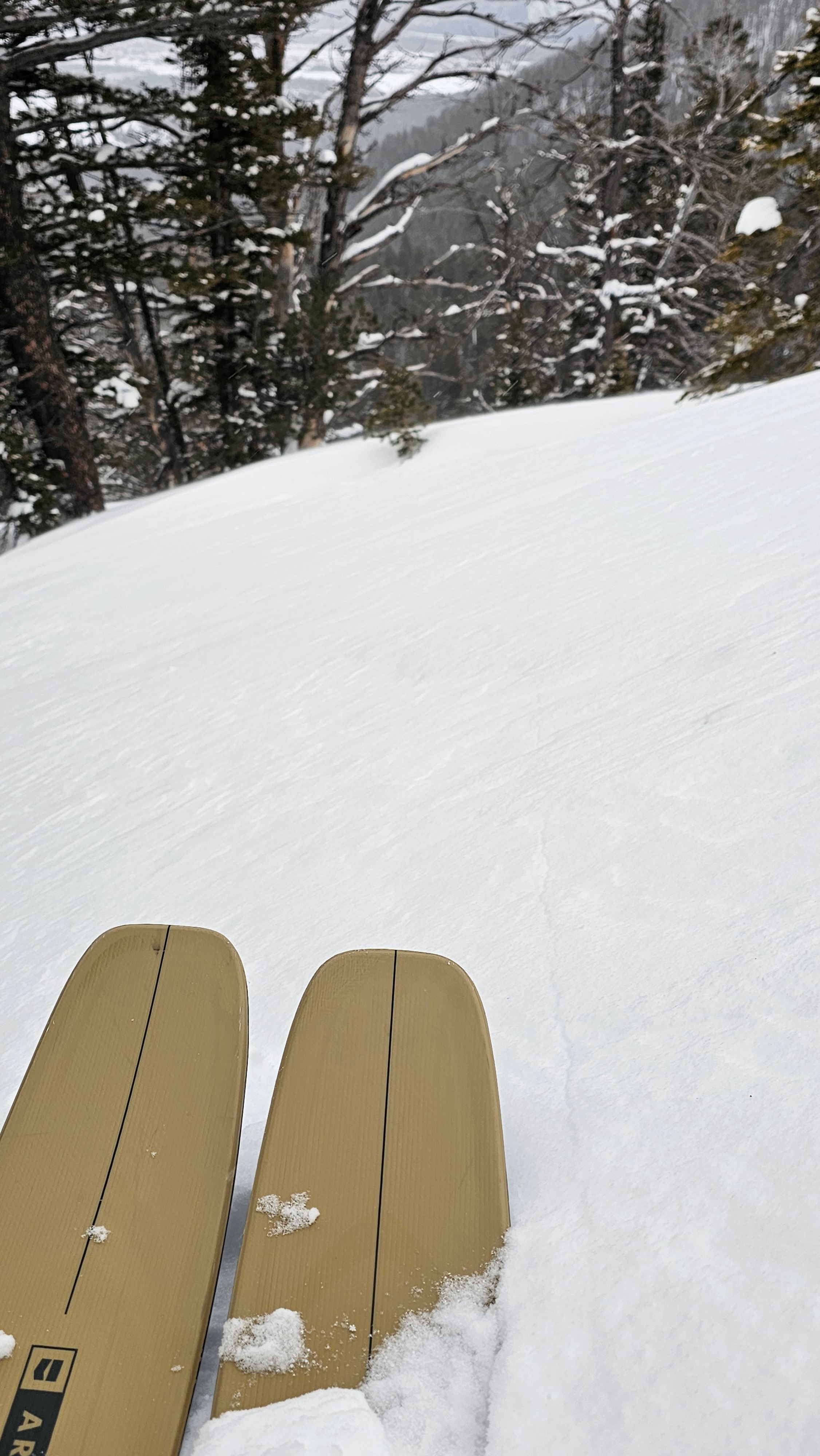
I was able to predictably get collapsing on leeward slopes. Photos below were from around 8,000' in fresh drifts.Weather
- Air Temp
- 25 at the car
- Cloud Cover
- overcast
- Wind Loading
- moderate
- Snow Avail For Transport
- moderate amounts
Today was windy! Wind was getting into the middle elevations in all but very sheltered north and east terrain. All snow that I skied had been wind affected in some manor. No snow accumulated from the ski while I was out, but it started to snow around 1:00PM.
Snowpack
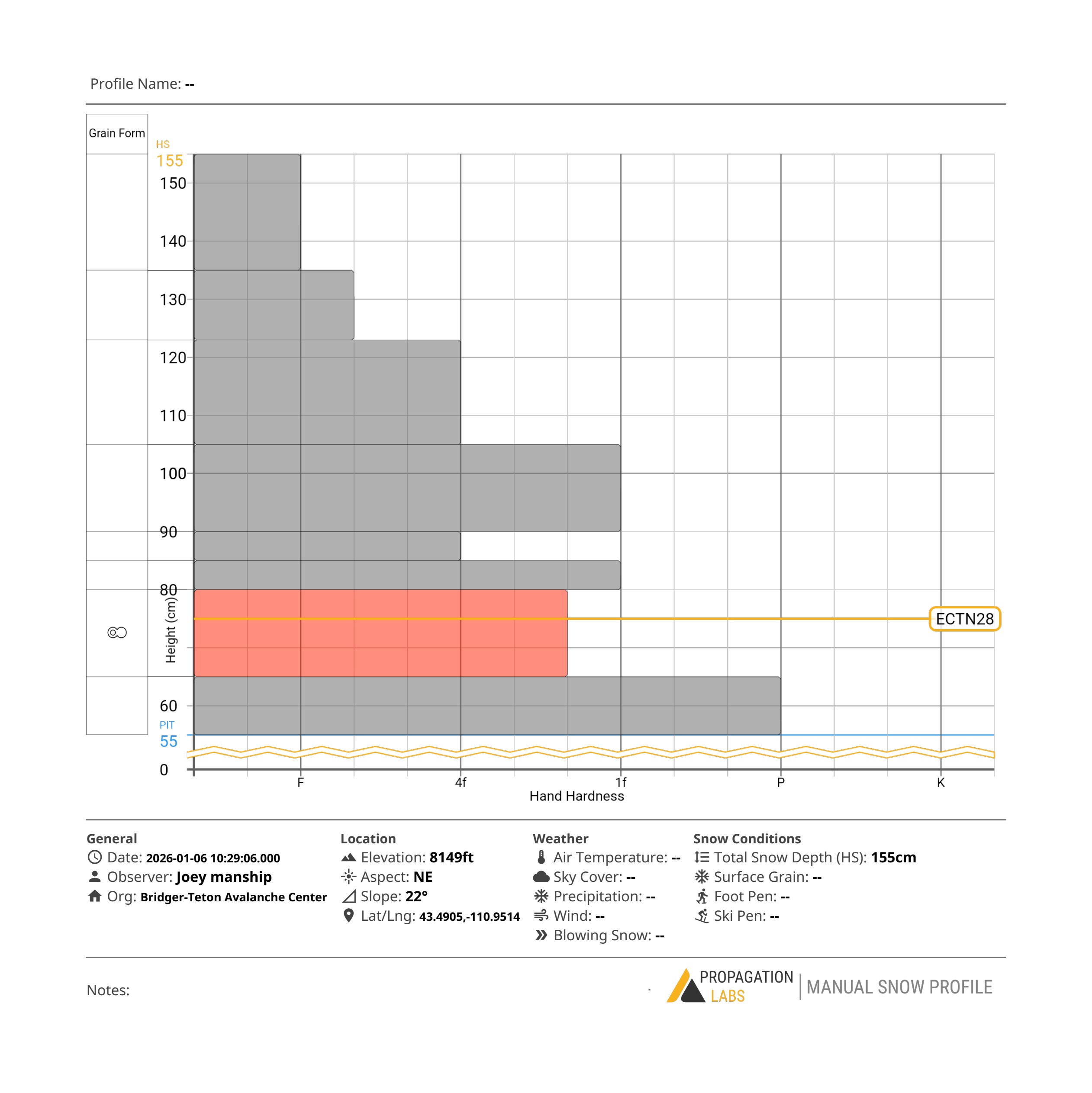
I dug at 8,150 feet to look at the Christmas Crust interface, with a total snow depth of 155 cm. At this location, faceting on top of the crust was not as pronounced, and I recorded an ECTN28 on this layer. Here, the crust was much thicker, with more moist and harder snow just below it.