
Quick report
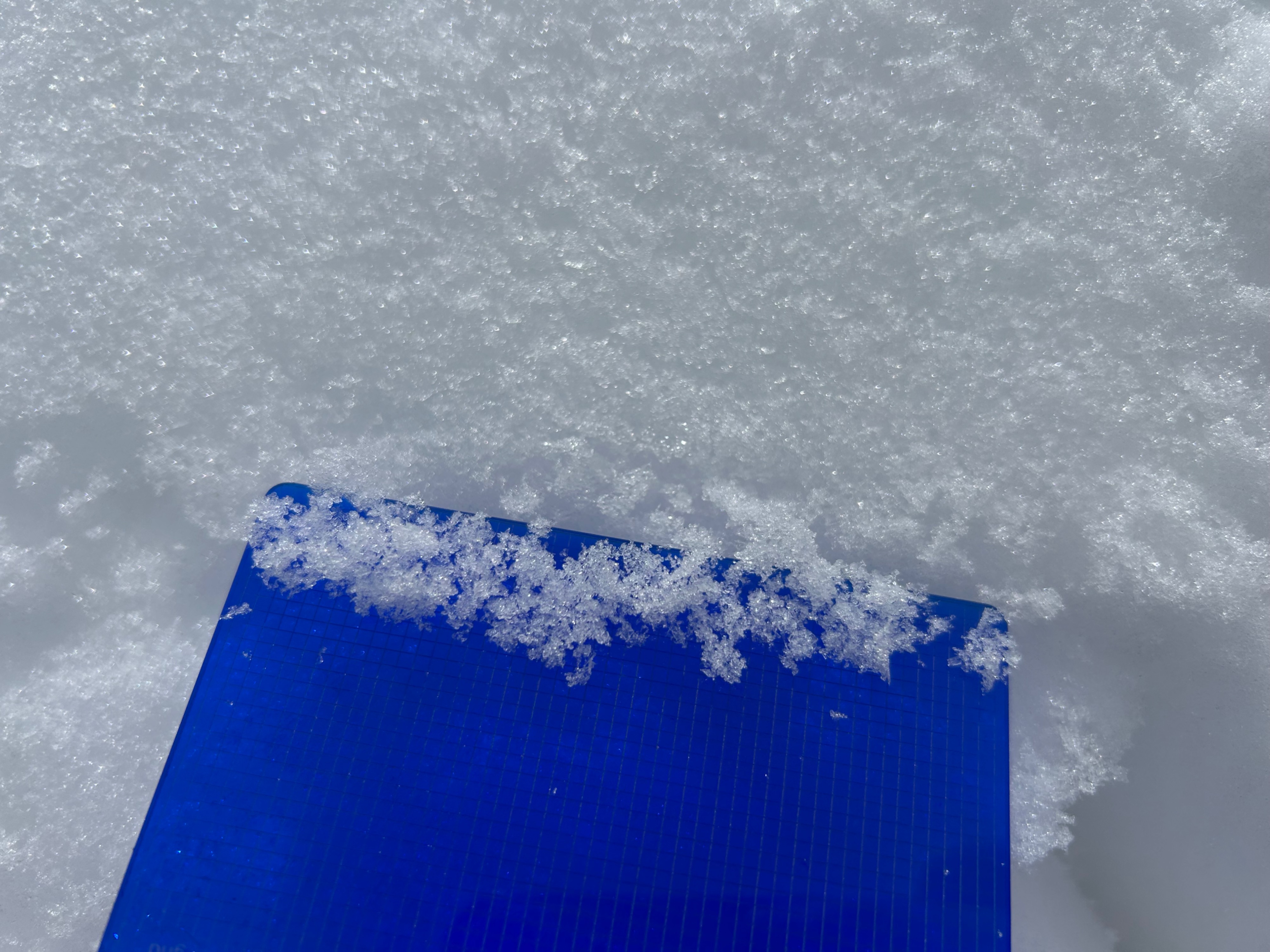
The new generation persistent slab problem (soft slabs 25 to 45 cm over small grained facets) is improving and showed no instability in tests or targeting suspect features. The snow surface is variable with aspect, and is forming near surface facets on the north half of the compass. These range from .5 to 2 mm in size, depending on the solar/energy balance, with the weakest grains on E to NE aspects. This could be a future weak layer.
No recent avalanche activity or signs of instability underfoot.Weather
- Wind Loading
- none
- Recent Snowfall
- 0
Cloud cover increased to thin, broken skies with a greenhouse effect. Mild temps, calm winds.
Snowpack
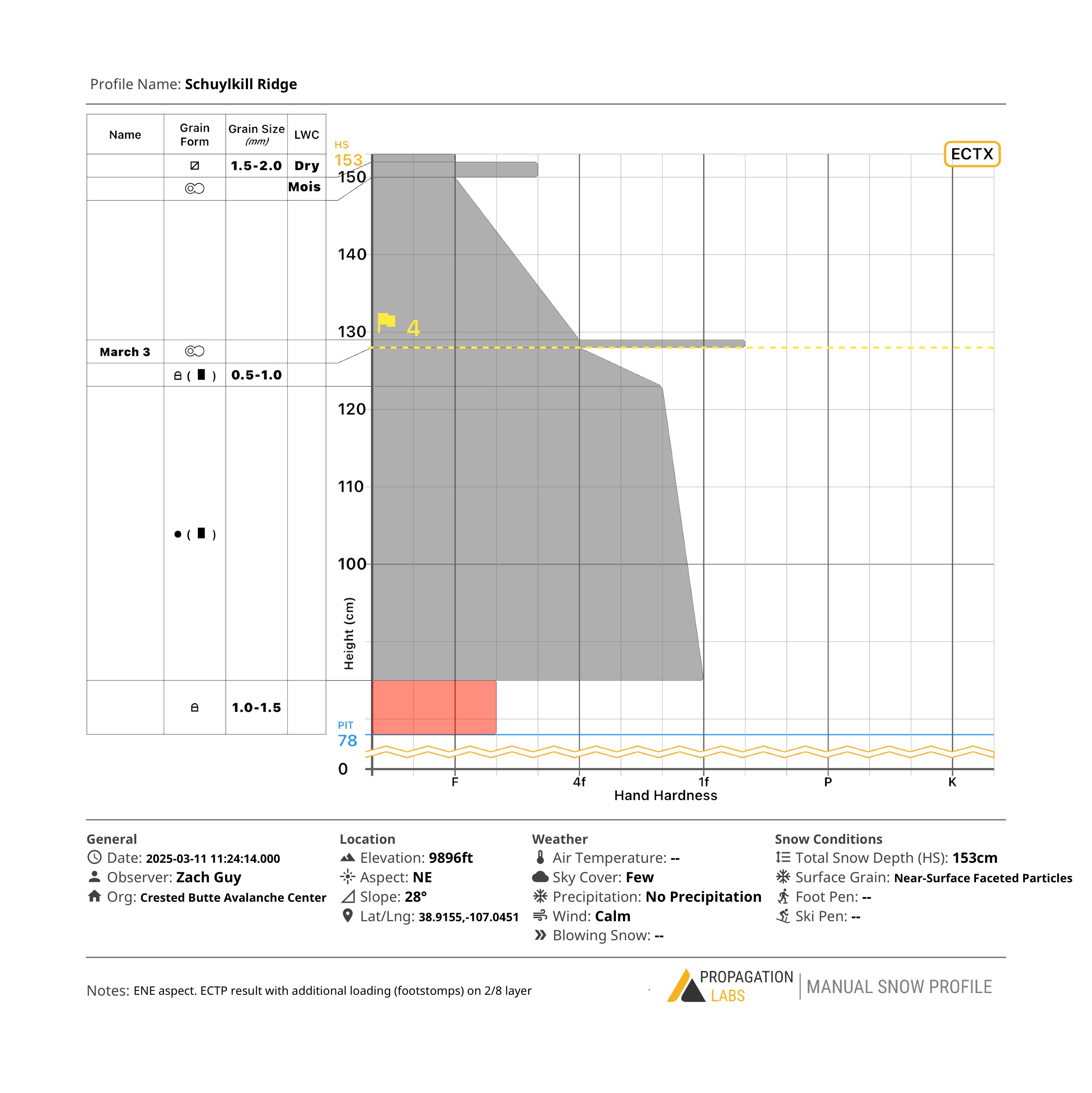
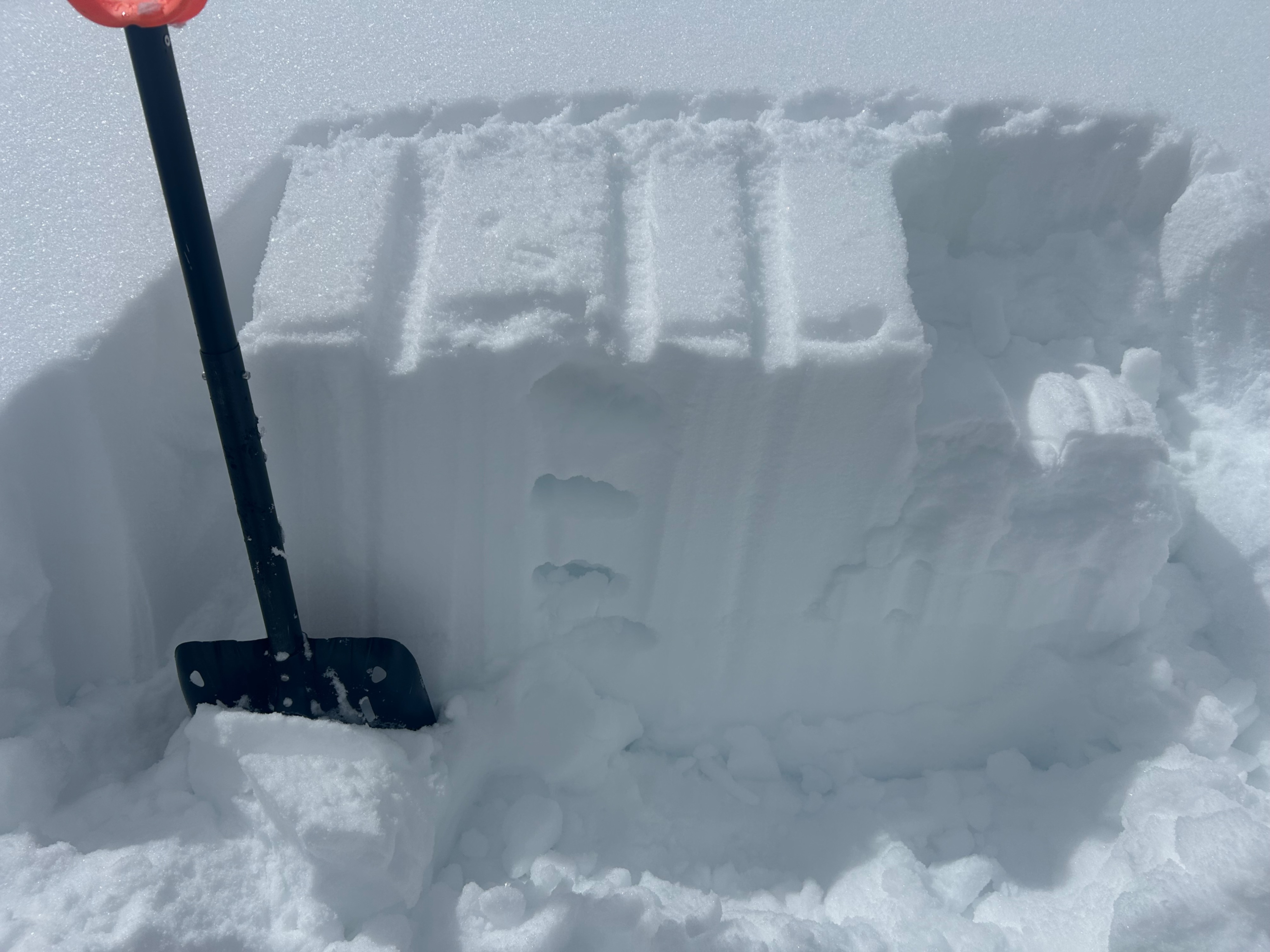
Several tests on NE aspects, both in sheltered terrain and previously windloaded terrain showed non-propagating results on the 3/3 interface, which was small grained (<.5mm) rounding facets. Slabs were about 25 cm below treeline and about 45 cm below ridgeline, up to 4F hard. The 2/8 interface produced propagating results with additional loading steps (foot stomps) under a 70 cm hard slab up to 1F. See profile.
Variable snow surfaces are generally small-grained facets (<.5mm) on shady north aspects, with larger-grained (up to 1 to 1.5 mm) near-surface facets on NE aspects and larger-grained (up to 1.5 - 2.0 mm) radiation recrystallization facets on the north half of E aspects to a sunnier NE aspects. The southern half of the compass held mature wet grains at the snow surface.
Avalanche
- Size
- D2
- Type
- SS
- Aspect
- NE
- Trigger
- N
- Elevation
- 11400 ft
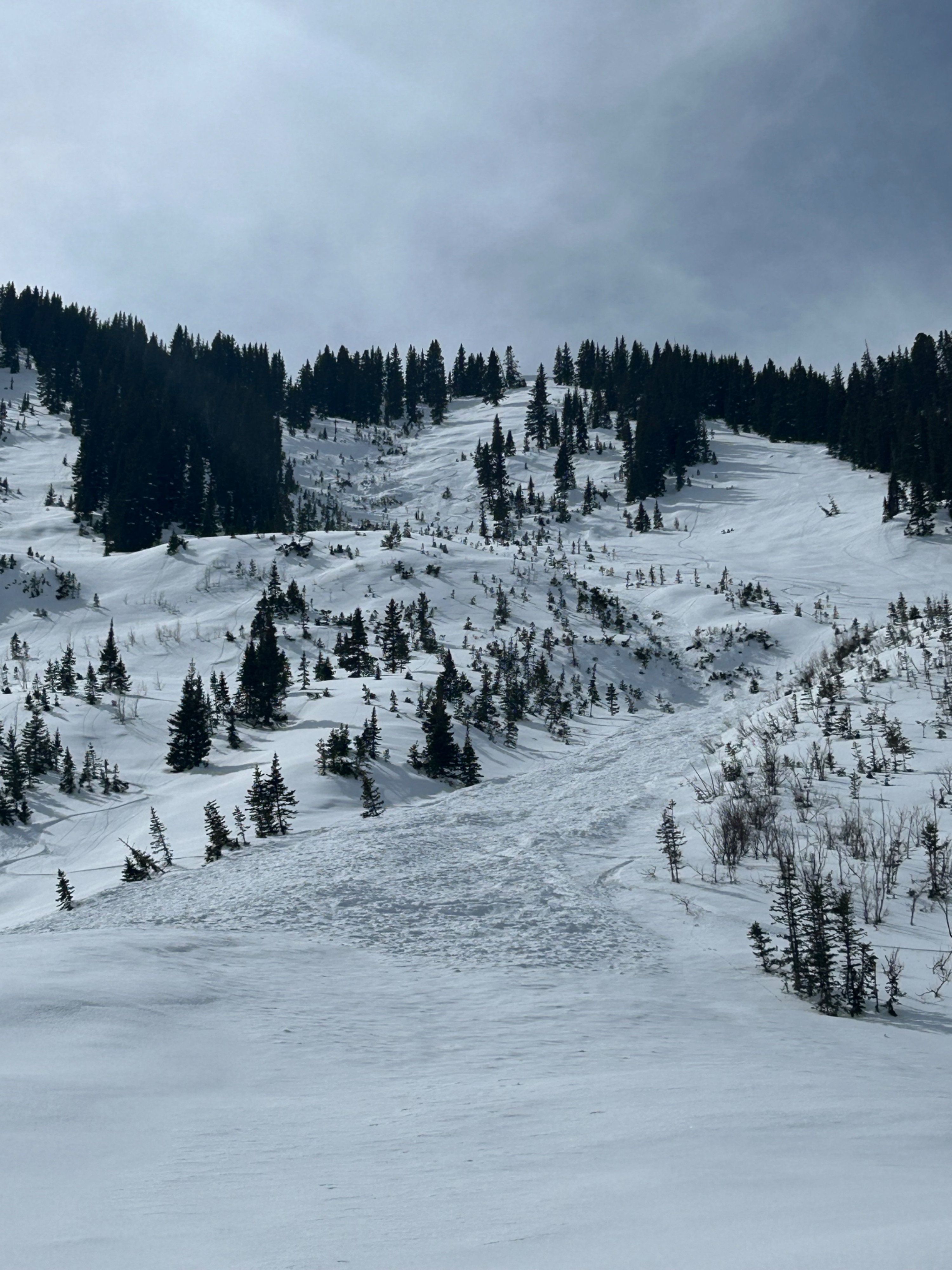
Likely ran late 3/6 or early 3/7 during peak of storm. A soft slab of wind drifted snow that failed on 3/3 interface, appeared to gouge into weak snow further in track (This path has run every major storm cycle so the existing snowpack was shallow).