
Quick report
- Cracking
- isolated
We got a slow start, trying to be out in the afternoon to see how things were handling the heat. The snowpack remained supportive to skis and boots for the majority of the tour until we descended below treeline in the afternoon, where the snowpack felt most dangerous.
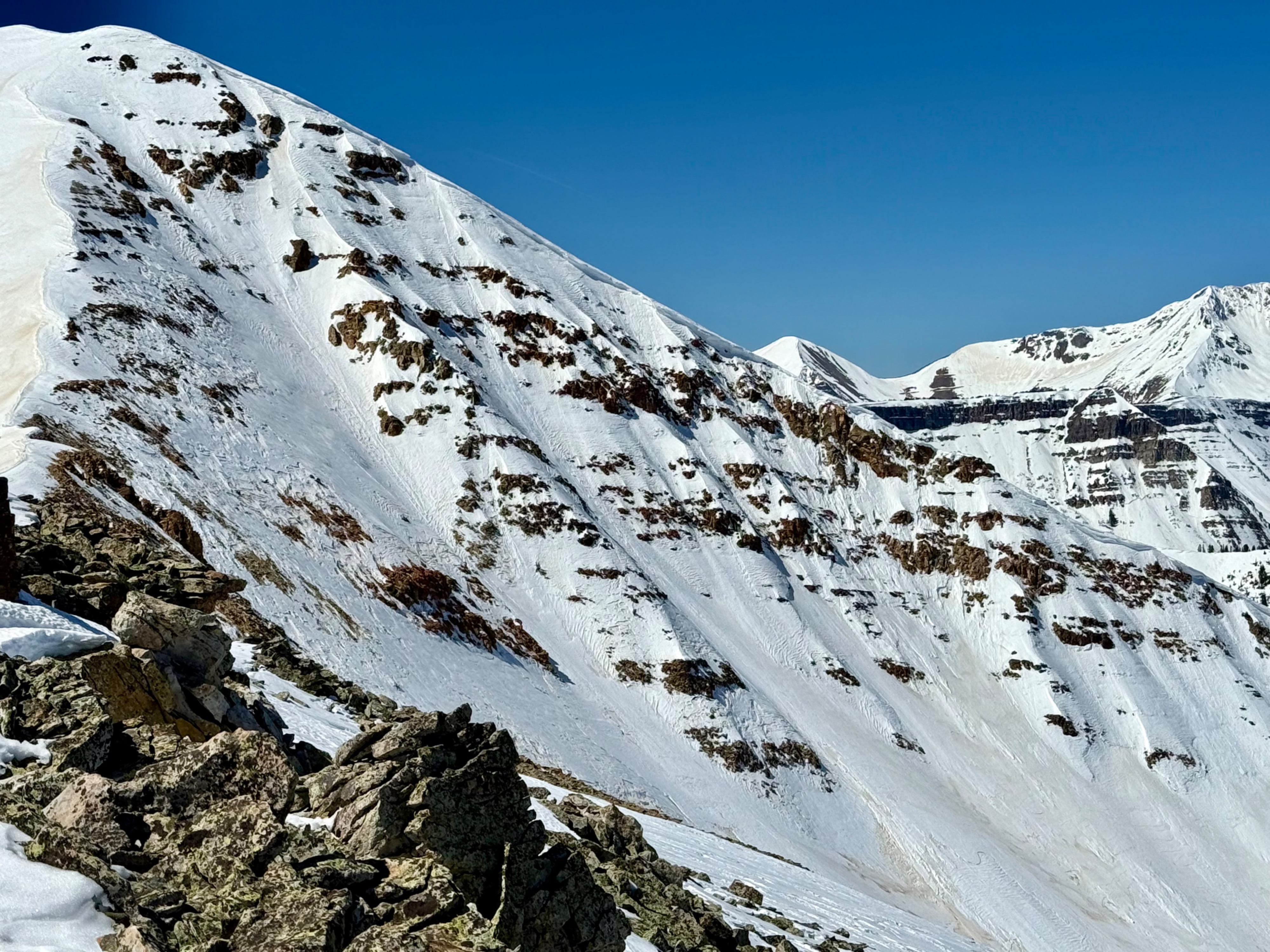
Coon Glades has some nice corn snow at 11:30AM. We skied into Coon Bowl on East and SE-facing slopes around 1pm with no wet loose avalanche concerns. The corn skiing was past prime and a little sticky, but the snowpack remained supportive with a couple inches of slushy snow over a hard crust.
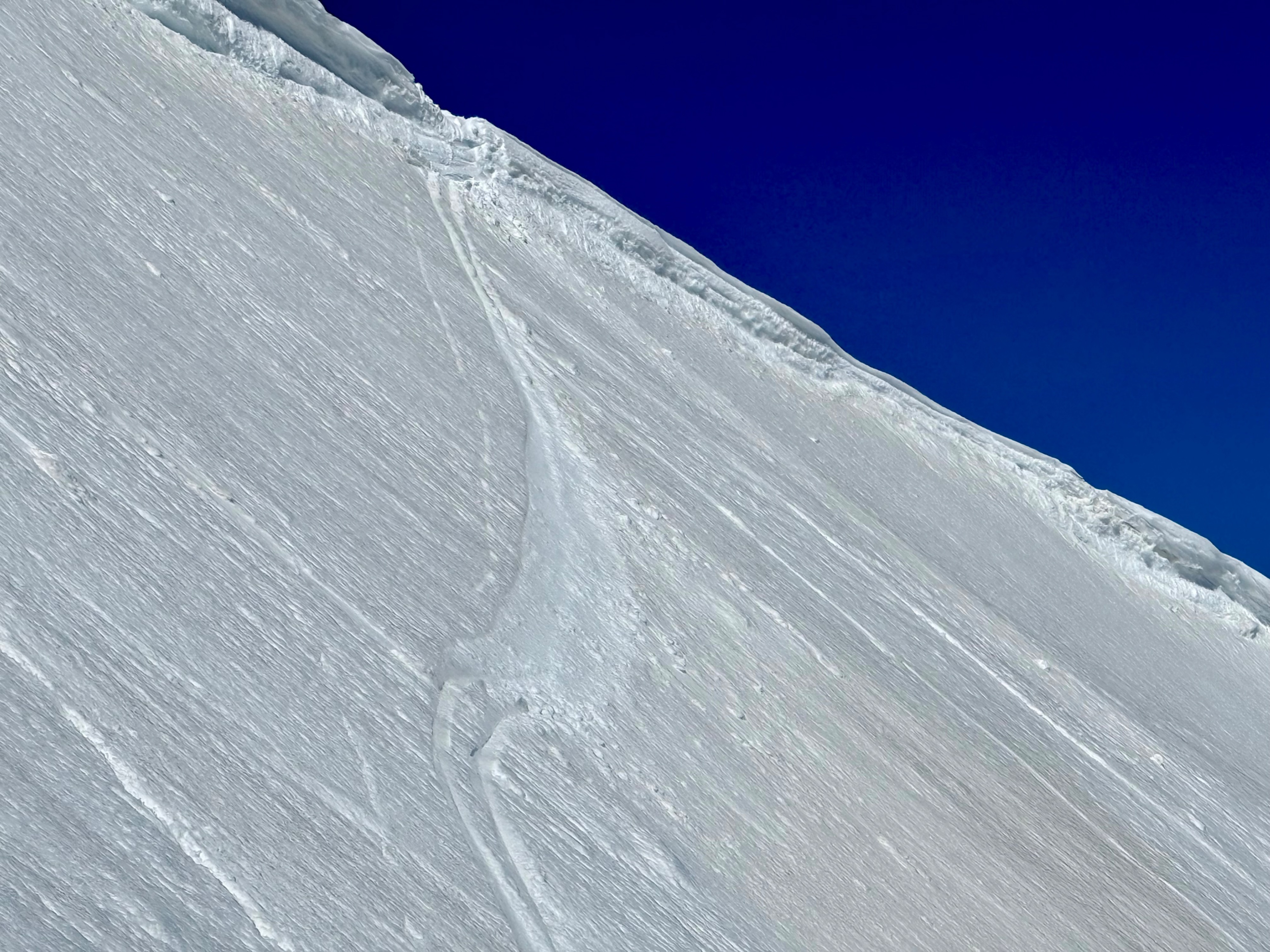
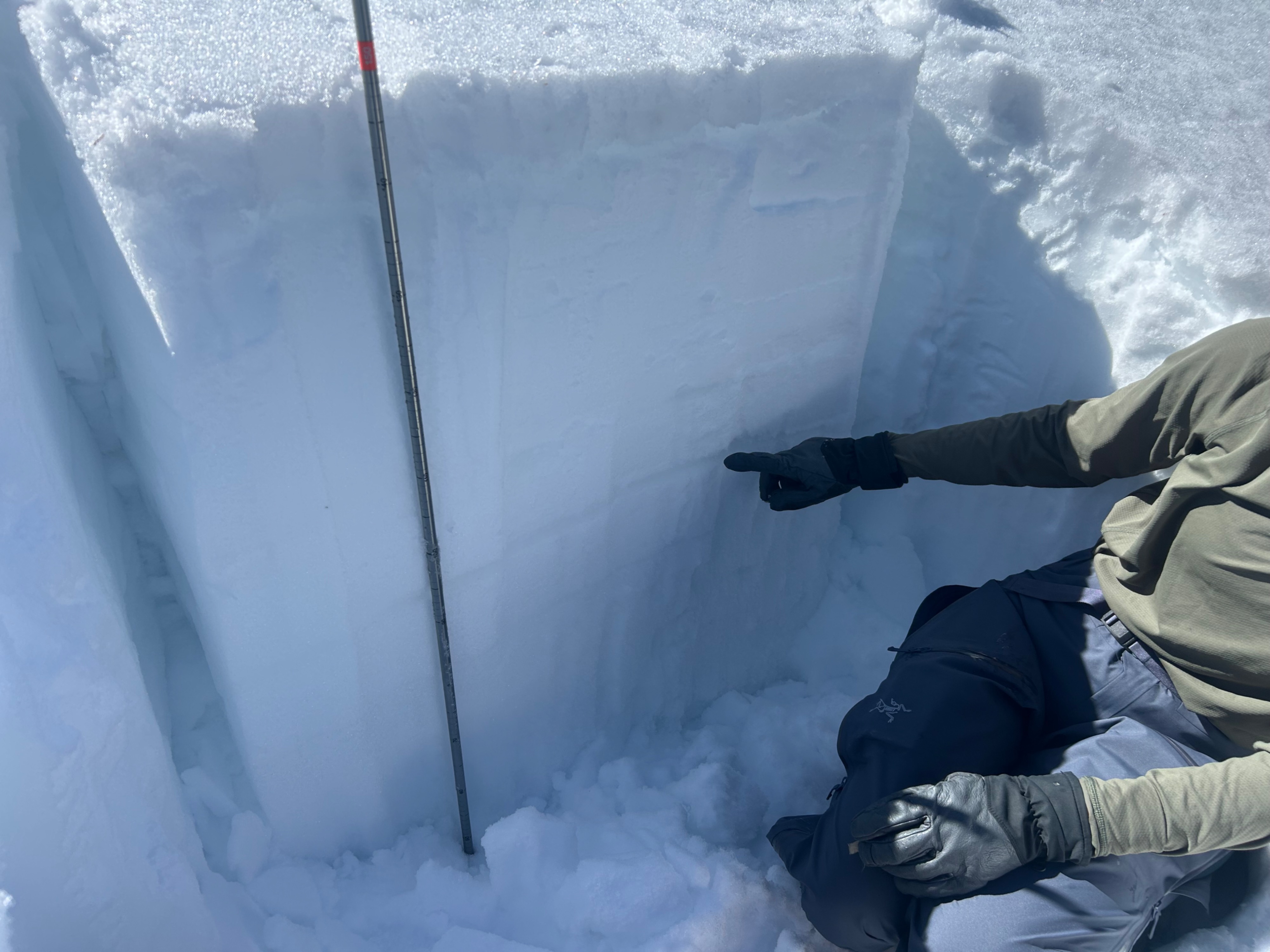
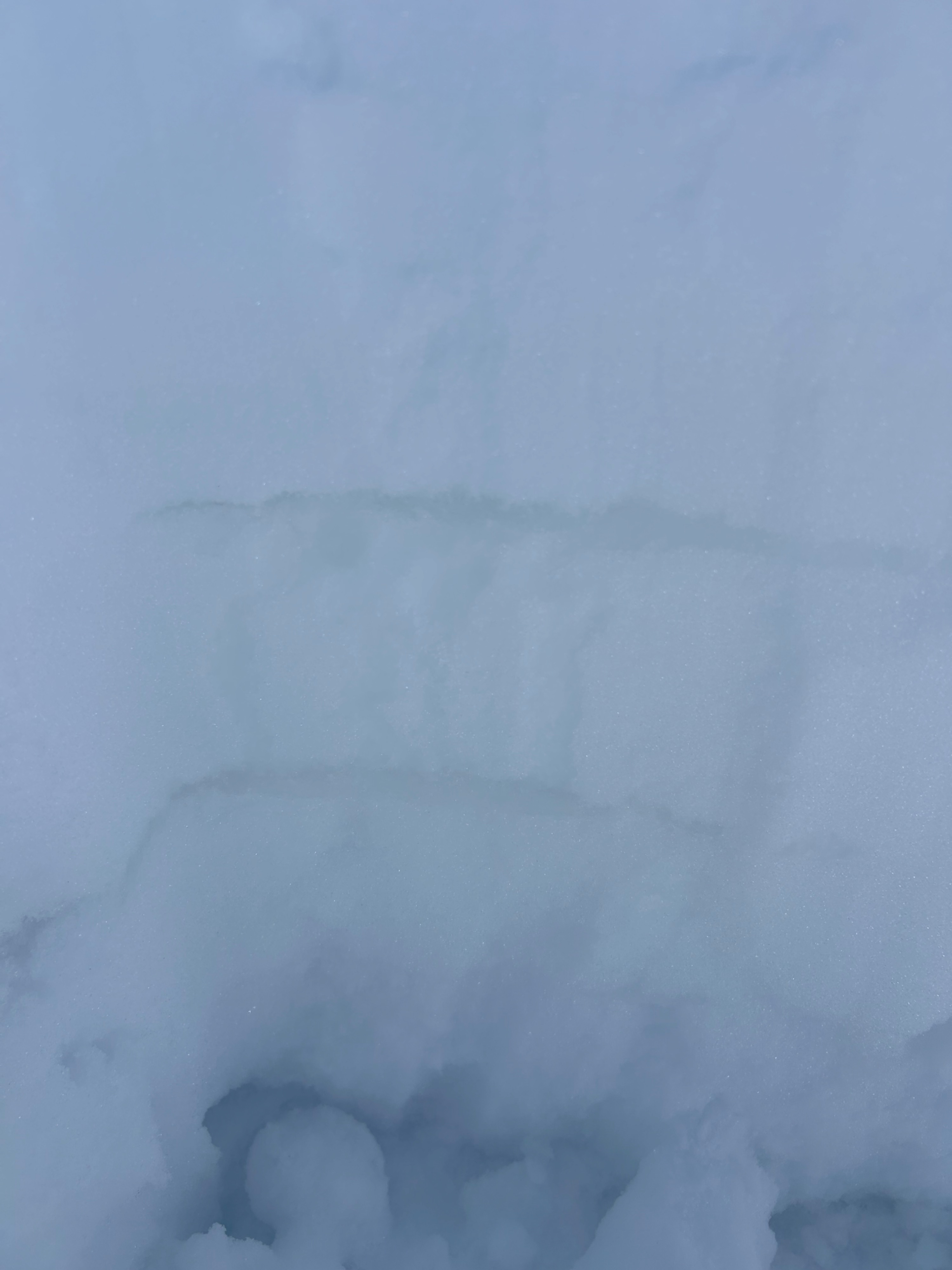
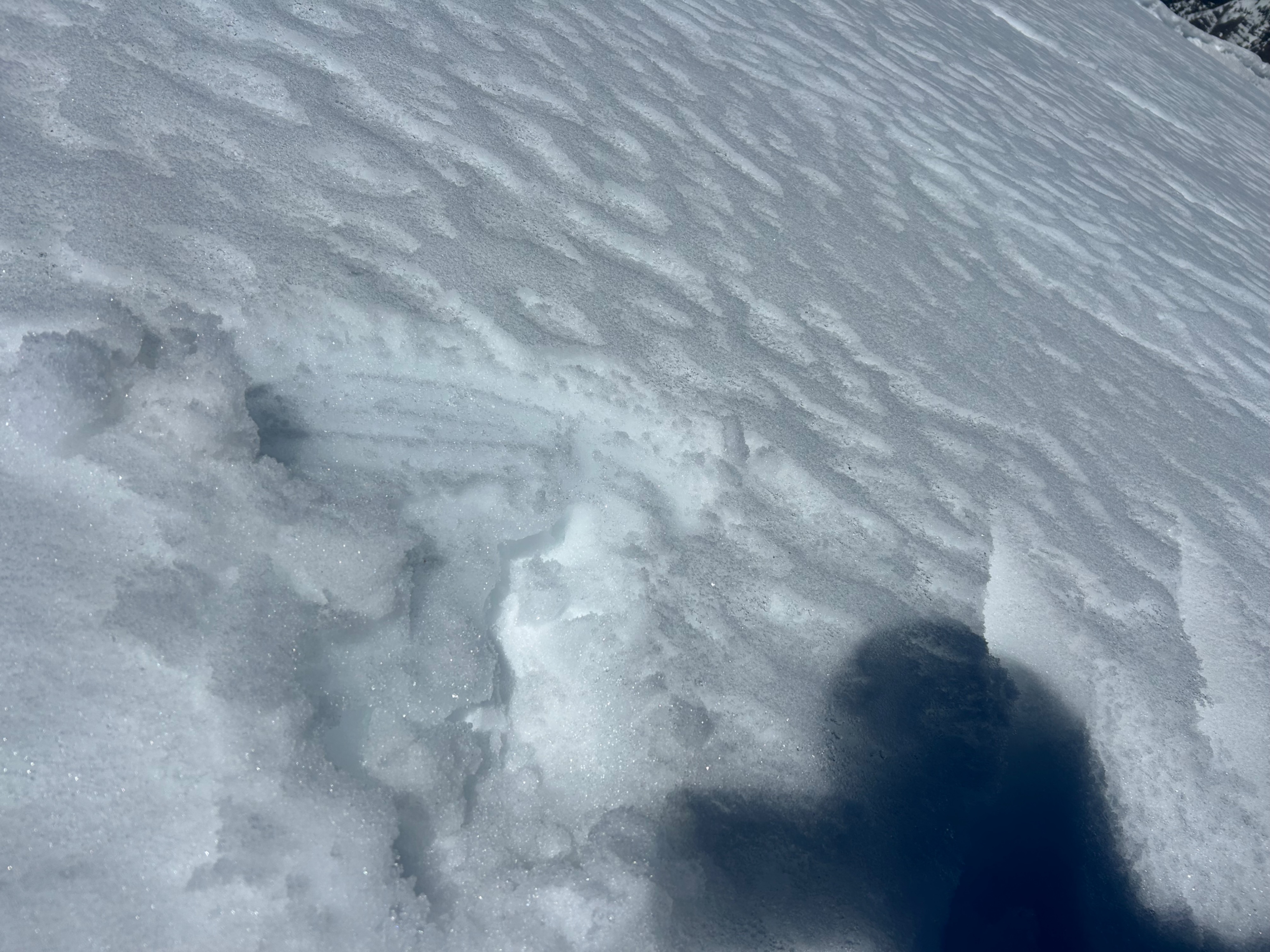
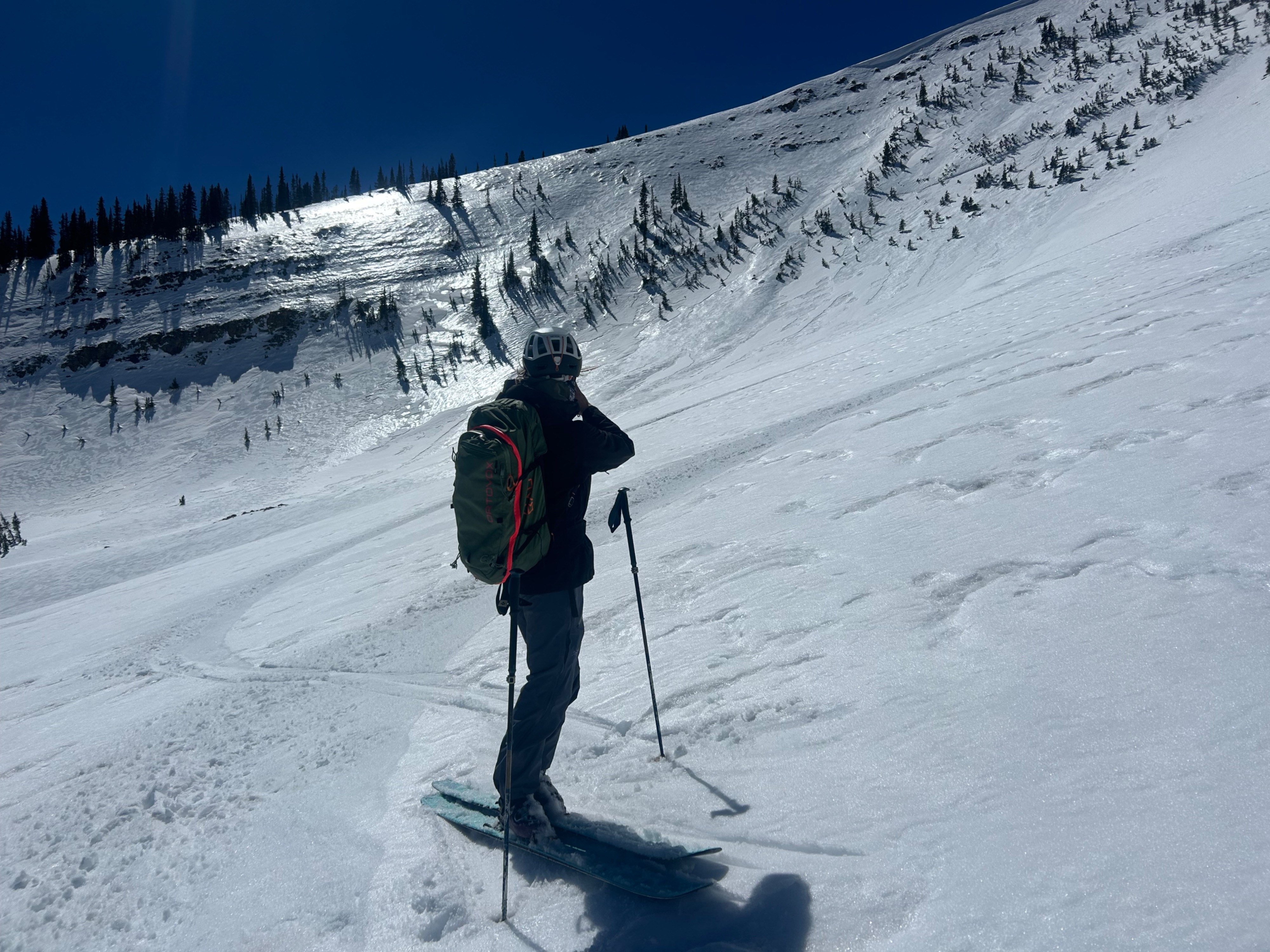
The top of Climax on the northeast and east aspects also remained supportive at 2:30pm. We pushed a couple of tiny wet loose avalanches into Climax that slid on the firm crust without entrainment. A couple of snowpits above Climax showed water pooling on weak layers in the upper snowpack.
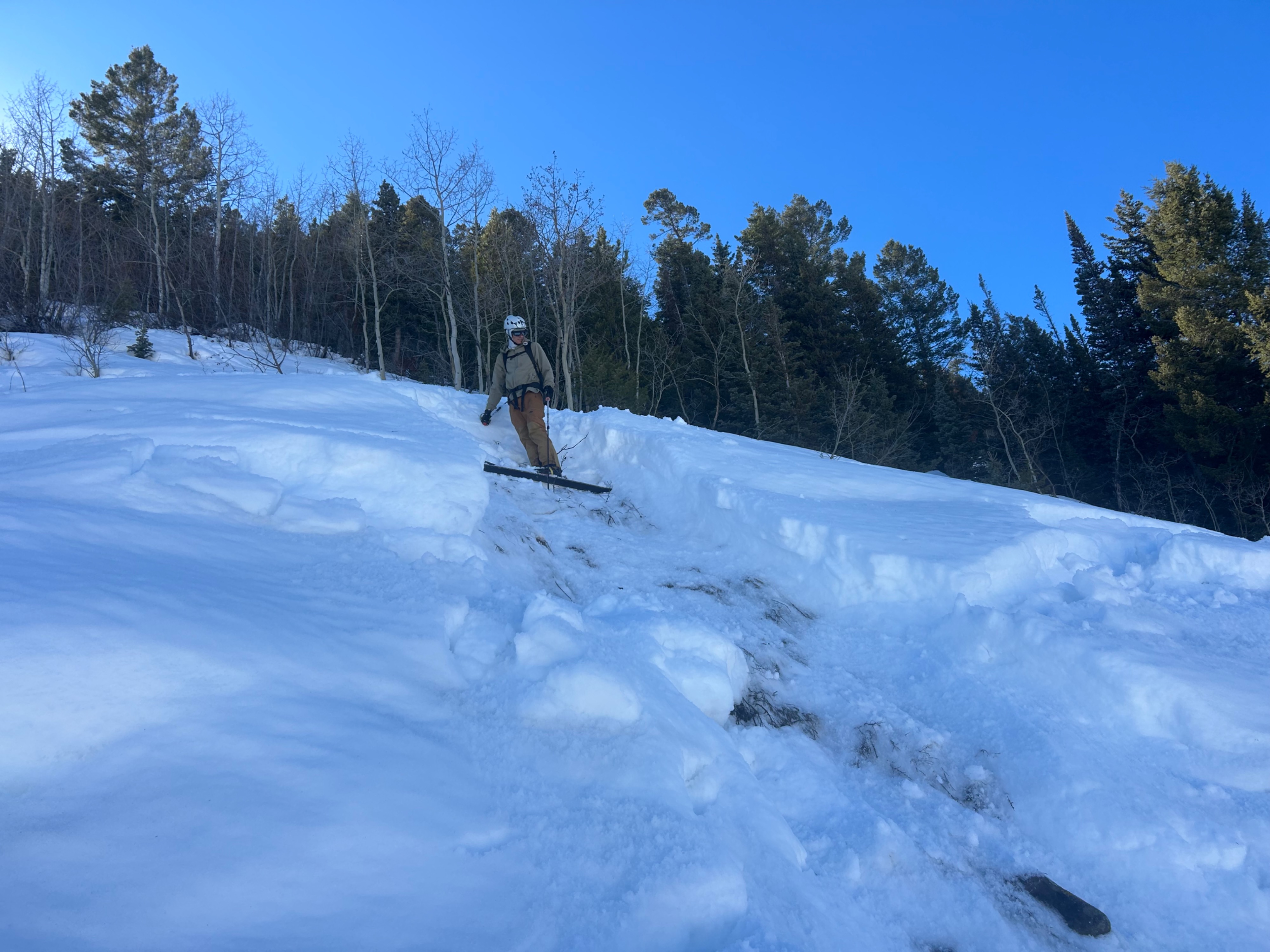
Around 3pm, we descended a NE-facing slope near Peanut Lake at ~9,400ft and found a mostly unsupportive wet snowpack. We pushed one small wet loose avalanche on a steep roller that entrained the entire shallow and saturated snowpack.
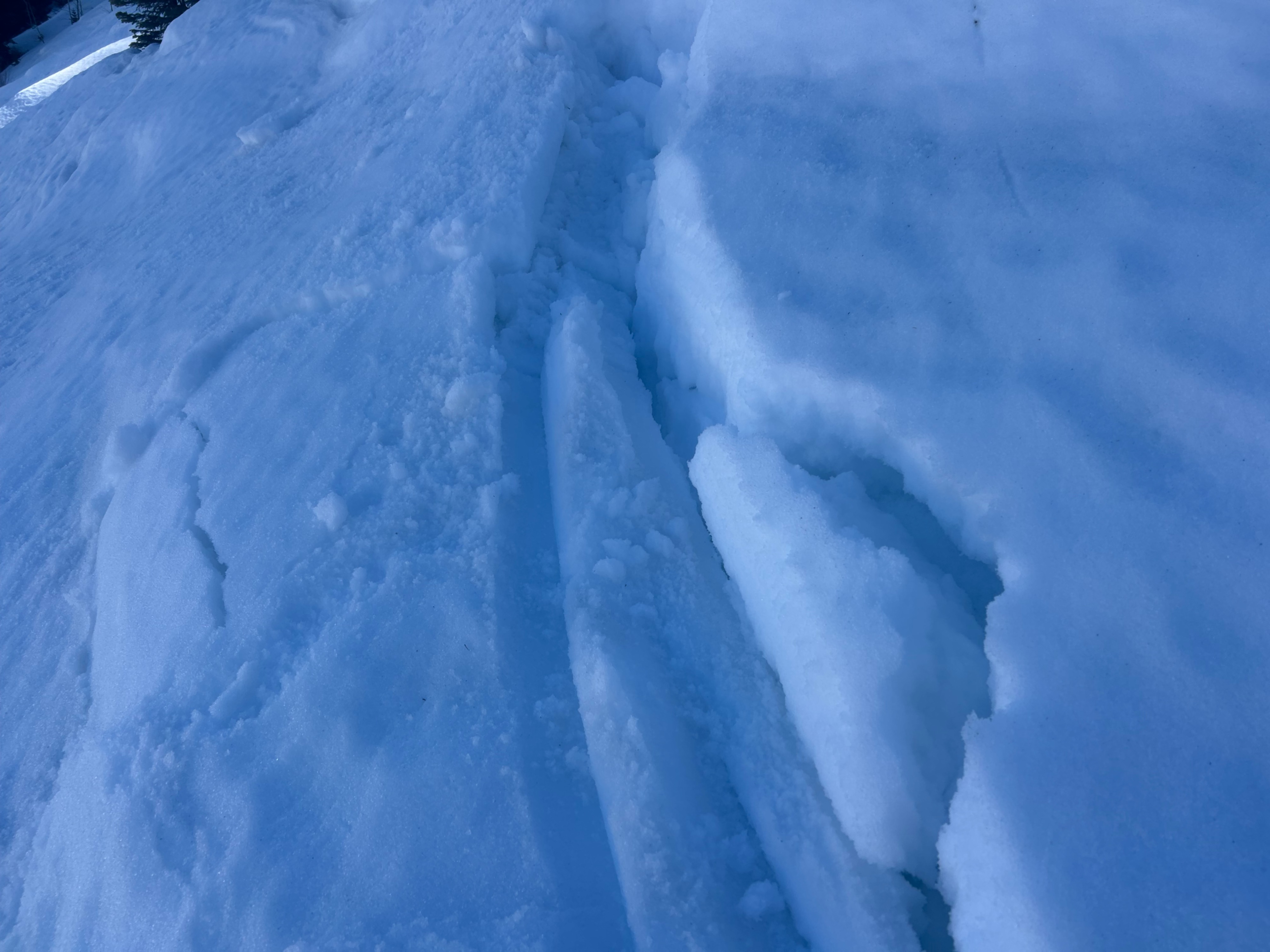
While skiing the saturated and unsupportive snowpack below treeline this afternoon, a few rollovers produced wet slab cracking that was less than 6' - the slabs are very wet, and losing cohesion and ability to propagate.Weather
- Cloud Cover
- clear
- Wind Loading
- none
- Recent Snowfall
- 0
- Snow Avail For Transport
- none
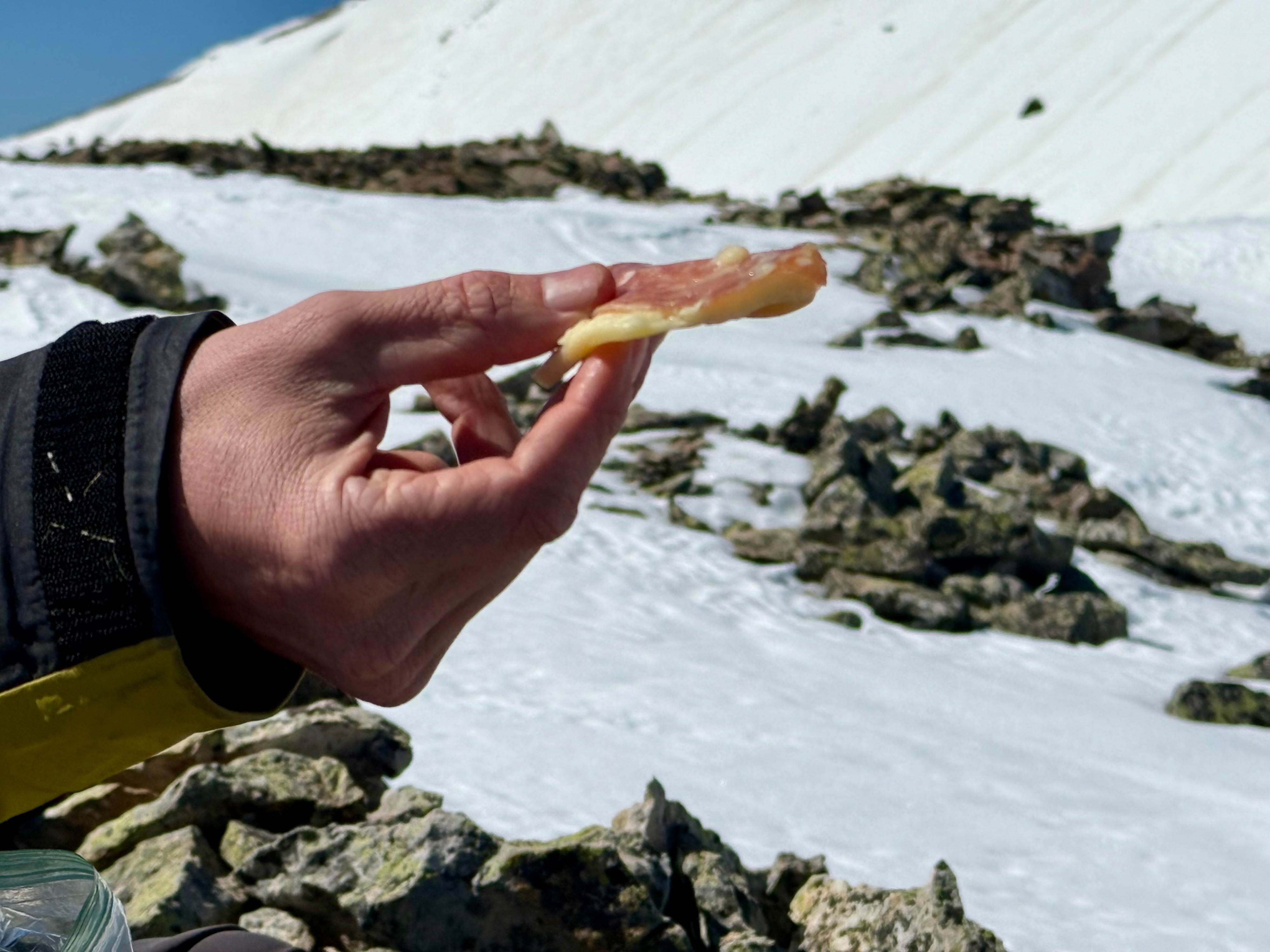
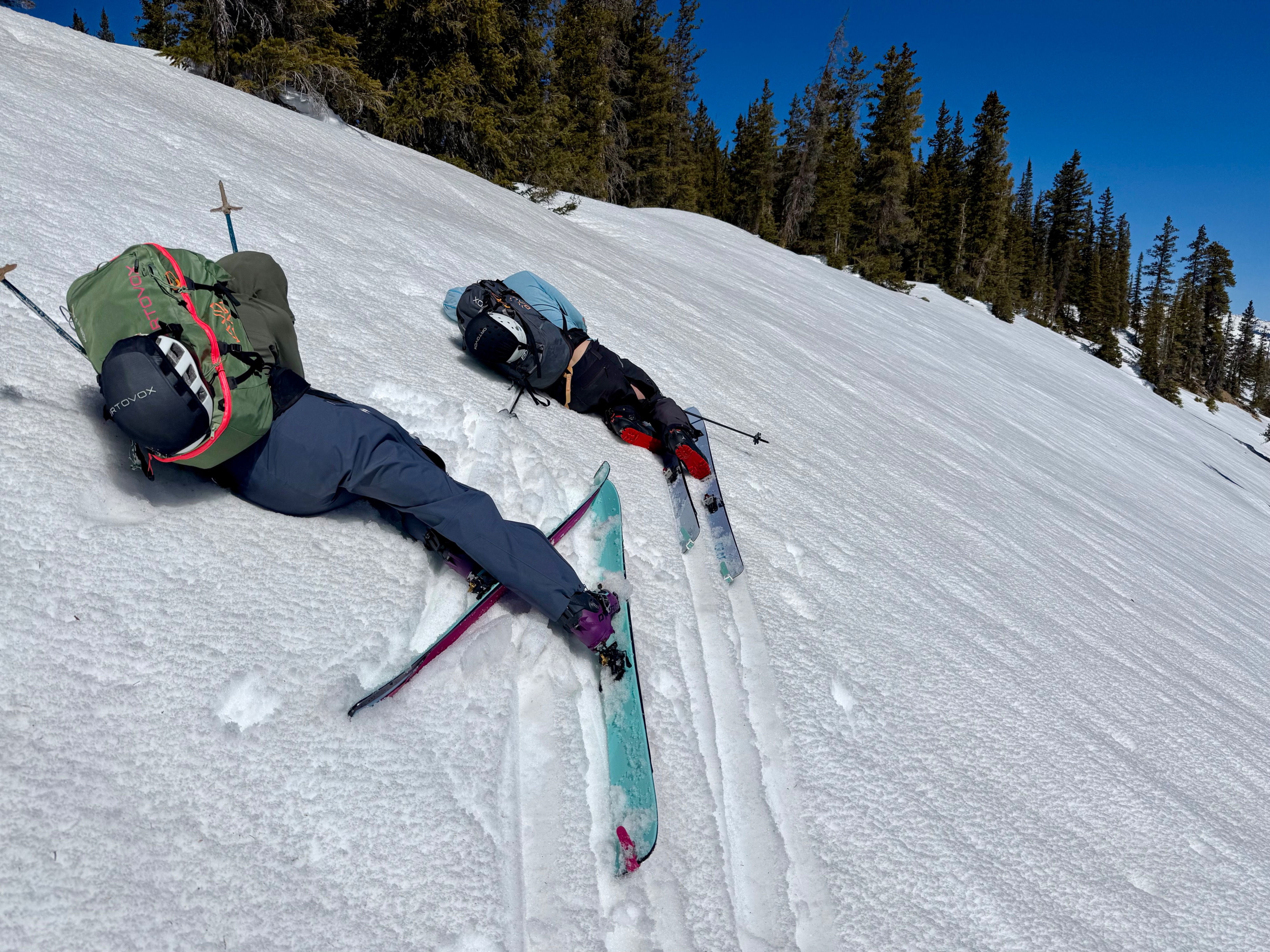
Hot temps and calm to light winds. "We are only allowed to stop in the shade" - Brie. "Its so hot my cheese is melting" - Zach
Snowpack
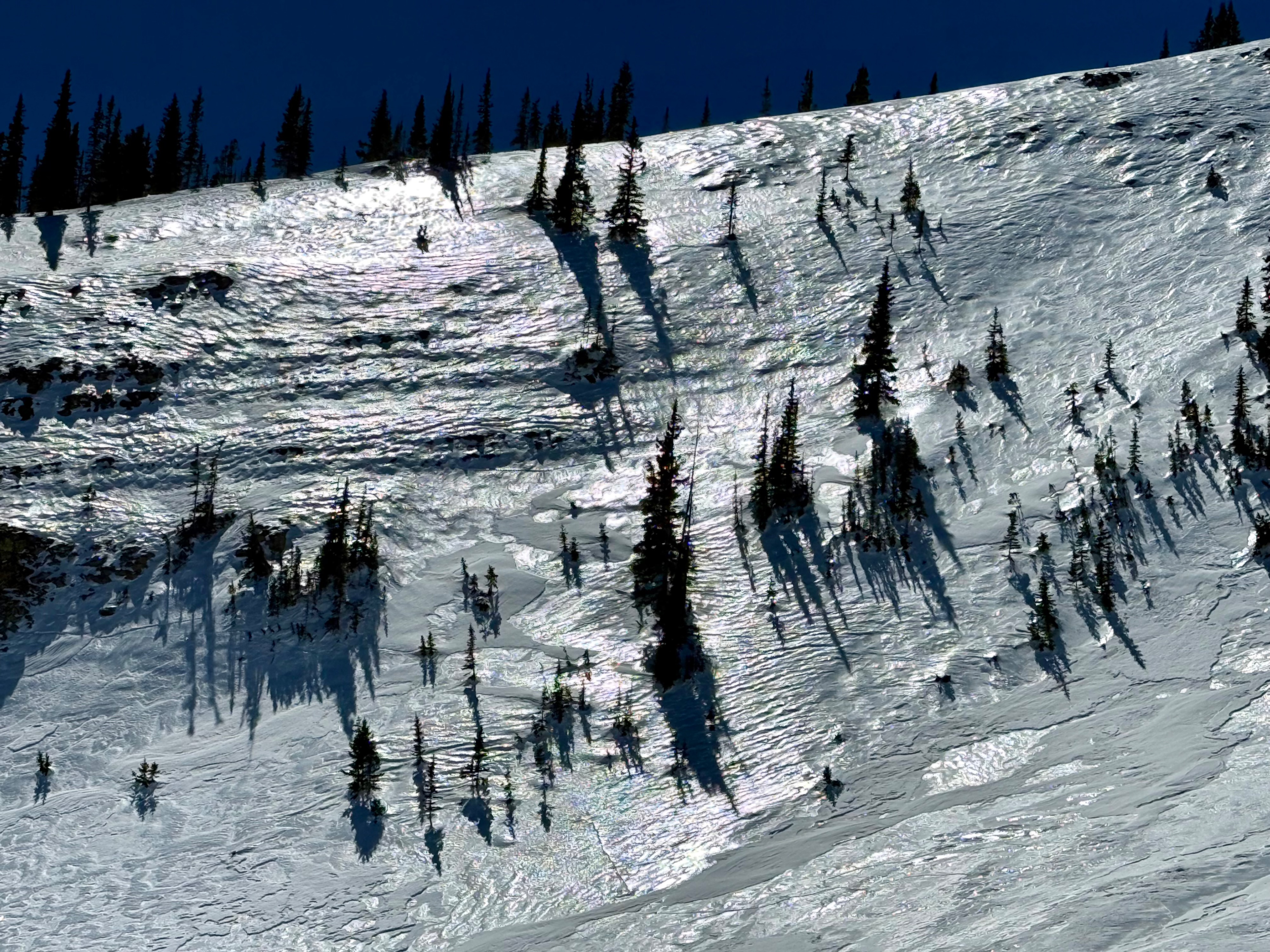
Many northerly facing slopes at near and above treeline elevations still have an ice lens on or just below the snow surface. Slopes with the ice crust appear far from developing much of a wet loose avalanche problem.
At 11,200ft, we dug 2 snow pits on E and ENE aspects, on low-angle terrain just above a Climax Chutes. Both snowpits showed water pooling in the February interfaces, and one showed water entering the January Drought Layer. A stability test showed propagation on the wetted Feb 11 interface after additional loading steps. The slab was 1F hard, mostly dry, and 50 cm thick.
Avalanche
- Size
- D1
- Type
- WL
- Count
- 2
- Aspect
- NE
- Trigger
- AS
- Elevation
- 9300 ft
Triggered a couple of small wet loose avalanches: A tiny one near treeline, a few inches deep, running on the 2/25 rain crust. Below treeline, it was a full-depth gouger on a small slope.