
Quick report
- Collapsing
- specific
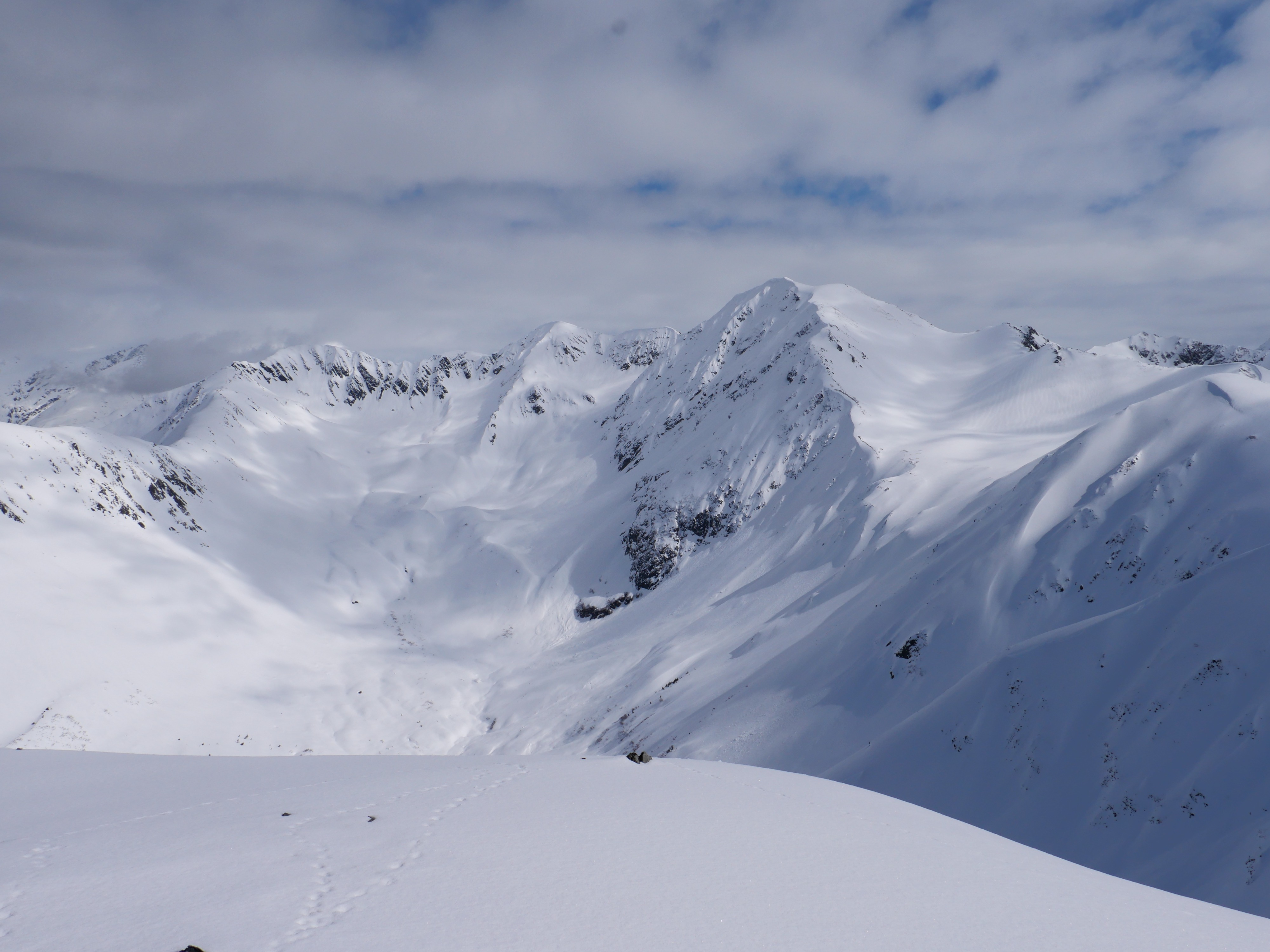
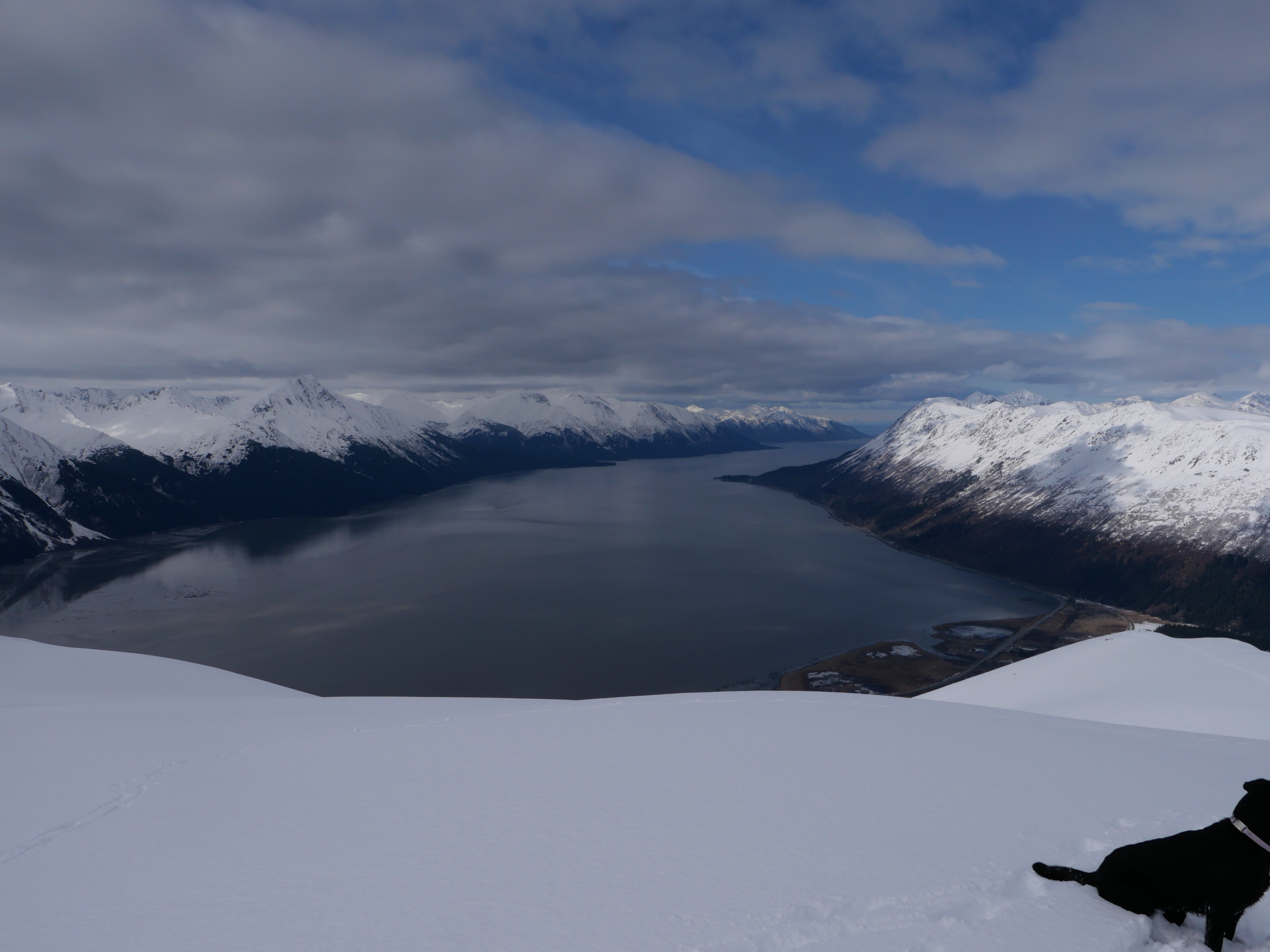
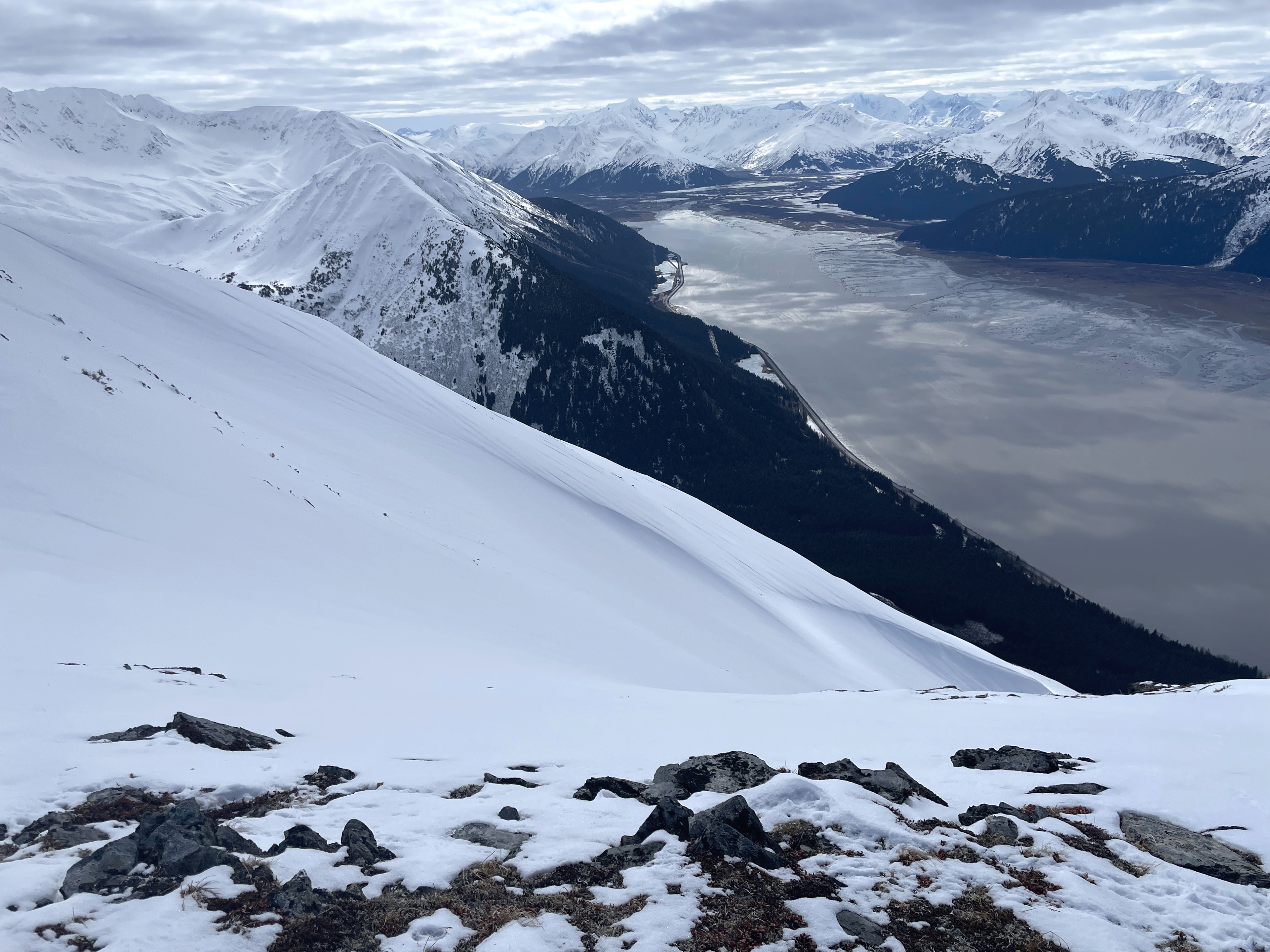
We skied a few runs on Orca this morning and early afternoon before things got too warm. We found 2-4" recent snow on a stout crust up to around 2500', but the near-surface crust became much thinner above that. Northerlies along the ridge (2600'-3400') were still cold and dry, and we felt and heard several large collapses as we traveled.
We traveled cautiously today, and only used a few small slopes that were steep enough to slide. We gave ourselves plenty of space as we traveled below steep overhead terrain, and were careful to get out of there before the near-surface crusts became unsupportable. It would have felt spooky out there after around 3:00 or so. We didn't go anywhere near steep northerly terrain, and were quite spooked by the multiple collapses we experienced. It is far from straightforward out there right now, and there is a whole lot of terrain on Orca that we were not interested in poking today.
We felt and heard several large collapses while walking along the ridgeline. These felt like they were propagating 50 to 100' wide, and seemed to be failing on a layer of facets about a foot deep. We noticed this consistently on the wind-loaded northerly side of the ridge, which had a cold and dry snowpack.Weather
- Air Temp
- warm
- Cloud Cover
- scattered
- Wind Loading
- previous
- Rain Elevation
- 1000'
- Recent Snowfall
- 4"
- Snow Avail For Transport
- moderate amounts
Warm and calm. Intermittent clouds kept surface melting at bay, but it was hot when the sun was out.
Snowpack
We dug several handpits on north and west aspects where we felt the collapses (around 3000' elevation), and identified two layers of weak near-surface facets buried in the upper 2' of the snowpack. It is hard to say which one was giving us the collapsing, but both looked concerning.
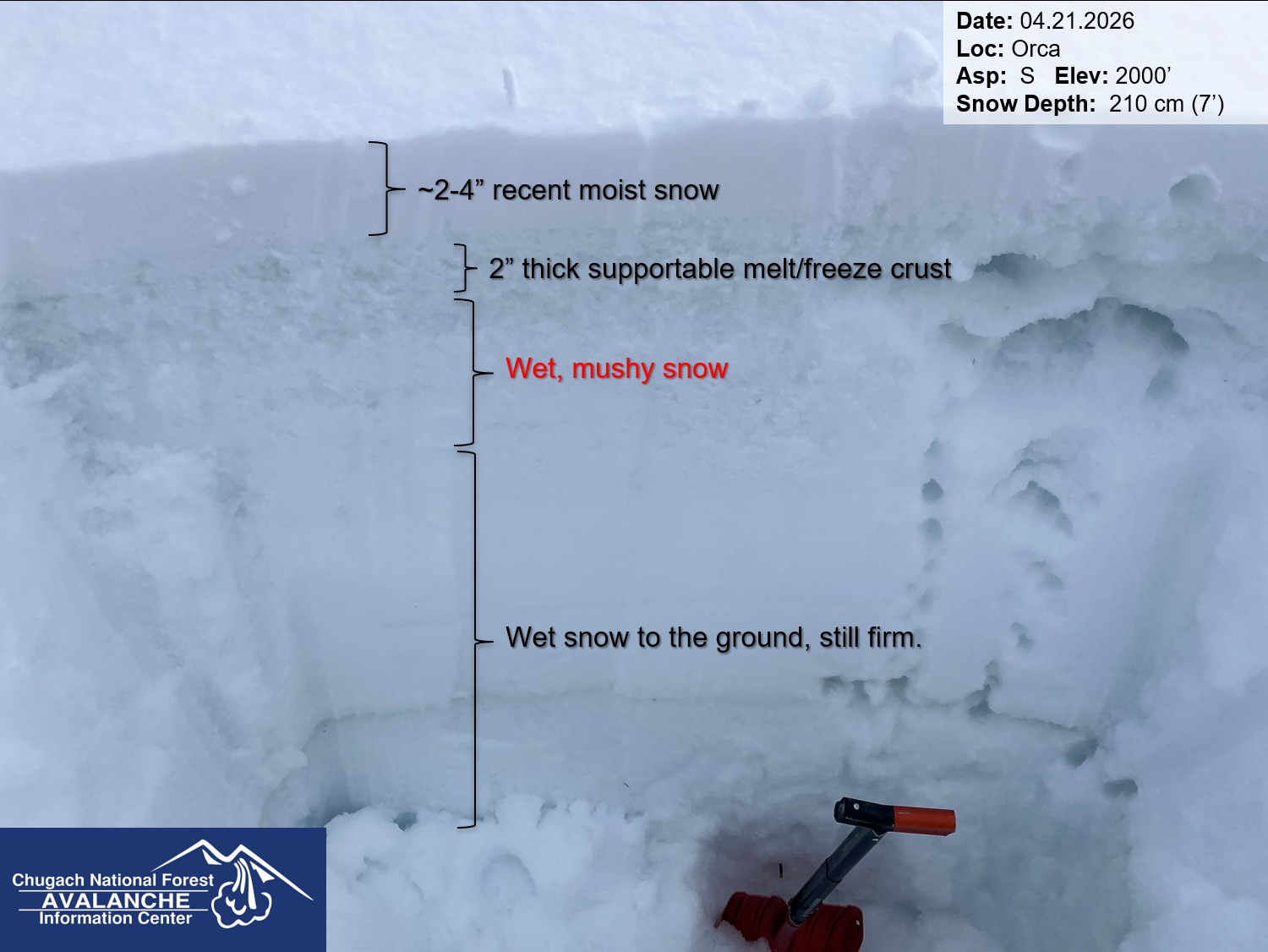
We also dug three pits on the south-facing terrain we were skiing, all of which were between 2000' and 2650'. There was a supportable melt-freeze crust buried below 2-4" recent snow, which stayed supportable while we were out. The steeper pits at 2100' and 2000' had a fully springtime snowpack, and seemed like they could produce significant wet snow avalanches once the surface crust melted. We made sure we were out of there before that happened. We did not get on any steep south facing terrain above 2200', but it seems likely that significant melt/freeze has been happening at upper elevation, steep south-facing slopes.