
Quick report
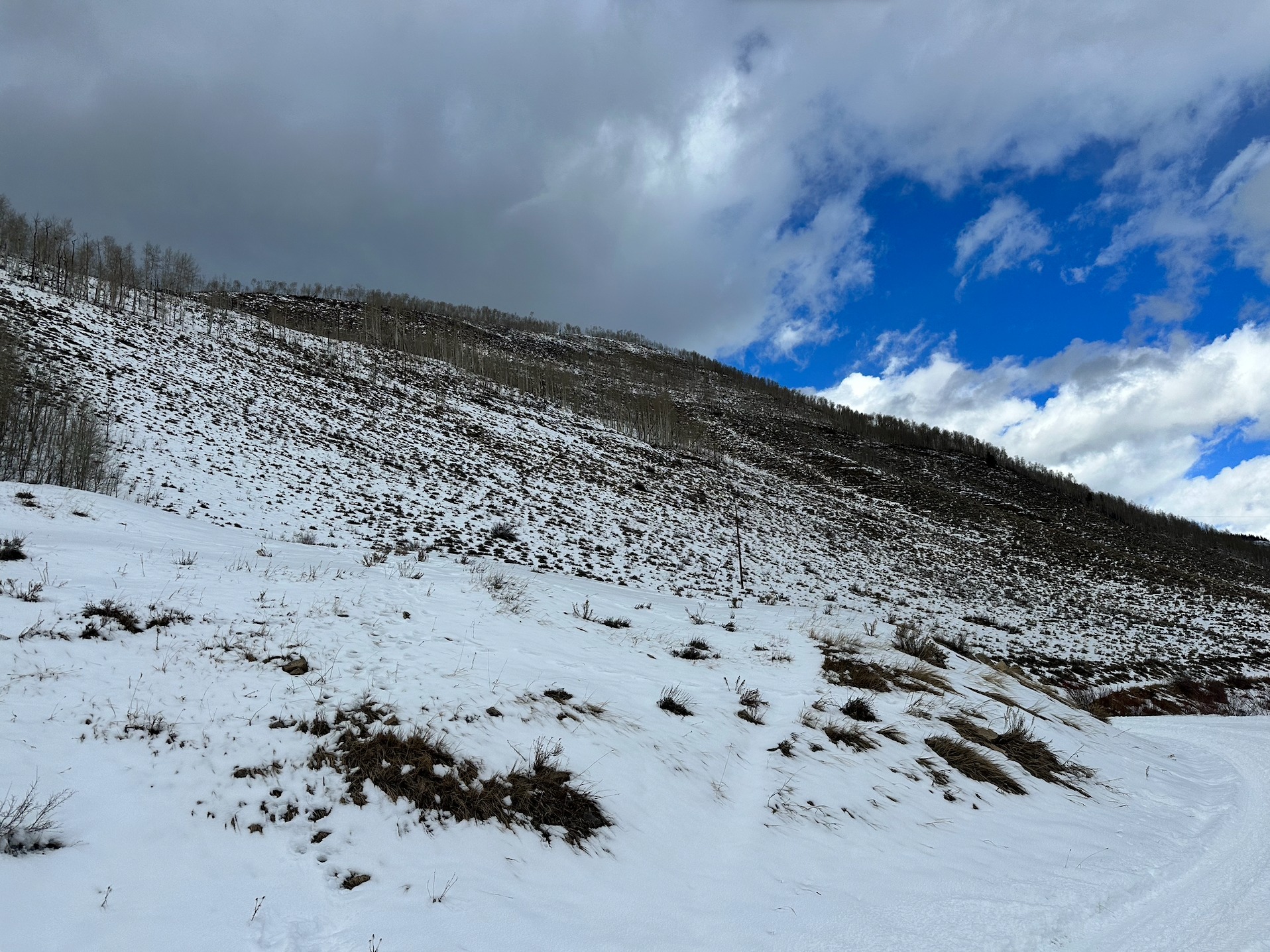
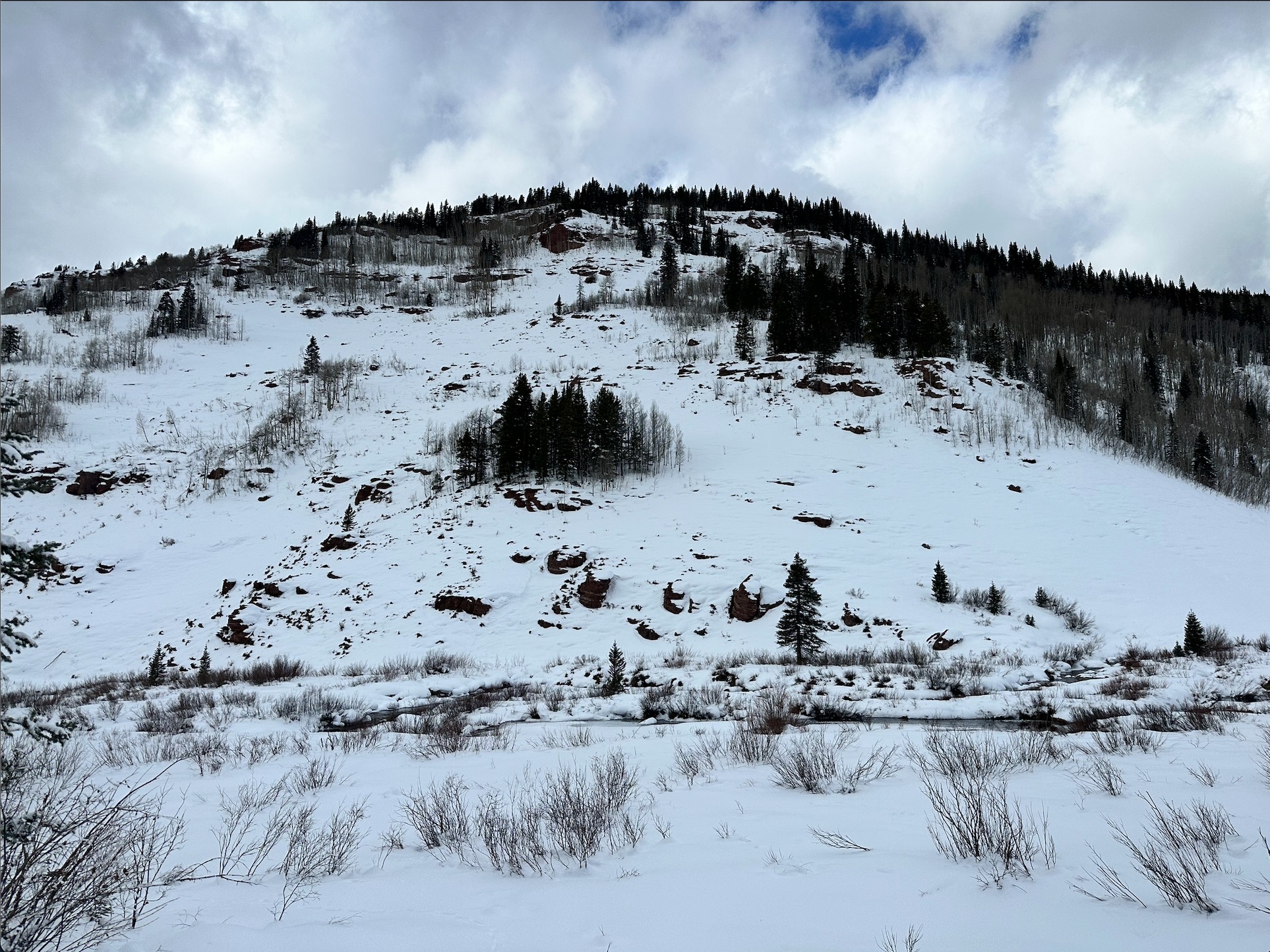
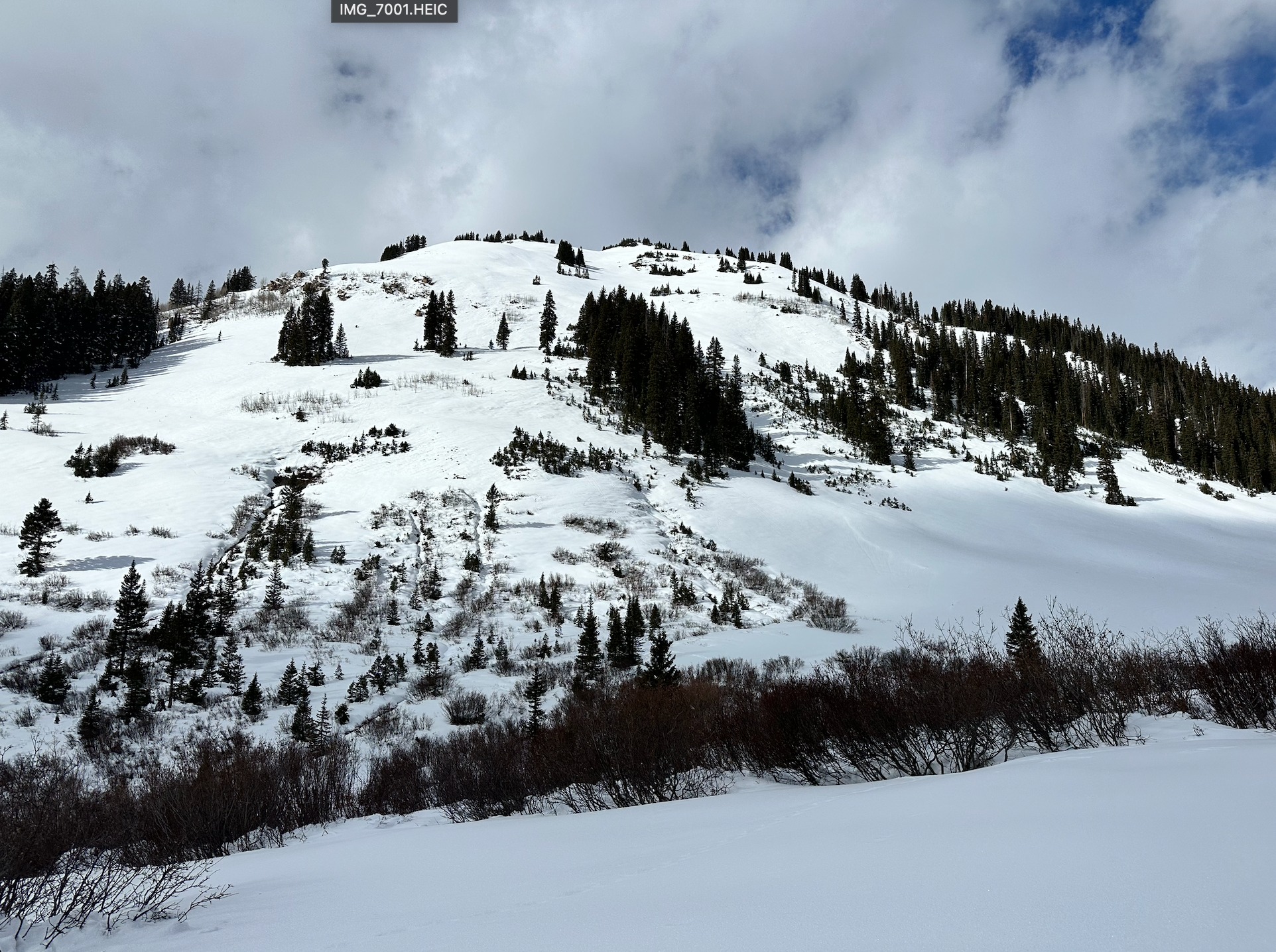
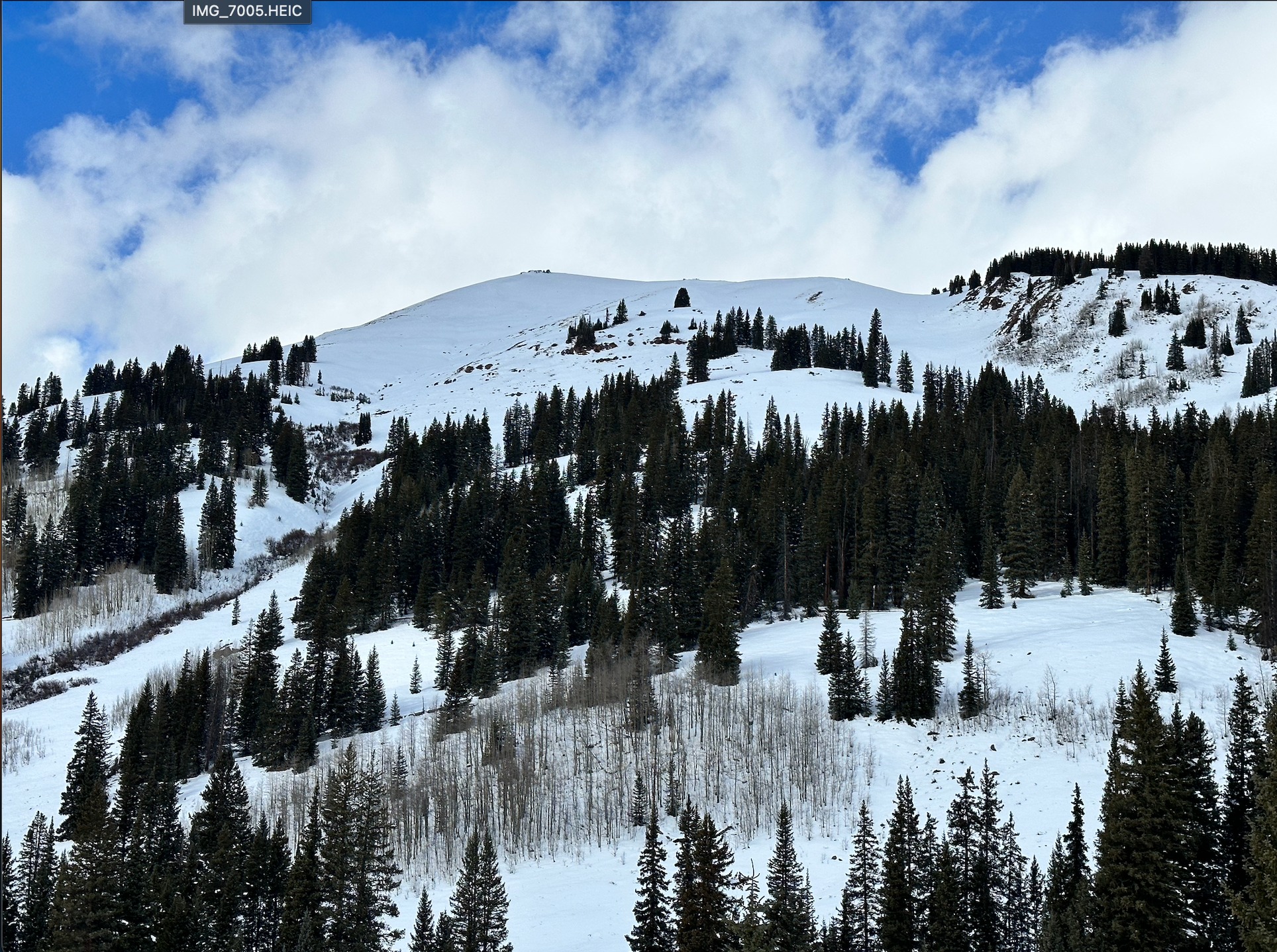
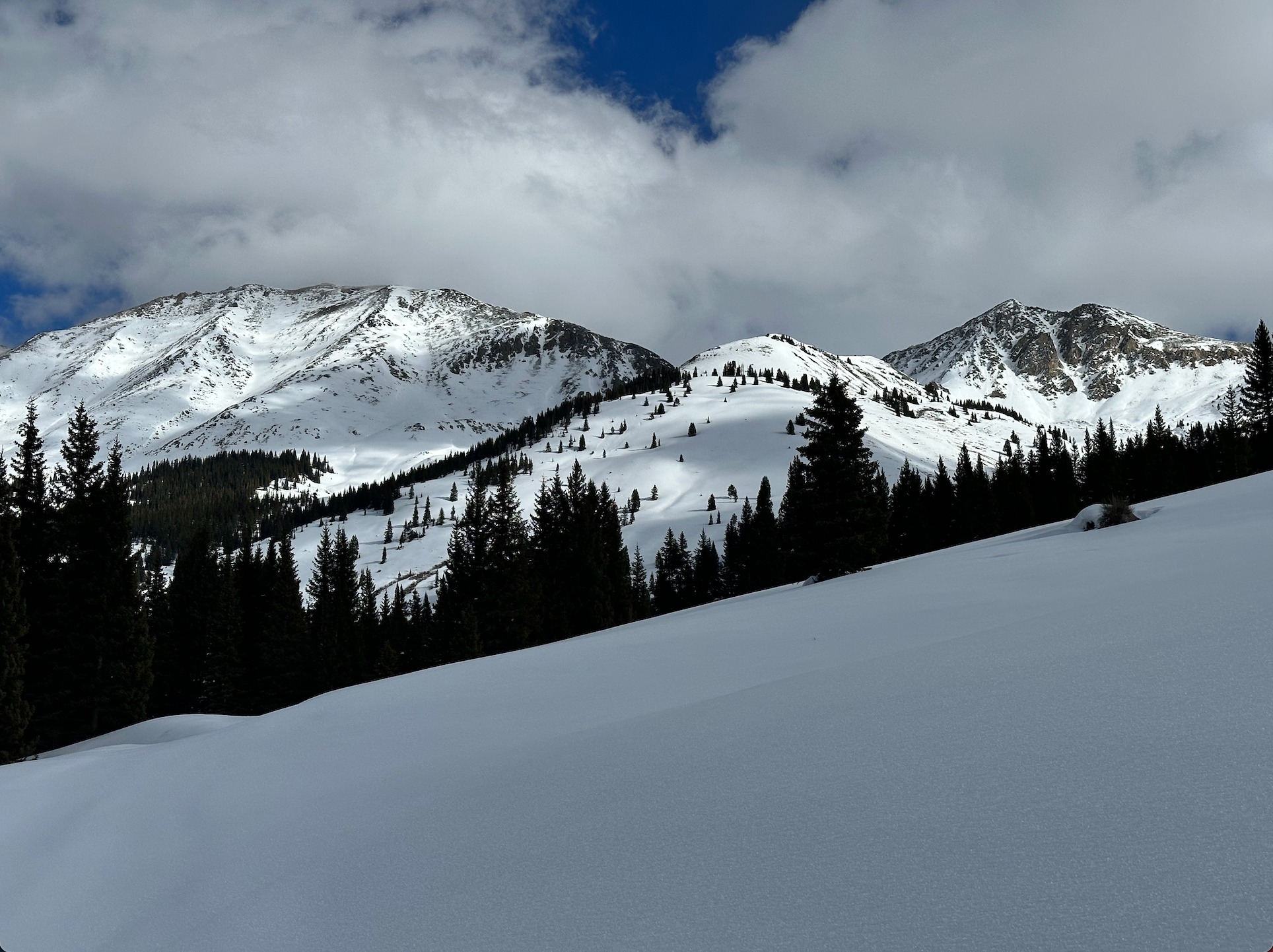
The snowpack in Cement Creek is weak and lacks much avalanche hazard below about 10,500 feet. Visually, Persistent Slab concerns appear on shaded aspects near and above treeline. There could be isolated places on west and southeast aspects with problematic slabs from wind-drifting and upper elevations. Potential avalanche size is notably smaller overall than the Northwest Mountains. Views toward the Elk Crest and the highest elevations of Brush Creeks look to have a deeper snowpack than Cement Creek (places like Upper West Brush Creek, Twin Lakes, and Castle Peak).
I was on my snowmobile following roads and it would have been unlikely to notice a small collapse. There was little chance to find slab structure below 10,500 feet.Snowpack
Snowpack below 10,000 feet remains shallow and weak on shaded slopes and a patchwork of dirt and crusts on sunny slopes. I did not encounter a slab in the snowpack on shaded slopes until about 10,500 feet near Italian Mountain (see image). At this location, there was a small amount of 4-finger hardness snow present in the snowpack; just enough to support my snowmobile for some delicate off-trail riding. Snow depths less than 60 cm were mostly a weak mess without cohesion. Surface Hoar up to 10mm was observed on the north half of the compass up to my high point of 11,250 feet.
Avalanche
- Size
- D1.5 R1
- Type
- SS
- Count
- 4
- Aspect
- NE
- Trigger
- N
- Elevation
- 11700 ft
A few recent avalanches were observed on upper elevation slopes in the Cement and Brush Creek area on northerly and easterly aspects. Previous winds and marginal visibility prevented me from identifying others as odd textures and faint lines suggest a handful more. Avalanche size in general is much smaller than the Northwest Mountains due to less snowfall. I suspect there were a few large natural avalanches in the Brush Creek corridor that I couldn't see, but the size was more commonly D1.5 in the eastern portions of the CBAC forecast area.