
Nebraska Notch
Quick report
- Cracking
- specific
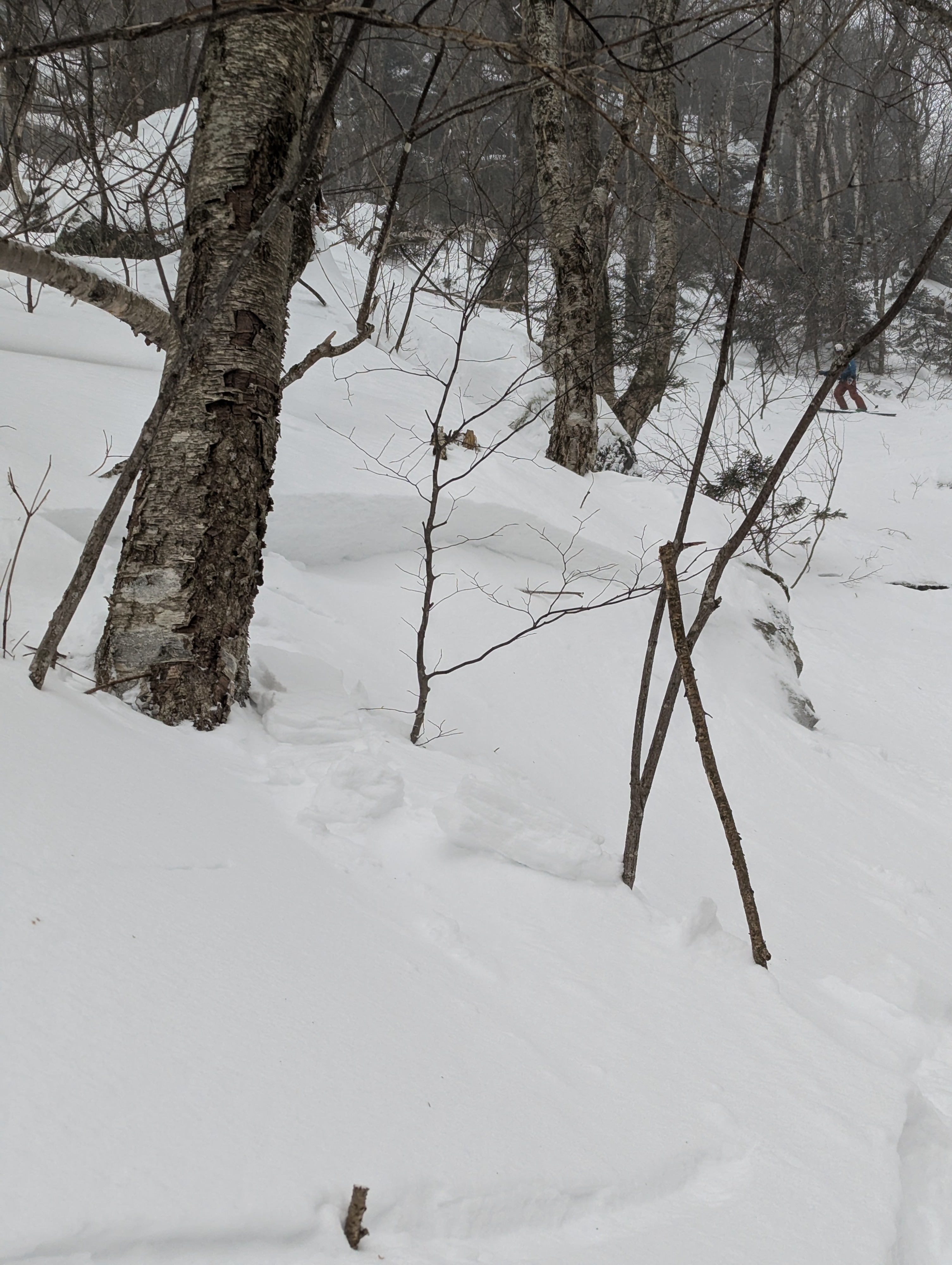
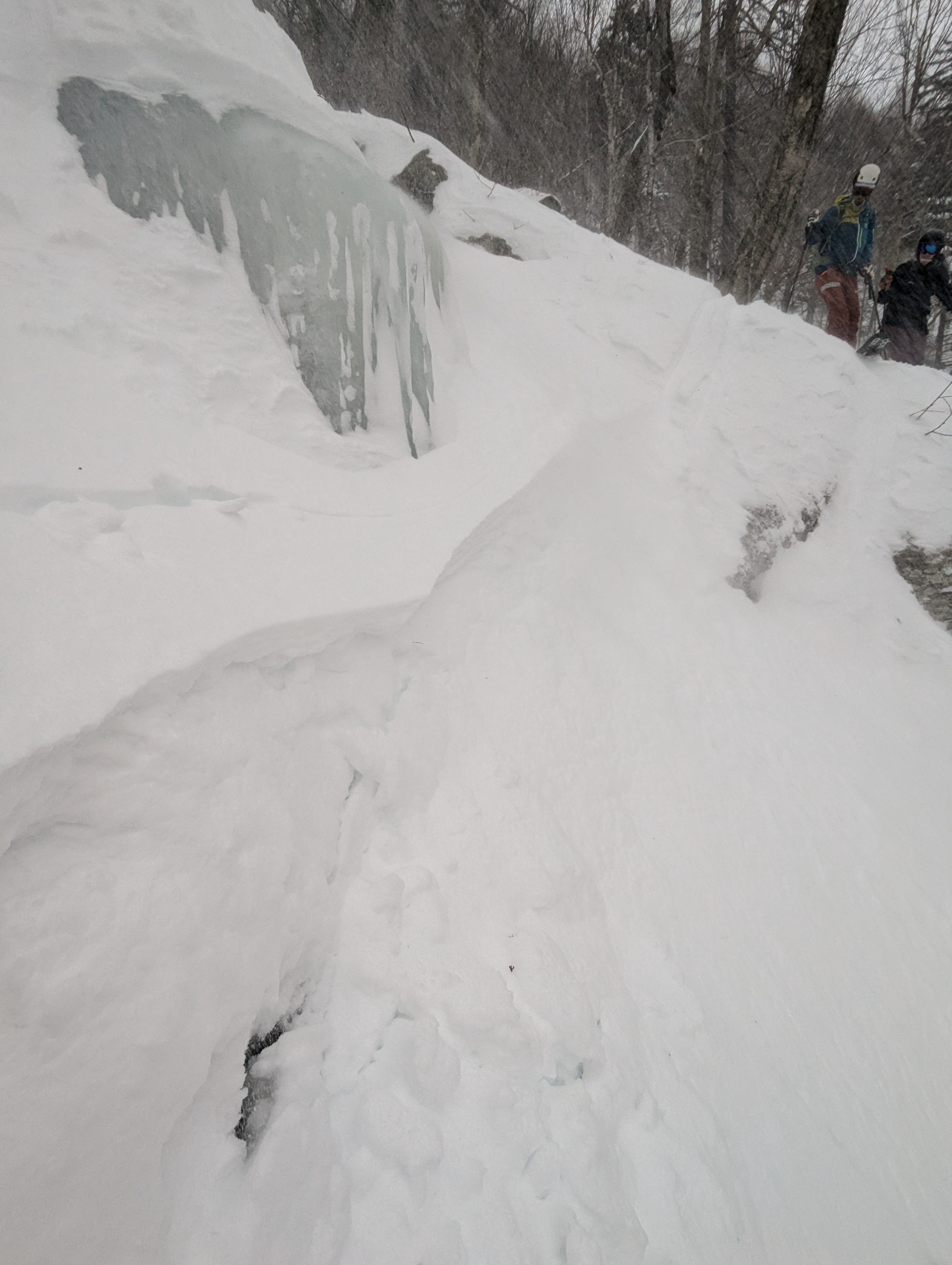
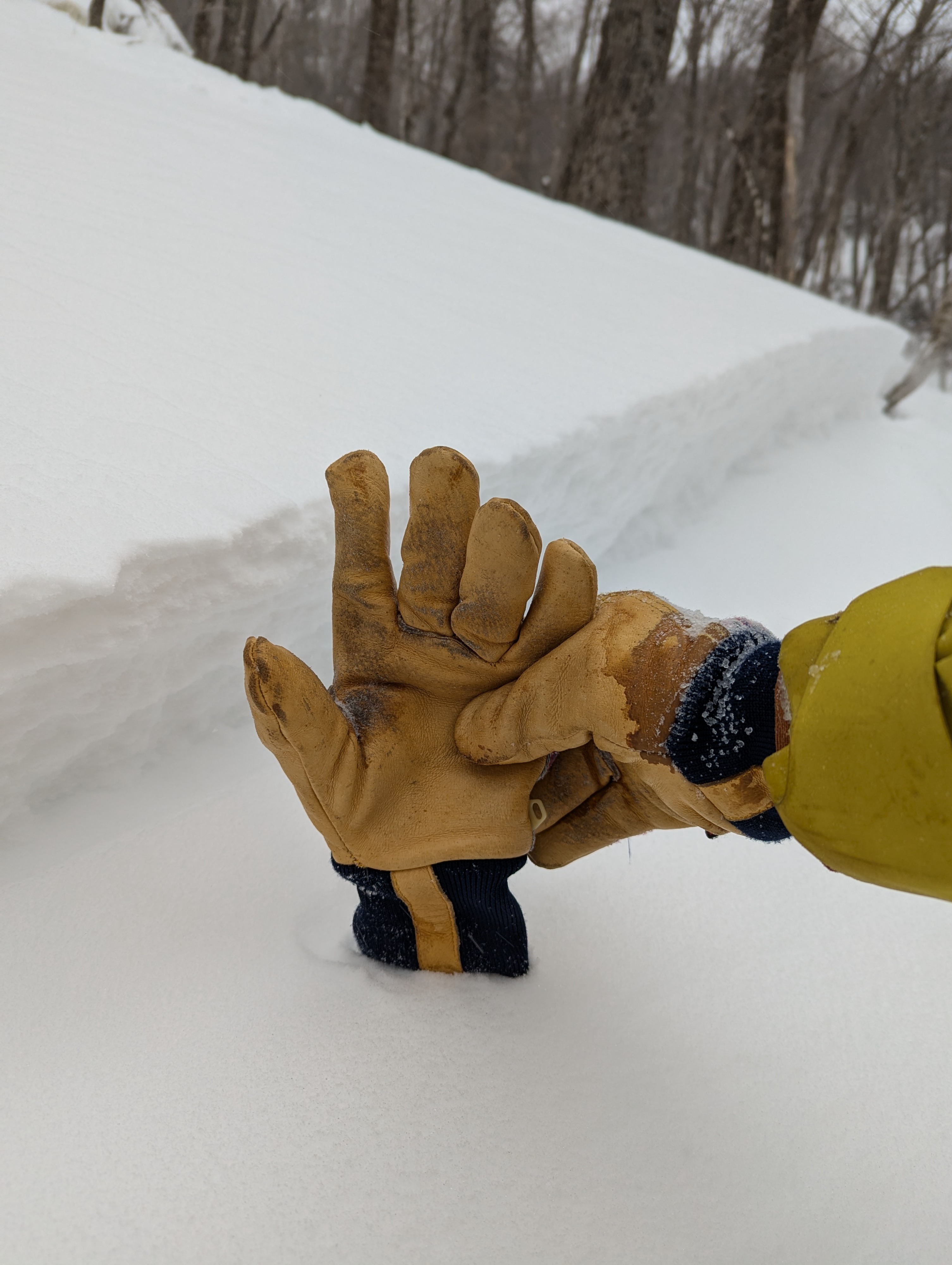
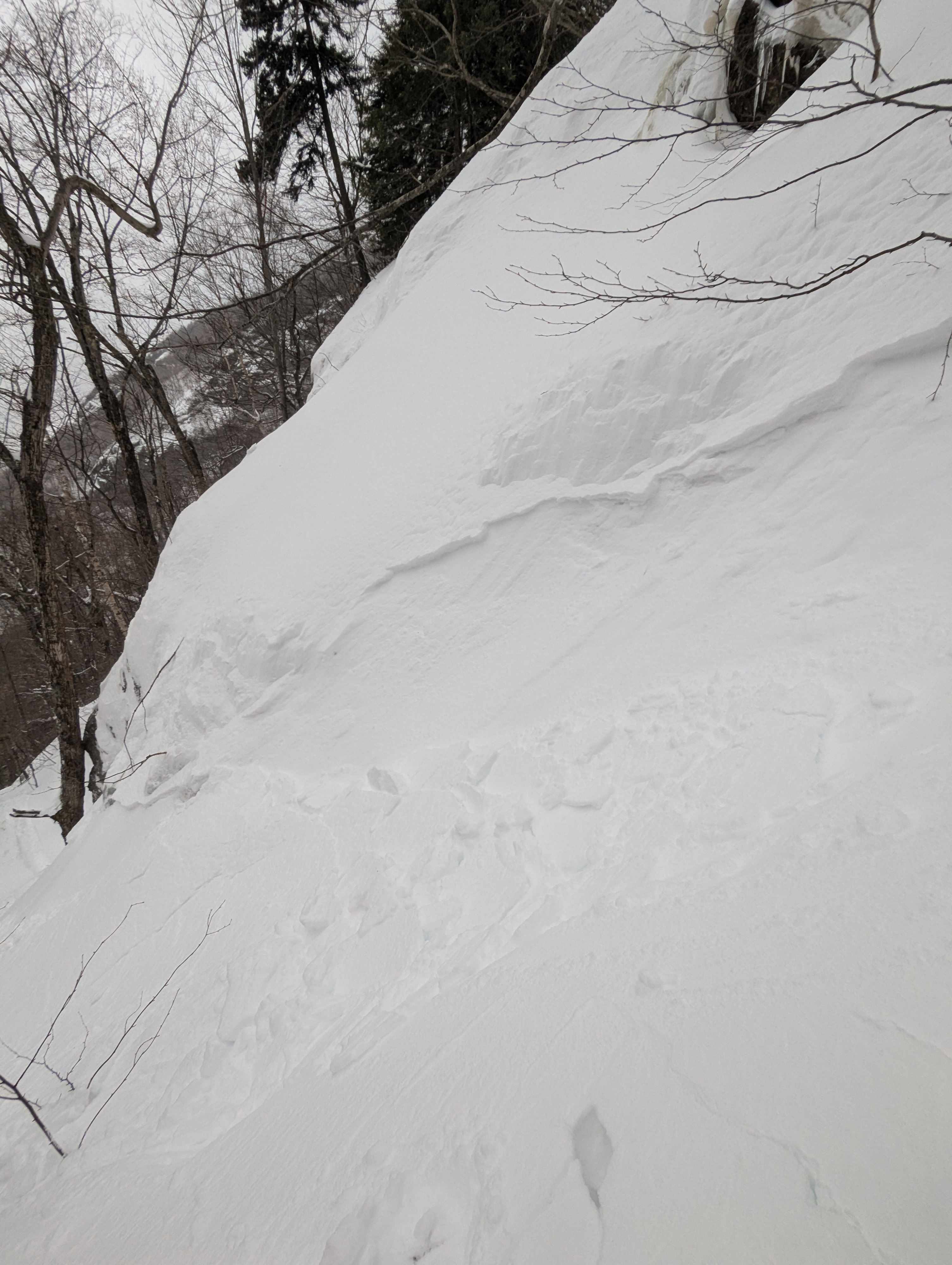
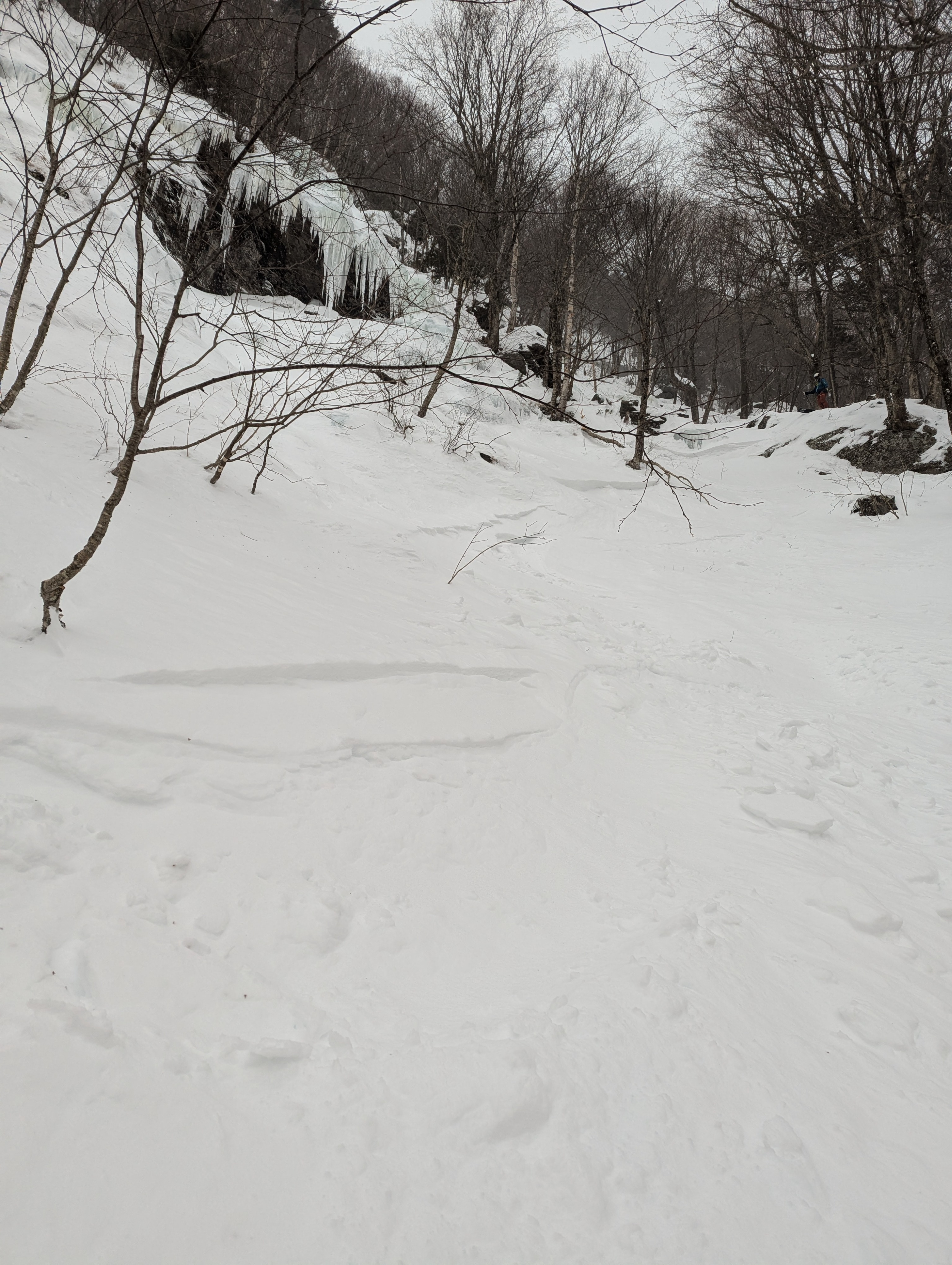
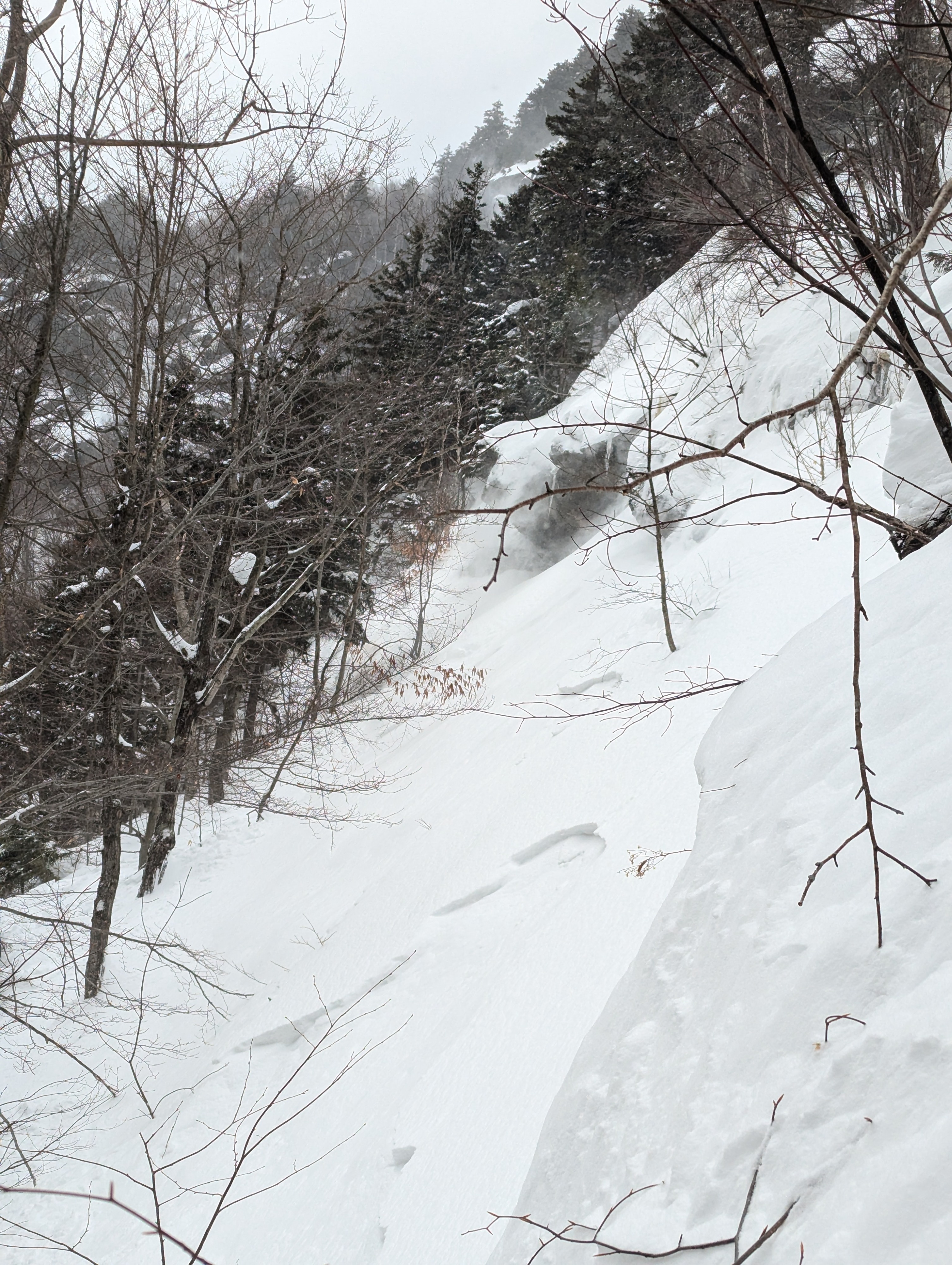
Freshly falling dense snow was being loaded by easterly winds on top of a wind affected layer from the previously (Thursday) strong southerly winds that had formed a firm and unbreakable wind board beneath. The newly fallen dense snow began with a brief period of very low density snow that would have bonded poorly creating a weak layer between that interface. This new snow is what cracked and avalanched, the thickness of the crown varying depending on the extent of wind transport but generally was 4-8". Slope cutting the top of the first drainage at ~2700' on a SW aspect (30-35°) lead to an avalanche that ran the pathway of the drainage pulling out sympathetic pockets as it descended to nearly the bottom of the gully around 1800' (D2, R3). The crown where the avalanche was cut was 4-6" of new dense snow. Descending the first drainage we exited to a second drainage to avoid a pending terrain hazard. The second drainage was also slope cut from the top at 2400' on a SW aspect (35-40°) which similarly triggered another D2, R3 avalanche although due to the shape and width of the second drainage being more broad it was able to gather more snow and energy. This broad nature meant this second drainage was less protected from the wind which was clearly audible overhead and the crown sizes increased to 6-8" with pockets of larger wind slabs being pulled out as sympathetic releases. Descending this drainage and exiting into the gladed area beneath it the third avalanche was triggered by a skier on low angle terrain traversing beneath a small steeper (40°) pitch. This third avalanche was at 2000' on a SSW aspect and did propagate laterally and uphill under some cliffs which had spindrift rolling off of them as a remote triggered slide (D1, R1). It had very little energy and did not descend past the immediate lower sloped terrain. Freshly falling dense snow was being loaded by easterly winds on top of a wind affected layer from the previously (Thursday) strong southerly winds that had formed a firm and unbreakable wind board beneath. The newly fallen dense snow began with a brief period of very low density snow that would have bonded poorly creating a weak layer between that interface. This new snow is what cracked and avalanched, the thickness of the crown varying depending on the extent of wind transport but generally was 4-8".
Weather
- Air Temp
- 23
- Cloud Cover
- overcast
- Recent Snowfall
- 20
Avalanche
Slope cutting the top of the first drainage at ~2700' on a SW aspect (30-35°) lead to an avalanche that ran the pathway of the drainage pulling out sympathetic pockets as it descended to nearly the bottom of the gully around 1800' (D2, R3). The crown where the avalanche was cut was 4-6" of new dense snow. Descending the first drainage we exited to a second drainage to avoid a pending terrain hazard. The second drainage was also slope cut from the top at 2400' on a SW aspect (35-40°) which similarly triggered another D2, R3 avalanche although due to the shape and width of the second drainage being more broad it was able to gather more snow and energy. This broad nature meant this second drainage was less protected from the wind which was clearly audible overhead and the crown sizes increased to 6-8" with pockets of larger wind slabs being pulled out as sympathetic releases. Descending this drainage and exiting into the gladed area beneath it the third avalanche was triggered by a skier on low angle terrain traversing beneath a small steeper (40°) pitch. This third avalanche was at 2000' on a SSW aspect and did propagate laterally and uphill under some cliffs which had spindrift rolling off of them as a remote triggered slide (D1, R1). It had very little energy and did not descend past the immediate lower sloped terrain.