
Quick report
- Cracking
- isolated
We rode up to Werner Peak to look for a previously reported avalanche and suss out buried weak layers in a windy location. New and recent snow and poor visibility made it so we weren't able to locate the reported avalanche. We spent the rest of the day hunting down buried surface hoar and testing it in a variety of ways.
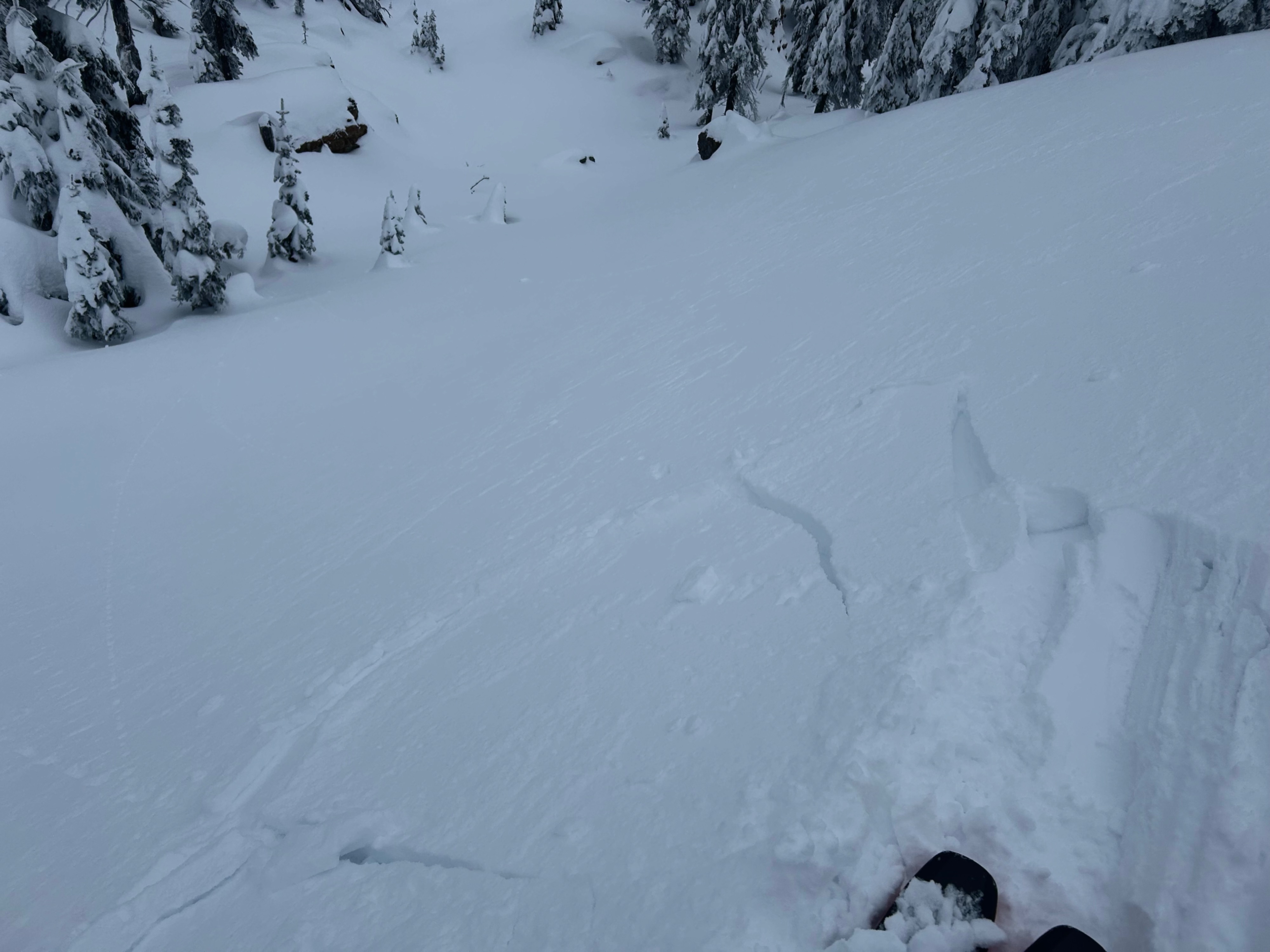
- 1 to 3 inches of recent snow drifted into thin slabs. We triggered a couple shooting crackes in the new snow.
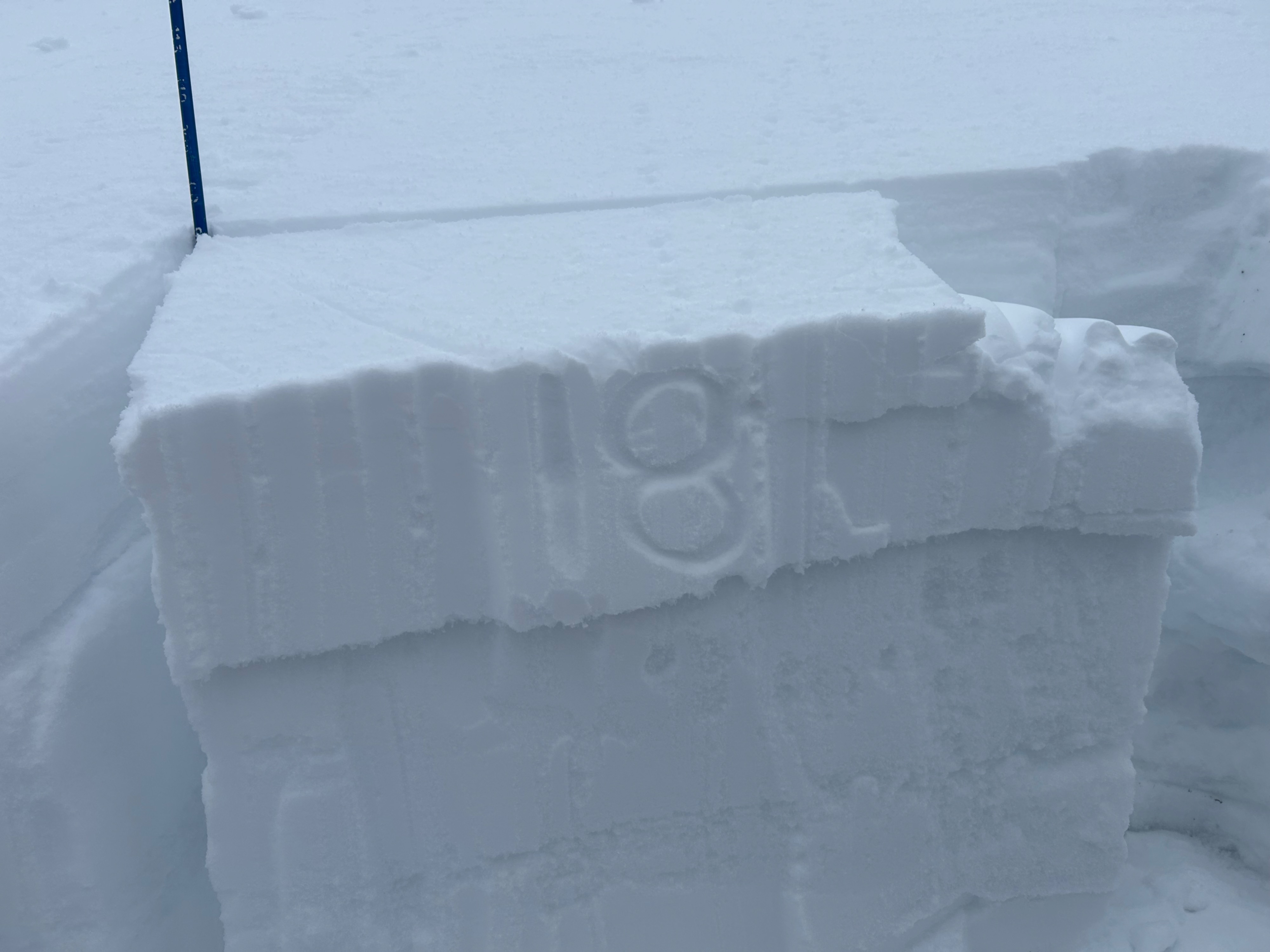
- We dug a few snowpits on a NE aspect between 6600' and 6900'. We got propagating results in extended column tests at all sites where we found buried surface hoar.
- The overlying slab in this location was harder than in other areas I've dug. I suspect this made the layer more prone to propagate in snowpit tests.
- We ski cut a few small test slopes and got no results on weak layers deeper in the snowpack.
- No signs of recent avalanche activity.
Weather
- Cloud Cover
- broken
- Wind Loading
- light
- Recent Snowfall
- 4
- Snow Avail For Transport
- small smounts
Broken cloud cover trending to overcast with light showers starting ~1400, accompanied with a light easterly wind.
Snowpack
Multiple pits and extended column tests on NE slopes (6600-6900') showed propagating results from medium force about 12" below the snow surface. These failed on a surface hoar layer that was buried on 12/7. Near the ridge on the leeward side (NE), this surface hoar layer was non-existant due to wind affect. We dug again approximately 20 meters down the slope and found it preserved and standing tall. This illustrates the spatial variability of surface hoar.
Here are test results from 2 different snowpits. These all failed on surface hoar layer 8 to 12 inches below the surface. :
ECTP11 X 3. ECTP18 X 1
PST 30/100 Arr (on surface hoar layer).
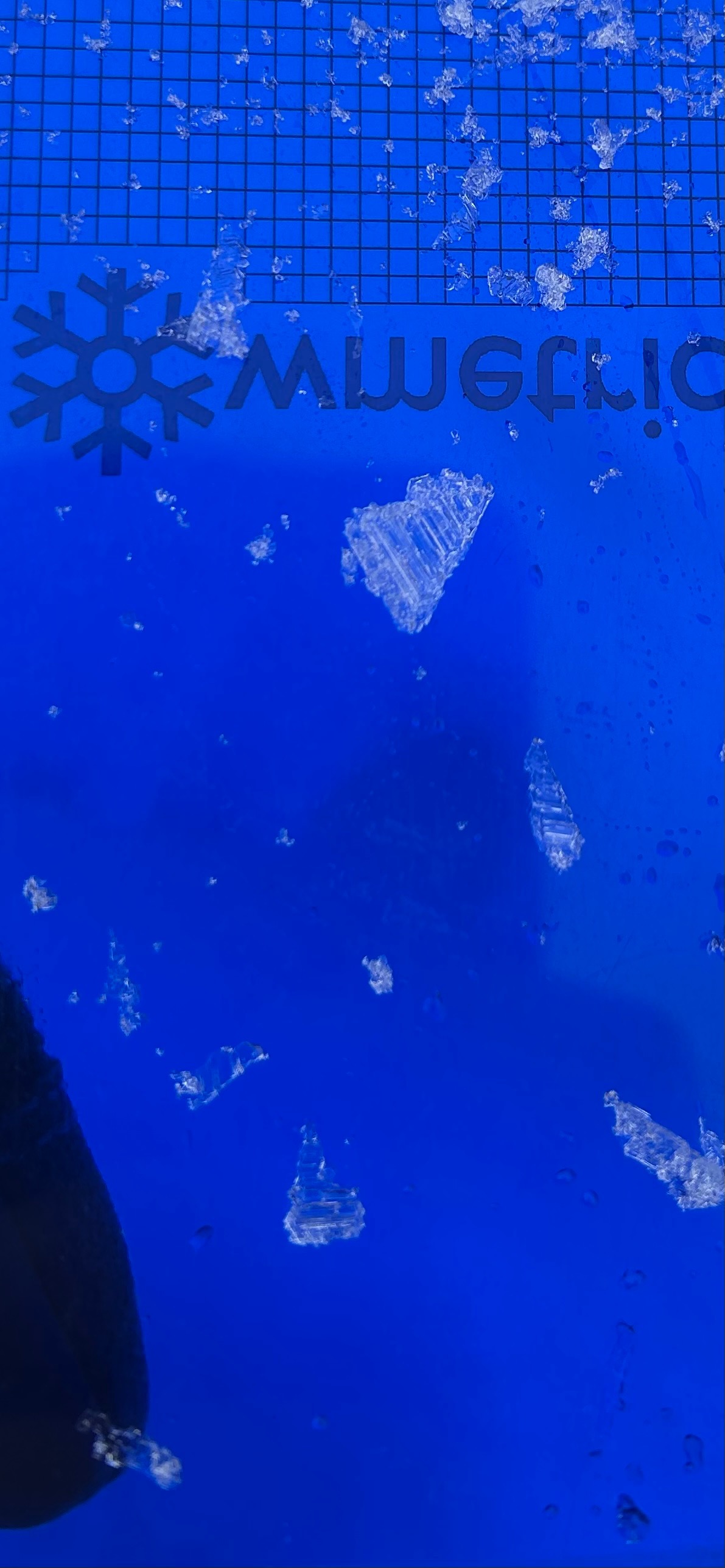
We found two persistent weak layers in the snowpack. 10 to 15 mm surface hoar and 1-2 mm facets above the AR crust.