
Quick report
- Collapsing
- isolated
Used visual clues to identify where wind slabs had built up on steep slopes and avoided these areas. Looked for softer snow conditions keeping in mind that more protected terrain with slopes greater than 30 degrees could have buried weak layers. Maintained wide safety margins to limit exposure by spacing out traveling uphill, riding one at a time keeping eyes on going downhill, and posting up in a safe zone away from potential run-outs.
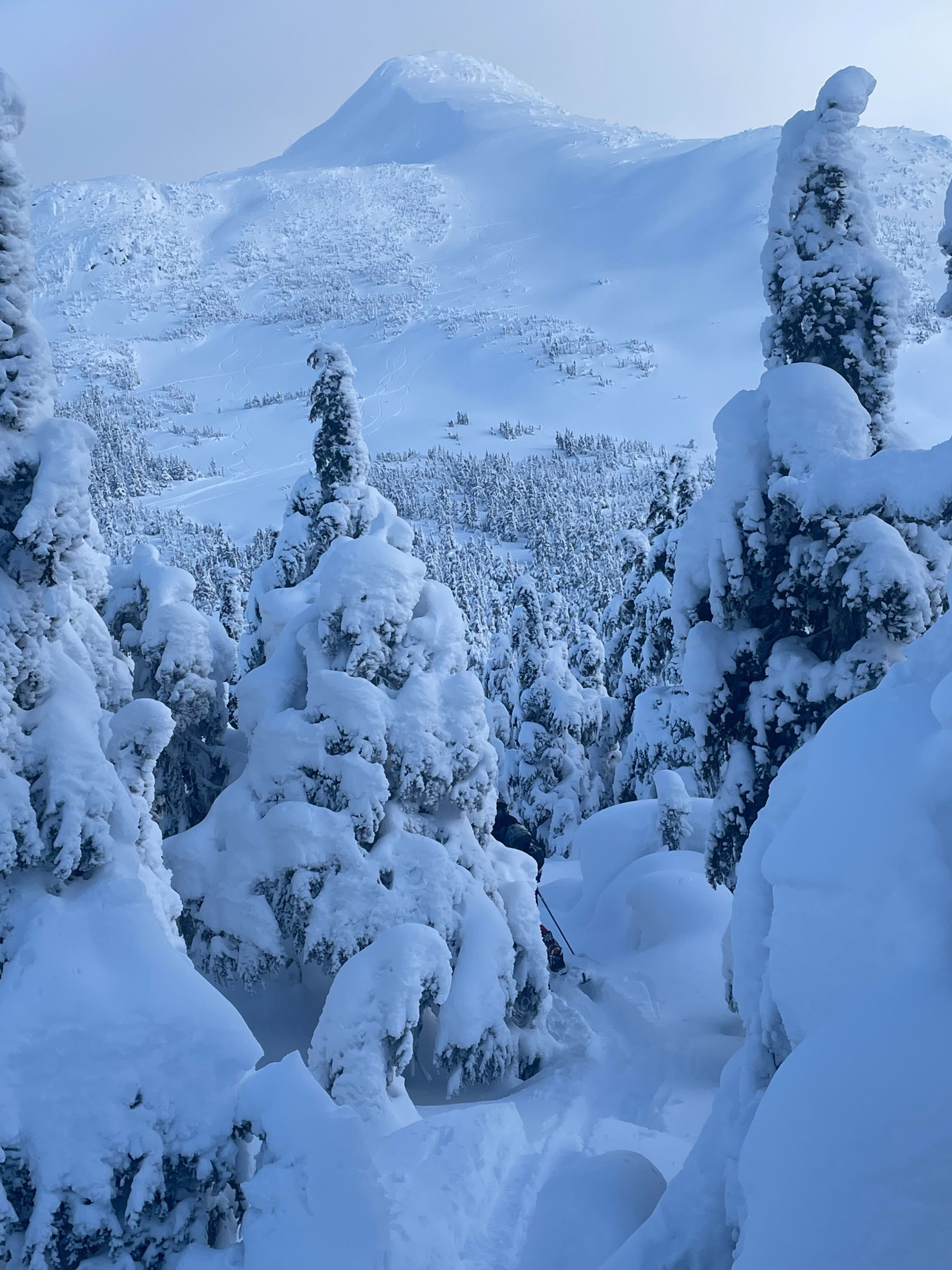
A few collapses and settlements in forested terrain on the saddle with one larger whumph in a flat meadow. Suspected that a layer of surface hoar below the new snow was the culprit.Weather
- Cloud Cover
- few
- Wind Loading
- previous
- Recent Snowfall
- 20+
- Snow Avail For Transport
- small smounts
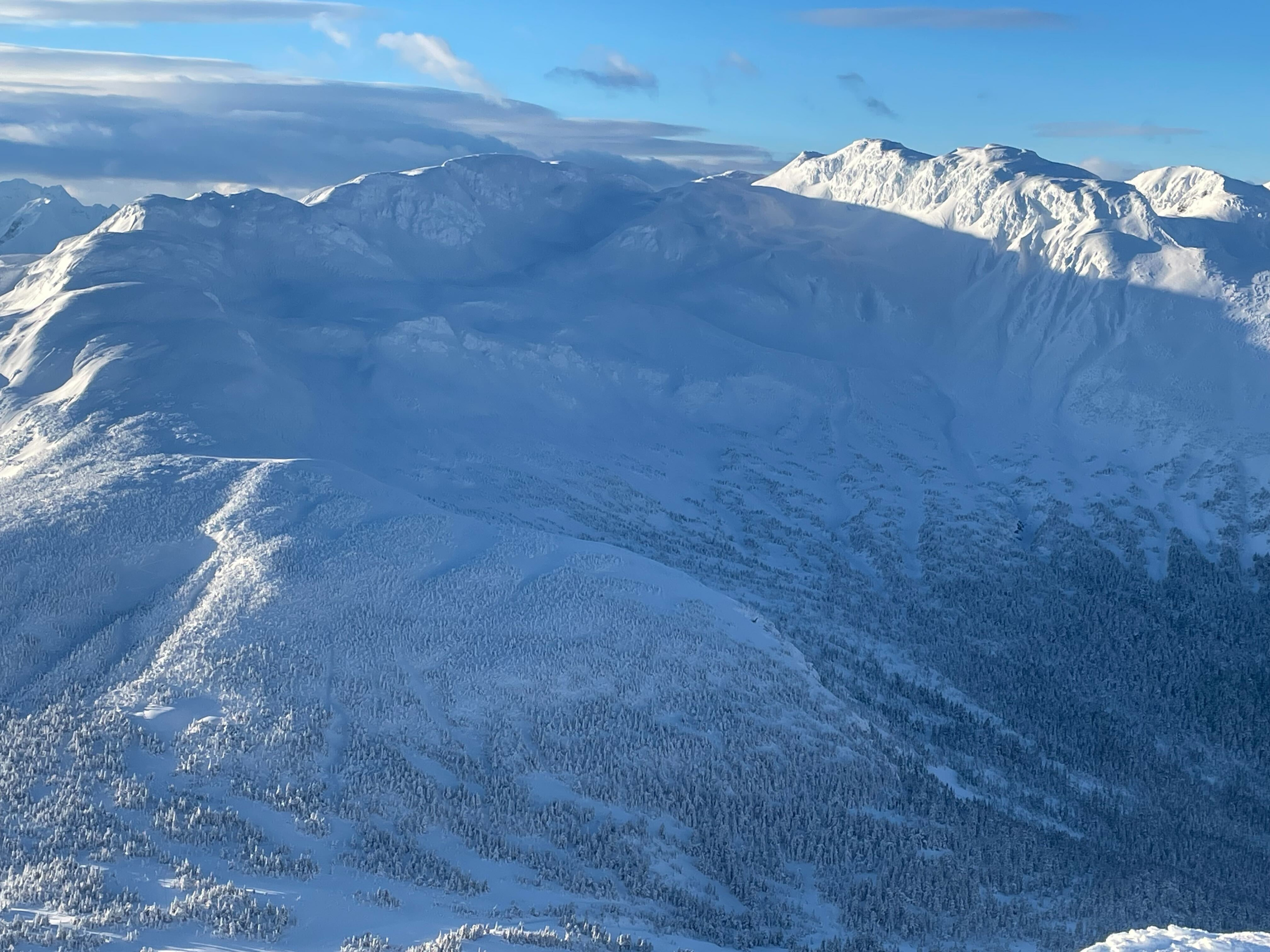
Clouds cleared throughout the day. Winds were light and variable. Saw snow blowing off faraway peaks. Valley seemed to have an inversion.
Snowpack
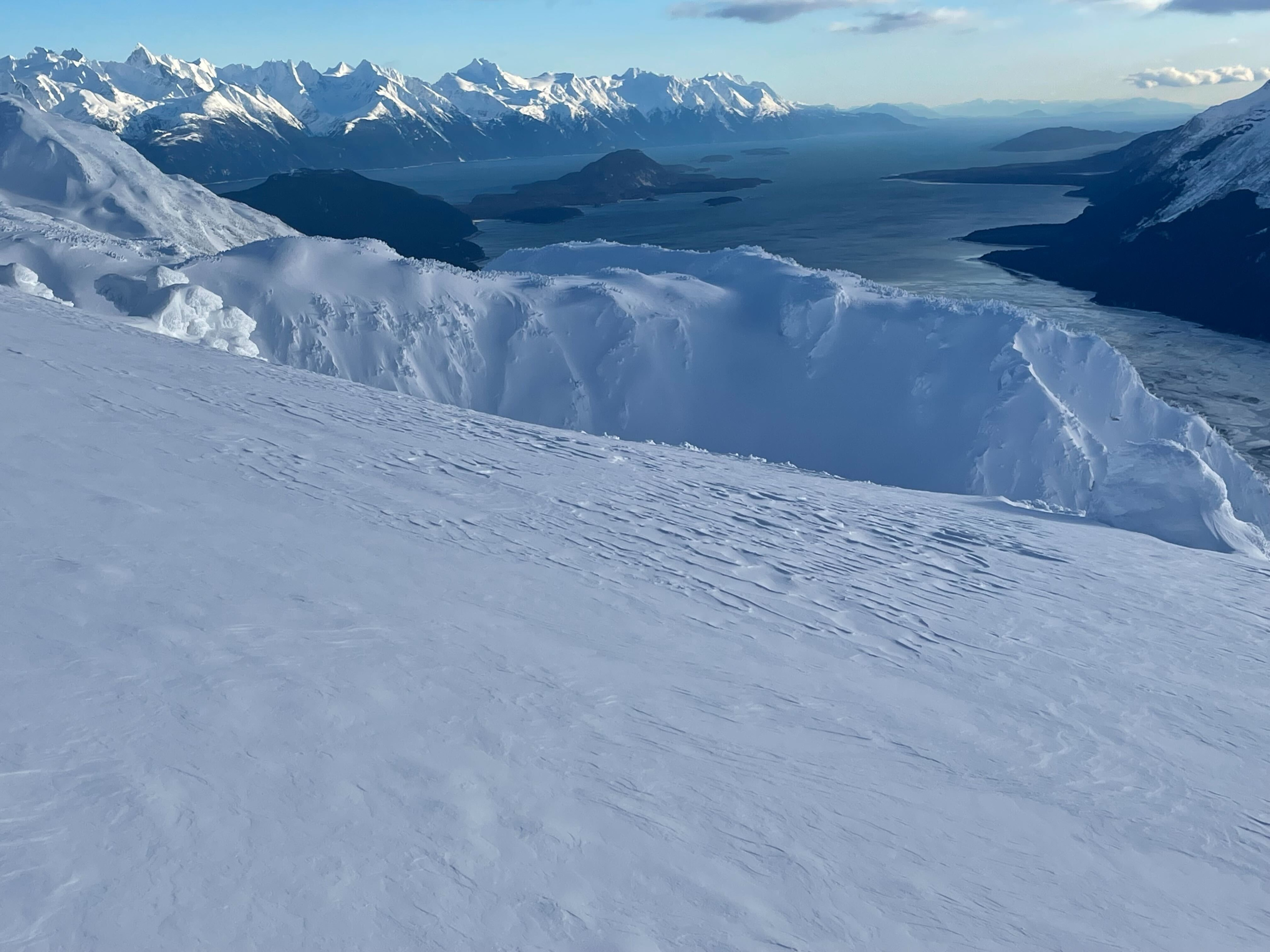
It was easy to tell where there were wind slabs because the snow looked more textured and was firmer. You would go from soft snow up to harder snow and then you knew you were on a slab. Since the new snowfall from Jan. 30th came in with cold temperatures and then was blown around by the northerly winds. These wind slabs could take some time to heal and become harder to trigger. However, the freshly blown-in tracks showed us that snow had been actively loading, even from the previous day and those wind slabs may be easier to trigger.