

Quick report
Encountered a variety of wind affected snow along the entire route. Wind slabs existed on the lee side of terrain features with varying depths of 4 inches-2 feet and were pencil hard with low sensitivity. Deeper wind slabs definitely exist on lee slopes with a large windward fetch. Wind slabs did not exhibit signs of instability and showed signs of gaining strength.
Pit results at 3500'/NE in a wind protected area produced ECTN14 down 20 cms and ECTN 22 down 35 cms with the new/old interface 50 cms down repeated 2x. A quality 2 shear was identified down 70 cms but did not react in stability tests and a persistent grain type was not present. HS 240 cms
Pit results at 5000'/N on a wind affected slope produced moderate results on ECT test with no propagation down 20 cms consisting of wind slab at the surface. HS 430 cms
Good structure and strength was evident in both pits below recently formed wind slabs digging down 130cms in each pit.
Weather
- Air Temp
- -15
- Cloud Cover
- clear
- Wind Loading
- previous
- Snow Avail For Transport
- small smounts
Clear and cold with strong inversion in place. -15 at the road and 20 above at 4200'. Light North winds in most places with moderate to strong winds in exposed spots.
Snowpack
Mid and upper snowpack shows good strength and structure. The primary concern revolves around the possibility of triggering old wind slabs and the unlikely possibility of triggering a slide that steps down to the ground at upper elevation.
Avalanche
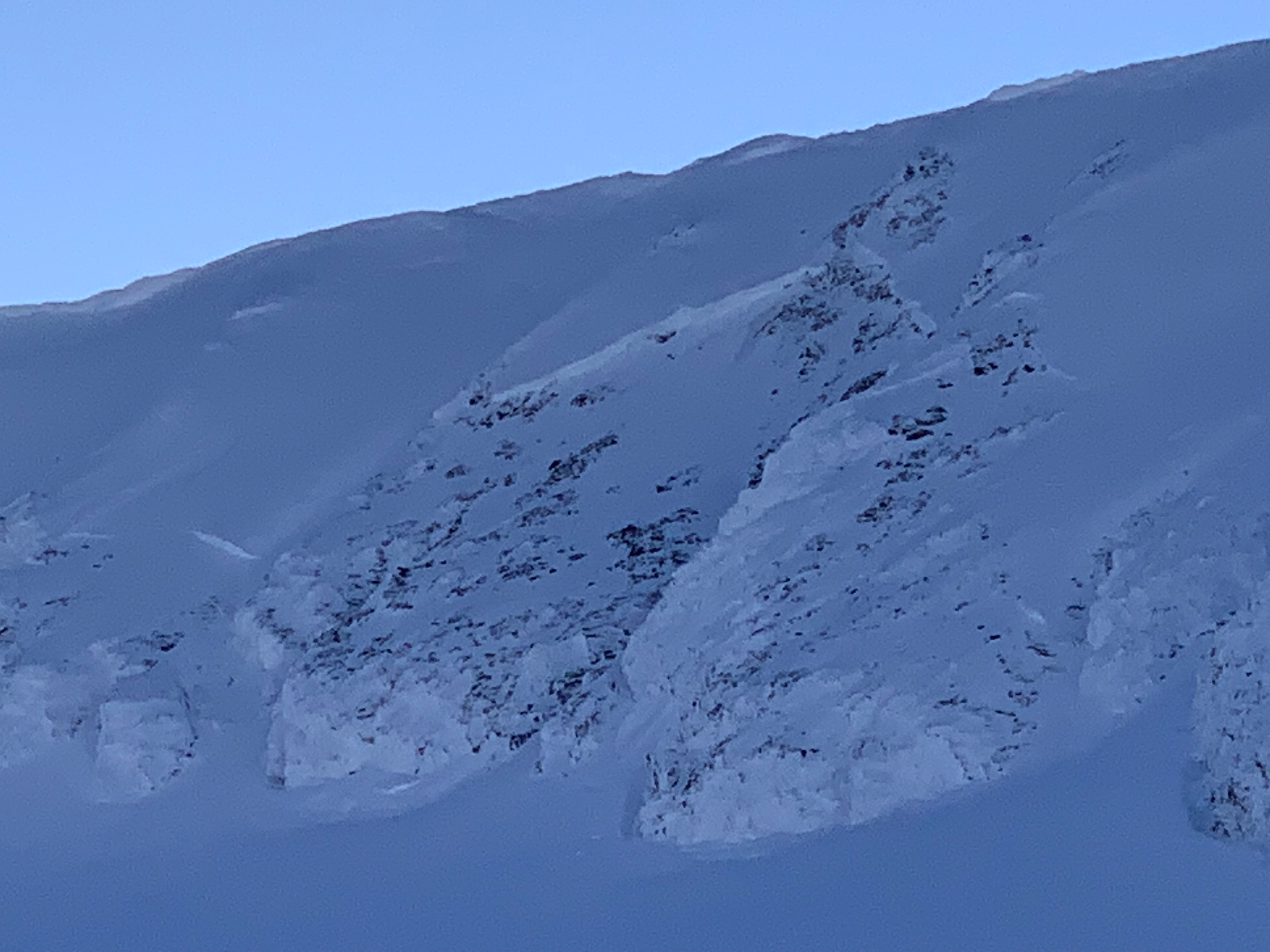
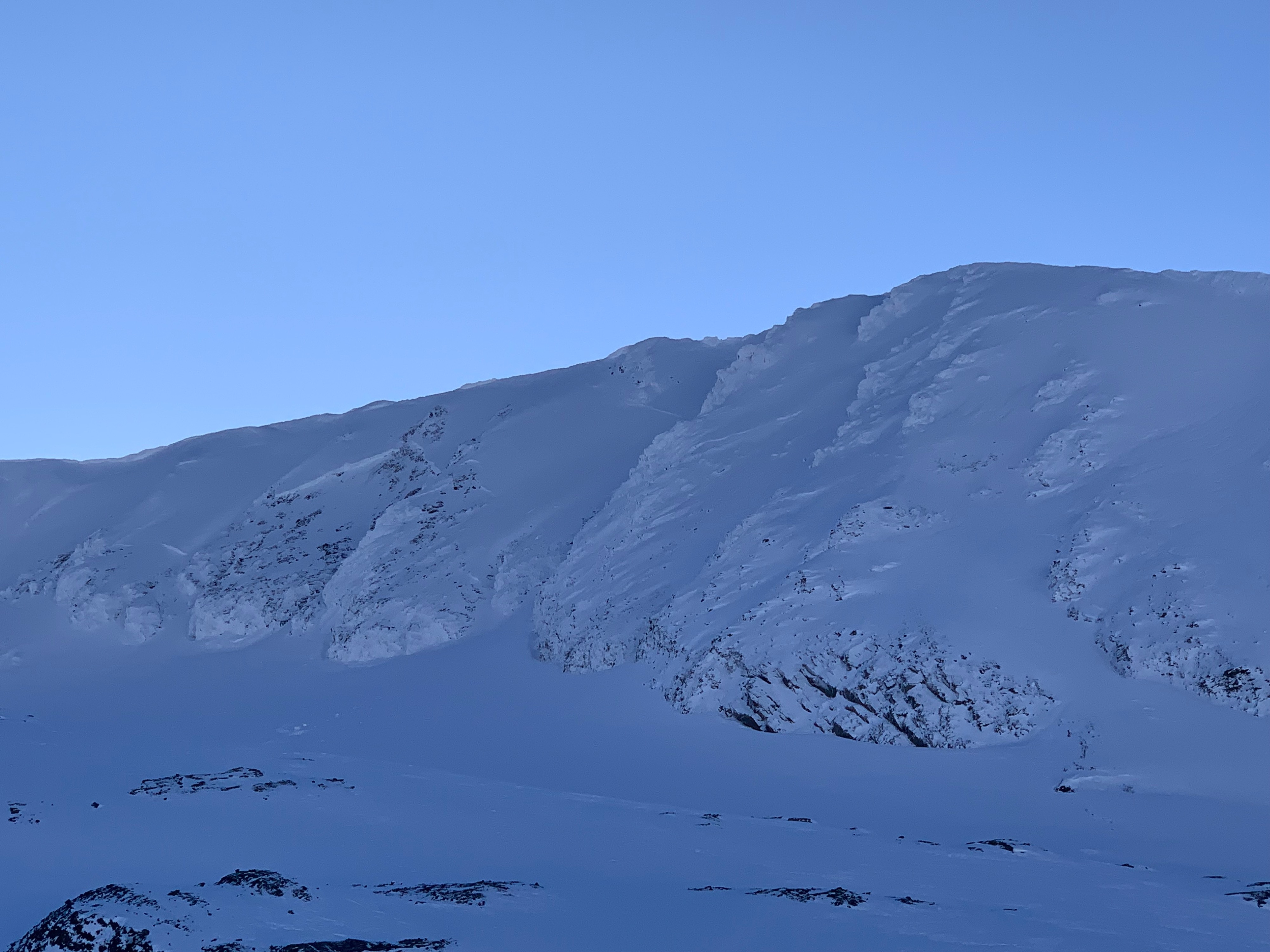
A few deep slab avalanches that were triggered by the late January wind event were observed along the Thompson Pass corridor with the most significant slides at upper elevations. Numerous D2-2.5's were present as well. Deep slab activity: Sapphire /East aspect HS-N-R4-D3.5 Berlin Wall/NE aspect HS-N-R2-D3 Python/W aspect HS-N-R2 D2.5