
Quick report
- Cracking
- specific
- Collapsing
- specific
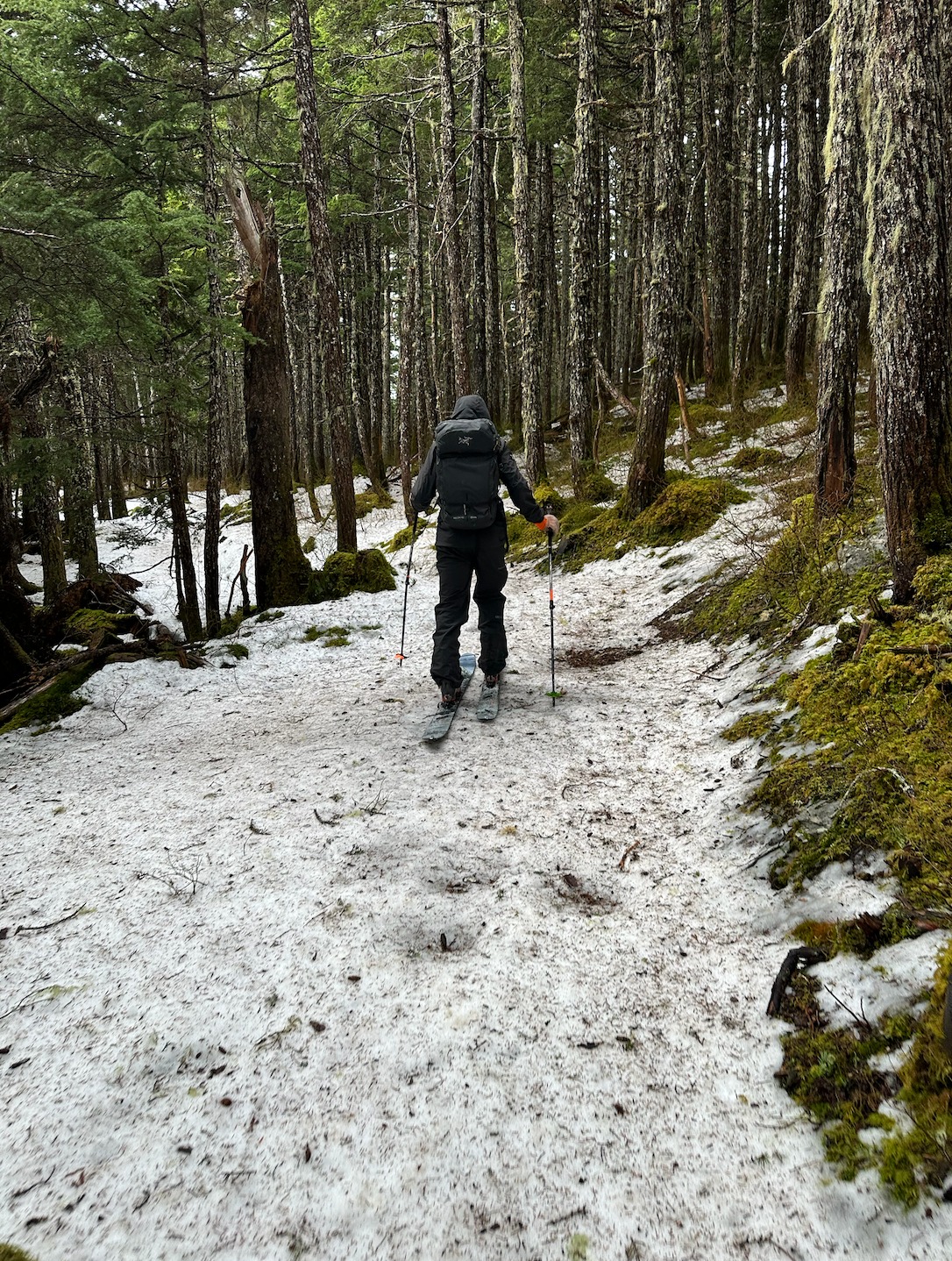
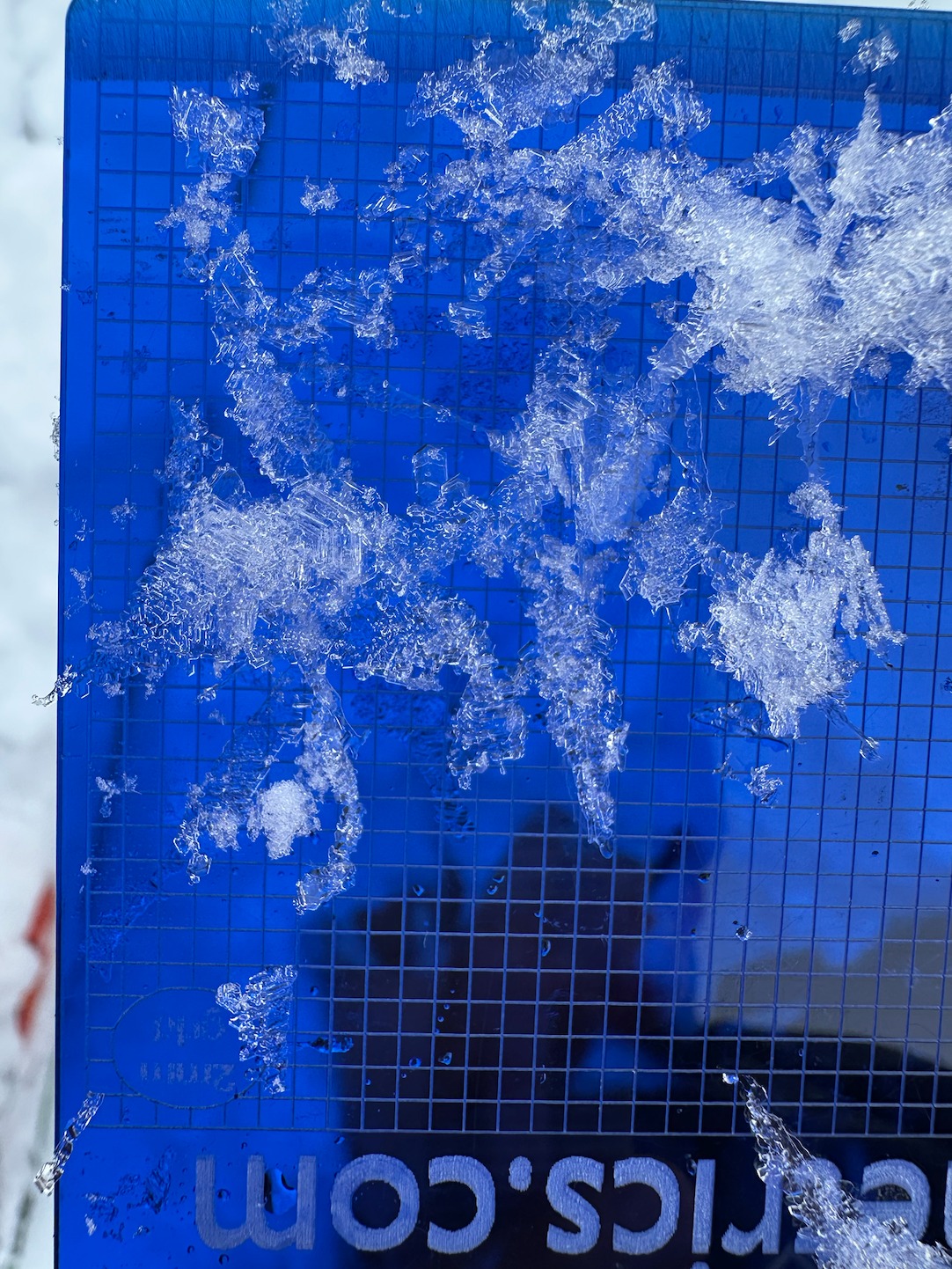
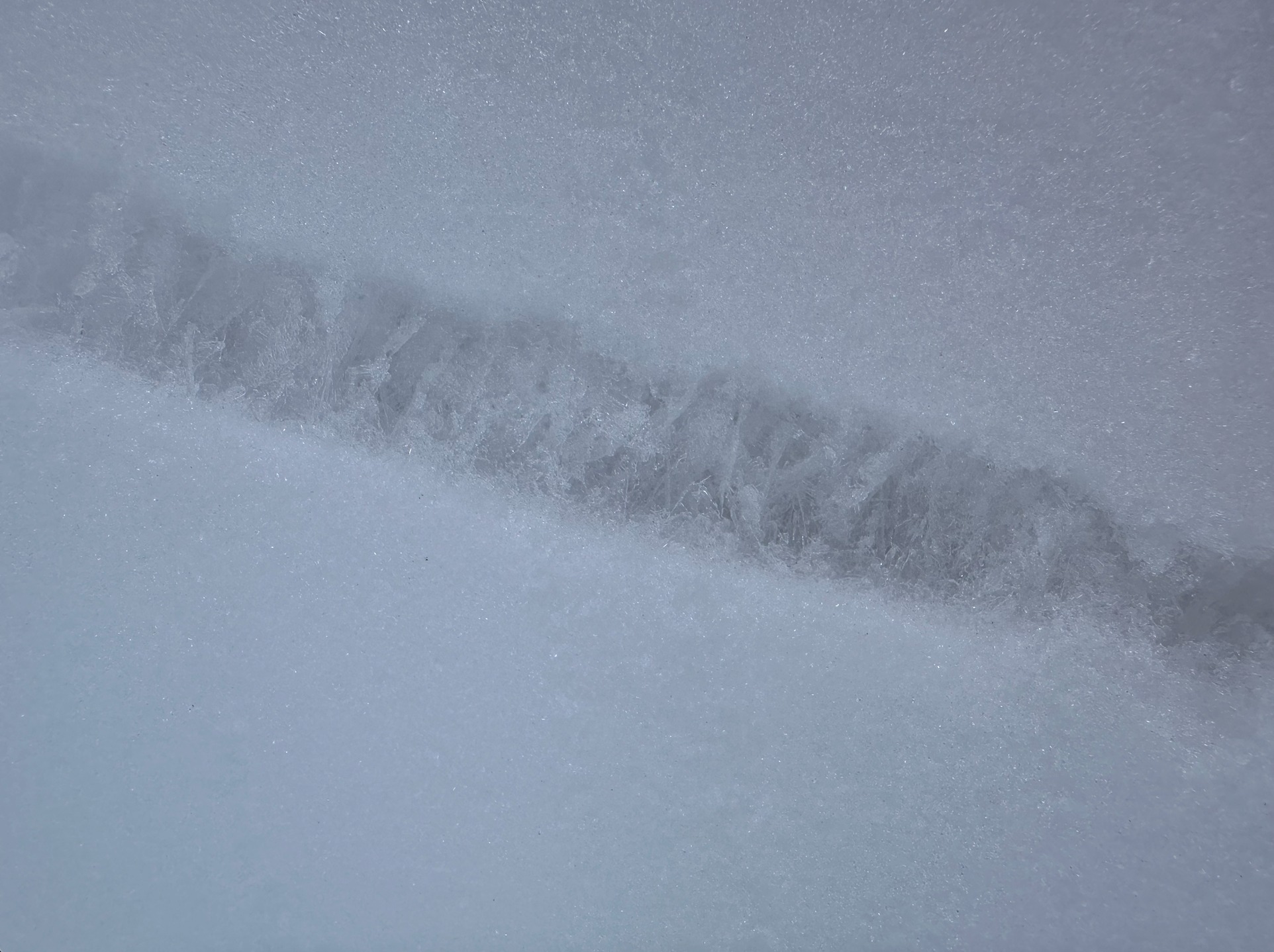
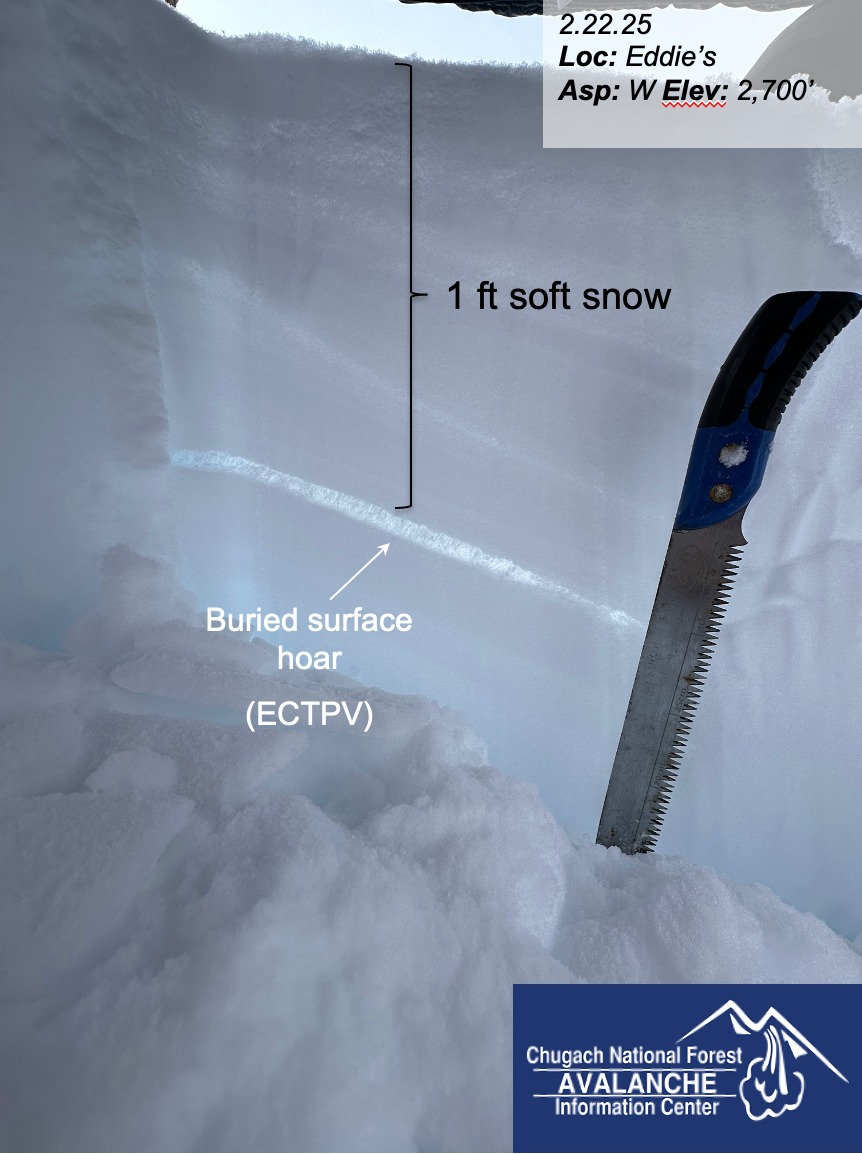
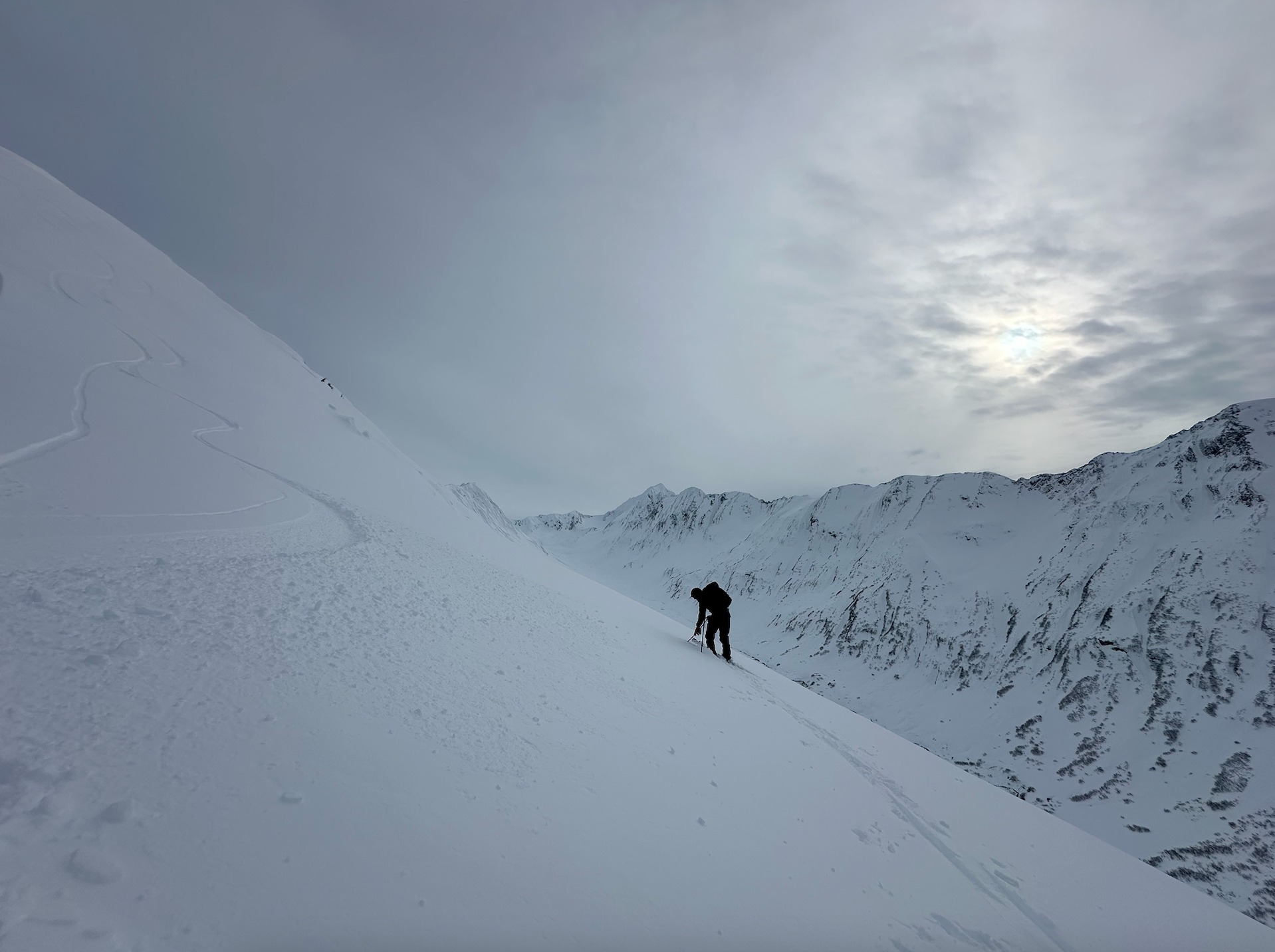
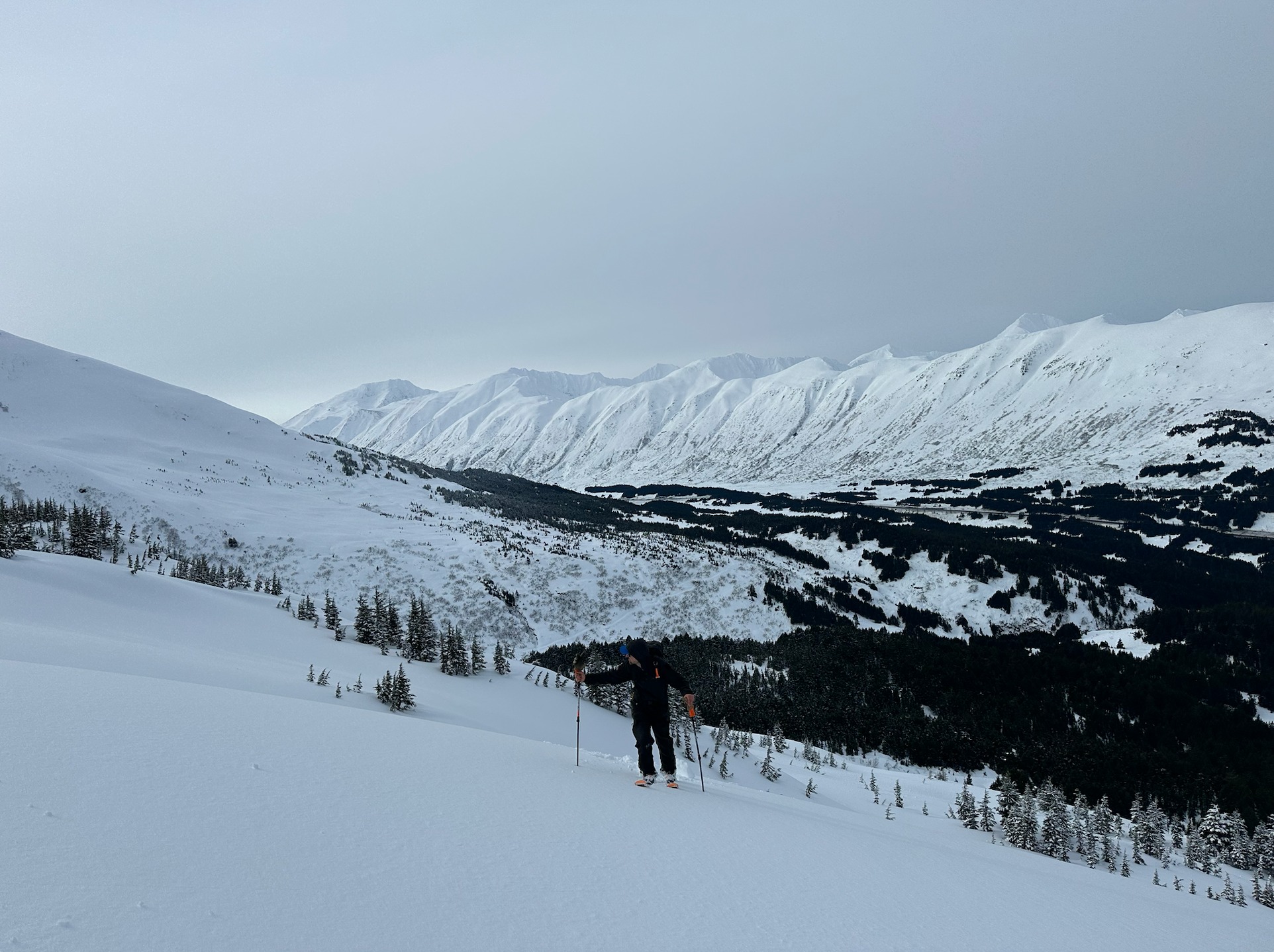
We toured up Eddie's to look at the distribution and sensitivity of the weak snow that developed during the early February dry spell. Above 1500' we consistently found a layer of surface hoar buried 10 to 12" deep that was very reactive in our tests. Looking forward, this will be an important layer to track since it has the potential to make large avalanches. A persistent weak layer can take a lot of time to heal and is difficult to predict in terrain, for now, it is important to be cautious with the terrain we're using.
Observed several collapses while skinning up on the layer of buried surface hoar ~30 cm down, above 2000'.Weather
- Cloud Cover
- broken
- Rain Elevation
- 1500
- Snow Avail For Transport
- moderate amounts
High clouds and great visibility with light winds throughout the day.
Snowpack
From the road up to 1000' the snowpack was old wet snow. From 1000 to 1500' the snow was moist with a 5 cm thick melt-freeze crust on the surface. Above 1500' the snow transitioned to dry as the rain transitioned to snow during the recent storms.
In a dozen hand-pits, we consistently observed two weak layers in the top 12 in of the snowpack that were very reactive, failing upon isolation. In a hand-pit on the wind-scoured side of a ridge, we did not find either of these layers, which suggests that these layers have been preserved in wind-protected terrain.
Avalanche
Several remotely triggered avalanches and cornice failures were reported today from the motorized side of the pass.