
Quick report
- Cracking
- widespread
- Collapsing
- widespread
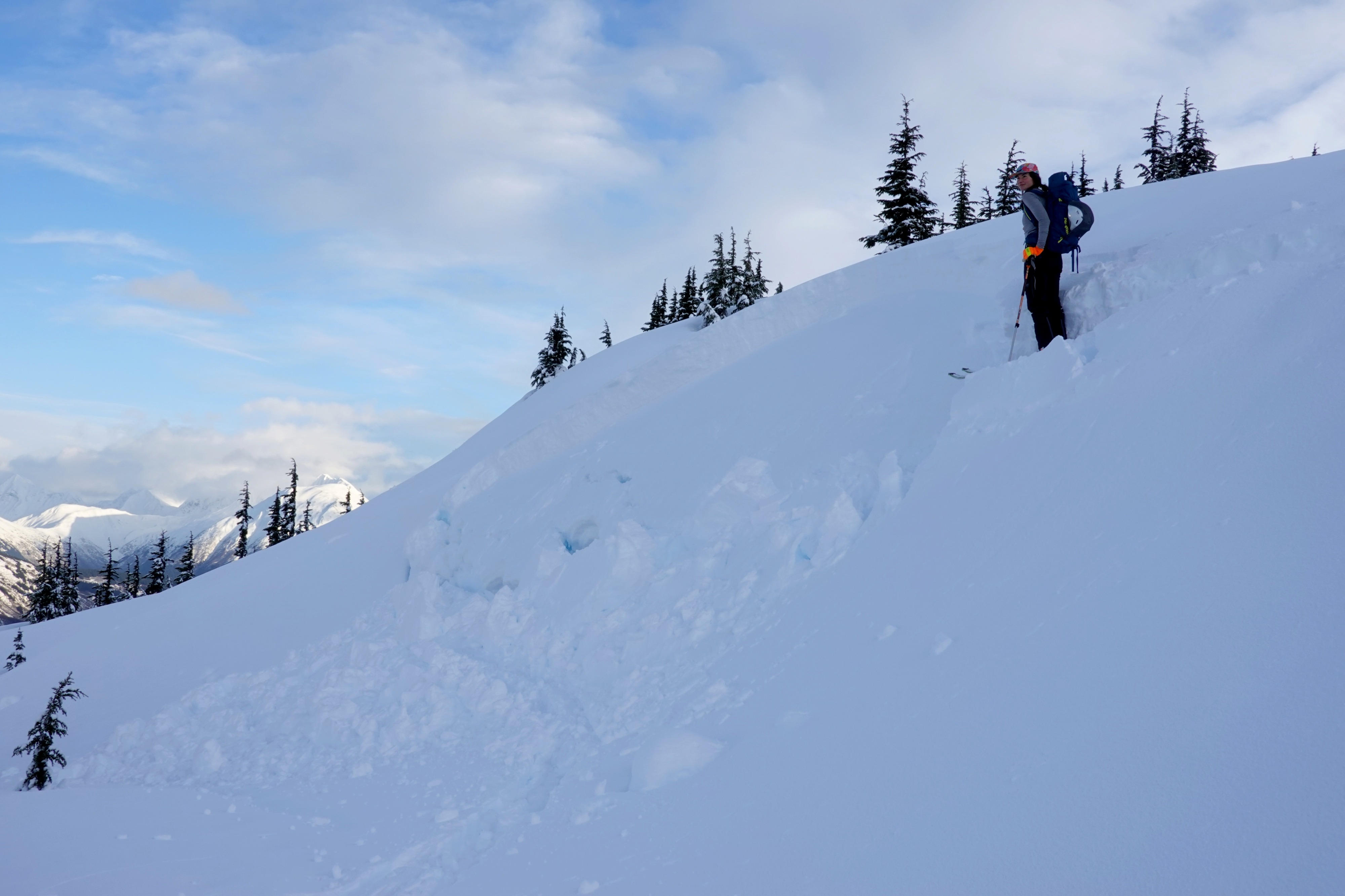
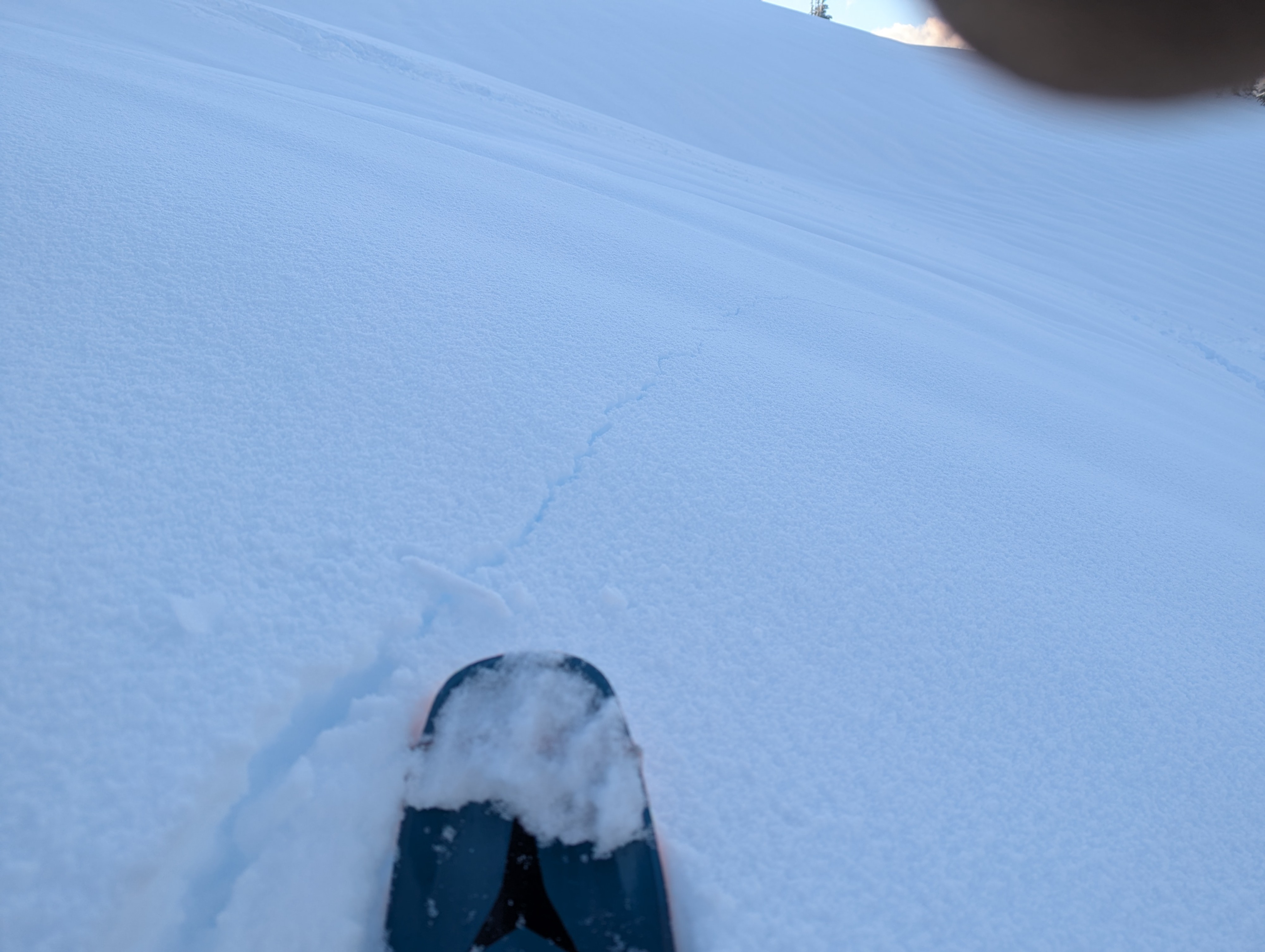
We toured up to treeline on Tincan and found alarmingly unstable avalanche conditions. So much so that we didn't feel comfortable traveling across the short ~ 30 degree slope that is required to traverse on the way up to Tincan Common. We triggered a small avalanche on a test slope and observed collapsing and whumphing between 2100' to 2300'. There was about 2' of wet and heavy storm snow from the past two days sitting on top of a layer of facets above an old ice crust. This is a bad slab/weak layer/bed surface setup that can cause very large avalanches. In addition, the skiing was really bad. With a 1-2" thick breakable crust on top and 6-24" of wet snow underneath. Above 2200' the skiing likely improves significantly but we had a bad feeling about heading up there today.
We triggered an avalanche on a small test slope (~ 20' tall by 50' wide) which was surprisingly deep and made up of wet and heavy snow from the past few days. There were also whumphs and shooting cracks in adjacent areas.Weather
- Air Temp
- 20s F
- Cloud Cover
- scattered
- Rain Elevation
- 2200'
- Recent Snowfall
- 6-24"
- Snow Avail For Transport
- small smounts
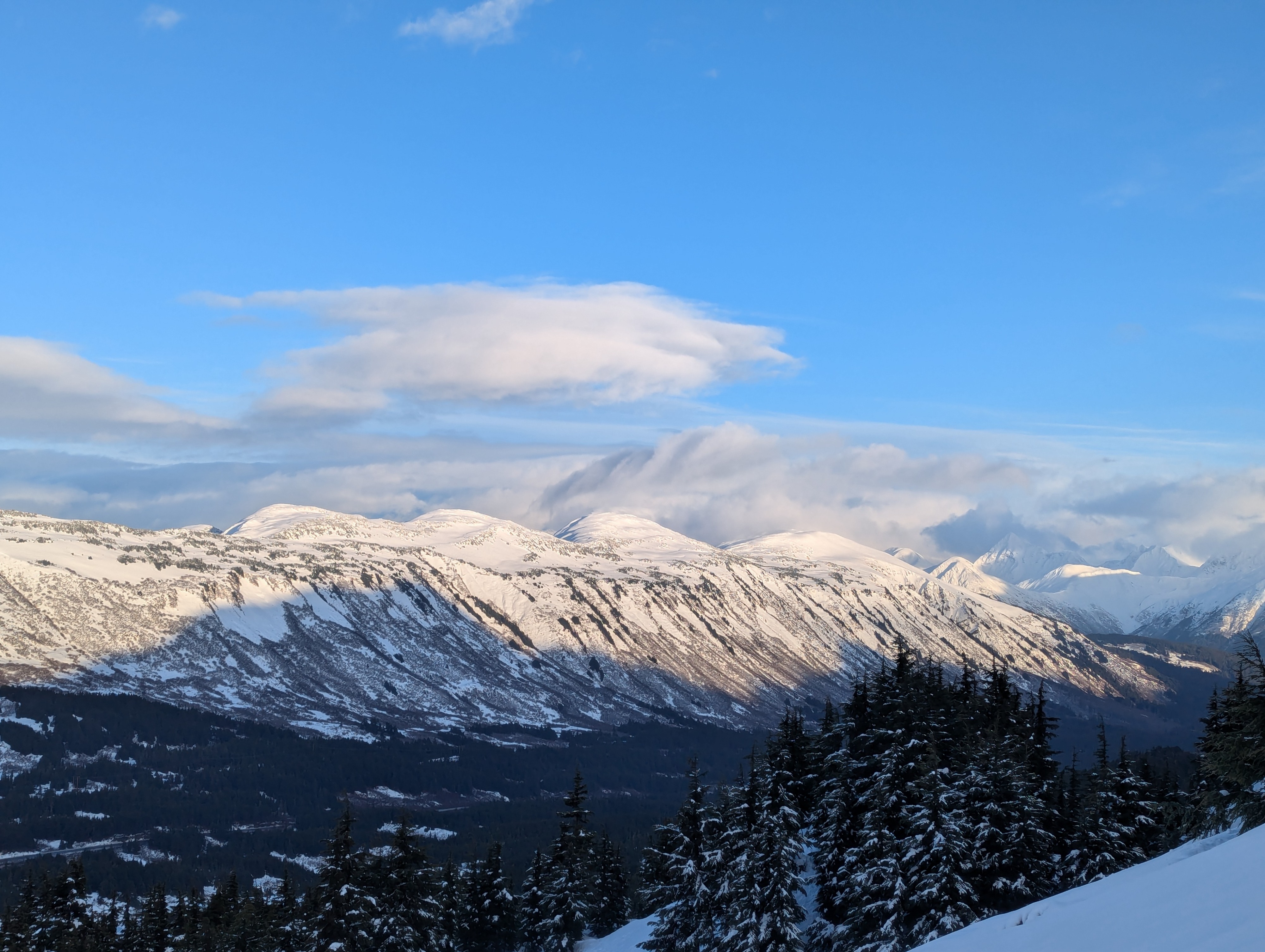
Surprisingly good visibility and fair weather in Turnagain Pass today. There was no rain or snow during the day and light winds up to the top of treeline.
Snowpack
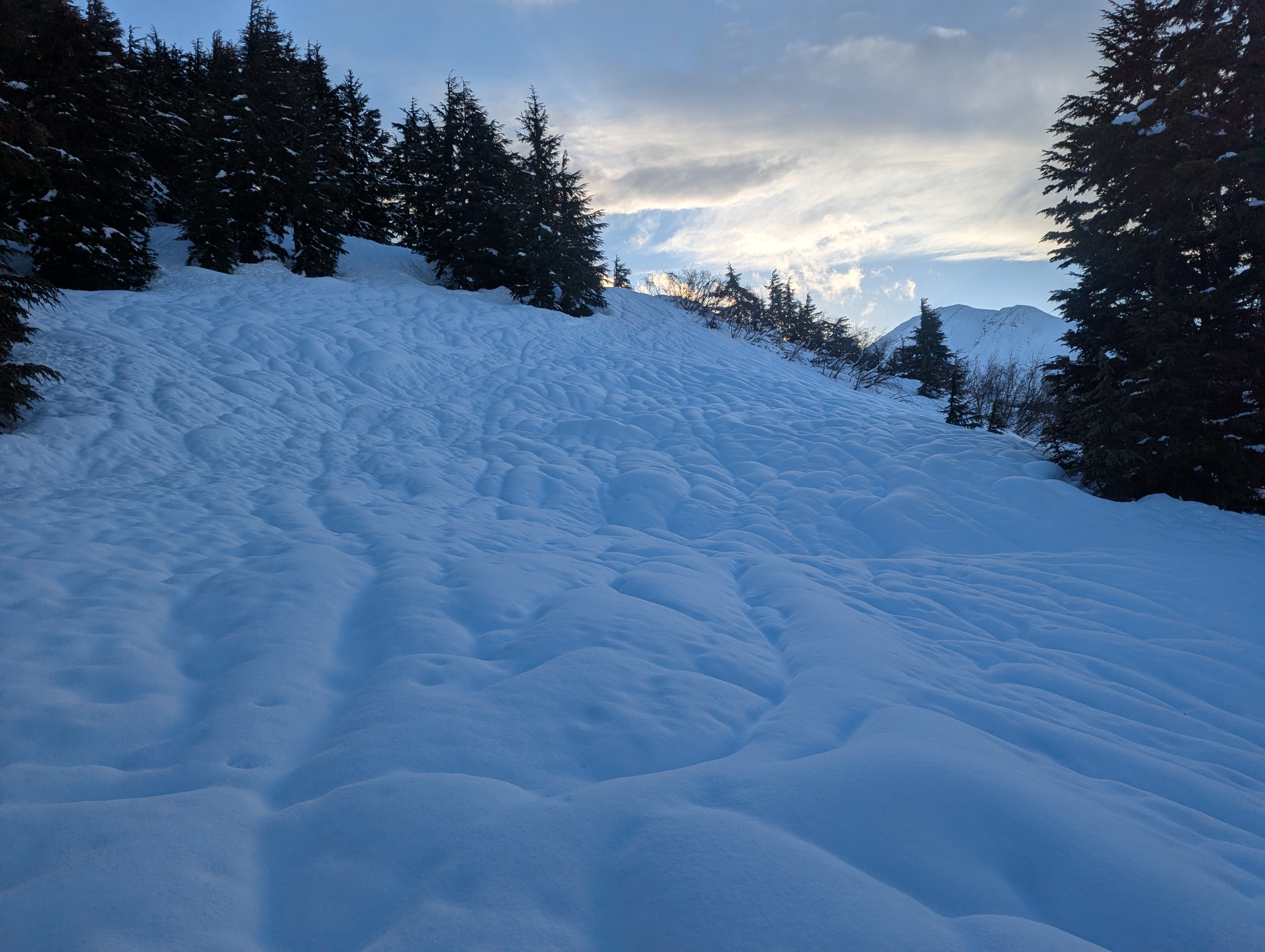
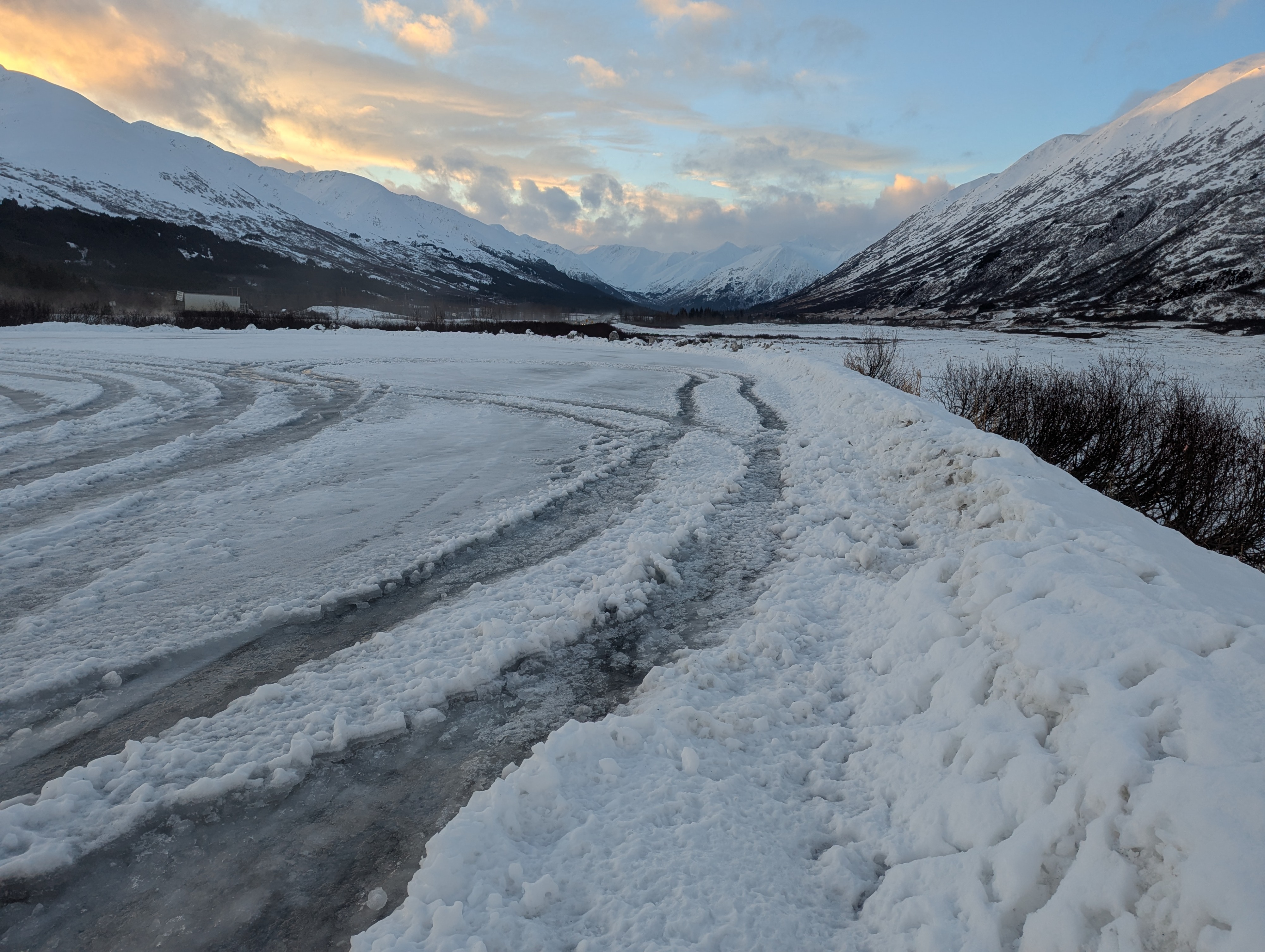
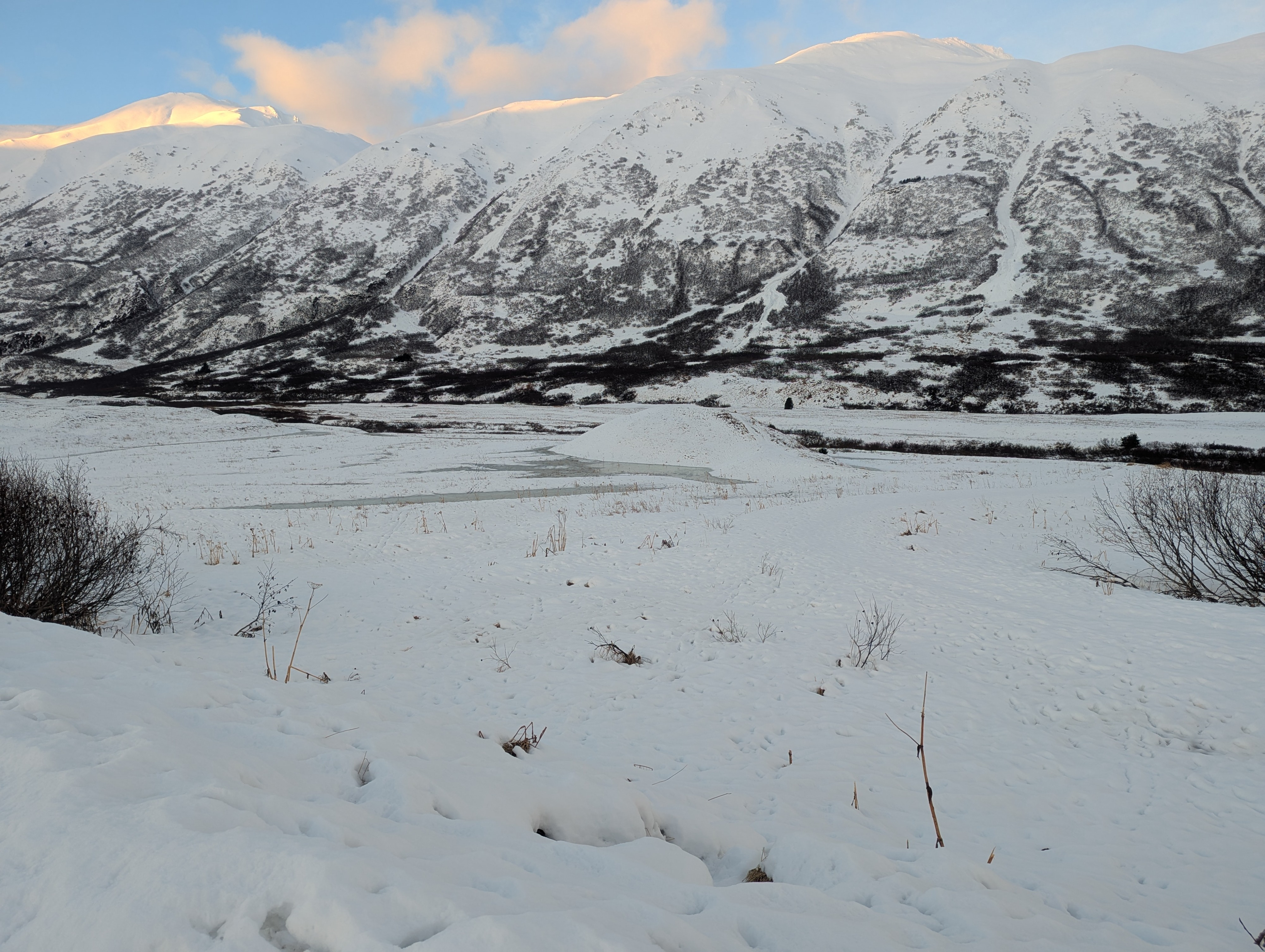
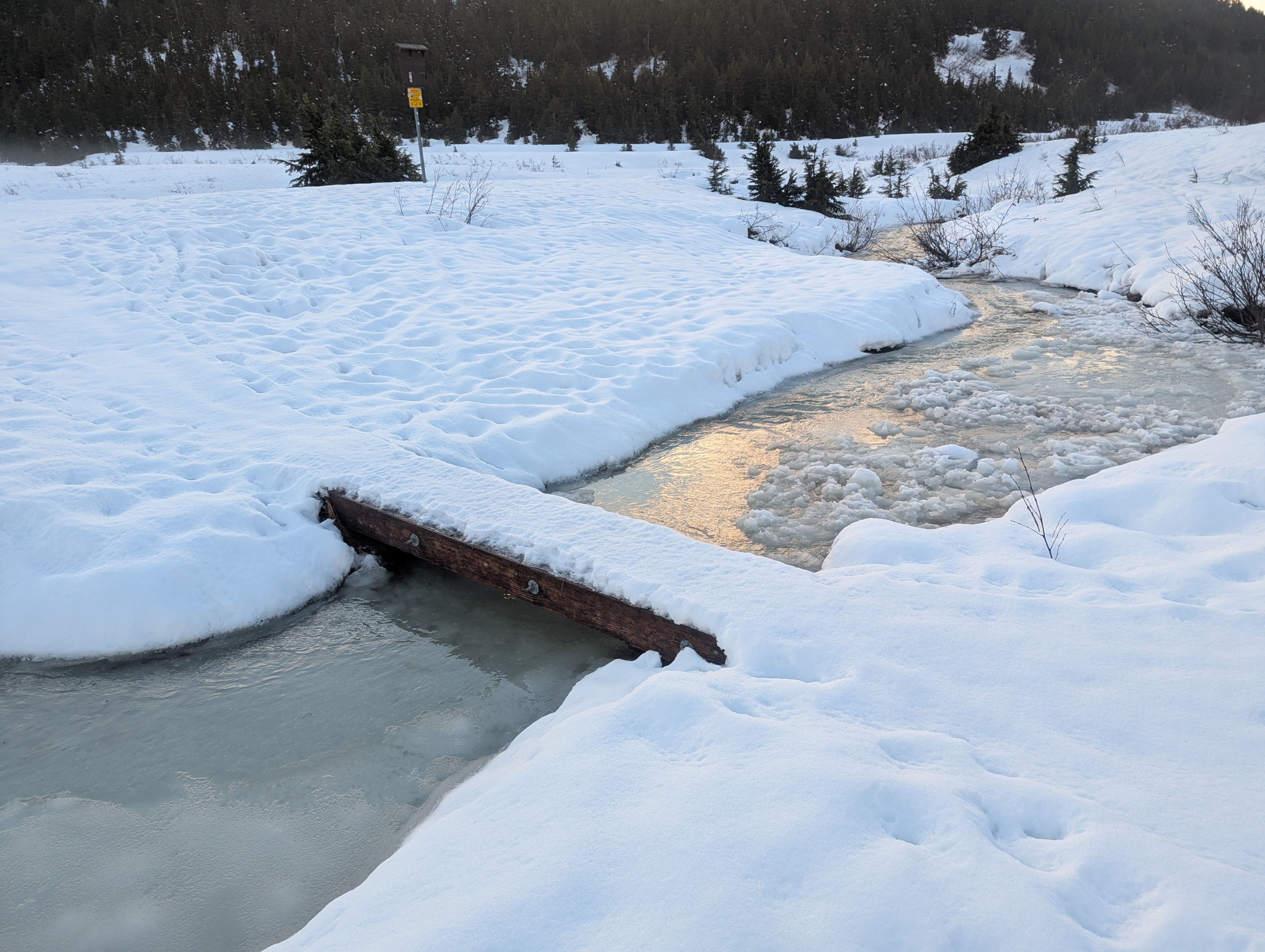
At the road elevation, there was a roughly 1" thick crust over about 5" of very wet snow. As we ascended the crust remained 1-2" thick and breakable until about 2200'. The wet snow underneath was about 24" deep above 2000' with a 3-4" thick layer of facets underneath sitting on top of an ice crust. We dug a set of pits at 2200' on a SE aspect and had propagating results in extended column tests (ECT P 1, ECT P 10) and in propagation saw tests (PST 22/100 END). The character of the failures was a sudden collapse, which is a sign of a persistent weak layer.
Avalanche
- Size
- D2.5
- Aspect
- SE
- Trigger
- N
- Elevation
- 2500 ft
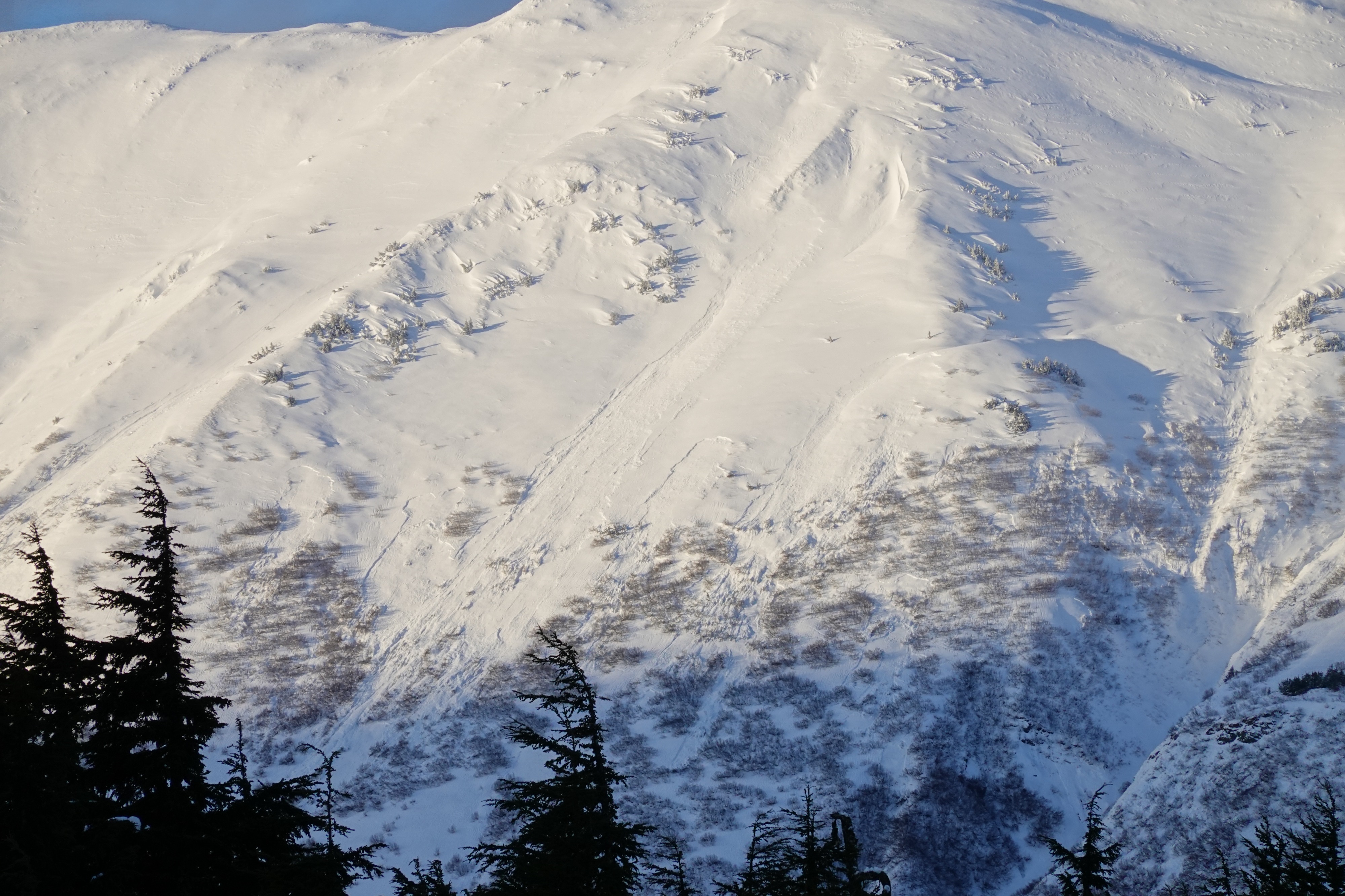
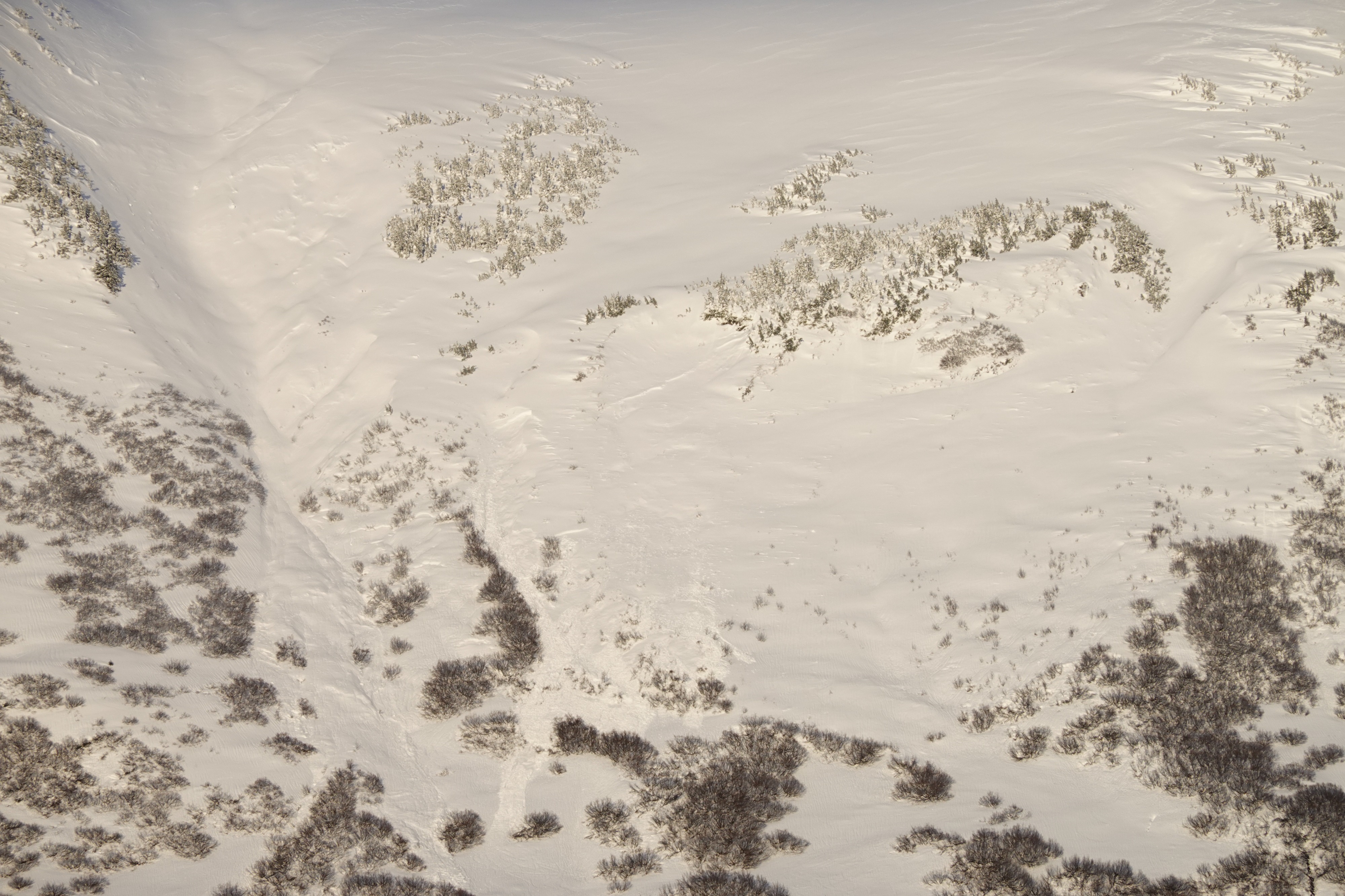
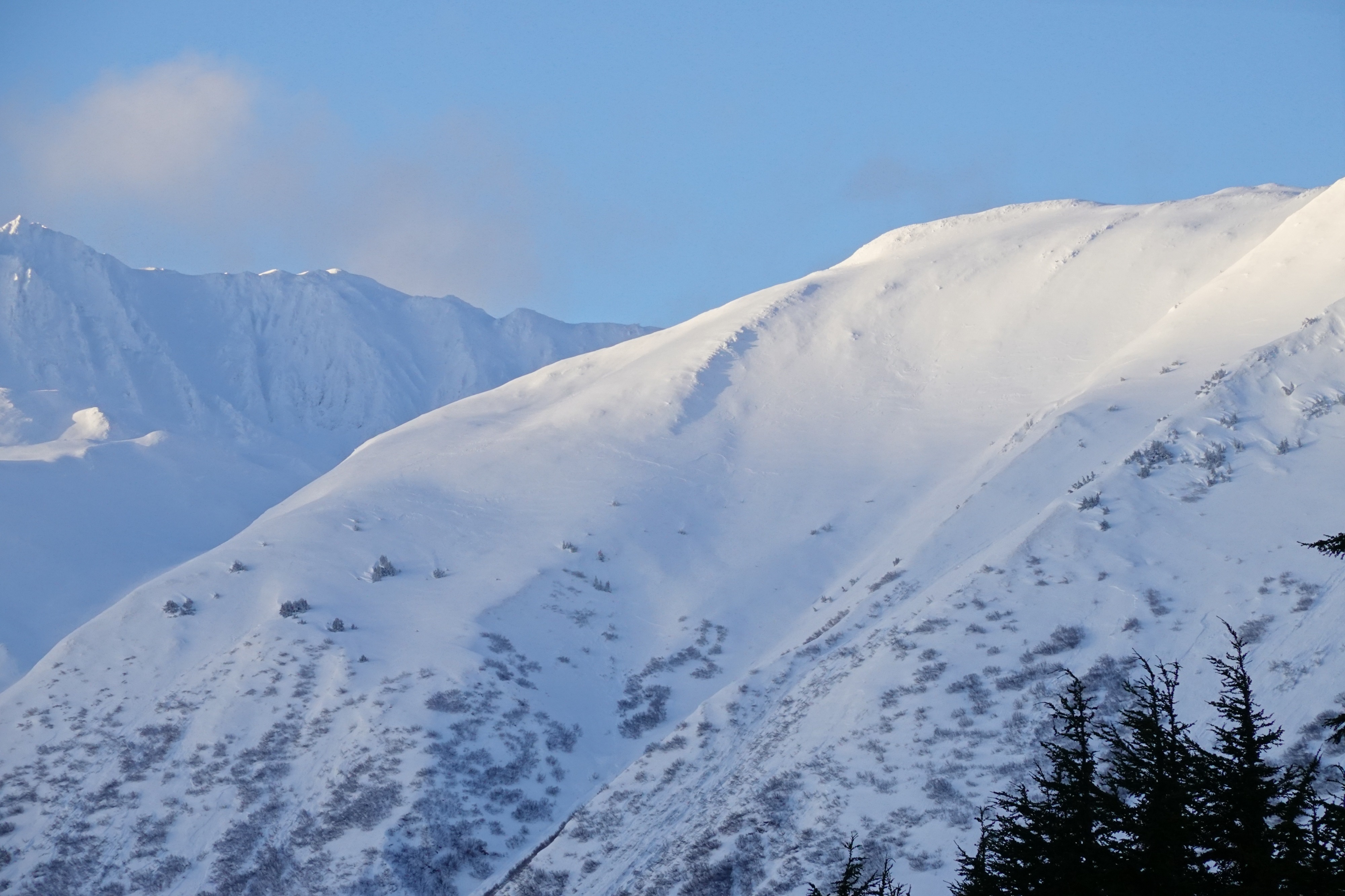
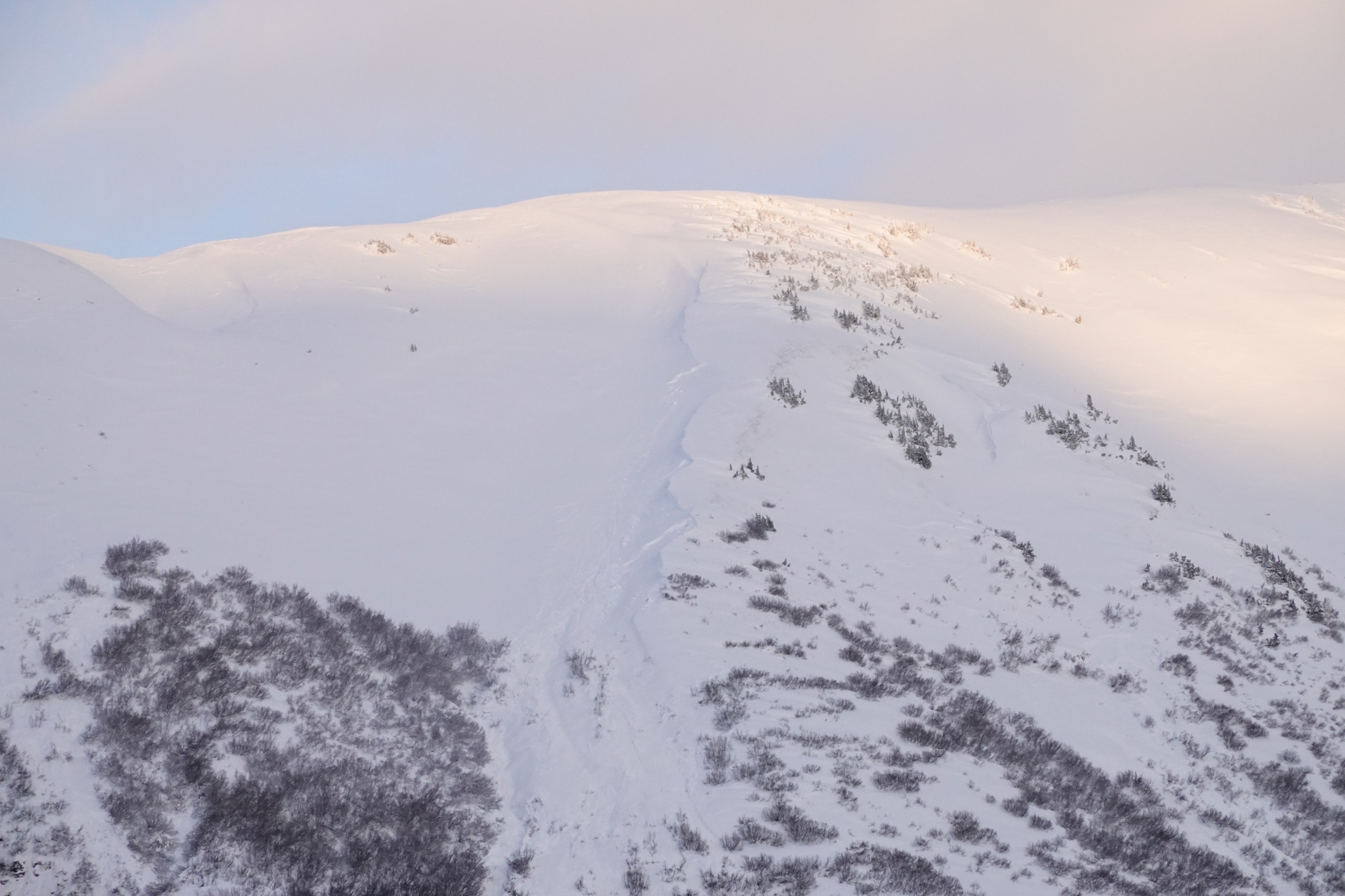
We saw several fresh crowns on Seattle Ridge, mostly at mid elevations of roughly 2000-3000'. Many paths that looked like they had fresh debris but where we couldn't see an obvious crown. These likely released during the storm and were partially filled in by subsequent wind and snowfall.