
Quick report
- Cracking
- isolated
My goals today were to get out and see natural activity as well as to investigate recently formed windslabs and our persistent slab structure. Attached are natural avalanches I found while driving.
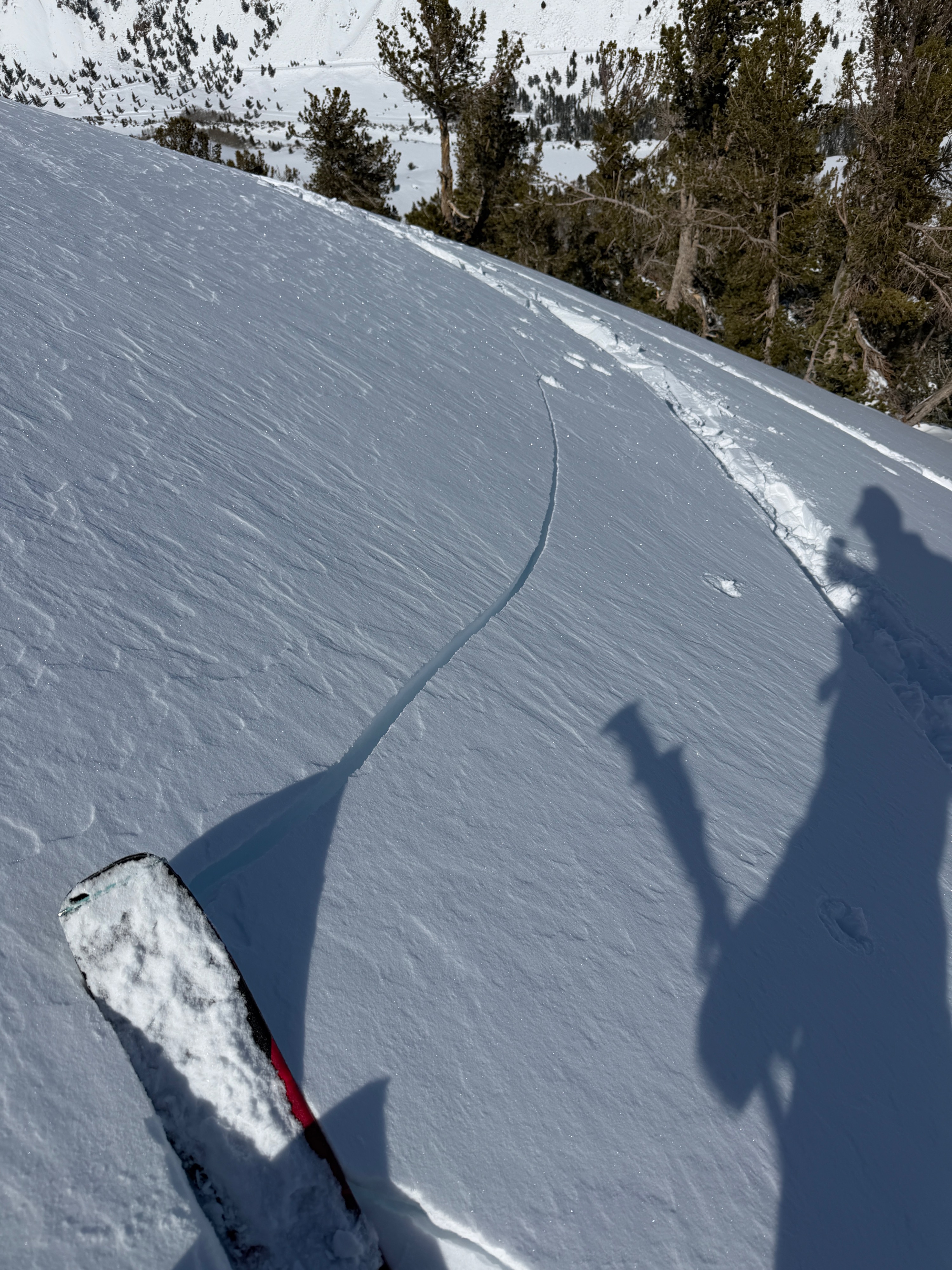
There are 2 separate wind-drifted slabs around 9000' on north to east facing terrain in the Lundy area. One is specific, and one is isolated. One is reactive, and one is stubborn. They are both failing on non-persistent grains and will likely stabilize over the coming days.
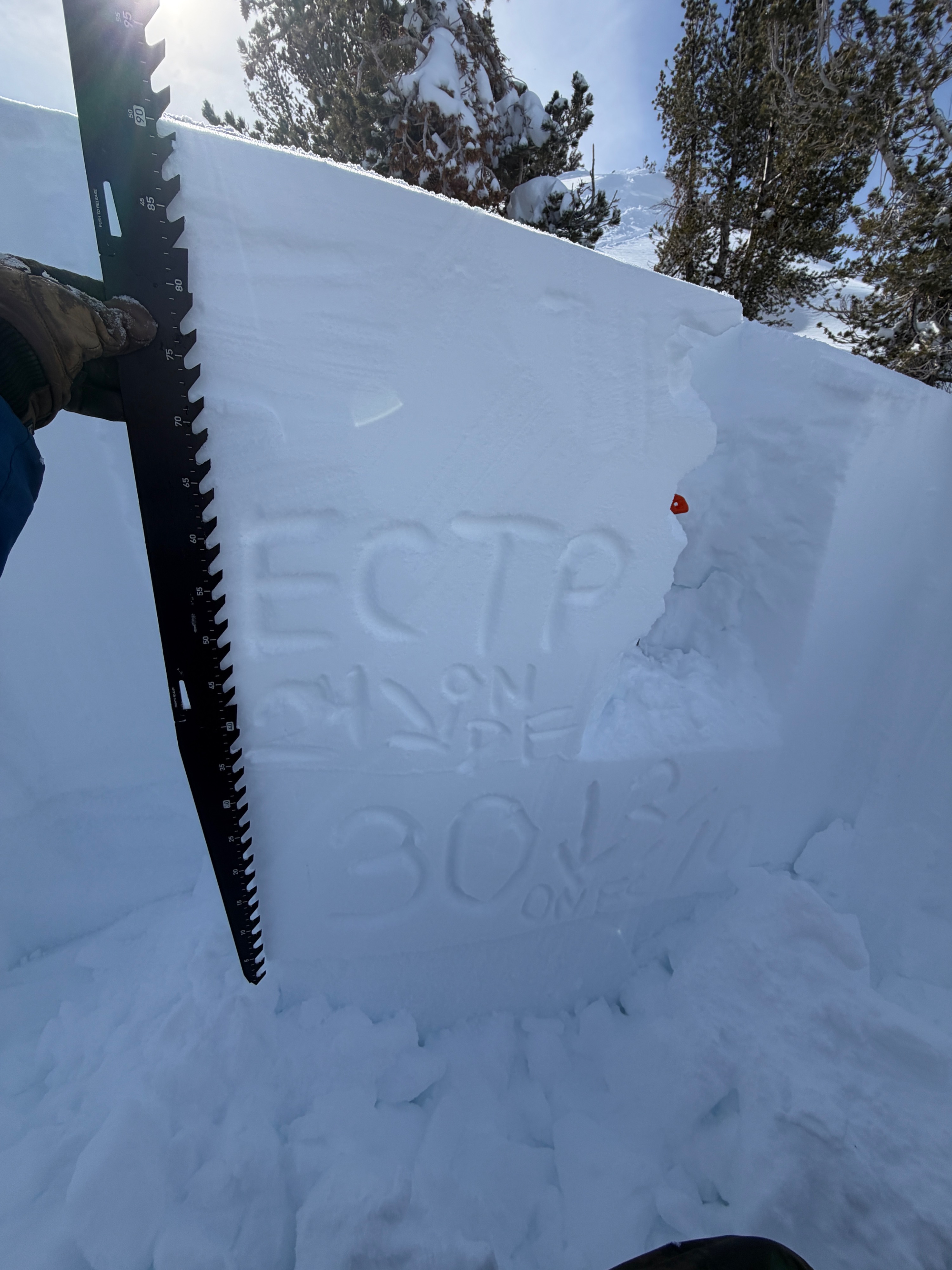
Persistent structure persists. I did not get direct feedback (cracking or collapsing) on the 2/10 interface while travelling. I found hard propagating results on the layer in one pit location and was unable to initiate any failure in a different location. I also found a ton of variability in the melt-freeze crust capping our "Dry January" facets.
Our persistent problem seems to have a bit of a "Goldilocks" quality to it. The slab is large, but not big enough that a human can't affect buried weak layers below it. Direct feedback is irregular, and so are propagating results in stability tests. And the melt-freeze crust at lower elevations... the crust may be helping to reduce a human's impact on the weak grains below, or it may be so variable across terrain that it doesn't change anything. Overall, this slab and weak layer combo is perfectly "not good."
I found cracking in a shallow (10-15cm) windslab in small pockets on north and northeast aspects around 9000'. These wind slabs existed in small pockets in specific terrain. I got no direct feedback from buried persistent weak layers.Weather
- Air Temp
- 20
- Cloud Cover
- few
- Wind Loading
- none
- Recent Snowfall
- Past 24: 10-15cm,, since 2/10 70-100cm.
- Snow Avail For Transport
- moderate amounts
Cold, clear, and beautiful this morning. Cloud cover increased throughout the day. Generally calm winds occasionally gusting light from the south and the west. I did not see any blowing snow today. There is still ammo available for transport.
Snowpack
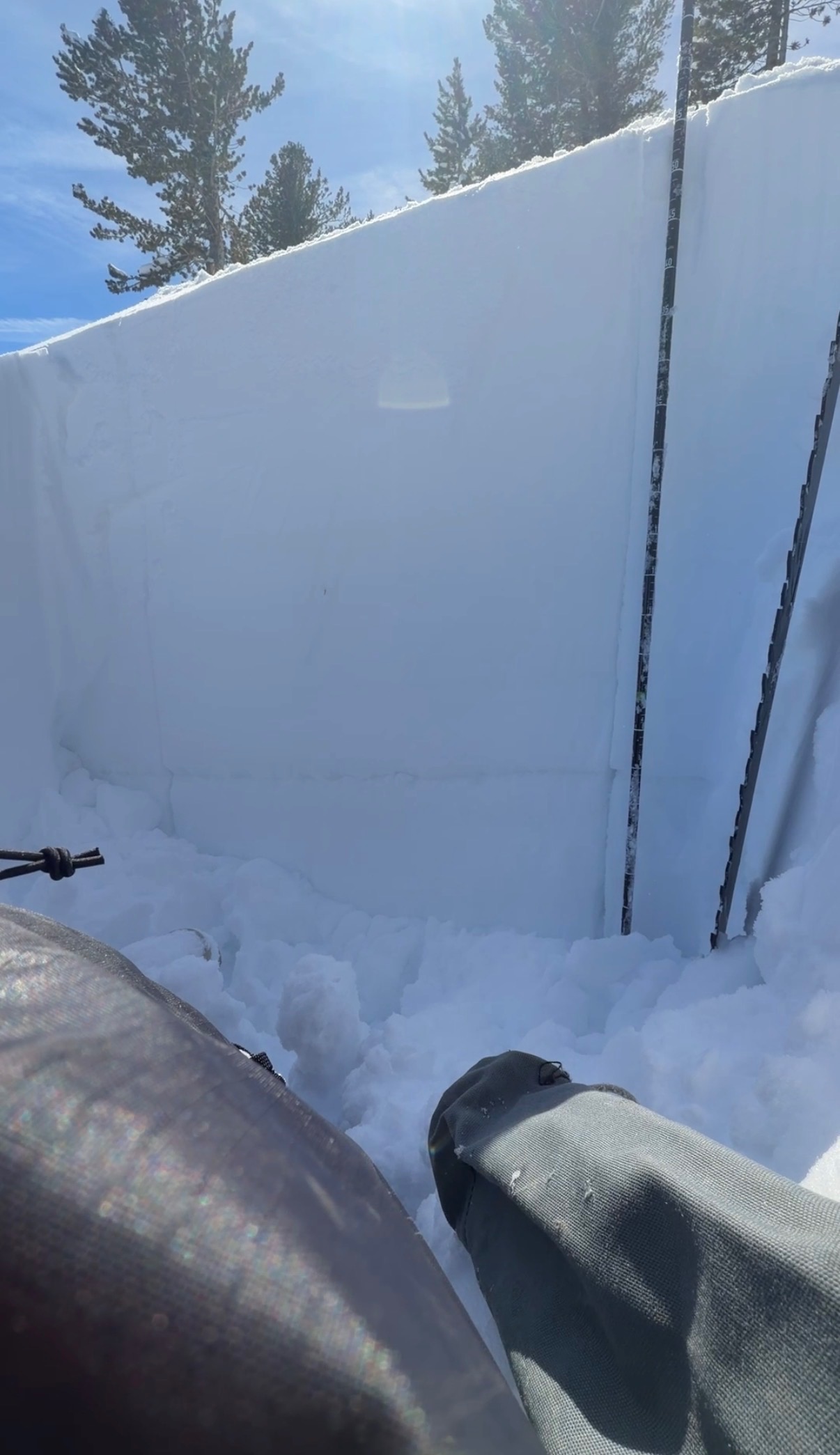
While touring today, I found the 2/10 interface down 70-100cm. In places where the wind has deposited snow, I found a subtle upside-down structure in the new snow. In places less wind affected, the new snow is generally right side up. My ski penetration was lower than recent outing and sat around 10-30cm. I dug 2 holes today, one on a northeast aspect at 9000' and one on a north aspect at 9400'. In both pits, the 2/10 interface was down 90cm.
Wind slab: 2 seperate windslabs exist on the north half of the compass around 9000' in the Lundy area.
- The top 10-15cm (4-6") holds a recently deposited windslab. This shallow problem is failing on decomposing fragments.
- I found hard propagating results down 50cm in the new snow. There is a subtle change in hardness within the new snow, and a cohesive, 4F slab failed on softer decomposing fragments. (ECTP25 @ 9000' on a NE aspect. ECTP24 @9400' on a N aspect). This problem is stubborn, and I had no direct feedback while travelling.
Persistent slab:
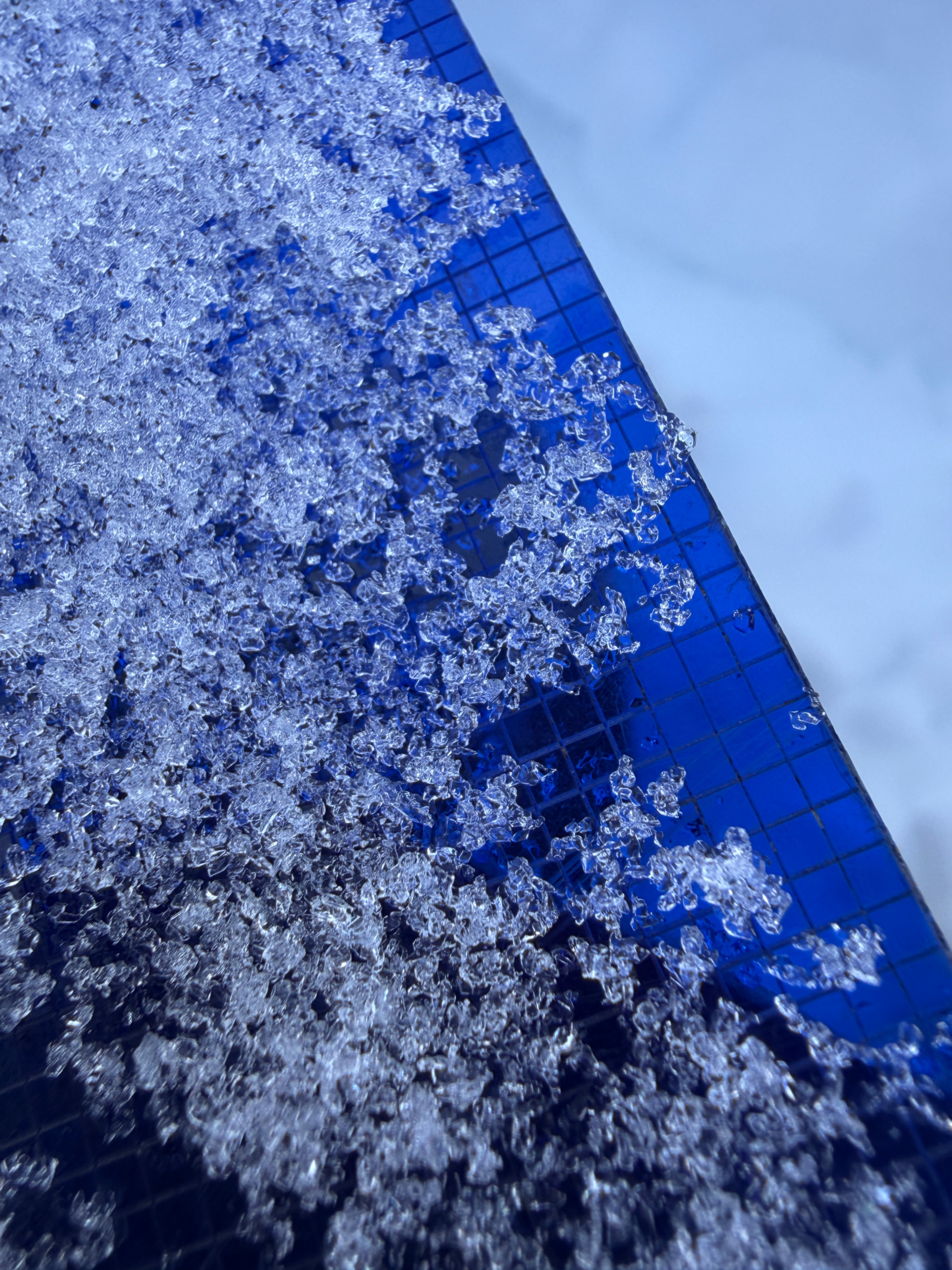
- In my hole at 9000' on a northeast facing aspect, a 2cm melt freeze crust capped 2mm facets from "Dry January". I was unable to initiate failure in on this layer. ECTX x 2
- In my hole at 9400' on a north-facing aspect, an almost undiscernible melt freeze crust capped 2mm facets. I was able to get propagating results on my last tap on the 2/10 interface. ECTP30.
Avalanche
- Size
- D2.5
- Count
- 4
- Aspect
- NE
- Elevation
- 11800 ft
Avalanche observations from the drive.